
High Tensile Cattle Fence: Strength, Cost Comparison & Design Guide
High tensile fencing represents the modern standard for cattle containment, offering superior strength, longevity, and cost-effectiveness compared to traditional barbed wire and woven wire fences. This comprehensive guide covers everything you need to know about selecting, designing, and installing high tensile cattle fences for your operation.
What Is High Tensile Cattle Fencing?
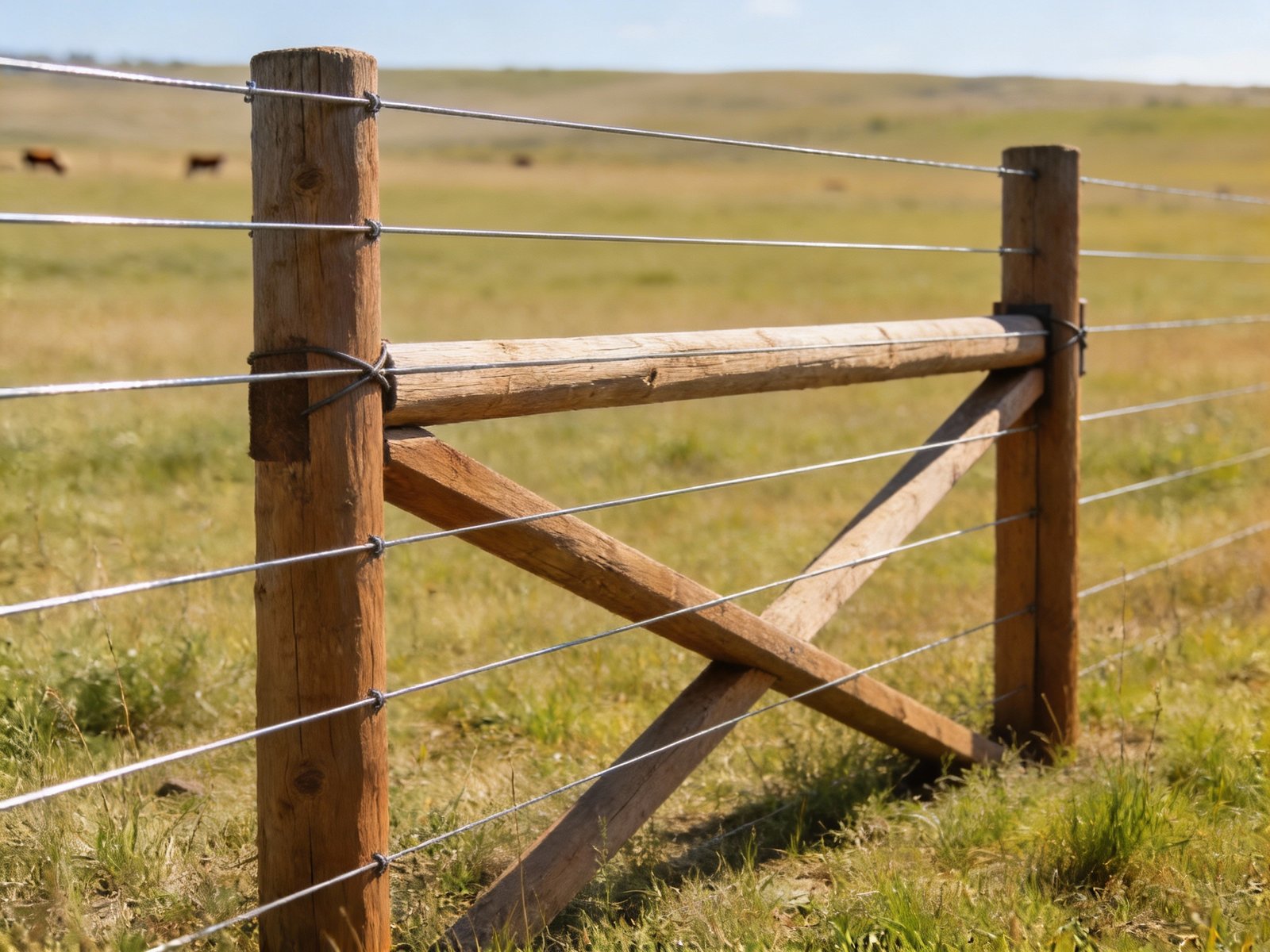
High tensile cattle fencing is a modern livestock containment system designed with strength and longevity as core features. Unlike traditional low-carbon barbed wire or woven wire, high tensile fencing uses smooth, high-strength wire that maintains consistent tension over extended periods without sagging or losing effectiveness. The fencing is constructed from wire that meets high tensile strength standards, typically ranging from 200,000 to 250,000 PSI (pounds per square inch), making it significantly stronger than conventional fencing materials.
The system relies on proper post spacing, wire tension, and strategic bracing to create a barrier that cattle respect without requiring extreme tension levels. High tensile smooth wire fences can use fewer strands than traditional fences while maintaining equivalent or superior containment, making the system more economical both in initial installation and long-term maintenance.
Key Benefits of High Tensile Fencing for Cattle
- Extended Lifespan: High tensile fences can last 50-60 years or more when properly installed and maintained, compared to 15-25 years for traditional barbed wire.
- Lower Maintenance Requirements: Once properly tensioned, high tensile fences require minimal adjustment. The wire maintains tension through temperature fluctuations better than low-carbon alternatives.
- Cost Efficiency Over Time: Despite higher initial material costs, the extended lifespan and reduced maintenance result in significantly lower cost per year of service.
- Smooth Wire Design: Elimina tes injuries to cattle that can occur with barbed wire, improving animal welfare and reducing veterinary costs.
- Electric Fence Compatibility: High tensile smooth wire works exceptionally well with electric fence systems, requiring no special modifications.
- Wide Post Spacing: The strength of high tensile wire allows for wider post spacing (up to 30 feet), reducing material and labor costs during installation.
High Tensile vs Low Carbon Fence Wire
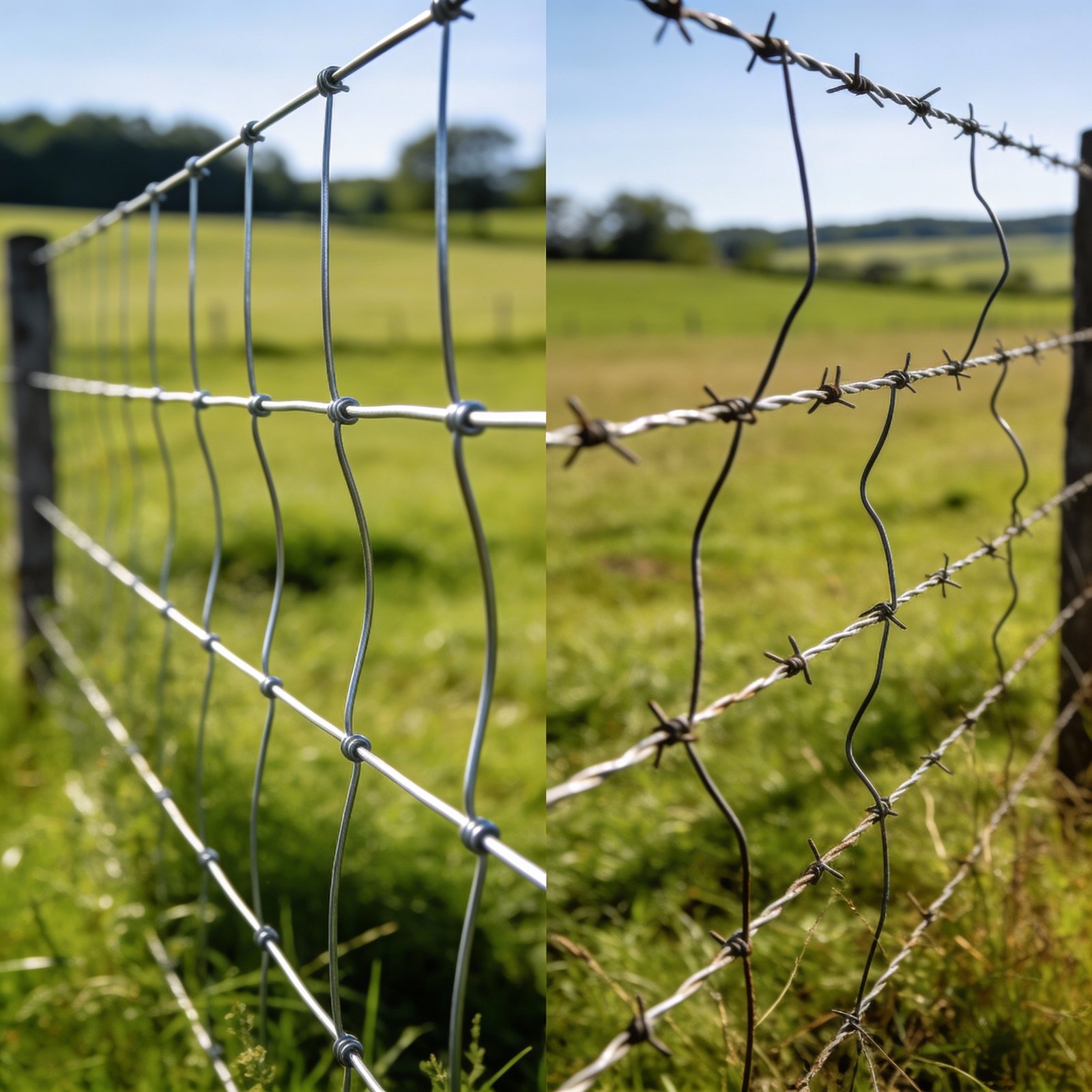
The differences between high tensile and low-carbon fencing go beyond simple material composition. High tensile wire maintains its strength and tension characteristics over decades, while low-carbon barbed wire naturally loses tension and requires regular adjustment.
| Characteristic | High Tensile Wire | Low Carbon Barbed Wire |
|---|---|---|
| Wire Strength (PSI) | 200,000-250,000 PSI | 80,000-100,000 PSI |
| Initial Tension Required | 150-200 lbs per strand | 300-350 lbs per strand |
| Re-tensioning Needs | Minimal after initial installation | Annual or biannual adjustment required |
| Wire Type | Smooth (for cattle) | Barbed (can injure cattle) |
| Expected Lifespan | 50-60+ years | 15-25 years |
| Post Spacing Options | Up to 30 feet | 8-12 feet (maximum) |
| Sag Over Time | Minimal | Significant (requires frequent adjustment) |
| Cost Per Year of Service | Lower (due to longevity) | Higher (requires replacement and maintenance) |
High Tensile Fence Design for Cattle: Strands, Spacing and Layout
Optimal Strand Count for Cattle
The number of strands in a high tensile fence system depends on cattle type, size, and age. Most operations use between 4 and 6 strands for mature cattle, with specific recommendations as follows:
- Calves and Growing Stock (under 500 lbs): 4-5 strands, with lower strands positioned closer together to prevent escape through gaps.
- Mature Cattle (500-1200 lbs): 4-5 strands spaced evenly from ground level to shoulder height.
- Bulls and Heavy Cattle (over 1200 lbs): 5-6 strands with reinforced post spacing and additional bracing at corners.
- Mixed Herd with Young Stock: 5-6 strands to accommodate size variation and prevent different age groups from finding escape routes.
Wire Height and Strand Spacing
Proper wire height ensures effective containment while allowing efficient passage of maintenance equipment. Standard strand heights from ground level are:
- Bottom strand: 6-8 inches
- Second strand: 18-24 inches
- Third strand: 36-42 inches
- Fourth strand: 48-54 inches
- Fifth strand: 60-66 inches (if used)
These heights are adjusted slightly based on cattle size, with smaller breeds requiring lower strand placement and taller breeds requiring higher top wire placement. The top strand should reach approximately the shoulder height of the target cattle to maximize visibility and psychological containment effect.
Post Spacing and Layout Considerations
One of the primary advantages of high tensile fencing is the ability to use wider post spacing, which reduces overall fence cost and labor requirements. Proper post spacing depends on terrain, soil type, and cattle pressure:
- Ideal Post Spacing: 25-30 feet for straight fence sections in relatively level terrain with stable soil.
- Conservative Spacing: 20-25 feet for rolling terrain or areas where cattle concentration is expected.
- Minimum Spacing: 15-20 feet for poor soil conditions or areas where cattle frequently lean on the fence.
- Increased Spacing Needs: Shorter spacing (8-12 feet) may be required in areas of extreme elevation change or at interior subdivisions where cattle clustering is likely.
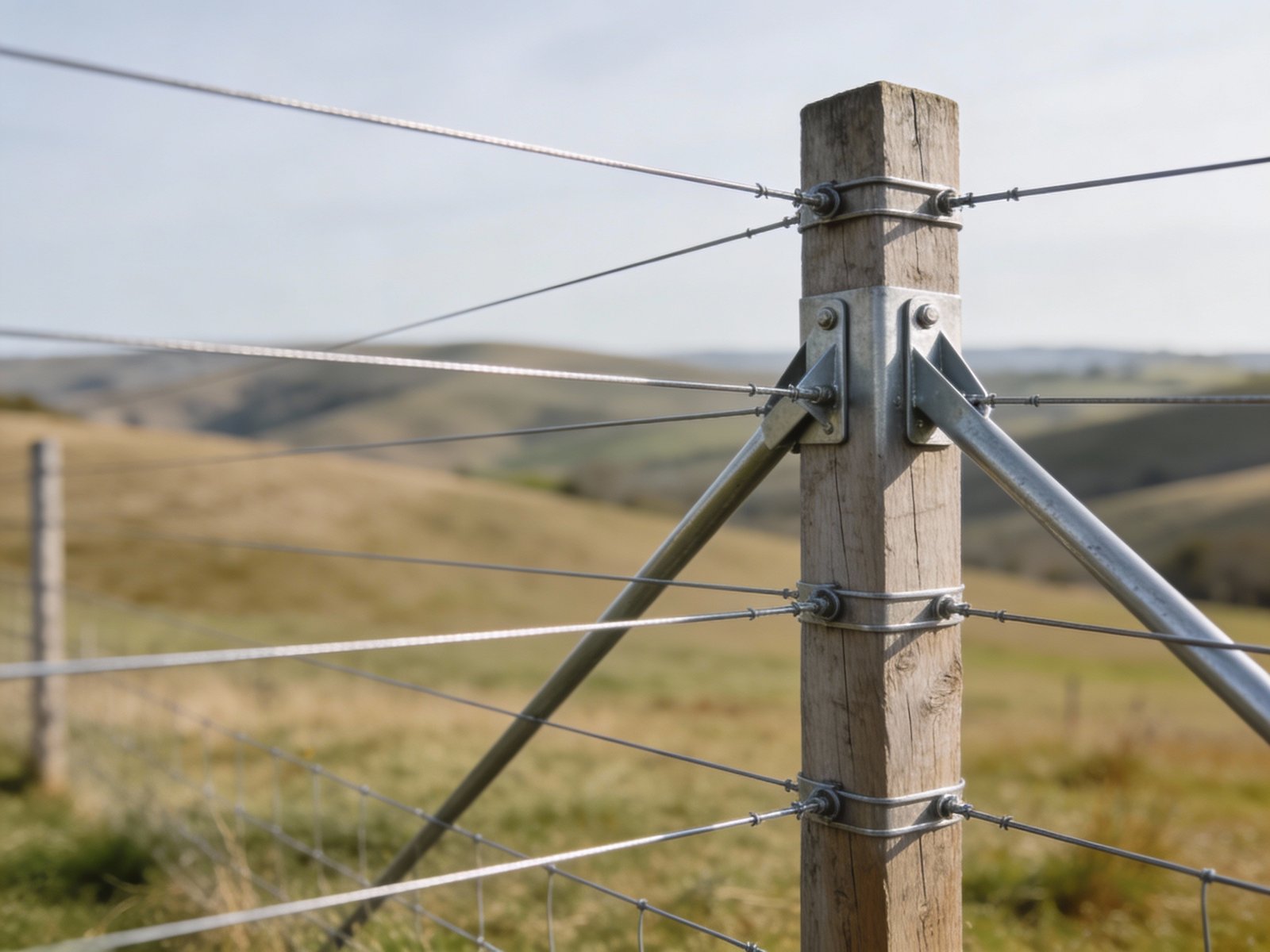
Corner posts and gate posts require special attention. These should always be spaced at maximum distances (20-30 feet from corner) and feature substantial bracing to handle the lateral forces from tensioned wire and animal pressure. H-brace or diagonal brace systems are essential for corner stability and longevity.
High Tensile Electric Fence for Cattle
This video demonstrates real-world high tensile cattle fence installation and tensioning techniques. It shows how proper bracing, wire tension, and post spacing contribute to long-term fence performance and reduced maintenance.
Benefits of Electric High Tensile Systems
Combining high tensile wire with electric fence systems creates a superior containment solution that leverages the strengths of both technologies. The high tensile component provides physical barrier strength, while the electric element provides psychological reinforcement through mild deterrent effect.
This video demonstrates real-world high tensile cattle fence installation and tensioning techniques, showing how proper bracing, wire tension, and post spacing contribute to long-term fence performance and reduced maintenance.
Electric Wire Integration
When electrifying high tensile smooth wire, the process is straightforward due to the conductive properties of the smooth wire material. Typically, 2-3 of the wire strands are electrified while the remaining strands provide physical containment. Common configurations include:
- Top Wire Electrified: The top strand carries electric charge, providing psychological deterrent at the most visible location. This works well for cattle that have established fence respect from younger ages.
- Alternating Strand Electrification: Alternating strands (1st, 3rd, 5th) are electrified, creating multiple contact points if an animal attempts escape. This approach maximizes deterrent effect.
- Upper Strand Electrification: The top 2-3 strands are electrified while lower physical strands prevent young stock escape. This balanced approach works for mixed herds.
Key Consideration: Energizer Selection
Choose an energizer rated for the total wire length of your system. High tensile smooth wire systems typically require less powerful energizers than traditional fences because the conductive properties of the wire transfer current efficiently. A well-designed high tensile electric fence system can operate effectively with energizers in the 1.0-2.0 joule range for most cattle operations.
Insulator and Hardware Requirements
Proper insulators are critical for electrified high tensile systems. Quality insulation prevents current loss and maintains system effectiveness. Requirements include:
- Heavy-duty post insulators rated for the intended voltage and climate conditions
- Corner and brace post insulators with enhanced durability for high-stress areas
- Appropriate grounding rods (minimum 6 feet length, typically 2-4 rods per system)
- Properly sized and insulated ground return wires
Installation Best Practices for High Tensile Cattle Fencing
Site Preparation and Layout
Proper planning before installation ensures fence longevity and reduces future problems. Begin with a complete site survey including terrain mapping, soil condition assessment, and identification of natural features that can support or be damaged by fencing. Mark all post locations using paint or stakes, with particular attention to:
- Ensuring corner posts are at true 90-degree angles for structural integrity
- Identifying areas where the fence will experience concentrated animal pressure
- Planning for gates and water system access
- Accounting for utility lines (electrical, gas, drainage) before installation
Post Selection and Installation
Post quality directly impacts fence longevity. For high tensile systems, use:
- Wooden Posts: Minimum 4×4 inches, pressure-treated or naturally rot-resistant species (cedar, locust). Install 2.5-3 feet deep with compacted soil or concrete.
- Concrete Posts: Engineered concrete posts rated for high tensile systems provide excellent longevity. Install with proper depth and compacted base.
- Steel Posts: High-grade steel posts work well for electric-fence systems. Standard posts are sufficient for non-electrified applications.
Depth is critical—deeper installation provides greater lateral resistance to tensioned wire forces. Corner posts should penetrate at least 3 feet, while line posts can use slightly shallower depths (2.5 feet) in stable soils.
Wire Tensioning Procedure
Proper tensioning ensures long fence life and effective containment. The high tensile smooth wire requires less tension than low-carbon barbed wire:
- Target tension: 150-200 pounds per strand
- Maximum tension: 250 pounds (excessive tension can damage wire and posts)
- Tools: Use mechanical stretchers and chain pullers rather than tractor power alone
- Technique: Tension multiple strands simultaneously when possible to distribute stress evenly
- Verification: Use tension spring indicators to verify proper tension at each strand
Stapling technique matters significantly. Use fencing staples (not nails) with barbed shanks to prevent pullout. Install staples at 45-degree angles with slight looseness to allow wire expansion and contraction with temperature changes. Never drive staples tight against posts—this restricts necessary wire movement.
Cost Analysis and Long-Term Value
Material and Installation Costs
High tensile fencing requires higher initial investment than traditional barbed wire, but long-term cost analysis typically favors high tensile systems. A typical cost comparison for 1 mile of cattle fencing includes:
| Expense Category | High Tensile (5-strand) | Barbed Wire (5-strand) |
|---|---|---|
| Wire Cost (per mile) | $800-1,200 | $300-500 |
| Posts (hardware included, per mile) | $900-1,400 | $900-1,400 |
| Labor (professional installation, per mile) | $1,200-1,800 | $800-1,200 |
| Total Initial Cost (per mile) | $2,900-4,400 | $2,000-3,100 |
| Cost per Year of Service (50-year lifespan) | $58-88 | $133-207 |
Long-Term Economic Advantages
Beyond the direct cost comparison, high tensile fencing provides economic benefits through:
- Reduced Maintenance Labor: Fewer repairs and adjustments save hundreds of hours over system lifetime
- Animal Welfare Improvements: Elimination of barbed wire injuries reduces veterinary costs and improves cattle health
- Operational Efficiency: Wide post spacing reduces installation labor and allows easier equipment access for pasture management
- Resale Value Enhancement: Properties with well-maintained high tensile fencing systems command premium prices and sell more quickly
Common Installation Mistakes to Avoid
Critical Installation Errors
- Over-tensioning: Exceeding 250 pounds of tension can weaken wire and damage posts. More tension is not better with high tensile systems.
- Inadequate Bracing: Corner posts without proper bracing will fail under tension forces, causing premature fence collapse.
- Shallow Post Installation: Posts installed less than 2.5 feet deep will shift under wire tension and animal pressure, creating gaps.
- Improper Stapling: Driving staples too tightly restricts necessary wire movement and can cause wire breakage.
- Ignoring Terrain Changes: Failing to adjust strand heights for rolling terrain creates escape routes for cattle.
- Mixing Wire Types: Combining high tensile wire with low-carbon sections creates weak points prone to failure.
Maintenance and Longevity
Annual Inspection Protocol
High tensile fencing requires minimal maintenance, but regular inspection prevents small problems from becoming costly failures. Conduct annual inspections in late fall, before winter weather impacts visibility:
- Walk the entire fence line, examining each section for wire damage, broken insulators, or post deterioration
- Check all corner and brace structures for lateral movement or instability
- Test electric fence systems with a portable tester to verify proper operation if electrified
- Look for tree branches or debris contacting the fence, which can cause grounding issues or physical damage
- Examine post bases for signs of heaving or frost damage in colder climates
Repair and Re-tensioning
High tensile wire breaks are rare but can occur from animal pressure, storm damage, or branch impact. When damage occurs, use proper splicing techniques with crimped connections or high-quality joiners designed for high tensile wire. Re-tension affected sections using mechanical equipment—never rely on manual hand tensioners for repairs.
Re-tensioning of the entire system is rarely necessary after initial installation, distinguishing high tensile systems from traditional fences. If fence sag becomes noticeable after many years (typically after 10+ years), selective re-tensioning at problem areas is usually sufficient rather than replacing entire sections.
Summary
High tensile cattle fencing represents a superior long-term investment for most cattle operations, offering extended lifespan, reduced maintenance, improved animal welfare, and ultimately lower cost per year of service compared to traditional fencing systems. The key to success lies in proper design, quality installation, and appropriate post spacing to match your specific terrain and cattle type. With 50-60+ year service life and minimal maintenance requirements, high tensile fencing allows farmers and ranchers to allocate resources toward productive operations rather than constant fence repairs.
Next Steps
When planning a high tensile cattle fencing project, begin with a detailed site assessment that accounts for terrain, soil conditions, cattle type and size, and climate considerations. Consider professional installation for your first project to ensure proper techniques are established. The investment in quality installation pays dividends throughout the system’s extended lifespan.