
Electric Fencing for Cattle: Complete Guide to Voltage, Systems & Rotational Grazing
Overview: Electric fencing for cattle is a flexible, cost-effective alternative to traditional barbed or woven wire fencing. This comprehensive guide covers electric fence voltage for cattle, system types (permanent and temporary), rotational grazing applications, charger selection, electric fence cost analysis, and training best practices. Whether you’re implementing portable electric fence cattle systems for managed grazing or installing permanent electric fencing for perimeter containment, this guide provides actionable specifications and design recommendations for every scenario.
Electric Fencing Fundamentals for Cattle
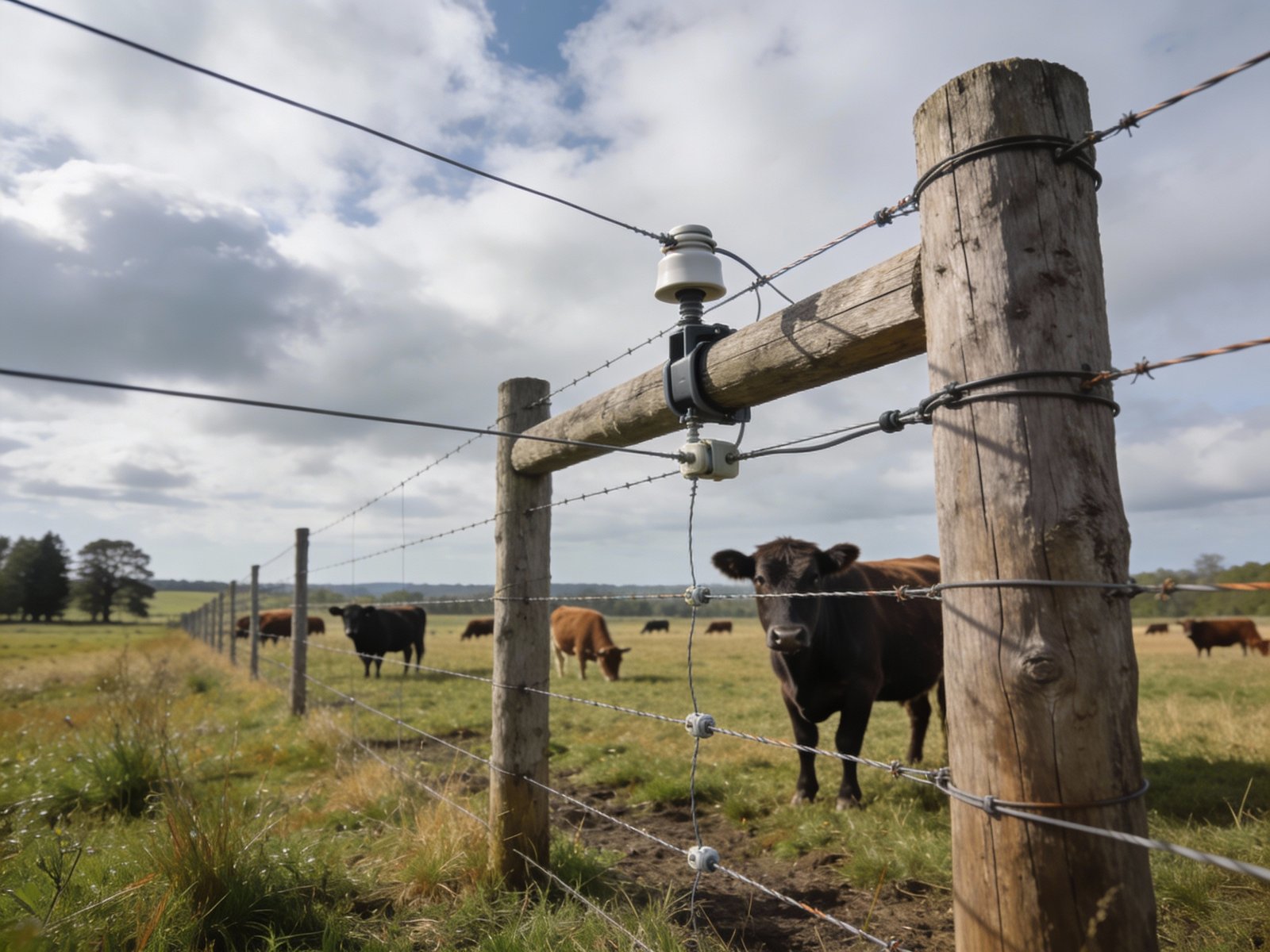
Electric fencing for cattle works as a psychological barrier: cattle learn to respect the fence after one or two encounters with the mild electrical pulse. Unlike physical barriers (barbed wire, woven wire), electric fences rely on behavior modification rather than strength, making them ideal for flexible grazing systems. The key to success is proper voltage, grounding, and cattle training.
Why Electric Fencing Works for Cattle
- Psychological barrier: Cattle learn to avoid the fence after brief, memorable encounters—not from fear or pain.
- Low maintenance: No rust, no sagging, minimal repairs compared to traditional fencing.
- Flexibility: Easy to move, reconfigure, or remove for rotational grazing and seasonal adjustments.
- Low cost: 50-70% cheaper than traditional fencing to install and operate over 25 years.
- Dual purpose: Can protect existing structures by adding a hot wire on top of barbed or woven wire fencing.
- Predator deterrent: Effective for protecting cattle from wolves, bears, and other large predators when properly configured.
Electric Fence Voltage Requirements for Cattle
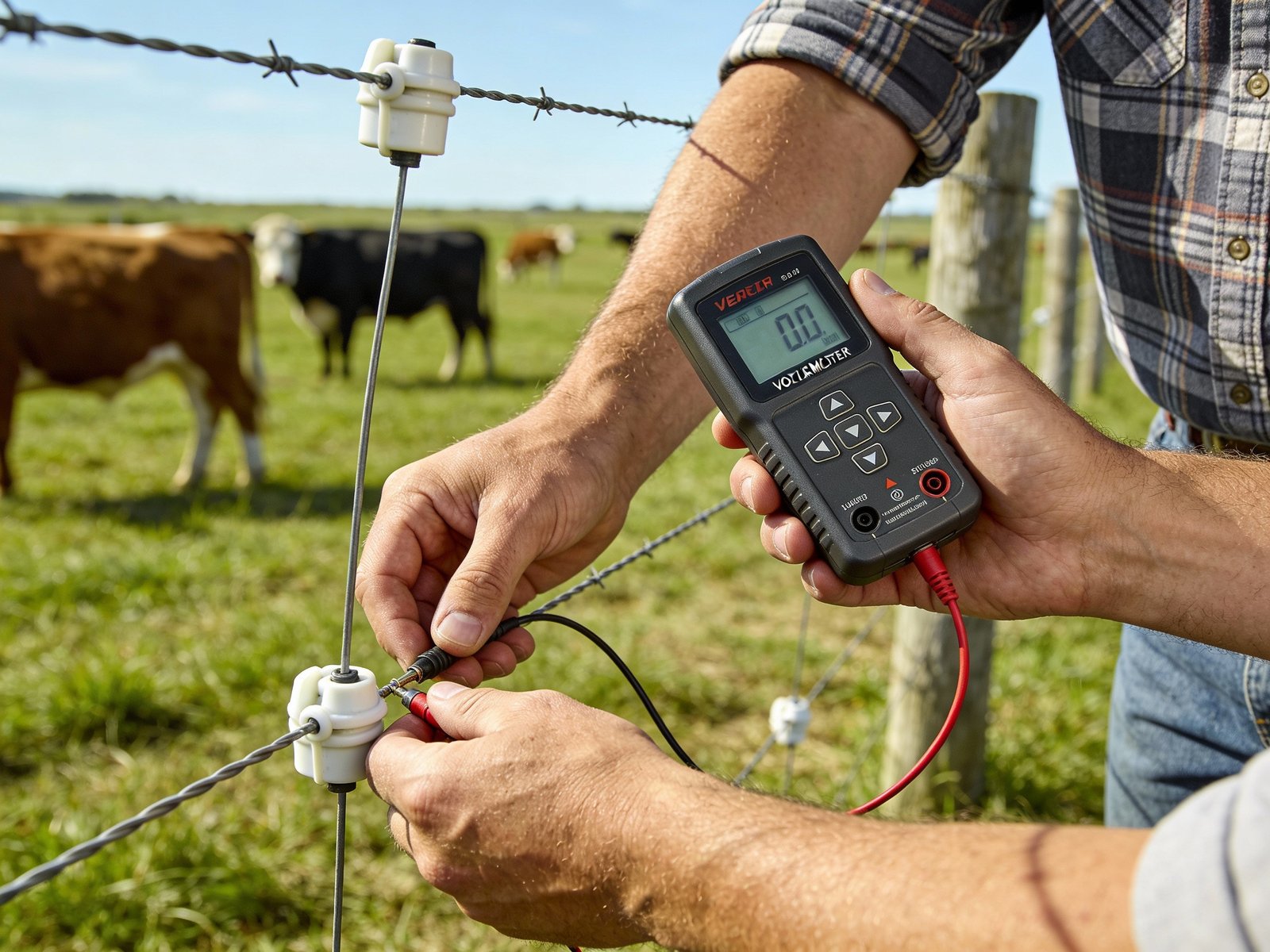
Voltage is the most critical factor in electric cattle fencing performance. Cattle require higher voltage than horses due to thicker hair coats and more challenging temperament. The voltage must be measured under load (with the fence active and animals present), not just at the charger.
| Livestock Type | Minimum Voltage | Recommended Voltage | Optimal/High-Pressure | Joules Output |
|---|---|---|---|---|
| Cattle (General) | 3,000V | 4,000-4,500V | 5,000V | 2-4J |
| Dairy Cattle | 3,500V | 4,000V | 4,500V | 2-3J |
| Beef Cattle | 4,000V | 4,500-5,000V | 5,000V+ | 3-5J |
| Bulls | 4,500V | 5,000V | 6,000V+ | 4-6J |
| Calves/Heifers | 3,000V | 3,500-4,000V | 4,000V | 1-2J |
| Horses (Reference) | 2,000V | 3,000V | 4,000V | 1-2J |
- Voltage under load: Use a digital volt meter to measure voltage at the far end of the fence when animals are present. Target 80-100% of charger voltage at the farthest point.
- Seasonal adjustment: Start with higher voltage (4,500-5,000V) in winter/spring when vegetation is low. This maintains adequate voltage as grass and weeds grow in summer.
- Vegetation load: Heavy weeds touching the wire bleed voltage. Higher output (5,000V+) ensures adequate voltage reaches the far end.
- Joules matter: Joules measure the energy/speed of the pulse. Aim for 1 joule per 1-2 miles of fence. Larger systems need 4-6 joules.
- Low-impedance energizers: Always choose low-impedance chargers (not high-impedance) to maintain consistent voltage through vegetation and long distances.
- Grounding critical: Poor grounding causes voltage loss. Use multiple ground rods and maintain resistance under 500 ohms for optimal performance.
Common Voltage Mistakes
Mistake 1: Using charger voltage instead of measured fence voltage. A 5,000V charger may deliver only 2,500V at the far end in summer with heavy vegetation—insufficient for cattle. Mistake 2: Using high-impedance “impulse” chargers designed for horses or pets. These deliver low joule output and poor reliability for cattle. Mistake 3: Insufficient grounding. Poor ground resistance causes 30-50% voltage loss and inconsistent shocking.
Electric Fence System Types: Permanent vs Temporary for Cattle
This comprehensive video demonstrates step-by-step installation of a high-tensile electric fence system, showing real farm construction from corner posts to wire tensioning. The detailed walkthrough covers post placement, H-brace assembly, wire stringing, and proper tensioning techniques—essential knowledge for anyone building permanent electric fencing for cattle containment.
Permanent Electric Fencing for Cattle
Permanent electric fencing uses fixed wooden, metal, or fiberglass posts combined with high-tensile electrified wire. It is installed once and remains in place for 20-30 years, making it ideal for perimeter fencing, long-term paddocks, and areas requiring maximum durability.
- Posts: Wooden (12-15 ft spacing), metal (15-20 ft spacing), or fiberglass (15-20 ft spacing).
- Wire: High-tensile smooth wire, 12.5 gauge, Class 3 galvanized minimum or Class 40 zinc-aluminum.
- Wire configuration: 3-5 strands spaced 12-18 inches apart for multi-strand systems, or 1 strand at 36-42 inches for single-wire setup.
- Insulators: Ceramic or polymer post insulators; end-strain insulators at corners and gates.
- Installation cost: $5,000-$15,000 per mile depending on terrain and materials.
- Annual operating cost: $100-$300 per mile (charger electricity only; minimal maintenance).
- Lifespan: 20-30 years with wire lasting longest; posts may need replacement at 15-20 years.
- Best for: Perimeter fencing, permanent paddocks, bull pens, feedlots, areas where fence won’t move.
Temporary Electric Fencing for Cattle (Portable)
Temporary electric fencing uses lightweight portable posts and poly wire or tape that can be installed and removed in minutes. It is essential for rotational grazing and strip grazing applications where daily cattle moves are standard.
- Posts: Lightweight plastic step-in posts (6-7 feet tall), fiberglass step-in posts, or metal electric fence posts.
- Wire/tape: Poly wire (4-6 mm diameter), poly tape (3/4 to 1.5 inches wide), or aluminum wire for maximum conductivity.
- Wire configuration: Single strand (36-48 inches height) for intensive rotational grazing, 2-3 strands for standard temporary systems.
- Installation cost: $500-$1,300 for a complete 200-600 meter kit with charger, posts, wire, and ground rods.
- Installation time: 30-60 minutes to erect or move a 600-meter (1,800 ft) system.
- Annual operating cost: $100-$200 per mile for charger electricity; minimal maintenance.
- Lifespan: 5-10 years for posts and wire before replacement needed; easily repaired in field.
- Best for: Rotational grazing, strip grazing, mob grazing, seasonal paddocks, rented land, flexible management systems.
Electric Fencing Cost Comparison: Permanent vs Temporary Systems
25-Year Total Cost of Ownership: Permanent vs Temporary Electric Fencing
When comparing electric fence types over 25 years, permanent systems show significant economic advantages for perimeter fencing, while temporary systems excel in rotational grazing operations due to flexibility and lower initial investment.
| Cost Factor | Permanent Electric (Per Mile) | Temporary/Portable (Multi-Paddock System) | Notes |
|---|---|---|---|
| Initial Installation | $7,500 | $1,500-$2,500 | Temporary assumes 200-600m kit; permanent includes posts, wire, charger, grounding. |
| Charger/Equipment | $800-$1,200 | $400-$800 (included in kit) | Permanent may use higher-output charger; portable charger is smaller, lower cost. |
| Annual Operating Cost | $200/yr (electricity, maintenance) | $150/yr (electricity, occasional wire replacement) | Based on charger use 6-8 months per year in temperate climate. |
| 25-Year Operating Total | $5,000 | $3,750 | Electricity and minimal maintenance only; depreciation not included. |
| Post Replacement (Year 15-20) | $2,000-$3,000 | Posts replaced every 5-7 years at $200-$400 per replacement | Permanent posts last 15-20 years; temporary posts need regular replacement. |
| Wire/Material Replacement | $500-$1,000 (25 years) | $1,000-$1,500 (poly wire replaced every 5 years) | Permanent wire lasts 25+ years; temporary wire degrades from UV exposure. |
| Labor (Installation/Moves) | One-time: 40-60 hours ($600-$900) | Recurring: 30-60 min per move, 2-5 moves per season ($500-$1,500/yr for contractor) | DIY temporary labor is minimal; contractor labor adds cost. |
| Total 25-Year Cost | $15,800-$20,100 | $8,650-$15,050 (if DIY labor), $25,000-$40,000+ (if contractor labor) | Permanent beats temporary if permanence intended. Temporary wins if rotational grazing is primary use. |
| Annual Amortized Cost | $632-$804/yr | $346-$602/yr (DIY), $1,000-$1,600/yr (contractor moves) | Permanent best for fixed perimeter. Temporary best for active rotational grazing (DIY labor). |
Electric Fence Chargers for Cattle: Types and Selection
- AC Plug-In Chargers (110V/220V): Mains-powered units; best output (4-10 joules); ideal for permanent systems near buildings. Cost: $200-$600. Requires grounded outlet within extension cord distance.
- 12V Battery Chargers: Battery-powered (rechargeable or replaceable); portable, suitable for remote areas. Cost: $150-$400. Output: 1-4 joules. Requires regular charging or battery replacement ($50-$100/yr).
- Solar Chargers: Solar panel + integrated battery; no plug or charging needed; best for permanent remote installations. Cost: $300-$600. Output: 1-3 joules. Warranty 5-10 years; no ongoing battery cost.
- Low-Impedance vs High-Impedance: Always choose LOW-impedance chargers for cattle. Low-impedance delivers consistent voltage through weeds and long distances. High-impedance (impulse) chargers designed for horses deliver weak output unsuitable for cattle.
- Joule Rating: Match joules to fence length: 1 joule per 1-2 miles for open pasture; 2-4 joules for long runs or heavy vegetation load. Larger operations (50+ cattle) use 4-6 joule chargers.
Recommended Charger Selection by Scenario
- Permanent perimeter (5+ miles): AC plug-in low-impedance charger, 4-6 joules, 5,000V output.
- Portable rotational grazing: 12V battery or solar charger, 2-3 joules, 4,000V output, included in portable kit.
- Remote paddocks (no power): Solar charger, 2-3 joules, with protective housing against UV and weather.
- Supplementary hot wire (on existing fence): Small 12V or solar charger, 1-2 joules sufficient for single-strand application.
- Bull pens/high-pressure areas: AC plug-in or large battery charger, 5-7 joules, 5,000V+ output for maximum deterrence.
Rotational Grazing with Electric Fencing: Best Practices and Benefits
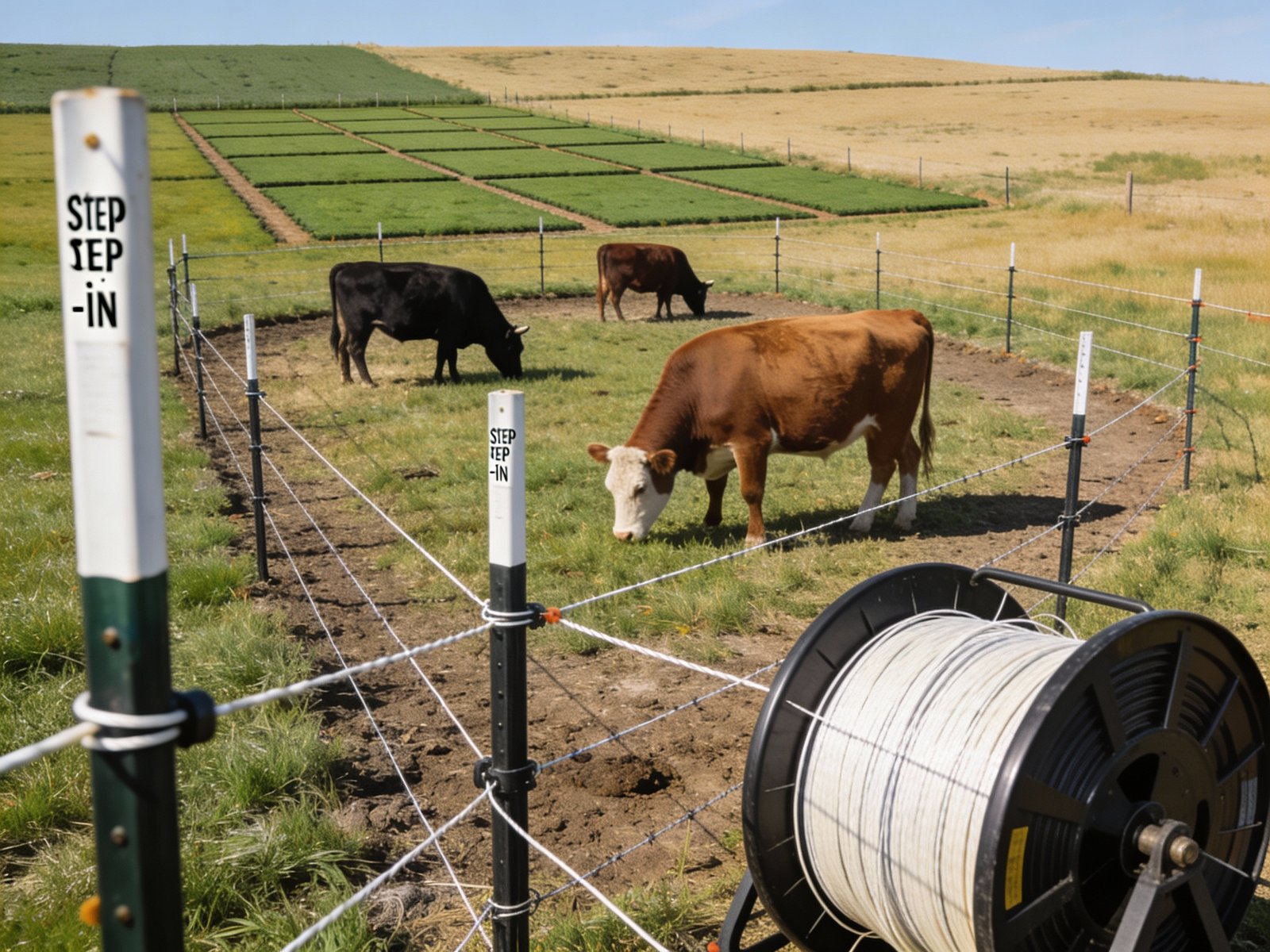
Rotational grazing with portable electric fencing is one of the most effective applications for electric fence technology. By moving cattle frequently to fresh forage, ranchers improve pasture quality, increase cattle daily weight gain, enhance soil health, and reduce parasite and disease pressure.
Strip Grazing with Temporary Electric Fence
Strip grazing involves dividing a pasture into long narrow strips with temporary electric fence. Cattle graze one strip, then move to the next. This technique maximizes forage quality by allowing cattle to selectively graze before plants set seed.
- Setup: Create 1-5 acre strips depending on cattle numbers and forage availability. Move cattle daily or every 2-3 days.
- Benefits: Increased daily weight gain (0.5-1.5 lbs/day improvement observed), reduced parasite exposure, even manure distribution, improved soil organic matter.
- Labor: 30-60 minutes per move to reposition portable fence. Highly efficient once system is established.
- Cost: $500-$1,500 for portable kit covers 600-1,200 meters of fencing. Move cost: $50-$100/move if contractor, zero if DIY.
- Wire configuration: Single strand at 36-42 inches (nose height) for standard cattle; 2-3 strands for mixed livestock or high-pressure areas.
Mob Grazing with Electric Fencing (Adaptive Multi-Paddock Grazing)
Mob grazing (AMP) is intensive rotational grazing with very small paddocks and frequent moves (daily or multiple times per day). This is the most aggressive form of rotational grazing and dramatically improves soil health and forage regeneration.
- Paddock size: 0.25-1 acre per paddock; cattle may be moved 2-5 times per day depending on forage and weather.
- Benefits: Maximum soil organic matter accumulation through trampling and manure; superior forage recovery; 30-50% increases in pasture production over time; reduced need for supplemental feed.
- Equipment needed: Multiple temporary electric fence kits, or very efficient system allowing quick moves (aircraft cable + reels for large operations).
- Labor: 10-30 minutes per move for standard temporary fence. Aircraft cable systems can move 1/4 mile of fence in 10-15 minutes with power tools.
- Cattletraining: Essential—cattle must respect hot wire completely. Calves should be trained from birth for best results.
- Results observed: 20-40% improvement in daily weight gain; pasture improvement visible within 1-2 years; reduced hay feeding need.
Electric Fencing Benefits in Rotational Grazing
- Flexibility: Move fencing in minutes to match pasture recovery and cattle appetite. Adjust paddock size daily if needed.
- Psychological barrier: Works without physical barrier risk to cattle; reduced injuries compared to forcing cattle through tight spaces.
- Extended perimeter containment: Single strands can subdivide very large areas (20-40 acres) with minimal materials.
- Training benefit: Cattle trained to electric fence are easier to move, manage, and contain in any situation.
- Labor efficiency: Once trained, cattle require minimal supervision. Move time is 20-60 minutes per day for most systems.
- Economic benefit: Faster cattle gains reduce finishing time by 20-30 days; improved pasture health reduces feed cost.
Training Cattle to Respect Electric Fencing
Successful electric fence containment depends entirely on cattle training. Cattle that don’t respect the fence will test it repeatedly, risking breaks and escape. Proper training creates lasting behavior change.
- Start early with calves: Calves trained young learn to respect hot wire for life. Adult cattle require more repetition but can still learn.
- Confined area training: Place cattle in a small paddock (1-5 acres) with active electric fencing for 1-3 days before turning out to larger areas. They will investigate and learn quickly.
- Adequate voltage: Use 4,000-5,000V during training; cattle learn faster with memorable shocks. Lower voltage requires more encounters to learn.
- Visible markers: Use bright flags or tape on the fence every 10-20 feet. Cattle can see the fence and learn to avoid it without testing.
- Water and shade inside fence: Keep cattle motivated to stay in paddock by providing water and shelter. Never use electric fence to keep cattle from critical resources.
- Multiple encounters: Most cattle need 3-5 light shocks before reliably respecting the fence. Expect some test encounters during first week.
- Positive reinforcement: If cattle discover fresh forage within fenced area, they associate fence with good grazing and respect it long-term.
Training Mistakes to Avoid
Mistake 1: Starting with low voltage (2,000-3,000V). Cattle don’t learn if shock is too mild; they may develop fence-testing behavior. Mistake 2: Training adults without prior experience. Adult cattle take longer and require more repetitions than calves. Mistake 3: Mixing trained and untrained cattle. Untrained animals may follow others through fence, creating escape opportunities. Mistake 4: Using electric fence as only barrier for dangerous situations (near roads, cliffs). Always combine with visual/physical backup.
Electric Fencing Design Specifications for Cattle
| Application | Wire Strands/Height | Wire Spacing | Post Spacing | Voltage | Charger Output |
|---|---|---|---|---|---|
| Rotational Grazing (Single Strand) | 1 strand at 36-42″ | N/A (single strand) | Portable posts: 12-15 ft | 4,000-4,500V | 1-2 joules |
| Strip Grazing (3 Strand) | 3 strands at 14″, 28″, 42″ | 14″ between strands | 15-20 ft (temporary) | 4,000-5,000V | 2-3 joules |
| Permanent Perimeter (4 Strand) | 4 strands at 12″, 24″, 36″, 48″ | 12″ between strands | 12-15 ft (wood), 15-20 ft (metal) | 4,500-5,000V | 4-6 joules |
| Bull Pens (5-6 Strand Heavy) | 5-6 strands at 8-10″ intervals, 48-60″ total | 8-10″ between strands | 8-12 ft (heavy posts) | 5,000-6,000V | 5-7 joules |
| Single Hot Wire on Existing Fence | 1 strand at 36-40″ (nose height) | N/A | As per existing fence | 3,500-4,000V | 1-2 joules |
| Water Trough Protection (Bulls) | 1 strand at 36-40″ (chest height) | N/A | 4-6 ft around trough | 4,000-5,000V | 2-3 joules |
Proper Grounding for Electric Cattle Fences
Grounding is critical but often overlooked. Poor grounding causes 30-50% voltage loss and inconsistent shocking, leading to cattle learning the fence is unreliable and testing it repeatedly.
- Ground rod specifications: Use 3/4-inch diameter, 8-10 feet long (or 2 rods if soil is dry/sandy). Drive fully into ground with 4-6 inches above soil for connection.
- Rod placement: Install ground rods 10-15 feet away from charger (perpendicular to fence line). Multiple rods: space 15-20 feet apart.
- Soil resistance target: Measure resistance with multimeter; goal is under 500 ohms. In dry soils, may need 3-4 rods to achieve this.
- Conductor: Use heavy copper wire (2-4 gauge) from charger ground terminal to ground rod. Bare wire, not insulated.
- Wet soil advantage: Moist soil provides better grounding. In dry climates, water ground rod area in summer or use conductive gel to improve contact.
- Return circuit: In portable systems with multiple chargers, ensure each has independent ground rods. Connecting chargers in series creates problems.
Electric Fencing for Cattle: Frequently Asked Questions
What voltage is recommended for electric cattle fencing?
The recommended voltage for electric cattle fencing is 4,000-5,000 volts measured at the far end of the fence (not the charger output). Start with 4,500-5,000V at the charger to account for voltage drop due to vegetation, ground conditions, and distance. For bulls and high-pressure areas, 5,000-6,000V is preferred.
How much does it cost to install electric fencing for cattle?
Temporary portable electric fencing kits cost $500-$1,300 for 200-600 meters of fencing including charger, posts, wire, and grounding. Permanent electric fencing costs $5,000-$15,000 per mile installed. Annual operating costs are $100-$300 per mile for electricity and maintenance. Total 25-year ownership cost is typically 50-70% lower than traditional fencing due to minimal maintenance.
Can I use a single strand of electric fence for cattle?
Yes, single-strand electric fencing works for cattle in rotational grazing systems, especially if cattle are well-trained and paddock moves are frequent (daily). Single strand positioned at 36-42 inches (nose/chest height) provides adequate containment. However, 2-3 strands provide more reliable backup if an animal breaks through or damages the wire.
How long does it take to move portable electric fencing?
Standard portable electric fence systems can be moved in 30-60 minutes for a 600-meter (1,800 ft) system. This includes rolling up wire, picking up posts, and re-installing in a new location. High-efficiency systems (using aircraft cable and motorized reels) can move 0.5 miles in 10-15 minutes with proper setup. Move time depends on system size, terrain, and crew experience.
Do bulls respect electric fencing?
Yes, bulls respect electric fencing if voltage is adequate (5,000-6,000V) and they are trained properly. Bulls have excellent memory of painful experiences and generally avoid electric fence after one or two encounters. However, during peak breeding season or when in proximity to cows, bulls may test fences. For bull pens, combine electric with heavier backing fences or use multiple-strand configuration (5-6 strands at 8-10 inch intervals).
Is electric fencing better than barbed wire for cattle?
Electric fencing is superior to barbed wire in many ways: 50% lower cost to install and operate, flexible for rotational grazing, zero maintenance compared to rusted barbed wire, and safer for cattle (psychological barrier vs physical harm). However, barbed wire provides backup physical containment if charger fails. Many operations combine them—permanent barbed/woven wire perimeter with temporary electric for interior paddocks.
What happens if the electric fence charger stops working?
If the charger fails, trained cattle typically remain in their paddock for 1-3 days before testing the fence. Untrained or young cattle may push through immediately. Preventive maintenance is essential: test voltage weekly, check charger function monthly, ensure grounding resistance is below 500 ohms, and keep backup charger available. In rotational systems, brief charger outages are usually acceptable if moves are frequent.
Can I combine electric fencing with traditional barbed or woven wire?
Yes, this is common and effective. Add a single or multiple hot wires on top of existing barbed or woven wire fencing to improve containment and reduce physical pressure on the structure. This extends the lifespan of old fencing (10-15 years additional life) and improves animal safety. Cattle learn to respect the electric wire and avoid rubbing or leaning on the backing fence.
How often should I test electric fence voltage?
Test electric fence voltage weekly during grazing season and monthly during off-season. Always measure at the farthest point from the charger to identify voltage drop. Use a digital voltmeter designed for electric fence testing. If voltage drops below 80% of target (e.g., below 3,200V for a 4,000V target), troubleshoot: check for grounding issues, vegetation load, or charger malfunction. Target resistance: under 500 ohms ground resistance.