
Predator-Proof & Wildlife-Exclusion Fencing
Complete Guide to Protecting Livestock from Feral Hogs, Coyotes, Wolves & Deer Using Woven Wire, Fixed-Knot & Electric Fencing Systems
What is Predator-Proof Fencing?
Predator-proof fencing is a specialized containment system designed to exclude dangerous wildlife (feral hogs, coyotes, wolves, deer) while safely containing small livestock (cattle, sheep, goats). Unlike standard perimeter fencing (which only stops contained animals from leaving), predator-exclusion fencing adds:
- Bottom barrier: Tight mesh (2×4 inches), buried apron, or ground-level electric wire to prevent digging/burrowing
- Height optimization: 54–72+ inches depending on target predators (hogs need containment from below; deer/elk need jumping prevention from above)
- Fixed-knot wire: Prevents sagging under hog pressure (hinge-joint wire fails under animal pressure)
- Electric integration: 2–3 hot wires providing psychological deterrent + redundancy if physical barrier fails
- Durable materials: High-tensile steel, Class 2–3 galvanizing (prevents rust in 10+ years of wet conditions)
- Close post spacing: 8–10 feet maximum (vs. 12–20 ft for pasture) to resist direct animal pressure
The Multi-Layer Defense Concept
Predators use different attack methods:
- Feral hogs: Root/dig from below (leverage from underneath), ram with head and shoulders (brute force), weigh 200–400 lbs
- Coyotes: Dig under fence, squeeze through gaps, climb/jump (smaller frame = can fit through 4–6 inch gap)
- Wolves: Jump high (6+ feet), dig, coordinated group attacks (one may distract while others breach)
- Deer/Elk: Jump (white-tailed deer 7+ feet, elk 9+ feet), may repeat until successful, visual learners (find “weak spots”)
Effective predator-proof fencing stacks defenses against all methods: bottom prevention (bury/electric) → mid-level containment (woven wire mesh) → top deterrent (electric wire). This is why single-solution fencing fails—a fence that stops hogs from digging may not stop deer from jumping.
When Do You Need Predator-Proof Fencing?
High-Risk Scenarios
🐗 Feral Hog & Wild Boar Pressure
Warning signs: Fresh root marks in pasture, overturned soil in 12–24″ patches, hog wallows (mud holes), fresh droppings, footprints.
Damage: Rooting destroys pasture/hay (10–50 hog can devastate 5 acres in 2 weeks), fouls water, damages fence by pushing from below. Economic impact: $200–$500 per hog per year in crop/pasture damage.
Fence need: 48–54″ minimum with buried apron or bottom electric wire mandatory.
🐺 Coyote & Wolf Pressure
Warning signs: Livestock killed (throat/leg bites), coyote scat (often on fence line or “territorial markers”), howling at dusk/dawn, pawprints in mud.
Damage: Small ruminants (lambs, kids, calves) are primary targets. One coyote can kill 5–10 animals per night. Pack attacks can kill adult cattle. Loss per attack: $200–$2,000 per animal.
Fence need: 54–60″ with 2×4″ bottom mesh (prevents squeezing through) + electric backup recommended.
🦌 Deer & Elk Pressure
Warning signs: Obvious: deer tracks in mud, vegetation browsed at head height (5–8 feet), fawns in pasture, hoof prints on fence (indicates jumping).
Damage: Deer consume 5–7 lbs forage daily, damage high-value crops/hay. Transmit diseases (Chronic Wasting Disease, foot rot). Loss: $50–$500 per deer per year depending on pasture value.
Fence need: 72–96″ solid fence OR 5–6 ft fence with electric top wire(s) to create perceived height.
⚠️ Mixed Predator Environment
Most common scenario: Hogs + coyotes + deer in same geographic area (South, Midwest, parts of West).
Challenge: Single fence type may stop one predator but not others. Hogs need bottom defense, deer need height, coyotes need tight mesh.
Solution: Layered system—54–60″ woven wire (2×4 bottom) + buried apron + 2–3 electric wires at different heights.
Operation-Specific Situations
- Pasture near woodline/river: Natural predator habitat. Risk automatically high. Priority installation area.
- Breeding season (spring): Ewes with lambs, cows with calves = high-value, vulnerable livestock. Predator-proof those paddocks first.
- Night penning (optional but smart): Small livestock (sheep, goats) moved to secure pen at dusk. Predator-proof pen prevents loss of entire flock in one night attack.
- Feedlot/fattening area: Concentrated high-value animals draw predators. Perimeter fence + internal sorting areas all need predator specs.
- High-dollar genetics: Registered breeding stock, show animals, foundation animals justify premium fencing cost ($10,000–$20,000+).
Fence System Options for Predator-Proof Fencing
Four proven systems dominate predator-exclusion fencing. Each trades cost vs. durability vs. maintenance requirements:
Fixed-Knot Woven Wire + Electric (Balanced)
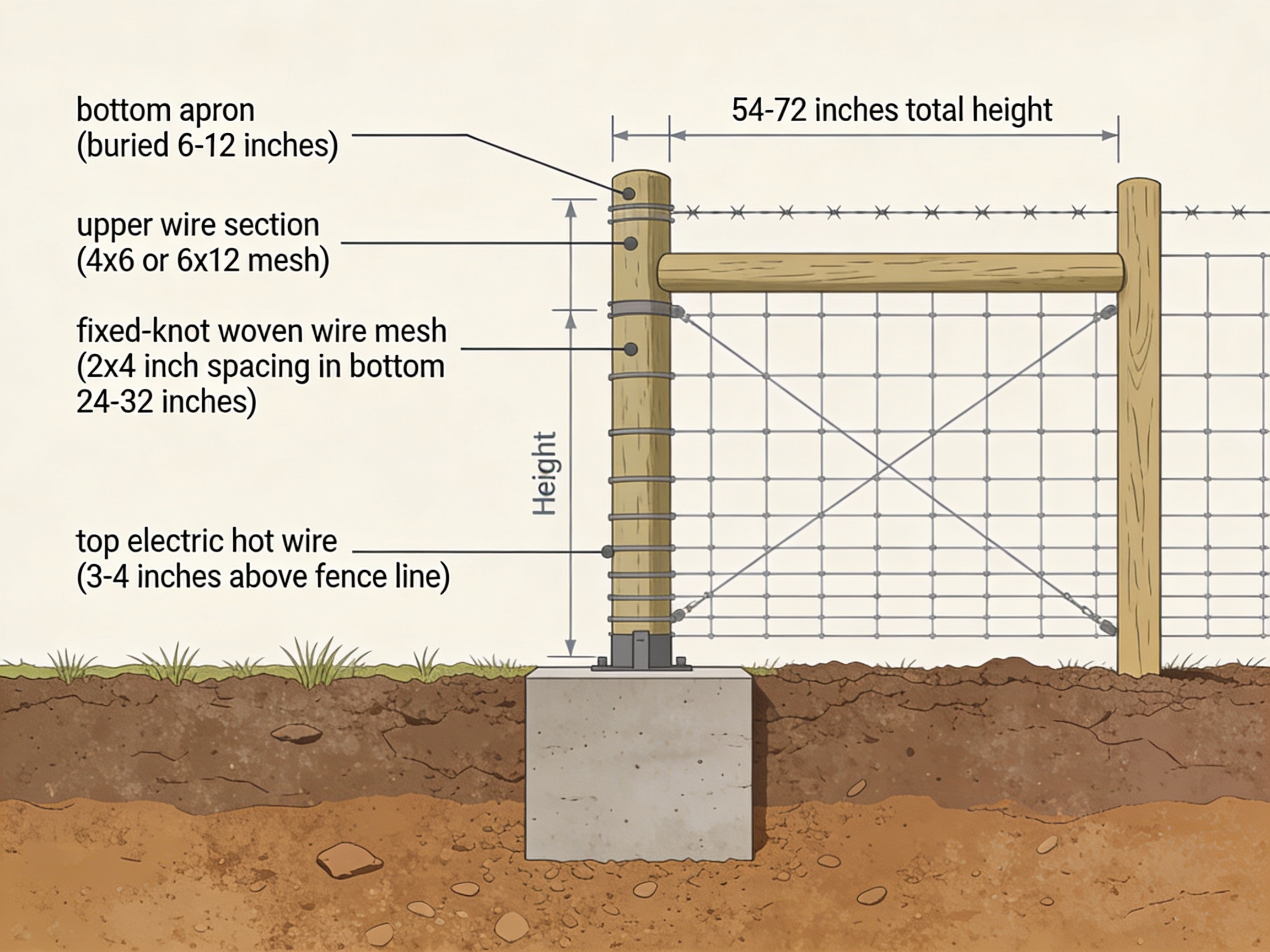
Construction: High-tensile fixed-knot woven wire (47–54″), 2×4″ mesh bottom 24–32 inches, 4×6″ or 6×12″ upper section. 2–3 electric hot wires (6–8″, 24″, 40–48″). Concrete-set posts 8–10 ft spacing.
- Mixed hog/coyote pressure
- Breeding pastures (lambs, calves)
- Medium-sized operations
- Cost-conscious farms
- Areas where maintenance possible
- Requires consistent electric maintenance
- May sag if hinge-joint used (must be fixed-knot)
- Lifespan 10–15 years vs. 25+ for steel
- Less intimidating (animals test it more)
Cost: $4.50–$7.00/ft installed
High-Tensile Electric Only (Portable/Temporary)
Construction: 5–8 smooth high-tensile wires, offset/outrigger design, varying heights (6″, 12″, 24″, 40″, 60″+). Portable or semi-permanent posts. No physical barrier—relies 100% on shock.
- Temporary protection (night pen, holding area)
- Rotational/portable grazing
- Short-term crop/garden protection
- Supplement to perimeter fence
- Low-density wildlife pressure
- No physical fallback if electric fails
- Hogs may push through (thick skin)
- Requires excellent maintenance
- Soil conductivity critical
- Inadequate for confirmed predator area
Cost: $2.00–$3.50/ft material only
Pipe & Panel + Electric (Premium)
Construction: Welded steel pipe/panel system (1-gauge wire, 60–72″), 2–3 electric hot wires on top (40–48″, 60″+). Concrete-set posts 8–10 ft. Heavy-duty frame. 25+ year lifespan.
- High-value breeding stock
- Permanent installations
- Severe predator pressure
- Professional ranches
- Zero-tolerance livestock loss
- Highest upfront cost
- Requires excavation/concrete
- Heavy (needs equipment to move)
- Rust maintenance required
Cost: $400–$700/panel installed ($40–$70/ft)
Woven Wire Hybrid (Hog + Deer)
Construction: 8-foot wildlife fence (woven wire, larger upper mesh), 2–3 electric hot wires, apron OR buried bottom wire. Optimized for white-tailed deer exclusion + hog bottom defense.
- Deer-heavy areas (South, East)
- Hog + deer mixed pressure
- Garden/orchard protection
- Valuable crops/hay protection
- Material-intensive (8 ft tall)
- Moderate cost
- May be overkill for coyote-only areas
Cost: $8.00–$12.00/ft installed
Quick System Comparison Table
| System Type | Height | Cost/ft | Primary Defense | Lifespan | Best Predators |
|---|---|---|---|---|---|
| Fixed-Knot + Electric | 54–60″ | $4.50–$7.00 | Physical + Shock | 10–15 yrs | Hog, Coyote |
| High-Tensile Electric | 60–72″ | $2.00–$3.50 | Shock only | 5–10 yrs | Coyote, Deer |
| Pipe & Panel + Electric | 60–72″ | $40–$70 | Physical + Shock | 25+ yrs | All (hog, coyote, deer) |
| 8 ft Wildlife Fence | 96″ | $8.00–$12.00 | Physical height | 10–15 yrs | Deer, Elk primary |
Species-Specific Design Requirements
🐗 Feral Hog / Wild Boar Fencing
Threat Profile: 200–400 lb rooting pressure, leveraging from below, shoulder/head ramming force ~1,500 lbs. Root 10–50 inches deep. Can breach weak fence in minutes.
Minimum Specifications
- Height: 48–54″ (hogs don’t jump high, focus is below-ground attack)
- Mesh/Wire: 2×4″ at bottom 24–36″, then larger (4×6″ or 6×12″) above
- Bottom Defense (Choose One):
- Buried Apron: Fold bottom 12″ of wire 90° outward, bury 6–8″ deep (creates L-shaped barrier hog can’t get leverage under)
- Subsurface Wire: Dig 6–8″ trench, lay heavy wire or mesh, cover with soil (prevents root drilling)
- Electric Wire (Backup): 1 hot wire 6–8″ above ground on OUTSIDE of fence (prevents hog from testing/rooting at base)
- Post Spacing: 8–10 ft maximum (hog weight concentrates on small area)
- Posts: 6″ wood or 2.5″ steel, concrete-set 30″ minimum, 8 ft spacing
- Corner Bracing: 9-gauge diagonal wire or cross-braces (mandatory—hogs test corners)
Why This Works
Hogs use leverage—they get their snout under the fence bottom and push/lift upward. A buried apron or subsurface wire removes the “fulcrum” they need to push fence up. Electric wire at ground level teaches hogs to avoid the fence base entirely. Multi-layer defense (physical + electrical) is most effective.
🐺 Coyote & Wolf Fencing
Threat Profile: 30–50 lb coyote (vs. 100–150 lb wolf), digging capability (3–4 feet deep), squeezing through small gaps (4–6 inches), climbing fence (fence height less relevant). Pack attacks coordinated.
Minimum Specifications
- Height: 54–60″ (prevents climbing, creates visual barrier)
- Mesh/Wire: 2×4″ or smaller from bottom to 32–36″ height (prevents squeezing). Larger (4×6″ or 6×12″) above is acceptable.
- Bottom Defense (Choose One):
- Buried Apron (6–12″): Same as hog defense (prevents coyote dig-under)
- Offset Outrigger: Horizontal arm extending 12–18″ OUTWARD at base with hot wire (prevents coyote from getting purchase to dig)
- Bottom Electric: Hot wire 6–8″ above ground + 1 wire 12″ high (creates shock zone at dig/snout height)
- Top Electric: 1–2 hot wires 48–60″ height (prevents climbing, teaches psychological barrier)
- Post Spacing: 8–10 ft maximum
- Solid vs. Mesh: Solid fence (board, sheet metal) preferred for predator pens—prevents coyotes from seeing through and judging distance to prey
Why This Works
Coyotes are smart diggers and climbers. Offset outriggers prevent them from getting leverage to dig. Solid sides reduce panic in prey animals (they can’t see the coyote preparing to attack). Small mesh gaps at bottom prevent squeeze-through. Electric provides backup—if one layer fails, next layer catches them.
🦌 Deer & Elk Exclusion
Threat Profile: White-tailed deer jump 7+ feet (some records 8–9 feet), elk jump 9+ feet. Can clear 6-foot fence if confident. Visual learners—find “weak spots” and return repeatedly. Low threat to adult cattle but devastate small livestock and crops.
Minimum Specifications
- Height (Deer): 8 feet minimum solid fence, OR 5–6 feet fence + electric top wires creating perceived height of 7–8 feet
- Height (Elk): 9 feet minimum solid fence recommended (elk are 5 feet at shoulder, powerful jumpers)
- Design for Deer:
- Solid Perimeter: No visible “landing zone” inside (deer judge jump feasibility). Use 8 ft woven or board fence (solid all the way up)
- Electric Alternative: 5–6 ft fence + 2 electric wires at 40″ and 60″ heights (perceived total height ~7–8 ft, shock deters jumping)
- Mesh Type: Larger mesh OK (4×6″ or 6×12″)—deer don’t squeeze, they jump
- Posts: 6 ft spacing (prevents sagging that creates jump-able dips)
- No Gaps/Weak Points: Eliminate low spots, corner gaps, weak sections—deer exploit any opening. Continuous inspection required.
Why This Works
Deer are behavioral learners—they test fences and remember weak spots. A solid 8-foot fence with no visible landing zone makes them less likely to attempt jump. Electric wires add shock deterrent. Combined approach (physical height + shock training) is most effective. Note: Deer in agricultural areas are persistent; temporary/portable fences will fail.
⚠️ Mixed Predator Environment (Hog + Coyote + Deer)
Design Challenge: Single fence type cannot optimize for all three threats. Solution is layered system.
Recommended “Triple-Threat” System
| Zone / Height | Material & Specs | Purpose |
|---|---|---|
| Below Ground (0–8″) | Buried apron (fold fence 90° outward, bury 6–8″) OR subsurface wire | Stop hog rooting / coyote digging |
| Ground Level Electric | 1 hot wire 6–8″ above ground (outside fence) | Shock deterrent for nose-level predators (hog, coyote) |
| Mid Section (0–32″) | 2×4″ tight mesh (fixed-knot woven) | Prevent coyote squeeze-through, hog small-gap exploitation |
| Upper Mid (32–48″) | 4×6″ or 6×12″ mesh (can be woven or electric) | Livestock containment, still prevents large-hole breaches |
| Mid Electric Wire (24″) | 1 hot wire 24–32″ high | Shock for mid-height contact (coyote head/body, cattle chest) |
| Top Section (48–60″) | Fixed-knot woven or smooth wire, 54–60″ total height | Prevent deer from jumping cleanly, visual barrier |
| Top Electric (48–60″) | 1–2 hot wires at 48″ and 60″ heights | Shock deterrent for jumping / climbing, prevents deer from testing fence top |
Total Effective Height
Physical fence: 54–60″ | Electric wires: 6–8″, 24″, 48″, 60″ | Buried apron: 6–8″ below ground | Total Protected Zone: 8″ below ground to 60″ above ground
Cost-Benefit Analysis
Mixed predator system (54–60″ woven wire + 3 electric wires + buried apron): ~$6,000–$8,000 per 200 linear feet installed. This is 1.5–2× cost of single-threat fence, but provides protection against hogs, coyotes, AND prevents deer damage. For operations with confirmed mixed pressure, this is the most economical long-term solution (one fence serves all purposes).
Key Design Specifications
Height & Mesh Summary by Target Species
Feral Hog Only
Height: 48–54″
Bottom Mesh: 2×4″ (24″)
Electric: 1 wire @ 6–8″ below top
Coyote Only
Height: 54–60″
Bottom Mesh: 2×4″ (32–36″)
Electric: 2 wires (mid + top)
Deer Only
Height: 72–96″ solid
Mesh: 6×12″ acceptable
Electric: Optional (1–2 top)
Hog + Coyote
Height: 54–60″
Bottom Mesh: 2×4″ (32″)
Electric: 2 wires (low + mid)
Hog + Coyote + Deer
Height: 60–72″
Bottom Mesh: 2×4″ (32″)
Electric: 3 wires (low, mid, top)
Deer + Elk
Height: 96″+
Mesh: 6×12″ or larger
Electric: 1–2 wires (top)
Post Specifications (Critical for High Pressure)
Wood vs. Steel T-Posts
| Factor | Wood Posts (Treated) | Steel T-Posts |
|---|---|---|
| Size | 6″ diameter (predator pens) or 4–5″ (pasture) | 2.5″ width, 14-gauge minimum |
| Depth in Ground | 30–36″ minimum (1/3 of fence height) | 24–30″ minimum (deeper for clay soil) |
| Setting Method | Concrete (80 lb bags, 3–4 per post) | Drive or concrete (drive = shallow, less stable) |
| Spacing | 8–10 ft for predator pens | 8–10 ft for predator pens |
| Lifespan | 15–25 years (depends on treatment, soil pH, moisture) | 20–40 years (no rot, rust possible) |
| Cost | $15–$40/post material | $20–$50/post material |
Critical Requirement
Predator-proof fencing REQUIRES concrete-set posts. Never use simple driven posts for permanent predator fencing. Driven posts shift under animal pressure, creating gaps. Concrete set to 30–36″ depth creates immobile anchor—critical when 2,000 lb hog is testing the fence.
Wire & Material Specifications
- Fixed-Knot Woven Wire (Recommended): 9–11 gauge, fixed-knot construction (NOT hinge-joint), Class 2–3 galvanizing, 12″ stay spacing. Sag-resistant under pressure.
- Electric Wire: 12.5–14 gauge smooth high-tensile, galvanized. 3–4 inches above physical fence or livestock nose height (~48″ for cattle). Never use rusty wire (loses conductivity).
- Pipe & Panel (Steel): 1-gauge or 0-gauge welded wire, 6×6″ mesh, galvanized-before-welding (prevents rust at welds). 2.5″ diameter frame minimum.
- Galvanizing Class: Class 1 = 2–3 years rust-free (budget). Class 2 = 5–10 years rust-free (mid-grade). Class 3 = 10–20+ years rust-free (premium, recommended for predator pens). Verify with supplier.
Bracing & Corner Design
- Corner Brace (Mandatory): Every corner requires 9-gauge diagonal wire or 2×6 lumber cross-brace. Corners are first point of failure under predator pressure (concentrated force on two posts).
- End Post Brace: All fence “ends” (dead ends, T-junctions) require bracing. Never leave an end post unbrace—it will tip under tension.
- Brace Angle: Diagonal from top of one post to bottom of adjacent post (45° angle ideal). Creates triangulated strength.
- Common Mistake: Installing fence without corner braces “to save money.” Results in fence sagging/failing within 1–2 seasons. Never economize here.
Design & Installation Best Practices
Phase 1: Assessment & Planning
- Identify Predator Type(s): Which animals are confirmed/suspected? (Hog holes in pasture? Coyote scat? Deer tracks on fence?) This determines height, mesh, electric requirements.
- Measure Perimeter: Exact linear feet needed. Document terrain changes (slopes = deeper post setting on downhill).
- Gate Placement: Minimum 2 gates per pen, preferably 3+ for working areas. Gates swing AWAY from animal (inward swing = handler trap). Heavy-duty hinges required ($50–$100 per gate).
- Mark Post Locations: 8–10 ft spacing. Use paint/flags on ground. Account for terrain (holes, rocks = move posts slightly to avoid).
- Call Before Digging: Utility locate service (free, usually 48-hour notice). Critical if concrete post setting planned.
Phase 2: Material Selection & Ordering
- Choose Fence Type: Based on predator pressure, budget, and permanence. Fixed-knot woven + electric is balanced choice for most operations.
- Calculate Material Quantities:
- Wire/panels: Linear feet of perimeter
- Posts: (Perimeter ÷ post spacing) + 2 extra for damage/mistakes. Example: 200 ft perimeter ÷ 10 ft spacing = 20 posts, order 22
- Concrete: 3–4 bags per post (80 lb bags standard)
- Bracing: 9-gauge wire or 2×6 lumber for every corner + ends
- Gates: 2–3 minimum, heavy-duty rated 1,000+ lb
- Electric (if using): Energizer (5,000–8,000V), insulators, wire, grounding rod
- Order Early: Predator fence materials often back-ordered. Order 4–6 weeks before installation date.
Phase 3: Installation (Summary)
- Set Corner Posts FIRST: Concrete to 36″ minimum depth. Allow 48 hours cure before attaching fence.
- Set Line Posts: Concrete or heavy-duty drive (if soil allows). 8–10 ft spacing exactly.
- Install Bracing: Diagonal wire/cross-braces before hanging fence (easier access).
- Attach Fence: Use bolts (pipe & panel) or clips (portable). Tension properly (no sagging). Work from corners outward to gates.
- Install Gates: Heavy-duty hinges, bolt latches (not chain). Swing away from animal. Test closure multiple times before putting animals in pen.
- Install Electric (if using): Hot wires at specified heights, grounding rod 8+ feet from fence, insulators every 4–6 feet, warning signs every 50 feet. Test with voltmeter (minimum 4,000 volts under load).
- Final Inspection: Walk entire perimeter, check for gaps, loose bolts, sagging sections, gate function. Push on fence physically—should NOT move.
Key Installation Tips
- Apron Installation (if used): Fold bottom 12″ of woven wire 90° outward BEFORE post setting. This prevents disturbance during concrete work. Bury to 6–8″ depth, cover with soil.
- Concrete Depth: Measure from bottom of post hole to ground level. Should equal 1/3 of fence height above ground (e.g., 60″ fence = 20″ above ground + 30–36″ below ground minimum).
- Post Alignment: Use string line between corners to keep line posts perfectly vertical. Crooked posts create gaps over time.
- Wire Tension: Woven wire should NOT be “drum-tight.” Slight sag is normal and reduces stress on posts. Over-tensioned wire snaps when animals climb or trees fall on it.
Cost Analysis & Budget Planning
Predator-Proof Pen Setup (200 linear feet, mixed threat system)
Scenario: Mixed hog + coyote + deer pressure. Fixed-knot woven wire + electric + apron system.
Material Cost Breakdown
- Fixed-Knot Woven Wire (54″, 200 ft @ $4/ft) $800
- Posts (25 @ $80/post concrete-set ready) $2,000
- Concrete & Setting (200 80-lb bags @ $5) $1,000
- Corner/End Bracing (9-gauge wire, hardware) $300
- Gates (2 × 4-5 ft heavy-duty @ $250 each) $500
- Electric System (energizer, wire, insulators, rod) $1,500
- Labor (16–20 hours DIY or $50–$75/hr hired) $800–$1,500
- TOTAL INSTALLED $6,900–$7,600
Per linear foot: $34.50–$38 | Per animal (single pen): $6,900–$7,600
Cost Comparisons by System Type (200 linear feet)
Budget Option: Electric Only
Total: $2,500–$3,500
Per ft: $12.50–$17.50
High-tensile smooth wire, multi-strand electric, minimal bracing. Best for temporary/portable use.
Mid-Range: Fixed-Knot + Electric
Total: $6,900–$7,600
Per ft: $34.50–$38
Recommended balanced system for mixed predator pressure. Physical + shock combination.
Premium: Pipe & Panel + Electric
Total: $10,500–$14,000
Per ft: $52.50–$70
Maximum durability, 25+ year lifespan, professional appearance. Worth for high-value breeding stock.
Deer-Focused: 8 ft Wildlife Fence
Total: $8,000–$12,000
Per ft: $40–$60
Full-height solid deer exclusion. Expensive but effective for heavy deer pressure.
Hidden Costs (Budget 10–20% Buffer)
- Concrete Truck Delivery: $150–$300 per load (usually 2–3 loads for 200 ft pen)
- Equipment Rental: Post-hole auger ($100–$200/day) or excavator ($300–$500/day)
- Gate Hardware Upgrades: Heavy-duty hinges + bolts + latches ~$75–$150/gate
- Electric Maintenance: Annual energizer battery replacement ($200–$500) or solar upgrade ($1,500–$2,500)
- First-Year Repairs: Loose bolts, bent posts, sagging wire = $500–$1,500
- Professional Installation (vs. DIY): Doubles labor cost, adds $1,600–$3,200 to total
Frequently Asked Questions
Hogs: 48–54″ height with buried apron or bottom electric is critical (hogs attack from below). Height alone is insufficient.
Coyotes: 54–60″ height with tight mesh (2×4″) bottom 32–36″ is recommended. Electric backup (top + side wires) adds behavioral deterrent.
Mixed hog + coyote: 54–60″ with 2×4″ bottom mesh 32″+, buried apron, electric 6–8″ and 24″ high. This layered approach stops both ground attacks and squeeze-throughs.
Yes, easily. White-tailed deer regularly clear 6-foot obstacles. Some records show 8–9 foot jumps from standing start. Elk jump 9+ feet. For reliable deer exclusion: 8-foot solid fence minimum, OR 5–6 ft fence + 2–3 electric hot wires at 40–50″ and 60″+ heights to create psychological height perception and shock deterrent.
Key insight: Deer rarely jump without confidence. Solid fence (no visible “landing zone” inside) + electric wires reduce their willingness to test the barrier.
Layered system recommended:
- 54–60″ fixed-knot woven wire (NOT hinge-joint)
- 2×4″ tight mesh bottom 32″+ (prevents coyote squeeze)
- Buried apron 6–12″ (prevents hog rooting)
- 3 electric hot wires at 6–8″, 24″, and 48–60″ heights
- Concrete-set posts 8–10 ft spacing, corner braces on all corners
Cost: ~$35–$40/ft installed (~$7,000–$8,000 for 200 ft pen). This single system protects against all three threats simultaneously—more cost-effective than building separate fences for each predator type.
Two proven methods:
1. Buried Apron (Easiest): Fold bottom 12 inches of fence wire 90 degrees outward. Bury 6–8 inches deep creating L-shaped barrier. Prevents hog from getting leverage to push fence upward from below. Install apron BEFORE post setting (easier).
2. Subsurface Wire: Dig 6–8 inch trench parallel to fence. Lay heavy-duty wire or mesh in trench. Cover with soil. Prevents root drilling. More labor-intensive but creates impenetrable barrier.
Electric Supplement: 1 hot wire 6–8″ above ground on OUTSIDE of fence teaches hog to avoid fence base. Physical apron + electric = most effective.
NO. Electric alone is insufficient. Why? (1) Hogs have thick skin—may not conduct shock effectively, (2) Coyotes can dig under before testing electric, (3) No physical backup if animal penetrates electric, (4) Electric fails if wet/shorted out.
Best practice: Use electric as PSYCHOLOGICAL DETERRENT + backup, never as primary containment. Physical barrier (woven wire) handles direct impacts. Electric adds behavioral training—animal learns fence = pain, avoids it entirely.
Recommended approach: Fixed-knot woven wire (primary) + 2–3 electric wires (behavioral backup). If one system fails, the other catches the animal.
Maximum 8–10 feet for predator pens (vs. 12–20 ft for standard pasture fencing). Why? Predator-proof fences withstand concentrated animal pressure—a 400 lb hog ramming one section applies thousands of pounds of force. Closer posts reduce sag and distribute load. Corners and loading chutes should be 6–8 feet maximum spacing.
Post depth: Minimum 30″ in ground for 60″ fence (1/3 rule). Predator areas: 36″ minimum for extra stability. Concrete-set mandatory (driven posts shift under pressure).
FIXED-KNOT ONLY for predator applications. Hinge-joint wire sags under animal pressure—hog/coyote pushes on fence, gaps open up at knot points, animals squeeze through or push fence down. Fixed-knot is stronger, resists sagging, maintains tight mesh even under pressure.
Cost difference: Fixed-knot is 10–15% more expensive but prevents fence failure in predator applications. Short-term savings (choosing hinge-joint) lead to long-term costs (animal losses, fence repairs).
Monthly minimum (weekly during predator season):
- Visual inspection for sag, damage, gaps
- Check for digging marks/hoof prints at base
- Electric voltmeter test (minimum 4,000V under load)
- Gate function check (hinges, latches smooth)
- Look for rust spots (especially welds)
Annual: Repaint steel (rust prevention), inspect posts for rot, check concrete integrity around posts, repair any damage.
As-needed: Replace damaged panels, retension sagging wire, add bolts if loose, repair gates.
Predator fences fail due to NEGLECT, not bad design. Regular inspection catches problems early before they become breaches.
Immediate actions:
- Account for all livestock (count animals, look for injuries)
- Separate survivors if injured (to prevent stress transmission)
- Do NOT attempt to corner/chase predator alone
- Call local wildlife control if predator still in area
After-action analysis:
- Identify breach point (hole in fence, broken corner, gate gap?)
- Inspect entire perimeter for weak points
- Repair breach IMMEDIATELY (prevent second attack same night)
- Add reinforcement: electric wire, tighter mesh, burial if needed
- Document incident (photos, date, loss amount)—helps with insurance/future prevention
Prevention focus: A breach usually indicates a design/installation error. Use it as diagnostic tool—what failed? What needs upgrading?