
Common Electric Fence Installation Mistakes to Avoid
The majority of electric fencing failures are not caused by weak energizers or poor materials, but by avoidable installation mistakes. Even a high-quality system will underperform if grounding is inadequate, wires are poorly spaced, or livestock are not properly trained. This guide consolidates the most common industry mistakes into a single, actionable checklist.
This page complements the comprehensive installation guide at Installing Electric Cattle Fences, focusing specifically on preventing common errors that cause system failures. Understanding these mistakes before installation saves time, money, and frustration from day one.
Why Most Electric Fence Failures Are Installation Errors
Research and field experience consistently show that improper grounding is the single most common cause of electric fence malfunction, accounting for the majority of voltage issues on farms and ranches. The grounding system acts as an antenna to collect electrical current and complete the circuit, and without adequate ground rods properly spaced and installed, even the most powerful energizer cannot deliver an effective shock.
Beyond grounding, installation errors related to wire selection, post spacing, energizer sizing, and livestock training create cascading problems that reduce fence effectiveness. These mistakes are entirely preventable with proper planning and execution. Most farmers who report unreliable electric fencing actually have reliable equipment—what they lack is correct installation technique.
The economic impact is significant. A properly installed electric fence provides decades of service with minimal maintenance, while a poorly installed system requires constant troubleshooting, repairs, and potentially costly livestock escapes. The upfront investment in doing things correctly pays dividends in reduced labor, improved animal containment, and peace of mind.
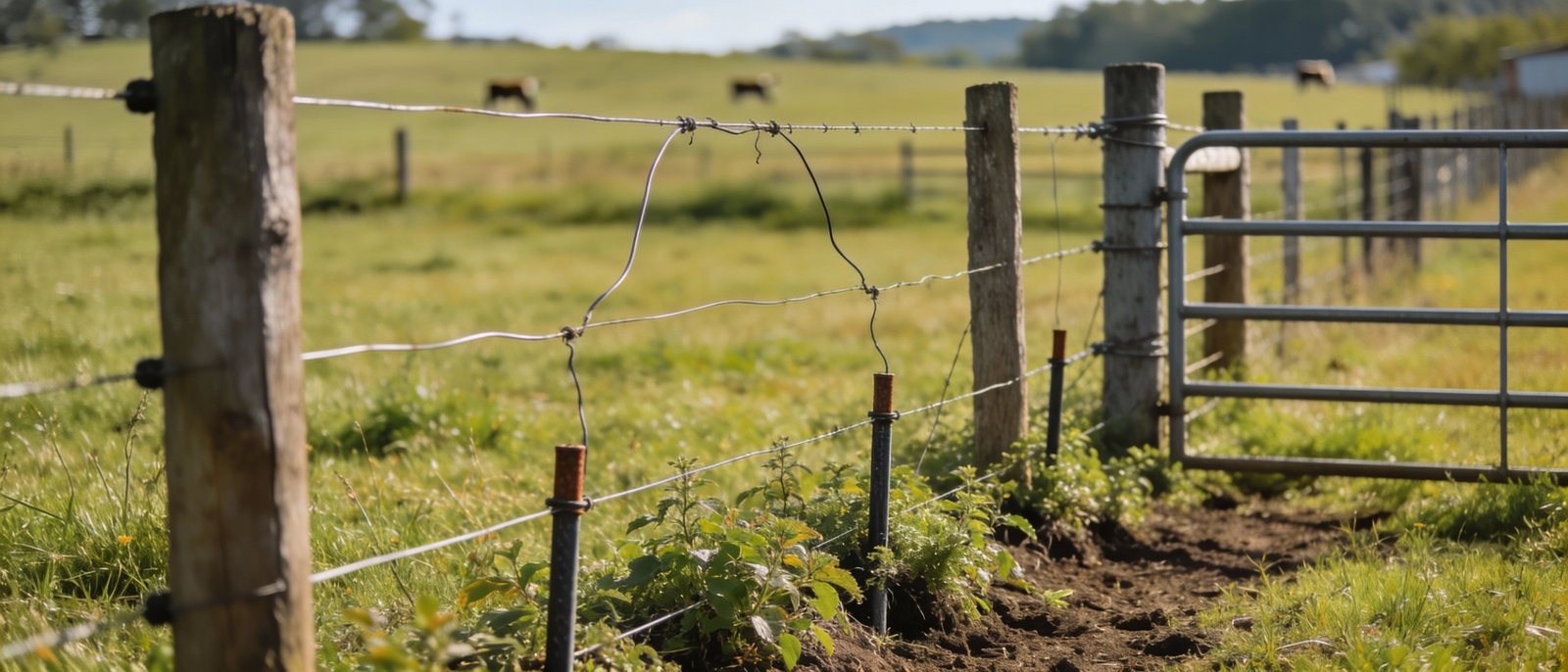
This video demonstrates common electric fence installation mistakes in real farm settings, including grounding errors, weak energizers, and wire spacing problems. It visually explains how these issues affect fence performance and shows practical ways to correct them.
The 15 Most Common Electric Fence Installation Mistakes
Inadequate Grounding
The single most common cause of electric fence failure. An inadequate grounding system means the electrical circuit cannot complete properly, resulting in weak or ineffective shocks that livestock quickly learn to ignore. Many installers underestimate grounding requirements, installing only one or two ground rods when three or more are needed.
Solution: Install a minimum of three galvanized ground rods, spaced 10 feet apart and driven 6 feet into the soil. As a general rule, use approximately 3 feet of grounding rod per joule of energizer output. In dry or sandy soil, additional ground rods may be necessary. Connect all ground rods with one continuous piece of 12.5-gauge or larger galvanized wire using proper ground rod clamps.
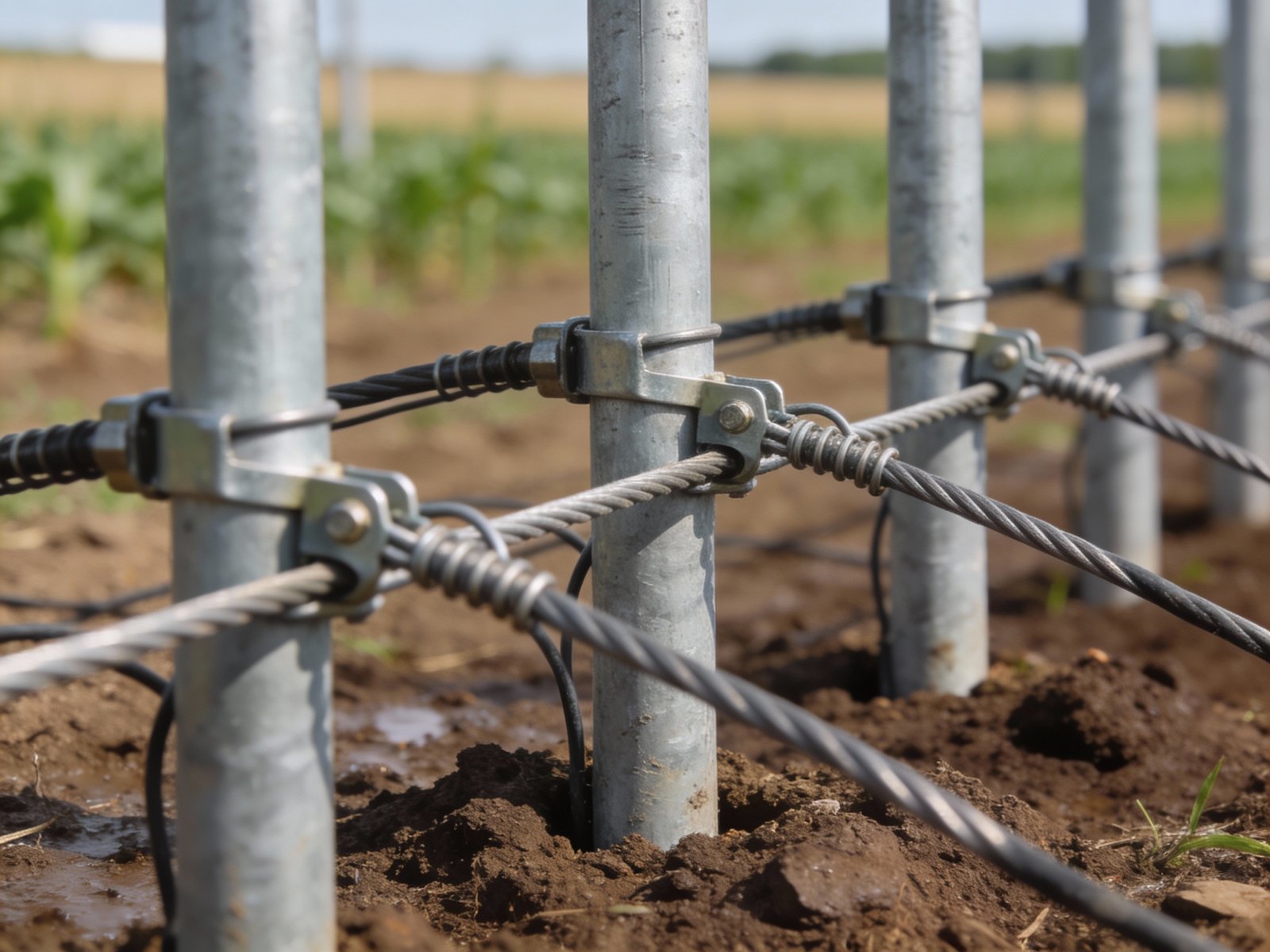
Undersized Energizer
If shock intensity is too weak, livestock will test and eventually ignore the fence. Selecting an energizer based solely on acreage or initial fence length fails to account for future expansion, vegetation interference, or the power needed to push current through long distances. An underpowered energizer forces the system to work at maximum capacity continuously, reducing effectiveness and lifespan.
Solution: Select an energizer powerful enough to push current through wet vegetation and long fence lines. Calculate total fence wire length (multiply fence distance by number of wires), then select an energizer rated well above that capacity. For fences with significant vegetation contact or in areas with poor soil conductivity, choose an energizer one size larger than minimum requirements.
Untrained Livestock
Animals encountering electric fencing for the first time may panic and escape, or they may not associate the shock with the fence boundary. Cattle, horses, and sheep require training to understand that the fence delivers an unpleasant but harmless shock. Without training, animals may run through the fence when startled or fail to respect it during periods of low voltage.
Solution: Train livestock in a controlled paddock with a physical barrier (such as woven wire or board fence) behind the electric fence before full deployment. Create a small training pen where animals encounter the electric fence while investigating feed or water. This allows them to receive a shock in a controlled environment where they cannot escape. Most animals require only one or two shocks to learn fence respect.
Posts Spaced Too Closely
Overbuilt fences waste material and reduce flexibility. New installers often assume that closer post spacing creates a stronger fence, but electric fencing relies on wire tension and psychological deterrent rather than physical barrier strength. Posts spaced 5 to 8 feet apart are unnecessarily expensive and prevent the wire from functioning as designed.
Solution: Maintain standard post spacing of 12 to 20 feet for high-tensile wire systems on relatively level ground. In undulating terrain, place posts at low points (dips) and high points (rises) first, then fill in between at regular intervals. The wire should act like a rubber band, absorbing impact and returning to position rather than breaking insulators or pulling posts from the ground.
Over-Tightened Wires
Excessive tension removes the “rubber band effect” that makes electric fencing resilient. When wire is stretched too tight, any impact from animals or falling debris transfers maximum force to insulators and posts, causing breakage. Overly tight wire is also more susceptible to breakage during temperature fluctuations as metal expands and contracts.
Solution: Tighten wires only enough to remove sag—do not overtension. High-tensile wire should have slight give when pressed. Use inline strainers or ratchet tensioners to achieve proper tension, which is generally just firm enough that the wire springs back when pushed but still has some flexibility. Proper tension varies with wire type and temperature, but the wire should never be guitar-string tight.
Bottom Wire Contacting Wet Vegetation
Grass and weeds drain large amounts of energy from electric fencing systems. A bottom wire that makes constant contact with vegetation creates a continuous short circuit, sometimes reducing fence voltage to ineffective levels across the entire system. This problem is especially severe during spring growth or in areas with persistent weeds.
Solution: Electrify bottom wires separately from upper wires and install cut-off switches for vegetation control. This allows you to turn off the bottom wire during periods of heavy vegetation growth while maintaining full voltage on upper wires. Alternatively, raise the bottom wire height to maintain at least 10 cm clearance from normal vegetation, or implement regular vegetation control along the fence line using mowing, herbicides, or grazing management.
Insufficient Wire Spacing
Wires placed too close together may short during wind or animal contact. When hot and ground wires touch, or when multiple hot wires make contact, the system loses voltage rapidly. This is particularly problematic in windy conditions or when animals push through the fence.
Solution: Maintain a minimum spacing of 5 inches (approximately 13 cm) between wires. For cattle, typical wire spacing from ground level is 6, 12, 18, 24, 32, and 42 inches for a six-wire system. Adjust spacing based on animal type and size, ensuring that animals cannot get their heads between wires without receiving a shock at nose level.
Low-Quality Insulators
Poor insulators leak power and fail prematurely. Cheap plastic insulators become brittle under UV exposure, cracking within one or two seasons and allowing wire to contact posts. Insulators that absorb moisture conduct electricity, especially during wet weather, further reducing system voltage.
Solution: Use UV-resistant, high-density polyethylene insulators rated for electric fencing applications. Quality insulators are slightly more expensive but last for decades without replacement. Porcelain insulators offer even longer service life in permanent installations, though they are heavier and more expensive. Avoid recycled or generic plastic insulators not specifically designed for electric fence use.
No Voltage Tester
Guessing voltage leads to missed failures. Without regular voltage testing, fence problems go undetected until livestock escape. Visual inspection cannot identify voltage drops caused by vegetation contact, faulty insulators, or grounding issues. Many farmers only discover fence problems after an escape incident.
Solution: Use a dedicated electric fence voltage tester to check fence performance regularly. Digital testers provide accurate voltage readings at various points along the fence line. Test voltage near the energizer and at the farthest point from the energizer monthly at minimum. Effective electric fences should maintain at least 3,000 to 5,000 volts throughout the system, depending on animal type.
Wire Diameter Too Small
Thin wires increase resistance and voltage loss over distance. While thinner wire costs less initially, it cannot carry current efficiently across long fence runs. This results in adequate voltage near the energizer but insufficient shock at distant portions of the fence.
Solution: Use 12.5-gauge high-tensile wire for permanent fences. For very long fence runs or lead-out wires from the energizer to the fence, consider 10-gauge or even 8-gauge wire to minimize resistance. The thicker the conductor, the less voltage drop over distance. While 12.5-gauge is standard, upgrading critical sections to heavier gauge improves overall system performance significantly.
Ground Rods Too Close Together
Closely spaced ground rods reduce grounding effectiveness because their electrical fields overlap. Ground rods function by creating a zone of conductivity around themselves, and if this zone overlaps with adjacent rods, the additional rods provide diminishing returns. Two ground rods spaced 3 feet apart are less effective than the same two rods spaced 10 feet apart.
Solution: Space ground rods approximately 10 feet apart. This spacing allows each ground rod to create an independent 5-foot diameter “catch field” for returning current. Use galvanized ground rods at least 6 feet long, driven completely into the ground. In dry climates or sandy soil, increase the number of ground rods rather than spacing them closer together.
Mixing Copper and Aluminum Directly
Dissimilar metals cause galvanic corrosion when in direct contact, especially in the presence of moisture. This corrosion creates high-resistance connections that degrade over time, eventually failing completely. The connection point becomes a weak link in the electrical circuit.
Solution: Use stainless steel or bronze clamps when joining different metals. Avoid direct copper-to-aluminum contact. When connecting lead-out wires to fence wire, or when connecting to ground rods, use connectors specifically designed for the metals involved. Split-bolt connectors work well for joining wires of the same metal type. For permanent connections, crimp connectors provide superior long-term reliability compared to wrapped wire connections.
No Lightning Protection
Lightning is a leading cause of energizer failure. Electric fences act as lightning attractors, conducting strikes directly to the energizer. Without proper protection, a single lightning strike can destroy an energizer and potentially damage buildings or other electrical systems connected to the same circuit.
Solution: Install lightning arrestors (also called lightning diverters) on both the fence and ground terminals of the energizer. These devices shunt excess voltage to ground during a lightning strike, protecting the energizer. Ensure the grounding system is separate from building grounding systems by at least 50 feet to prevent lightning energy from entering structures. Some high-quality energizers include built-in lightning protection, but external arrestors provide additional safety.
Installing Near Old Fences
Nearby metal fences cause repeated short circuits. Old woven wire, barbed wire, or chain-link fences that touch or come close to electrified wire create grounding points that drain voltage. Even fences several feet away can cause problems if vegetation bridges the gap or if wind causes wire contact.
Solution: Maintain sufficient separation from existing metal fences—at least 3 feet minimum, with 6 feet or more preferred. If running parallel to old fences, regularly inspect for contact points and vegetation bridges. In some cases, the old fence can be incorporated into the electric fence system by attaching it to the ground circuit, but this requires careful planning to avoid creating unintended ground loops.
Neglecting Regular Maintenance
Performance degrades gradually without routine checks. Vegetation grows, insulators crack, connections corrode, and ground rods lose conductivity as soil conditions change. These gradual changes are imperceptible day-to-day but accumulate to cause significant voltage loss over time.
Solution: Follow a structured maintenance schedule. Test voltage weekly during growing season, monthly during dormant periods. Walk fence lines to identify broken insulators, vegetation contact, and wire damage. Check all electrical connections quarterly, tightening and cleaning as necessary. Test the grounding system annually by creating a deliberate short and measuring voltage—if voltage remains above 2,000 volts with a short in place, add additional ground rods.
Recommended Electric Fence Maintenance Schedule
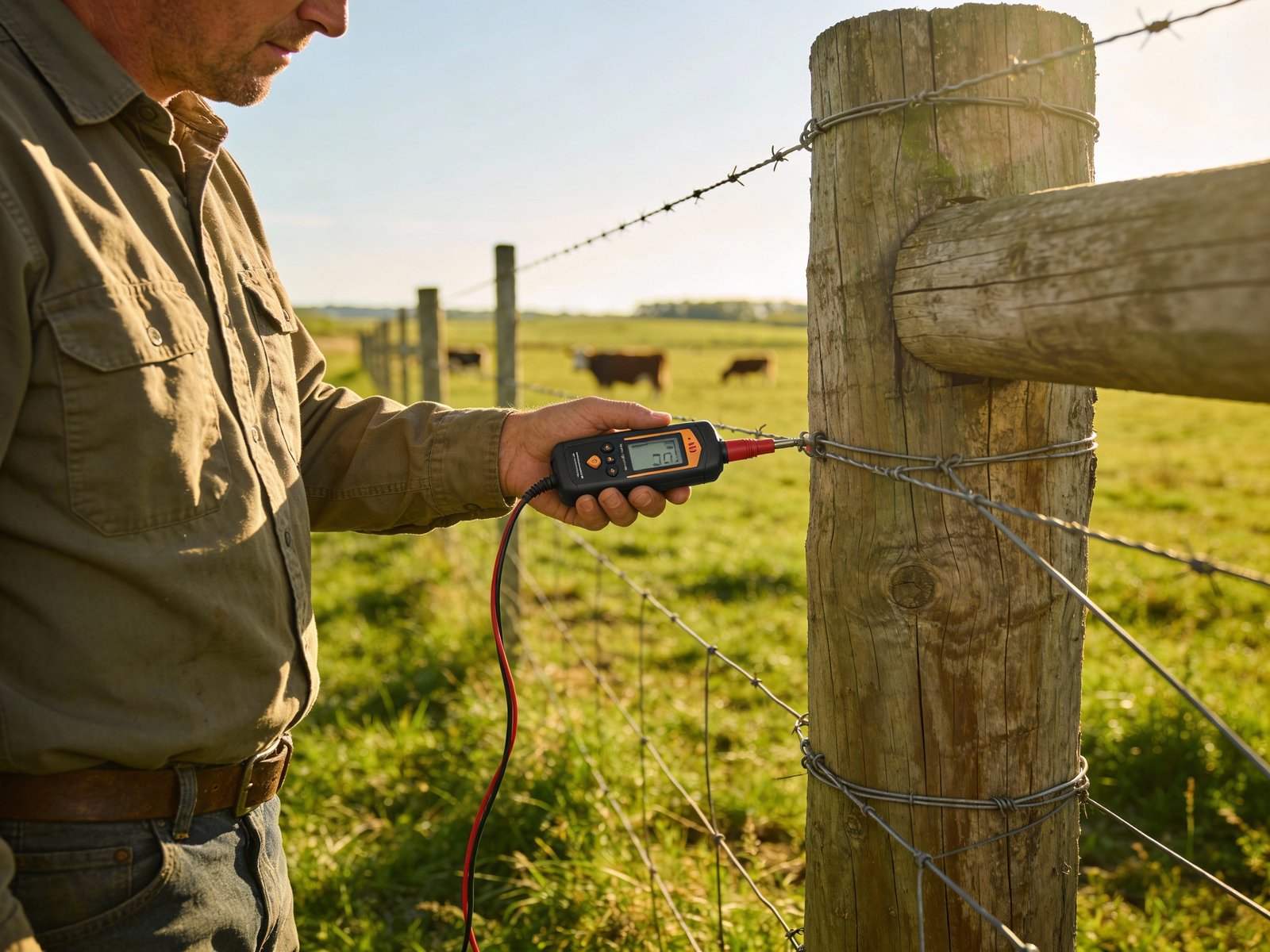
Preventive maintenance is far more cost-effective than reactive repairs. A systematic approach to fence maintenance identifies problems before they cause failures. The following schedule provides a framework for maintaining optimal fence performance throughout the year.
| Component | Daily | Weekly | Monthly | Annually |
|---|---|---|---|---|
| Voltage testing | ✓ | ✓ | ✓ | ✓ |
| Vegetation control | — | ✓ | ✓ | ✓ |
| Insulator inspection | — | — | ✓ | ✓ |
| Post alignment | — | — | ✓ | ✓ |
| Grounding system test | — | — | — | ✓ |
| Connection tightening | — | — | — | ✓ |
| Wire tension adjustment | — | — | — | ✓ |
Adjust this schedule based on local conditions. Farms in areas with rapid vegetation growth require more frequent vegetation control. Fences in coastal areas or regions with high humidity may need more frequent connection inspection due to accelerated corrosion.
Related Resources and Further Reading
For comprehensive guidance on electric fence installation, consult the main Installing Electric Cattle Fences guide. This resource provides step-by-step installation procedures, material selection guidance, and system design principles that complement the mistake-prevention focus of this page.
Technical Specifications and System Components
Understanding the technical aspects of each system component helps prevent installation mistakes. The Grounding System Design and Testing guide provides in-depth coverage of grounding rod selection, placement, and performance testing—essential reading given that grounding errors are the most common installation mistake.
Proper energizer selection is covered thoroughly in the Fence Energizer Guide, which explains how to calculate power requirements, compare energizer types, and match energizer capacity to fence length and animal type. This prevents the undersized energizer mistake that affects many installations.
Insulator quality significantly impacts long-term fence performance. The Insulator Selection and Installation guide compares insulator materials, explains UV resistance ratings, and demonstrates proper installation techniques to prevent power leakage.
Ongoing Operation and Problem Resolution
Even properly installed fences require regular maintenance and occasional troubleshooting. The Electric Fence Maintenance guide expands on the maintenance schedule presented here, providing seasonal checklists and detailed procedures for common maintenance tasks.
When problems do occur, systematic troubleshooting identifies issues quickly. The Troubleshooting Electric Fence Problems guide walks through diagnostic procedures for voltage loss, intermittent operation, and complete system failure—helping you identify which of the common mistakes may have occurred and how to correct them.
Key Takeaways for Avoiding Installation Mistakes
Bottom Line: Most electric fence problems are preventable. Correct installation saves time, money, and prevents livestock escapes from day one. The majority of fence failures result from inadequate grounding, improper energizer sizing, or poor installation technique—not from equipment defects.
The fifteen mistakes outlined in this guide represent the most common errors observed across thousands of electric fence installations. Grounding issues dominate the list because they are invisible—you cannot see inadequate grounding until voltage testing reveals the problem. Investing in proper grounding from the start is the single most important step toward reliable fence performance.
Quality materials matter, but proper installation technique matters more. A modest energizer with excellent grounding outperforms a powerful energizer with poor grounding. Similarly, standard 12.5-gauge high-tensile wire properly installed and maintained provides better performance than premium wire on a poorly designed system.
Livestock training is often overlooked but essential. Even the best-designed electric fence fails if animals do not respect it. The few hours invested in proper livestock training prevents years of fence-related problems and provides peace of mind that animals understand and respect the boundary.
Regular maintenance transforms a good installation into a great one. Establishing a maintenance routine and following it consistently prevents the gradual degradation that affects all electric fencing systems. Weekly voltage testing takes less than five minutes but identifies problems before they become failures.
Remember that electric fencing is a system, not just a product. The energizer, grounding system, wire, insulators, and posts all work together. Weakness in any component compromises the entire system. By avoiding these fifteen common mistakes, you create a reliable, effective electric fence that provides decades of service with minimal maintenance.