
Large-Scale Ranch & Farm Applications for Woven Wire Fences
Executive Summary
For large-scale ranch and agricultural operations, high-tensile woven wire fencing demonstrates superior performance in strength (breaking strength ≥1,380 lbs per horizontal wire), durability (projected lifespan 20–30 years), maintainability (routine annual inspection sufficient), and terrain adaptability. This fencing system effectively prevents livestock escape, excludes wildlife intrusion, and protects grazing resources. This technical guide analyzes critical design considerations, material specifications, installation strategies, and maintenance protocols specific to commercial-scale implementations.
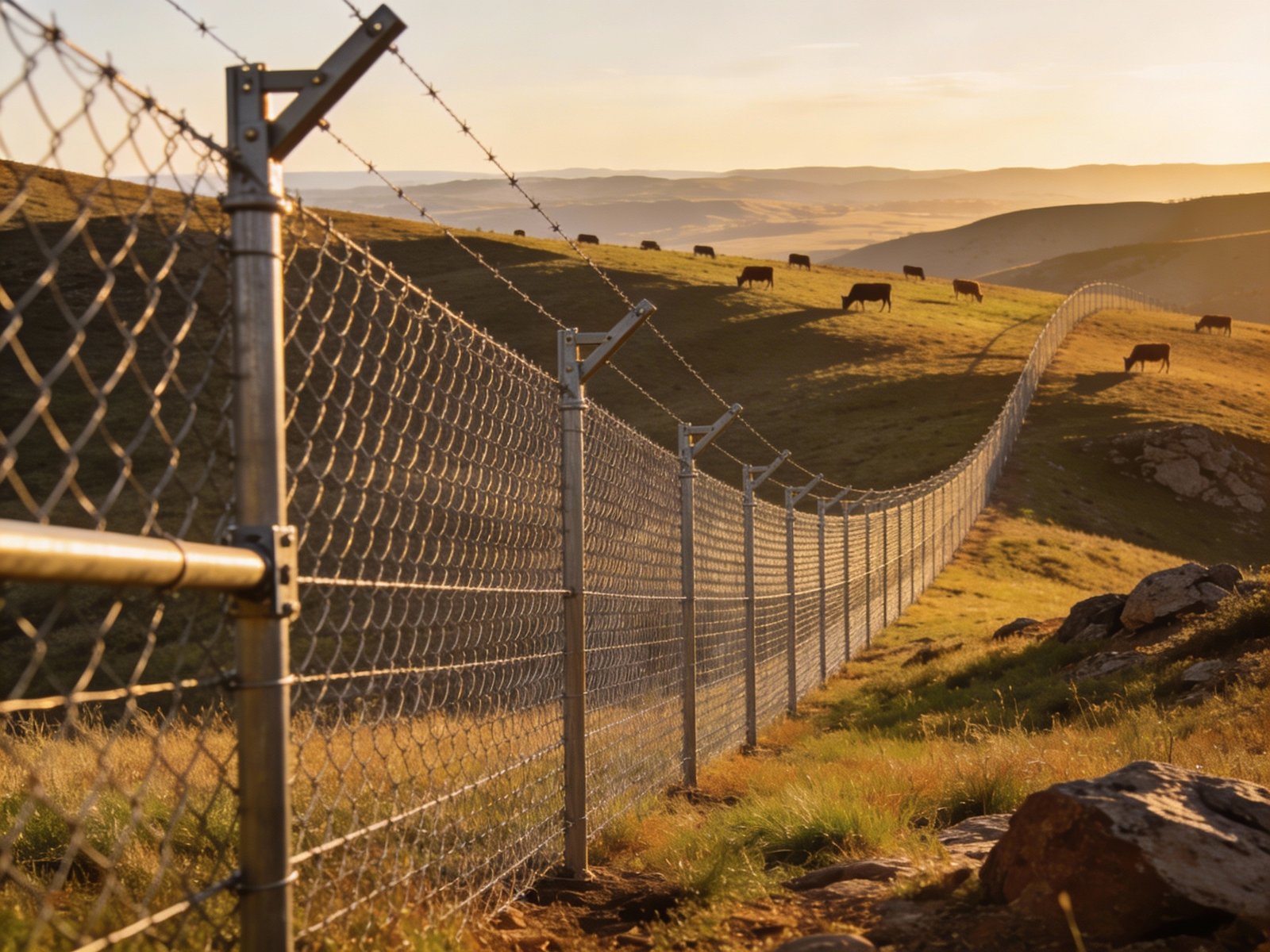
Figure 1: Large-scale ranch woven wire fence installation across expansive terrain with proper H-bracing systems visible at intervals
Why Woven Wire Fence Is Ideal for Large Ranch & Farm Use
Strength & Structural Performance
The structural integrity of woven wire fencing in large-scale applications depends critically on wire tensile strength and knot configuration. High-tensile wire, manufactured with carbon content approximately 0.28% (compared to 0.10% in low-carbon alternatives), achieves tensile strength ratings of 50,000 psi—representing a 45% improvement over standard steel wire.
Under sustained livestock pressure, high-tensile systems resist elongation and retain shape through crimped horizontal wires that function in spring-like fashion. Each 12.5-gauge horizontal wire maintains a breaking strength near 1,380 lbs, providing substantial safety margins for cattle containment applications.
Fixed knot construction utilizes a separate wire piece tightly wound around both line wire and stay wire intersections, creating the highest vertical strength among woven wire designs. Laboratory testing demonstrates fixed knot fences maintain structural integrity under heavy impact loads that cause hinge joint systems to loosen progressively. For high-pressure areas—including handling facilities, calving pens, and bull enclosures—fixed knot construction is the engineering-recommended choice.
Coverage & Versatility
Large-scale woven wire systems serve multiple functional zones within ranch operations:
- Perimeter containment: Establishes primary property boundaries, preventing livestock escape and unauthorized entry while maintaining legal separation from adjacent properties and roadways
- Interior paddock divisions: Creates secure subdivisions for herd management, breeding group separation, and livestock handling operations
- Rotational grazing layouts: Supports intensive grazing management strategies by providing reliable barriers that allow for frequent pasture rotation without compromising fence integrity
The graduated mesh design—featuring tighter spacing at ground level (typically 3–6 inches) transitioning to wider spacing at upper levels—accommodates diverse livestock types within a single fence line. This configuration prevents small animal escape while optimizing material efficiency.
Lifecycle Economics
Economic analysis of large-scale fencing investments requires evaluation of both initial capital expenditure and long-term maintenance costs. While woven wire systems typically represent higher upfront investment compared to barbed wire alternatives, the total cost of ownership over a 20–30 year operational period demonstrates significant advantage.
Initial Investment
- Material cost: $1.20–$2.50 per linear foot
- Installation labor: $2.00–$4.00 per linear foot
- Post and bracing systems: $500–$800 per corner/brace assembly
- Total installed cost: $3.20–$6.50 per linear foot
Maintenance Economics
- Annual inspection requirement: 2–4 hours per mile
- Routine maintenance: Minimal (debris removal, vegetation control)
- Re-tensioning frequency: Once per 5–7 years (if properly installed)
- Expected service life: 20–30 years with Class 3 galvanization
For commercial operations managing multiple miles of perimeter fencing, the reduced maintenance frequency and extended service life of high-tensile woven wire systems yield substantial labor savings and minimize operational disruptions associated with fence repair.
Key Engineering Considerations for Large-Scale Installations
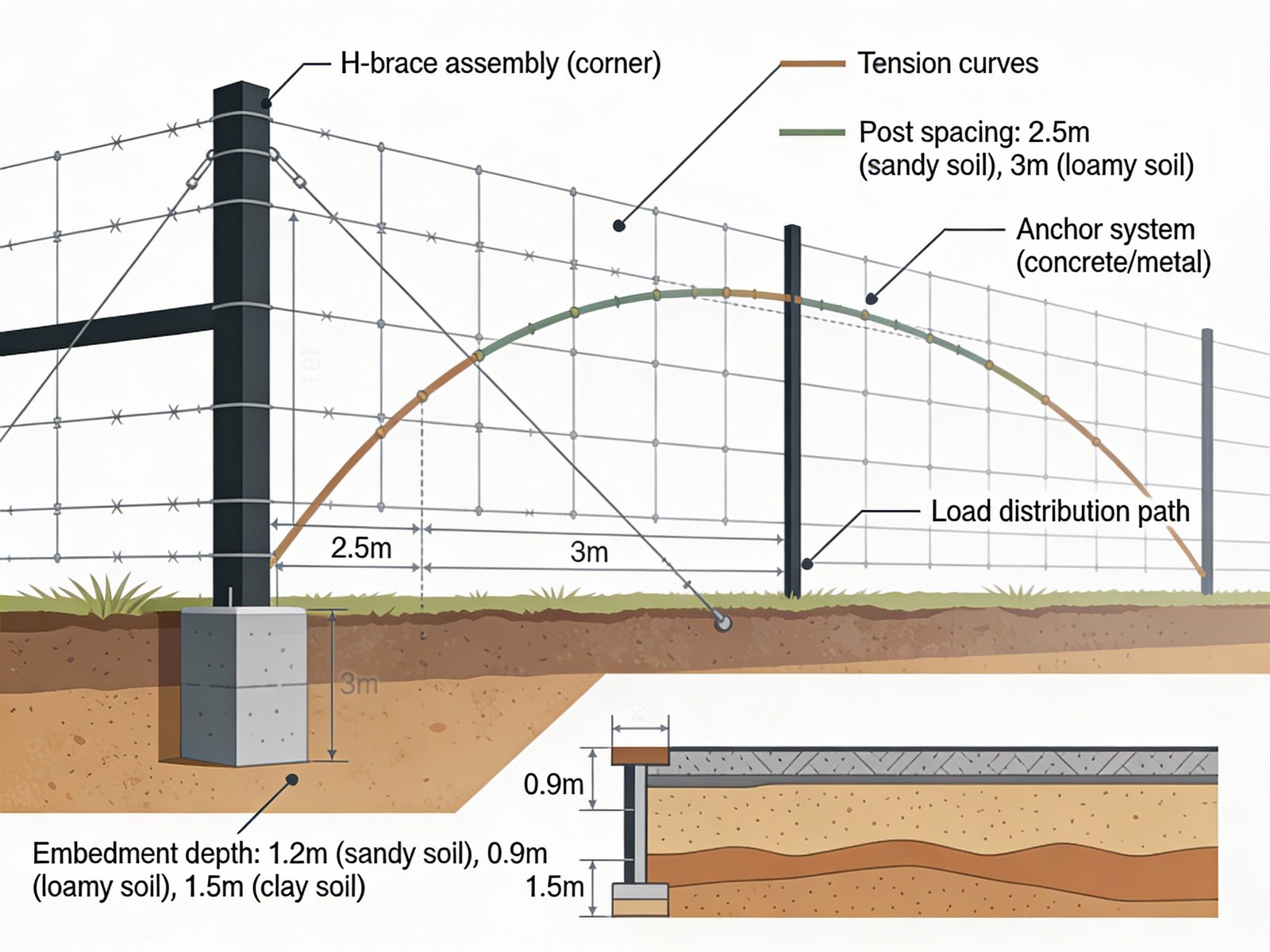
Figure 2: Engineering diagram showing critical components of large-scale woven wire fence systems including H-brace assemblies, proper post spacing, and load distribution principles
Post Spacing & Load Distribution
Proper post spacing directly influences fence tension maintenance and structural longevity. For high-tensile woven wire systems, the reduced post density compared to traditional low-carbon fencing represents a primary cost advantage—but requires adherence to engineering specifications.
Recommended post spacing parameters:
- High-tensile systems: 12–16 feet between line posts on level terrain; 8–12 feet on rolling or uneven ground
- Standard (low-carbon) systems: 8–12 feet between line posts regardless of terrain
- Corner and end posts: Must be sized and braced to resist full line tension (typically 250–400 lbs per wire)
Tension load distribution across long fence runs depends on proper post embedment depth and soil bearing capacity. For most ranch applications, line posts should achieve minimum embedment of 30 inches in stable soils, with increases to 36–42 inches required in sandy or loose substrates.
Brace & Anchor Systems
H-brace assemblies serve as critical structural elements in large-scale woven wire installations, transferring lateral loads from tensioned wire to the soil through properly sized posts and compression members. Each corner, direction change, and long straight run requires engineered bracing to maintain system integrity.
H-Brace Configuration
- Post diameter: Minimum 5 inches (wood) or equivalent strength (steel)
- Embedment depth: 42–48 inches
- Horizontal brace: 4×4 or 5-inch diameter, length matching post spacing
- Diagonal wire: 9-gauge high-tensile, properly twisted
Brace Placement Guidelines
- All corners and direction changes ≥45°
- Intervals of 1/4 mile maximum on straight runs
- Each side of gates and access points
- Terrain transitions (slope changes, drainage crossings)
For fence lines exceeding one mile in continuous length, engineering best practice specifies intermediate anchor assemblies every 1,320 feet (1/4 mile) to prevent progressive tension loss and facilitate sectional re-tensioning without disturbing entire fence runs.
Terrain & Environmental Adaptations
Large ranch properties typically encompass diverse topography and soil conditions that require site-specific fence design modifications.
Sloped and uneven ground: Woven wire’s flexibility allows conformance to terrain contours without requiring extensive grading. On slopes exceeding 15%, reduce post spacing to 10–12 feet and consider additional guy wires on downslope sides of corner assemblies. The fence should follow ground contour rather than creating straight spans across depressions.
Flood plains and high-moisture soils: In areas subject to seasonal flooding or persistent soil moisture, steel posts with extended life coatings (galvanized plus powder coat) or preservative-treated wood posts rated for ground contact provide necessary corrosion resistance. Post embedment should extend below seasonal frost depth to prevent heaving.
Rocky or compacted substrate: When augering or driving posts becomes impractical, engineered alternatives include surface-mounted post bases with concrete footings (minimum 12-inch diameter, 36-inch depth) or rock baskets for post stabilization. In extremely rocky terrain, consider increasing stay wire spacing (vertical wire interval) to 12 inches to reduce post requirements.
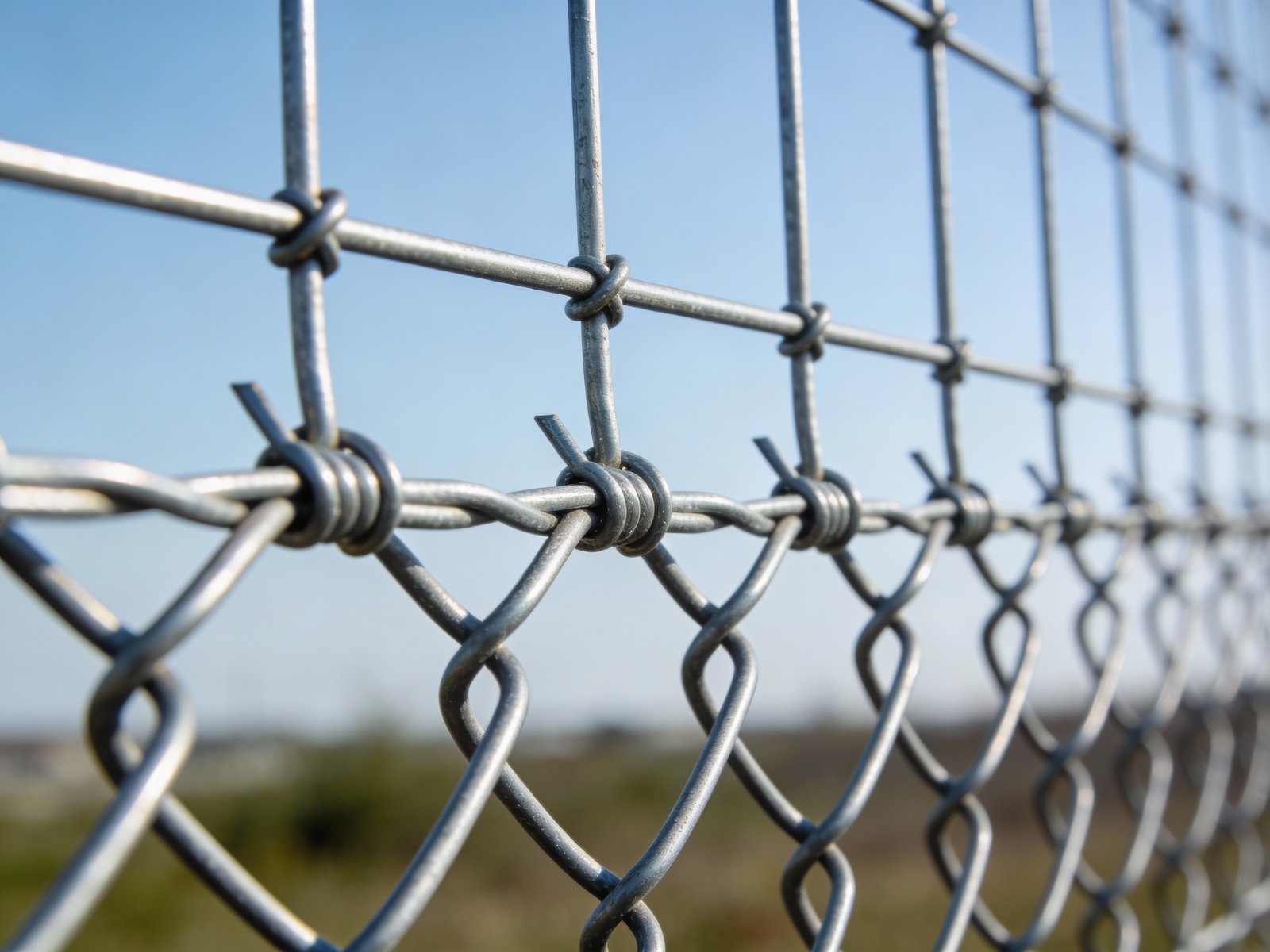
Figure 3: Close-up detail of high-tensile woven wire fence showing fixed knot construction, Class 3 galvanized coating, and graduated mesh spacing design
Material Specification Selection
Wire Grade & Coating
Galvanization quality directly determines fence service life in outdoor agricultural environments. Class 3 galvanized coating, defined by ASTM A641 specification, provides zinc coating weight of 2.00 oz/ft² (610 g/m²)—representing approximately twice the zinc mass of Class 1 coatings used in light-duty applications.
Comparative service life projections for woven wire fence in typical ranch environments:
- Class 1 galvanized (light agricultural grade): 12–15 years before rust perforation in moderate climates
- Class 3 galvanized (commercial grade): 25–30 years in moderate climates; 20–25 years in coastal or high-humidity regions
- Class 3 with polymer coating: 30–40 years; provides additional UV and chemical resistance
For large-scale installations where fence replacement represents significant operational disruption and expense, specification of Class 3 galvanization as minimum standard is engineering best practice. The incremental material cost (typically 15–25% premium over Class 1) is recovered through extended service intervals and reduced maintenance.
Knot Type and Mesh Layout
Knot configuration affects both structural performance under livestock pressure and long-term fence stability. Three primary knot designs exist in the commercial woven wire market:
Fixed knot: Separate wire wraps around line wire and stay wire intersection. Highest vertical strength; minimal loosening under repeated stress. Preferred for cattle, bulls, and high-traffic areas.
Hinge joint (field fence): Stay wire wraps around line wire. Moderate strength; progressive loosening over time. Suitable for low-pressure applications and temporary divisions.
Square knot (smooth knot): Continuous vertical wire with individual knot at each intersection. Excellent for horses and smaller livestock (reduced coat/skin damage risk). Moderate vertical strength.
Mesh size recommendations by livestock type:
- Cattle (beef): 6-inch vertical spacing, 6–9-inch horizontal spacing in upper courses; minimum fence height 49 inches (9 horizontal wires)
- Sheep and goats: 3–6-inch vertical spacing, 3-inch horizontal spacing in bottom two courses; minimum height 42–47 inches
- Horses: 6-inch vertical spacing, 8-inch maximum horizontal spacing; minimum height 54 inches; square knot preferred
- Multi-species operations: Default to most restrictive species requirements (typically sheep/goat specifications)
Post Material & Size
Post selection affects installation cost, maintenance requirements, and fence longevity. Large-scale operations typically employ combination systems that optimize economics while maintaining structural integrity.
| Post Type | Application | Service Life | Relative Cost | Installation Method |
|---|---|---|---|---|
| Steel T-posts (1.25 lb/ft) | Line posts, straight runs | 20–30 years | Low ($3–5 each) | Driven with manual or hydraulic driver |
| Treated wood posts (5–6 inch) | Corners, braces, gates | 20–25 years | Medium ($12–20 each) | Augered or set in concrete |
| Steel pipe posts (2.5 inch) | Heavy-duty corners, bulls | 30–40 years | High ($25–40 each) | Set in concrete footings |
| Fiberglass posts | Interior divisions, electric | 15–20 years | Medium ($8–15 each) | Driven or surface-mounted |
Table 1: Post material comparison for large-scale woven wire fence installations. Costs reflect 2026 market averages for commercial quantities.
Embedment depth and concrete footing decisions: Line posts typically require 30-inch minimum embedment in stable soils. Corner and brace posts should achieve 42–48 inch embedment, with concrete footings (12-inch diameter minimum, extending to 36-inch depth) specified for sandy soils or high-wind exposure areas. In permafrost or deep-frost regions, all posts must extend below maximum frost depth plus 6 inches.
Large-Scale Application Scenarios
Perimeter Fencing for Cattle Ranches
Primary perimeter fencing establishes the fundamental boundary of ranch operations, serving legal, biosecurity, and livestock containment functions. Design considerations for large cattle ranch perimeters include:
Common layout configurations: Rectangular or irregular boundary following property lines, with strategic placement of access gates at vehicle entry points, livestock handling facilities, and hay feeding areas. For ranches exceeding 1,000 acres, multiple perimeter access points (spaced at 1/2 to 1-mile intervals) facilitate efficient pasture management and emergency livestock movement.
Protection against predators and stray animals: Standard woven wire (49-inch height, 6-inch mesh) provides effective deterrence for most predator species. In regions with significant coyote, wolf, or feral dog pressure, consider adding one strand of barbed wire 2–3 inches above the woven wire top line, positioned at 52–54 inches total height. For wild hog exclusion, the bottom horizontal wire should be positioned no more than 4 inches above ground level, with mesh spacing not exceeding 4 inches in the lower two courses.
Standard 49-inch woven wire fencing does not reliably exclude deer or elk. In areas where wildlife containment or exclusion is required, specify minimum fence height of 96 inches (8 feet) with consideration for angled top wires or extensions. Consult state wildlife agencies regarding legal requirements for wildlife-permeable fence design in designated habitat areas.
Pasture Division & Rotational Grazing
Interior fencing strategies for intensive grazing management require balance between fence durability and economic efficiency. Rotational grazing systems typically involve frequent paddock subdivision to optimize forage utilization and minimize soil compaction.
Interior fencing approaches:
- Permanent interior divisions: Full-specification woven wire matching perimeter fence standards. Appropriate for primary pasture divisions that will remain fixed for multiple years or decades.
- Semi-permanent subdivisions: Lighter gauge woven wire (14.5-gauge) with reduced post frequency (16–20 feet). Suitable for paddocks rotated annually or seasonally.
- Temporary grazing cells: Electrified polywire or polytape on step-in posts. Provides maximum flexibility for intensive rotational systems but requires daily management and livestock training to respect electric barriers.
For large-scale operations implementing rotational grazing across hundreds or thousands of acres, a hybrid approach—permanent woven wire for major pasture blocks (40–160 acres each) with temporary electric subdivision within blocks—optimizes both capital efficiency and management flexibility.
Minimizing grazing pressure and soil compaction: Proper fence layout should account for natural livestock movement patterns, water source locations, and shade areas. Avoid creating long, narrow paddocks that concentrate traffic along fence lines. Where possible, design paddock dimensions with length-to-width ratios not exceeding 3:1 to encourage even grazing distribution.
Wildlife Exclusion Zones
Agricultural operations frequently require exclusion of specific wildlife species to protect crops, prevent disease transmission, or maintain biosecurity standards. Woven wire systems provide effective barriers when properly specified for target species behavior.
Deer, elk, and wild hog considerations:
- White-tailed deer: Minimum effective fence height 8 feet (96 inches); may require angled top section or double-fence configuration in areas of high deer density
- Elk: 8-foot fence height minimum; 10-foot height recommended in heavy elk pressure areas; fence must be highly visible to prevent collision injuries
- Wild hogs: Focus on ground-level exclusion—bottom wire at ≤4 inches height, mesh spacing ≤4 inches in lower courses, bury bottom wire 6–12 inches or add apron extending outward 12 inches
Buffer zones and dual perimeter strategies: In regions where wildlife pressure is severe or biosecurity requirements are stringent (disease surveillance areas, quarantine facilities), dual-fence perimeters with 15–30 foot spacing between inner and outer fence lines provide additional security. The outer fence serves as wildlife exclusion; the inner fence contains livestock. This configuration also provides vehicle patrol corridor for fence inspection and maintenance.
Multi-Species Ranching
Operations managing multiple livestock species simultaneously must design fencing systems that satisfy the most restrictive containment requirements while remaining economically viable.
Sheep and goats: These species present the most demanding fencing requirements due to small body size, agility, and tendency to test fence integrity. Specify 3-inch vertical stay spacing with mesh graduation from 3-inch horizontal spacing at ground level to maximum 6-inch spacing in upper courses. Fence height of 42–47 inches is generally adequate. For goat operations, fixed knot construction is strongly recommended due to goats’ climbing behavior and tendency to rub against fences.
Horses: Safety is the primary design consideration for horse fencing. Square knot (smooth knot) woven wire minimizes risk of coat damage and reduces entanglement hazard compared to hinge joint designs. Specify minimum fence height of 54 inches with no sharp protrusions. Avoid barbed wire top strands in horse enclosures. Where horses and cattle share pasture, 54-inch woven wire with square knot construction accommodates both species.
Mixed livestock setups: When designing fence for multi-species operations, default specifications should meet the most restrictive species requirements. For sheep/cattle combinations, use sheep-specification fence (tighter mesh, 42–47 inch height) with awareness that cattle may require additional training to respect the lower fence height. Consider adding one electric offset wire at cattle nose height (30–36 inches) to reinforce containment without compromising sheep security.
Performance Comparison
| Application Factor | Woven Wire Fence | High-Tensile Barbed Wire | Electric Fence | Welded Wire Mesh |
|---|---|---|---|---|
| Livestock Retention | Excellent physical barrier |
Good for cattle, limited for small stock |
Requires power, animal training |
Rigid, limited terrain adaptation |
| Predator Resistance | Effective barrier to most predators |
Limited effectiveness |
Minimal deterrence |
Good for small predators |
| Maintenance Ease | Annual inspection, minimal repair |
Frequent re-tensioning needed |
Daily checks, vegetation control |
Rust vulnerability at welds |
| Installation Complexity | Moderate skill required |
Simple, fast installation |
Requires electrical expertise |
Panel installation straightforward |
| Expected Lifespan | 20–30+ years (Class 3 galvanization) |
15–20 years (High-tensile, Class 3) |
10–15 years (Wire component lifespan) |
15–25 years (Weld points limit life) |
| Cost per Mile | $16,900–$34,300 (Materials + installation) |
$8,500–$15,800 (5-strand system) |
$6,300–$12,700 (Plus energizer, grounding) |
$21,100–$42,200 (Panel systems) |
Table 2: Comparative performance analysis for large ranch fencing systems. Cost estimates based on 2026 commercial pricing for bulk material orders and professional installation.
Best Practice Installation Tips
Staging & Stretcher Tool Use
Efficient installation of large-scale woven wire fence requires systematic staging of materials and proper use of specialized stretching equipment. For projects involving multiple miles of fence, establish staging areas at 1/2 mile intervals along the fence route to minimize material transport time.
Correct approach for long runs:
- Pre-installation preparation: Complete all post installation and bracing before beginning wire placement. Mark post heights with paint or chalk to ensure consistent wire positioning.
- Wire roll handling: Use tractor-mounted spindles or heavy-duty unwinding stands to control wire roll deployment. Manual handling of full rolls (200+ lb weight) presents injury risk and material damage potential.
- Stretcher bar attachment: Thread stretcher bar through wire mesh at 3–4 vertical stay intervals to distribute tension load evenly. Position stretcher bar on opposite side of post from fence fabric to prevent wire displacement during tensioning.
- Come-along or power stretcher: Attach tensioning device to stretcher bar, secured to anchor post or vehicle. For hand-operated come-alongs, use 3:1 or 4:1 mechanical advantage models to achieve required tension (250–400 lbs per wire) without excessive operator effort.
Tensioning Protocols for Large Fence Lines
Proper tensioning directly affects fence performance and longevity. Insufficient tension results in sagging and livestock escape; excessive tension causes post movement, wire breakage, and accelerated brace wear.
Staged tensioning procedure:
- Tension to approximately 70% of target tension initially
- Attach wire to posts using fence staples or clips (do not fully seat fasteners)
- Allow fence to settle for 24–48 hours
- Complete tensioning to full specification (250–400 lbs per wire, depending on wire gauge and spacing)
- Fully seat all post fasteners
Seasonal re-tensioning considerations: Wire thermal expansion and contraction causes tension variation with temperature changes. High-tensile wire experiences approximately 1% length change per 100°F temperature differential. For fence installed in winter months, plan for re-tensioning inspection after first summer season. Conversely, summer installations may require tension adjustment after first winter freeze. After initial seasonal cycle, properly installed high-tensile systems typically maintain adequate tension for 5–7 years before requiring adjustment.
Deploying Braces & Anchors Efficiently
For large-scale projects involving dozens of brace assemblies, systematic deployment strategies reduce installation time and ensure consistency.
Brace assembly staging: Pre-assemble H-brace components (posts, horizontal brace, diagonal wire, hardware) at a central workshop or staging area. Transport assembled units to fence line on trailer, positioned in correct orientation for installation. This approach reduces field assembly time by 40–60% compared to component-by-component construction.
Post hole drilling strategy: For projects requiring 50+ brace posts, hydraulic auger equipment (skid-steer or tractor-mounted) provides substantial time savings over manual post hole diggers. When drilling post holes, diameter should exceed post size by 3–4 inches to allow backfill material placement. In rocky soils where augering is impractical, rock drilling equipment or concrete footing systems may be necessary.
Spacing optimization for long runs: While engineering specifications call for brace assemblies at 1/4 mile intervals maximum, practical efficiency considerations may justify slightly tighter spacing (1,000–1,200 feet) on very long runs. The additional brace cost is offset by simplified tensioning operations and reduced risk of progressive tension loss across multi-mile fence sections.
Video Reference: Large-scale perimeter fence installation on commercial ranch property. This documentary-style video demonstrates proper H-brace construction, post spacing intervals, and woven wire tensioning procedures on expansive terrain. The installation shown covers several hundred linear feet of boundary fence using fixed knot woven wire with Class 3 galvanization. (Duration: 12:35) Source: Greg Judy Regenerative Rancher
Risk Management & Avoiding Common Mistakes
Large ranch fencing projects represent significant capital investment—$50,000 to $200,000+ for perimeter fencing on properties of 500–2,000 acres. Common installation errors that compromise system performance include: excessive post spacing beyond engineering specifications, inadequate accommodation of terrain variations, specification of insufficient galvanization class for local environmental conditions, and knot type selection that cannot withstand long-term livestock pressure. These failures typically manifest within 3–5 years of installation and often require extensive remedial work or complete fence replacement.
Over-spacing Posts
The temptation to reduce post count (and associated labor/material cost) by increasing spacing beyond recommended intervals is a frequent source of premature fence failure.
Consequences of excessive post spacing:
- Progressive sagging: Wire weight combined with snow load, vegetation accumulation, and animal pressure causes downward deflection between posts. When deflection exceeds 6 inches, livestock can push under or through fence.
- Wave propagation: Impact from large animals (or vehicle strikes) transmits along fence line, progressively loosening post attachments across multiple spans.
- Accelerated wire fatigue: Flexing between widely-spaced posts concentrates stress at post attachment points, leading to wire breakage at staples or clips within 5–10 years rather than expected 20–30 year service life.
Correction protocol: If post spacing exceeds 16 feet on high-tensile installations or 12 feet on standard systems, add intermediate posts to bring spacing within specification. This retrofitting is labor-intensive but necessary to prevent progressive failure.
Wrong Knot Selection
Knot type selection significantly affects long-term fence stability, particularly in high-pressure applications involving large cattle breeds, bulls, or areas where wildlife contact is frequent.
Hinge joint knot loosening over time: Field fence (hinge joint) construction wraps the stay wire around the line wire at each intersection. Under repeated stress—such as cattle rubbing or pushing—this wrap gradually loosens, creating gaps in the mesh pattern. Over 10–15 year periods, hinge joint fences in high-traffic areas often develop 2–4 inch gaps at stay wire positions, sufficient for calf escape or predator entry.
For commercial cattle operations, especially those managing breeding stock where calf security is critical, the premium cost of fixed knot construction (typically 20–30% higher material cost than hinge joint) is justified by superior long-term performance and avoidance of early replacement.
Under-protected End Posts
Corner and end posts experience the highest stress in any woven wire fence system, bearing the cumulative tension of all horizontal wires—potentially 2,000–3,600 lbs total load on a 9-wire fence. Undersized posts or inadequate bracing leads to post movement, lean, and eventual failure.
Corner failure indicators:
- Visible post lean (>5° from vertical) within 2–3 years of installation
- Diagonal brace wire slack or broken
- Cracks in concrete footings or heaved posts in freeze-thaw climates
- Progressive fence sag extending 50–100 feet from corner in both directions
Prevention specifications: Corner and end posts should be minimum 6-inch diameter (wood) or equivalent strength (steel), embedded 48 inches minimum depth, with concrete footings in unstable soils. Double H-brace configuration (two horizontal braces in series) is recommended for corners bearing >1/4 mile of fence line in multiple directions.
Frequently Asked Questions
How should post spacing change for large ranches compared to small-scale installations?
Large ranch installations can utilize wider post spacing when employing high-tensile wire systems, providing significant cost savings across multi-mile fence runs. High-tensile woven wire supports 12–16 foot post spacing on level terrain (compared to 8–12 feet for standard low-carbon wire), reducing post count by approximately 30–40%. However, this optimization requires strict adherence to proper brace installation every 1/4 mile and appropriate wire tensioning. On rolling or uneven terrain common to ranch properties, reduce spacing to 8–12 feet regardless of wire type to maintain fence conformance to ground contours. Corner posts and direction changes require full-specification bracing regardless of line post spacing.
Do large farms need higher grade galvanized wire compared to smaller operations?
Large-scale operations benefit disproportionately from specifying Class 3 galvanized wire regardless of climate zone. While smaller properties (under 100 acres) can accept the operational disruption of fence replacement on a 15-year cycle, large ranches face substantial indirect costs when major fence reconstruction becomes necessary—including livestock relocation across hundreds or thousands of acres, multi-week project timelines interfering with grazing rotations, and mobilization costs for contractors serving remote properties. Class 3 galvanization extends service life to 25–30 years (versus 12–15 years for Class 1), effectively allowing one fence installation to serve an entire generation of ranch operation. The material premium (approximately $200–400 per mile of fence) is minor compared to total project costs and yields significant return through avoided early replacement.
How does rotational grazing affect fence longevity in large ranch operations?
Intensive rotational grazing systems typically extend woven wire fence lifespan compared to continuous grazing by distributing livestock pressure temporally rather than concentrating animal contact along fence lines. In continuous grazing scenarios, cattle establish habitual loafing and rubbing locations along fence perimeters, creating localized stress points that accelerate wire and post wear. Rotational systems move livestock through paddocks at 1–7 day intervals (depending on management intensity), preventing establishment of these chronic stress patterns. However, rotational systems require significantly more total fence length—typically 3–5 times the perimeter-only fence requirement—to create adequate paddock subdivisions. This expanded fence infrastructure represents higher initial capital investment but distributes wear across greater total fence length, often resulting in 30–40 year service life for properly installed high-tensile systems compared to 20–25 years in continuous grazing applications.
What fence height is required for effective cattle containment in large pastures?
Standard beef cattle containment requires minimum fence height of 49 inches (measured to top wire), typically achieved with 9 horizontal wires at graduated spacing. This specification accommodates cattle up to 1,400–1,600 lbs body weight under normal grazing conditions. For operations managing bulls or exceptionally large breeds (Charolais, Simmental, Maine-Anjou exceeding 2,000 lbs), consider 54-inch fence height (10 wires) particularly in high-traffic areas such as breeding pastures and handling facility approaches. In extensive range conditions where cattle may not encounter fence lines for days or weeks, slightly lower specifications (47 inches, 8 wires) may prove adequate due to reduced fence testing behavior. However, any fence height reduction should be validated against local cattle behavior patterns, and perimeter fences should always meet or exceed the 49-inch standard regardless of interior fence specifications.
Can woven wire fence be electrified for additional security on large ranches?
Woven wire fencing can be effectively integrated with electric fence components to create hybrid systems offering both physical barrier and psychological deterrent properties. Common configurations include: (1) Single offset electric wire positioned 8–10 inches outside the fence line at cattle nose height (30–36 inches), which trains animals to maintain distance from the physical fence, reducing rubbing and impact stress. (2) Hot wire strand added 2–3 inches above the top woven wire, providing additional deterrent without requiring fence height increase. (3) Complete fence electrification using insulated post attachments, converting the entire woven wire fabric into a charged barrier—though this approach requires careful grounding system design and may create maintenance challenges in vegetated areas. For large-scale applications, the offset electric wire configuration (option 1) provides optimal balance of effectiveness and maintainability, requiring only simple energizer systems serving 2–3 miles of fence per unit.
Related Resources
Match Specifications to Your Ranch’s Needs
Expert recommendations help ensure your woven wire fence performs reliably for decades across varying terrains and livestock conditions. Proper material selection, engineering design, and installation methodology are critical to long-term system success.
View Wire Specifications Request Technical ConsultationTechnical References:
- ASTM A641 – Standard Specification for Zinc-Coated (Galvanized) Carbon Steel Wire
- USDA NRCS – Practice Standard 382: Fence (Barbed Wire, Woven Wire, or Suspension Fence)
- University Extension Agricultural Engineering Departments – Fence Installation Guidelines
Last updated: January 2026. Material costs and specifications reflect current industry standards and may vary by region and supplier.