
Electric Fence Safety for Cattle: Design, Voltage, and Best Practices
Complete safety guide for designing, operating, and maintaining electric cattle fencing systems without injury or risk
Why Electric Fence Safety Matters for Cattle
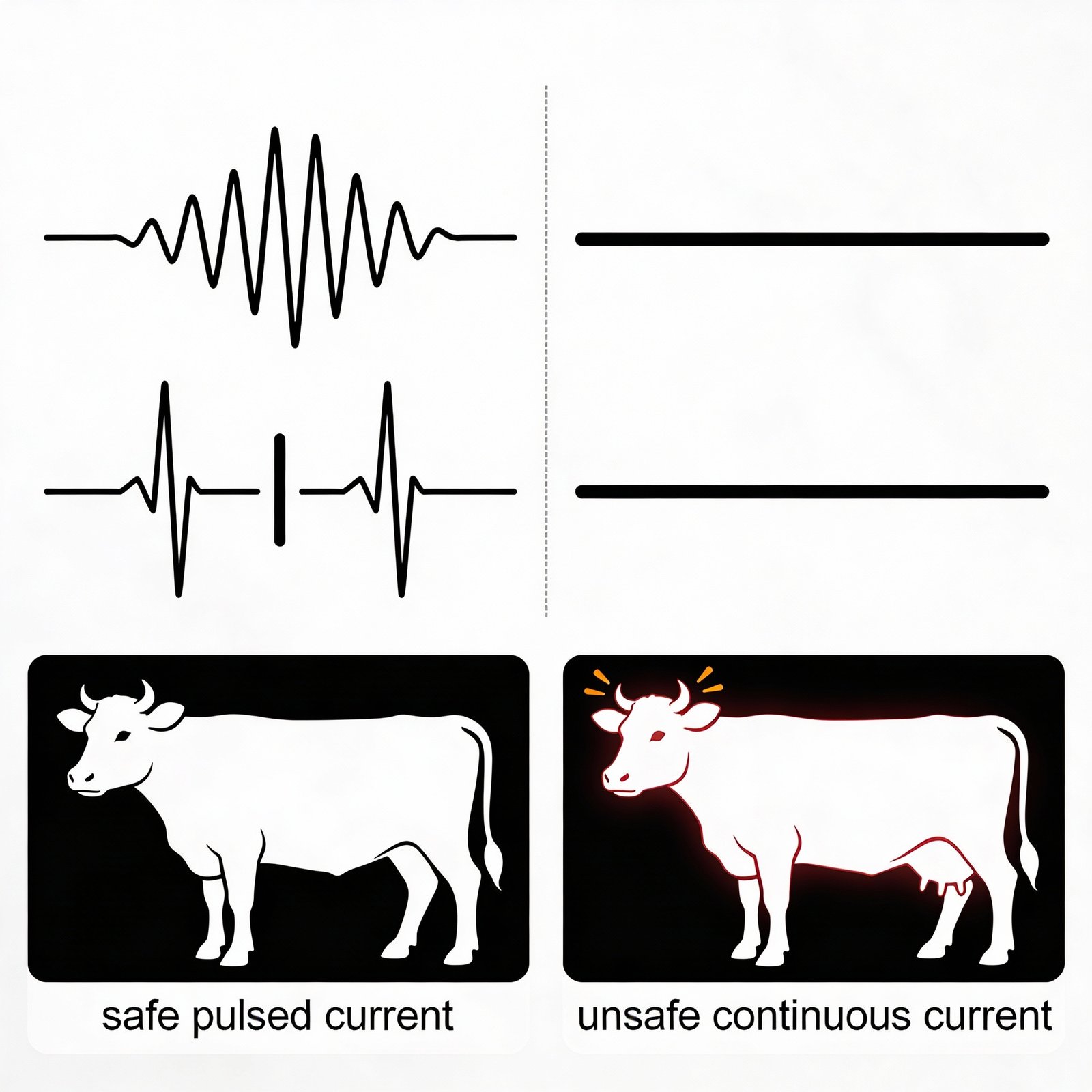
A properly designed electric fencing system is one of the safest and most humane methods for controlling cattle movement. However, safety depends entirely on correct voltage levels, system design, grounding quality, and daily operating practices. Modern electric fence energizers convert power into controlled, high-voltage pulses that travel through fence wires approximately once per second, with each pulse lasting only about 150 microseconds. This brief duration allows animals to recoil immediately without muscle lock or tissue damage.
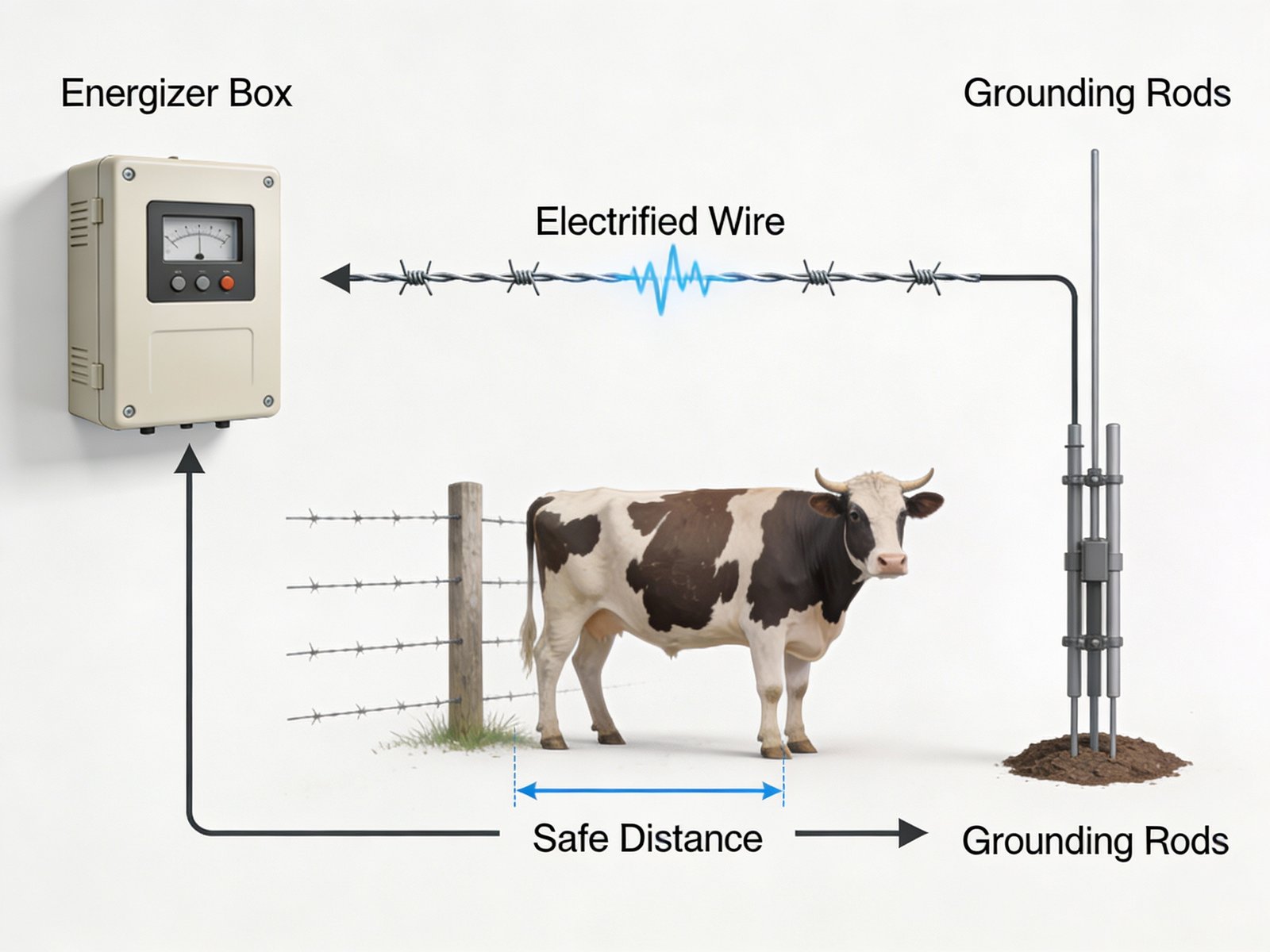
Unsafe electric fences rarely fail because of electricity itself—they fail because of poor installation, incorrect energizer sizing, damaged components, or lack of routine inspection. Electric fencing functions as a psychological barrier rather than a physical restraint, teaching livestock to respect boundaries through brief, memorable shocks that condition behavior without causing harm. The system relies on proper grounding to complete the electrical circuit: when an animal touches the electrified wire while standing on the ground, current flows through its body into the soil and back to ground rods connected to the energizer.
Core Safety Principles of Electric Cattle Fencing
⚡ Psychological Barrier, Not Physical Force
Electric fences are designed to create a brief, memorable shock—not pain or injury. The goal is behavioral conditioning, not physical restraint. The energizer acts as the heart of the system, continuously sending short pulses through the wire to establish a lasting psychological boundary. Once cattle learn to associate the shock with the fence boundary, they respect the barrier even when voltage levels fluctuate or during temporary power interruptions. This conditioning process is humane and effective when executed with proper cattle training techniques.
⏱ Short Pulse Duration
Modern energizers deliver pulses lasting fractions of a second, allowing cattle to recoil immediately without muscle lock or tissue damage. The pulsating current is far safer than continuous supply because it permits animals to remove themselves from the source of electricity without becoming trapped or immobilized. Low-impedance pulse energizers are specifically designed to resist current leakage that can occur when vegetation or other materials contact the fence, ensuring consistent and safe shock delivery. Understanding how electric fence systems work helps operators maintain safe pulse characteristics.
🔌 Controlled Energy Output
Output joules—not voltage alone—determine safety. Properly sized energizers ensure effective shock without excess energy. When selecting an energizer, factors such as animal type, fence length, vegetation load, and fence type must be considered to avoid both underpowered systems that cattle ignore and overpowered systems that deliver unnecessarily strong shocks. The energizer must match the operational requirements while maintaining safety margins that protect both livestock and humans who may accidentally contact the fence.
Safe Voltage Levels for Cattle
Voltage ranges must be calibrated to provide effective deterrence without causing harm. The relationship between voltage, pulse duration, and joule output determines both safety and effectiveness. While high voltage numbers may seem alarming, the extremely short pulse duration and controlled energy output ensure that cattle receive only a brief, uncomfortable sensation rather than dangerous electrical exposure.
| Voltage Range | Effect on Cattle | Safety Assessment |
|---|---|---|
| Below 3,000 V | Fence often ignored | ❌ Ineffective |
| 4,000–6,000 V | Clear deterrent | ✅ Safe & Effective |
| 6,000–8,000 V | Strong deterrent | ✅ Safe when pulsed |
| Above 10,000 V | Unnecessary output | ⚠️ Not recommended |
Regular voltage testing ensures the system operates within safe parameters. Vegetation contact, wire corrosion, poor connections, and inadequate grounding can all cause voltage drops that reduce effectiveness, prompting cattle to challenge the fence. Conversely, excessive voltage from oversized energizers or multiple energizers on the same line can create unnecessarily strong shocks. Proper troubleshooting and maintenance practices help maintain optimal voltage levels throughout seasonal changes and varying environmental conditions.
Common Electric Fence Safety Risks
Most electric fence incidents stem from preventable installation and maintenance errors rather than inherent dangers in the technology itself. Understanding these common failure points allows operators to design safer systems and implement effective inspection routines. Equipment malfunction, environmental factors, and human error all contribute to safety risks that can be mitigated through proper planning and regular monitoring.
Faulty energizers that deliver continuous current instead of pulsed output create the most serious safety hazard, potentially causing muscle lock that prevents animals from releasing the wire. This condition violates fundamental safety principles and requires immediate energizer replacement. Proper energizer selection ensures only low-impedance, pulse-type units are installed.
Grounding system failures represent another critical risk factor. Inadequate ground rod installation in dry, sandy, or rocky soil prevents proper circuit completion, resulting in weak or inconsistent shocks that cattle learn to ignore. Worse, poor grounding can cause stray voltage that creates shock hazards in unexpected locations. The grounding system design must account for soil conditions, with multiple ground rods installed in moist locations and connected with high-conductivity cable.
Physical component failures create both effectiveness and safety problems. Broken insulators allow electrified wire to contact metal posts, creating shock hazards for anyone touching the post and draining voltage from the fence line. Wire positioned at inappropriate heights—particularly for young calves—increases entanglement risk. Regular inspection protocols should identify damaged insulators, sagging wires, and vegetation contact before they compromise safety. Learning to avoid common installation mistakes prevents many of these issues from occurring initially.
Safe Fence Design for Cattle
Design choices directly impact both safety and effectiveness. Wire positioning, visibility, fence alignment, and conductor selection all influence how cattle interact with the barrier. Thoughtful design prevents panic, reduces injury risk, and creates clear boundaries that cattle respect without repeated testing.
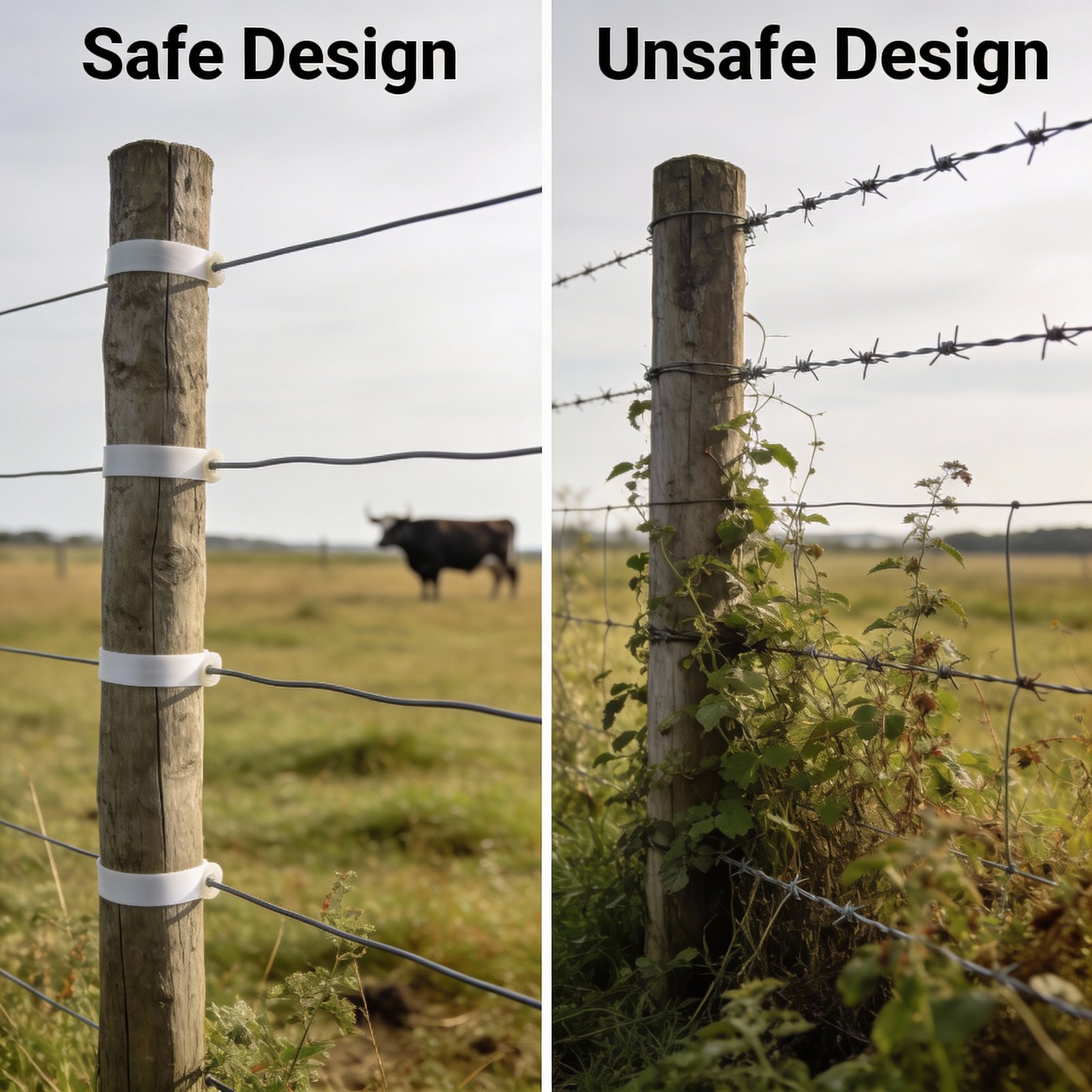
Conductor material selection affects both safety and performance. High-tensile smooth wire offers excellent conductivity and durability for permanent installations. Polywire and polytape provide visibility advantages for temporary and training applications. Wire gauge must be appropriate for expected loads—undersized wire sags excessively and breaks under stress, while properly sized wire maintains tension and height. Consult wire and conductor material comparisons when specifying fence components.
Multi-wire configurations require careful planning. For cattle, two to three wire heights typically suffice for adult animals, while systems containing calves may need four or five strands. The spacing between wires should prevent animals from pushing through gaps while avoiding excessive wire density that increases installation cost and maintenance burden. Consider future needs when designing permanent systems—adding wire strands later requires careful integration with existing energizer capacity and grounding systems.
Human Safety Considerations
Electric fences pose risks to humans as well as livestock. While modern pulsed systems are designed to be non-lethal, shocks remain painful and can cause falls, dropped tools, or involuntary reactions that lead to secondary injuries. People with pacemakers or other medical devices face additional risks and should exercise extreme caution near electrified fences. Comprehensive human safety protocols protect farm workers, visitors, and emergency responders who may encounter fencing systems.
- Install warning signs at access points where people regularly enter fenced areas
- Use insulated gate handles that allow safe fence opening without receiving shocks
- Turn off power before repairs by disconnecting energizers or using cutoff switches
- Train staff and visitors about electric fence locations and proper interaction procedures
- Keep energizers out of reach of children and secure in weatherproof housings
- Mark buried or hard-to-see wire runs with visible flags or posts
- Provide voltage testers for safe fence checking without physical contact
- Document fence locations on property maps shared with emergency services
Creating a safety culture around electric fencing requires ongoing education. New employees need comprehensive training that covers system operation, shutdown procedures, and emergency response. Visitors should receive briefings about fence locations before accessing properties. Children living on or visiting farms require age-appropriate education about electricity dangers and specific instruction never to touch electric fences. Regular safety reminders and visible signage reinforce these messages.
Emergency planning must account for electric fence presence. Emergency responders arriving to medical incidents, fires, or other crises need to know fence locations to avoid dangerous contact during rescue operations. Property maps showing fence runs and energizer locations facilitate rapid system shutdown if necessary. Fire departments and ambulance services benefit from advance notification about electric fence installations during routine pre-planning visits.
Environmental Safety Factors
Weather and environmental conditions significantly influence electric fence performance and safety characteristics. Understanding these variables allows operators to adjust system parameters seasonally and respond to changing conditions that affect shock intensity, grounding effectiveness, and structural integrity. Proactive environmental management prevents safety incidents related to weather extremes, vegetation growth, and soil moisture variations.
🌧 Wet Conditions
- Improved grounding efficiency as moisture enhances soil conductivity
- Lower shock resistance through animal coats and hooves
- Monitor voltage levels to prevent excessive shock strength
- Increased risk of corrosion on connections and components
❄ Winter & Ice
- Remove ice load on wires that causes excessive sag and breakage
- Inspect for sagging that brings wires into contact with vegetation
- Check grounding in frozen soil conditions that reduce conductivity
- Consider ground return wire systems in areas with persistent frozen soil
🌾 Heavy Vegetation
- Increased energy drain from grass and weeds touching wires
- Risk of voltage fluctuation below effective deterrence levels
- Regular clearing required to maintain fence effectiveness
- Higher-joule energizers may be needed in areas with persistent growth
Seasonal transitions require system adjustments. Spring vegetation growth rapidly consumes fence energy, potentially dropping voltage below effective levels within days. Proactive vegetation management through mowing, herbicide application, or mechanical clearing maintains clear zones beneath and around fence lines. In rotational grazing systems, moving livestock frequently limits vegetation contact duration. Energizer capacity should account for expected vegetation loads rather than assuming ideal clear-fence conditions.
Lightning poses special risks to electric fence systems. The elevated conductors act as lightning attractors during storms, with strikes potentially destroying energizers, injuring nearby livestock, and creating fire hazards. Lightning protection and surge prevention equipment including lightning diverters and arrestors protects system components and reduces animal injury risk. Grounding systems separate from fence energizer grounds prevent lightning current from entering buildings or damaging other electrical systems.
Drought conditions present opposite challenges from wet weather. Dry soil reduces grounding effectiveness, weakening shock strength even as vegetation load decreases. Ground return wire systems that don’t rely on soil conductivity perform more consistently in arid climates. Strategic ground rod placement in naturally moister locations—north sides of buildings, low spots, near water sources—improves year-round grounding. Comprehensive weather and seasonal management strategies address these varying challenges.
Electric Fence Safety Best Practices
Consistent application of safety protocols transforms electric fencing from a potential hazard into a reliable, humane livestock management tool. These practices span initial design, daily operation, routine maintenance, and emergency response. Organizations should develop written safety procedures that standardize practices across all personnel and create accountability for safety compliance.
Safety Checklist
- Use pulsed energizers only—never continuous current devices
- Maintain proper grounding with adequate rod quantity and placement
- Inspect insulators regularly for cracks, breaks, or degradation
- Keep voltage within recommended range through seasonal adjustments
- Train cattle before full deployment using visible temporary fencing
- Document inspections and incidents in maintenance logs
- Test fence voltage weekly during active use periods
- Clear vegetation monthly or as needed to prevent energy drain
- Replace damaged wire sections promptly to maintain consistent shock
- Verify energizer output annually with calibrated testing equipment
Documentation serves multiple safety functions. Maintenance logs create accountability and help identify recurring problems that indicate systemic issues. Incident reports capture details about fence failures, livestock injuries, or human contact events that inform future design improvements. Inspection checklists ensure consistent coverage of critical safety points during routine checks. These records also demonstrate due diligence in liability situations and support insurance claims when equipment failures occur.
Training programs should be formalized and documented. New staff need hands-on instruction in fence operation, testing procedures, and emergency shutdown methods. Annual refresher training reinforces proper practices and introduces updates to equipment or procedures. Training should include actual demonstrations of voltage testing, insulator replacement, and vegetation clearing rather than classroom-only instruction. Competency verification ensures personnel can safely perform assigned tasks.
Preventive maintenance schedules reduce emergency repairs and safety incidents. Monthly visual inspections identify obvious damage, vegetation contact, and insulator problems. Quarterly detailed inspections include voltage testing at multiple fence points, ground system resistance testing, and energizer output verification. Annual comprehensive reviews assess overall system condition and plan major maintenance or upgrades. Proper fence maintenance extends system life while maintaining safety standards.
Emergency response procedures must be readily accessible. All staff should know energizer locations and shutdown procedures. First aid protocols specific to electric shock incidents should be posted near energizers. Emergency contact information for electrical contractors familiar with fence systems enables rapid response to equipment failures. Clear communication channels ensure incidents are reported promptly and investigated thoroughly.
Frequently Asked Questions
Can electric fences injure cattle?
Electric fences do not injure cattle when:
- Voltage remains within recommended 4,000-8,000V ranges
- Pulsed energizers are used instead of continuous current devices
- Fence design prevents entanglement with proper wire height and spacing
- Regular maintenance ensures consistent, predictable shock delivery
- Smooth wire or polytape conductors are used rather than electrified barbed wire
Injuries typically result from poor design, faulty equipment, or lack of maintenance rather than properly functioning electric fence systems.
Is electric fencing safe for calves?
Yes, electric fencing is safe for calves when systems are appropriately adapted:
- Wire height adjusted to calf nose or chest level for initial contact
- High-visibility conductors used to help calves see boundaries
- Voltage calibrated for smaller body mass while remaining effective
- Additional wire strands added to prevent calves from slipping through gaps
- Training conducted in controlled areas before pasture deployment
Young cattle learn fence boundaries quickly and retain this conditioning as they mature. Proper cattle training techniques ensure safe introduction to electric fencing systems.
Can electric fences cause burns?
Modern pulsed electric fence systems do not generate heat sufficient to cause burns. The extremely brief pulse duration—typically 150 microseconds or less—prevents tissue heating that produces burn injuries. Burns may occur only in rare situations involving:
- Faulty energizers delivering continuous current instead of pulses
- Animals becoming trapped and unable to release contact with the wire
- Multiple energizers incorrectly connected to the same fence line
- Lightning strikes directly hitting fence wires
Proper energizer selection, installation, and maintenance effectively eliminate burn risk from normal fence operation.
How often should electric fence voltage be tested?
Test voltage weekly during active grazing periods and monthly during off-seasons. More frequent testing is warranted when:
- Rapid vegetation growth occurs following rain
- Cattle begin challenging or ignoring fence boundaries
- Severe weather events may have damaged components
- New fence sections have been added or repairs completed
What voltage is considered unsafe for electric cattle fencing?
Voltage below 3,000V is unsafe because it proves ineffective, encouraging cattle to challenge boundaries. Voltage consistently above 10,000V is unsafe because it delivers unnecessarily strong shocks. Optimal safety and effectiveness occur between 4,000-8,000V when delivered through proper pulsed energizers. However, voltage alone does not determine safety—pulse duration and joule output are equally critical factors.
Do electric fences work on all cattle breeds?
Yes, electric fences work effectively on all cattle breeds when voltage and design are appropriate. Some considerations include:
- Beef breeds with thicker hides may require slightly higher voltage than dairy cattle
- Docile breeds often respond to lower voltage levels than more active breeds
- Hair coat density affects shock perception, with seasonal adjustments sometimes needed
- Individual temperament varies more than breed characteristics in fence response
Key Safety Takeaways
Success requires commitment to ongoing education and system monitoring. Electric fence technology continues evolving with improved energizers, better conductors, and enhanced monitoring systems. Staying current with industry developments and incorporating new safety features as they become available demonstrates professional livestock management. The investment in proper design, quality components, and consistent maintenance returns dividends through reduced livestock losses, lower labor requirements, and improved pasture utilization—all achieved while maintaining the highest safety standards for both animals and humans.