
Electric Fence Energizer Selection Guide for Cattle
A practical decision guide to choosing the right electric fence energizer for cattle fencing, based on fence length, vegetation load, power source, and real-world operating conditions.
Typical Output Range
Fence Coverage
AC · Battery · Solar
Read Time
Making the Right Choice: Why Energizer Selection Matters
The most common mistake in electric cattle fencing isn’t choosing the wrong energizer— it’s choosing one that doesn’t match real fence conditions. Whether you’re running a 50-acre rotational grazing operation or managing 2,000 acres of permanent perimeter fencing, the energizer must deliver consistent voltage under your specific vegetation load, fence length, and power availability.
Avoid overspending on unnecessary output capacity or undersizing and facing repeated containment failures that require costly upgrades
Maintain 4,000+ volts at the far end of long fence runs even during peak vegetation growth seasons
Reduce troubleshooting time and minimize voltage loss incidents that lead to livestock escapes
Reliable containment reduces labor costs, prevents cattle loss, and extends fence system lifespan
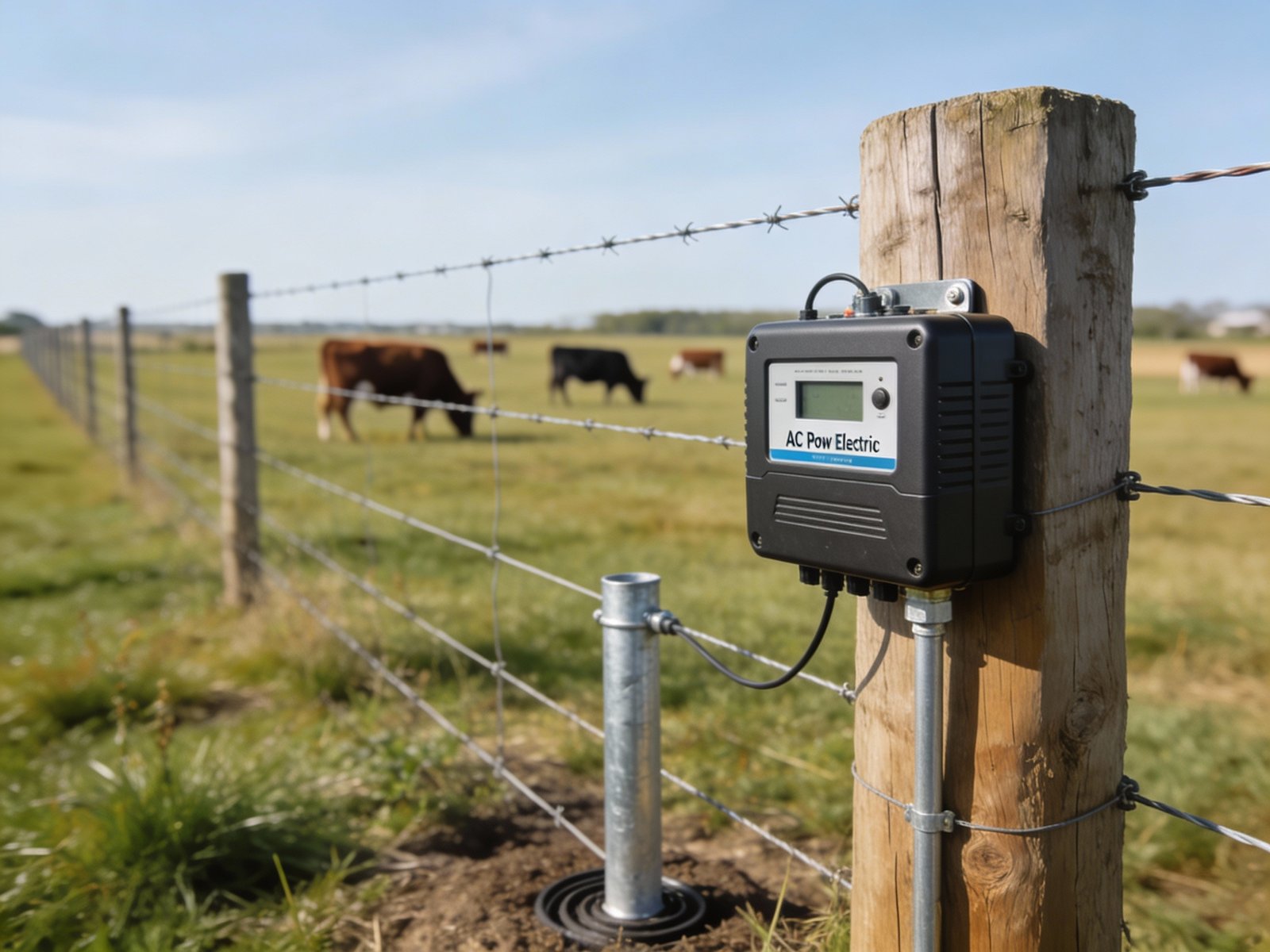
A properly sized energizer powers the complete cattle fencing system: the energizer converts electrical energy into high-voltage pulses, the fence wire carries those pulses around the paddock, posts and insulators keep electricity on the wire, and the grounding system completes the electrical circuit when cattle make contact.
What Is an Electric Fence Energizer?
An electric fence energizer is the power source of an electric cattle fencing system. It converts electrical energy into short, high-voltage pulses that travel through the fence wire. When cattle touch the wire, the pulse delivers a brief but memorable shock that trains animals to respect the boundary. Modern energizers deliver pulses approximately once per second, with each pulse lasting only a few milliseconds but carrying enough energy to create an effective psychological barrier.
- Energizer: generates the electrical pulse, typically 5,000–10,000 volts depending on model and load conditions
- Fence wire: carries the pulse around the paddock with minimal resistance loss in properly designed systems
- Posts and insulators: prevent energy loss to the ground and maintain wire tension
- Grounding system: completes the electrical circuit when cattle make contact, requiring at least 3 feet of ground rod per joule of energizer output
New to electric cattle fencing? Start with our complete guide to electric cattle fencing systems to understand how energizers fit into the overall fence design, or explore our detailed explanation of how electric fences work.
Why Choosing the Right Energizer Matters for Cattle
Cattle are large, strong animals with relatively thin hair coats, making them responsive to electric fencing but also capable of testing boundaries when motivated by fresh pasture, breeding behavior, or herd pressure. The energizer must deliver sufficient power to maintain control under all conditions your operation will encounter.
- Too weak: cattle test, push, or ignore the fence when voltage drops below 4,000 volts at contact points, leading to escapes and fence damage
- Too powerful: unnecessary cost with no added benefit since cattle respond effectively to properly sized systems at 4,000–7,000 volts
- Wrong power source: unreliable fencing in remote areas where AC power is unavailable, or wasted investment in solar systems where grid power is readily accessible
- Insufficient grounding: even high-output energizers fail in dry soil conditions without adequate ground rod installation
Most electric fence failures are caused by undersized energizers that cannot maintain voltage under vegetation load and long fence distances. A rancher managing 5 miles of two-wire perimeter fence through brushy pasture needs dramatically different output capacity than one running 1 mile of temporary polywire for rotational grazing trained cattle.
Real-world example: A 500-acre beef cattle operation in Texas installed a 2-joule solar energizer to power 8 miles of five-wire perimeter fencing. During spring vegetation growth, voltage at the far end dropped from 7,000 volts to 2,500 volts. Cattle began pushing through weak sections, requiring emergency repairs and energizer replacement with a 6-joule AC unit that maintained 5,500+ volts year-round.
Key Factors to Consider When Selecting an Energizer
Fence Length and Design
Always calculate total wire length, not just paddock perimeter. Multi-wire fences, loops, and cross-fencing significantly increase electrical load. A 1-mile perimeter fence with five wires equals 5 miles of total wire length. Adding interior cross-fencing for rotational grazing can double or triple total wire distance. Each additional mile of wire increases resistance and requires more energizer output to maintain effective voltage at distant fence sections.
Calculate wire length: Measure perimeter or total fence line distance, multiply by number of electrified wires, add any cross-fencing or interior divisions. Most manufacturers rate energizers in miles of fence under ideal conditions with minimal vegetation load.
Cattle Type and Stock Density
Beef cattle, dairy cattle, and calves respond differently to electric fencing. Higher stock density increases fence pressure and power demand. Adult beef cattle respect well-maintained fences at 4,000–5,000 volts. Dairy cattle accustomed to electric training from calf age respond at similar levels. Bulls and untrained cattle require higher voltage for initial training, while calves may require lower wire placement but similar voltage levels.
High stock density operations with intensive rotational grazing create more frequent fence contact and pressure, requiring reliable voltage delivery. Low stock density extensive grazing places less daily pressure on fences but requires longer wire runs and stronger output to reach distant paddocks.
Vegetation Load
Grass, weeds, and brush touching the fence drain energy continuously. Each vegetation contact point creates a small short circuit that draws power from the energizer. Heavy vegetation can reduce fence voltage by 50% or more, turning an adequate energizer into an inadequate one during spring growth or wet seasons.
Low vegetation environments include regularly mowed fence lines, desert or arid rangeland with sparse growth, and winter dormant pastures. These conditions allow smaller energizers to perform effectively. High vegetation environments include ungrazed fence lines, spring growth periods, brushy pastures, and areas with tall weeds or woody plant encroachment. These conditions demand higher joule output to maintain effective voltage.
Many operations experience seasonal vegetation loads: adequate voltage in winter, failing voltage in spring and summer. Size your energizer for peak vegetation conditions, not minimum conditions.
Power Source Availability
AC, battery, and solar energizers each serve different environments, from permanent boundaries to remote pastures. AC-powered energizers provide the most reliable output and lowest operating cost where grid electricity is available within 100 feet of the fence line. Battery-powered energizers offer portability for temporary fencing and rotational grazing but require regular recharging or replacement. Solar-powered energizers enable remote fence operation without grid access but require adequate sun exposure and proper battery maintenance.
Consider power reliability: grid power eliminates battery maintenance but limits fence location. Solar systems provide complete location flexibility but performance varies with seasonal sunlight and battery condition. Battery-only systems work for short-term temporary fencing but become labor-intensive for permanent installations.
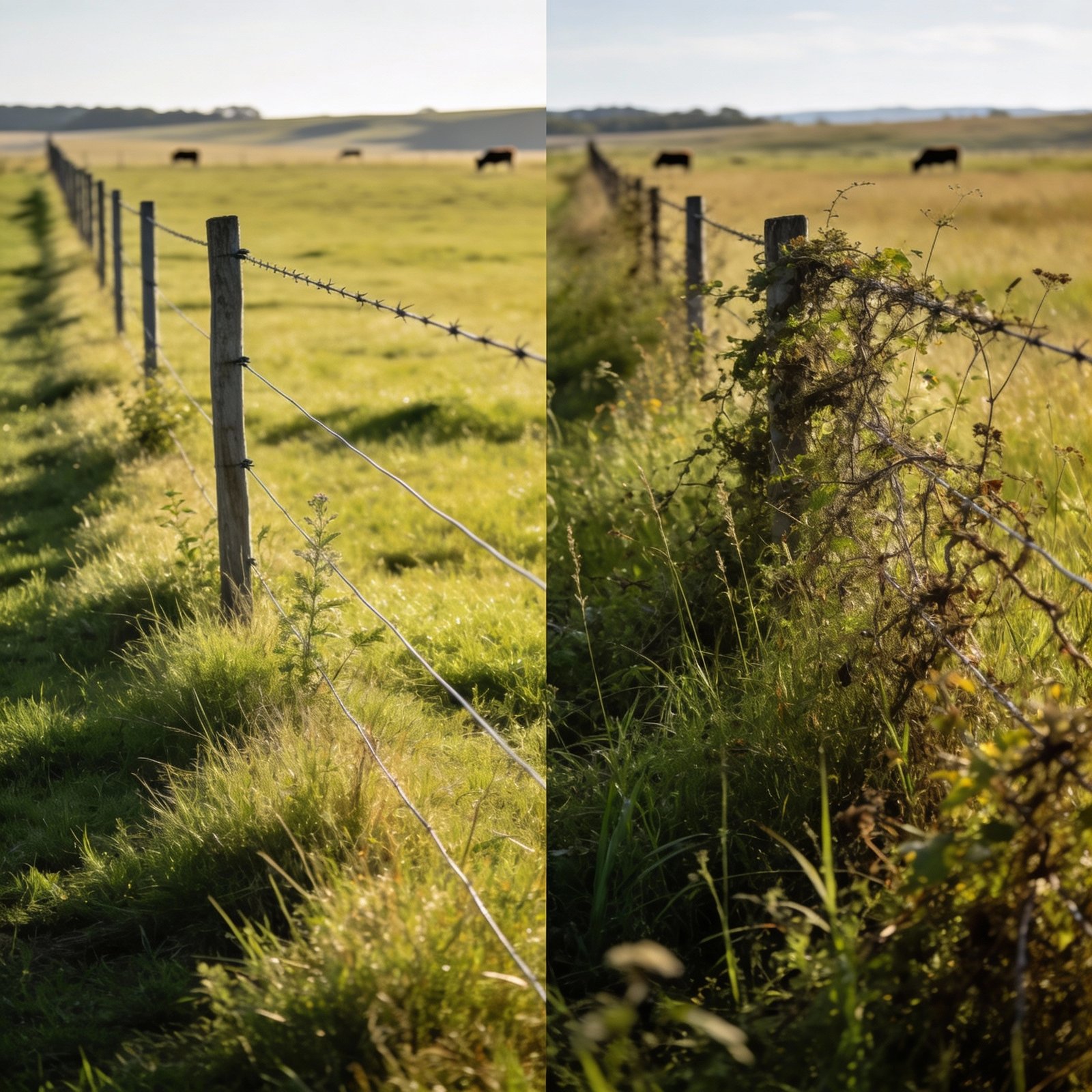
Vegetation load dramatically affects energizer performance. The comparison above shows how grass and weed growth creates continuous power drain that reduces voltage and weakens fence effectiveness. Energizers must be sized to maintain adequate voltage under your worst-case vegetation conditions.
Understanding Joules in Electric Fence Energizers
Joules measure the amount of energy delivered in each pulse. For cattle fencing, output joules matter more than advertised voltage. Peak voltage numbers represent unloaded energizer output—but your fence never operates unloaded. Wire resistance, vegetation contact, and fence length all reduce voltage. Joules measure the energizer’s capacity to push voltage through real-world resistance.
A simple rule of thumb: under ideal conditions with minimal vegetation, one joule powers approximately one mile of single-wire fence to effective voltage. However, real-world conditions require adjustment. Multi-wire fences, vegetation load, and poor conductors reduce effective distance per joule. Conservative sizing uses 0.5 miles per joule for multi-wire fences in moderate vegetation conditions.
| Output Joules | Fence Distance | Typical Use Case |
|---|---|---|
| 0.5–1 J | 1–2 miles clean wire | Short temporary fences, trained cattle, low vegetation, single or two-wire systems |
| 1–3 J | 2–6 miles moderate conditions | Medium paddocks, moderate vegetation, three to five-wire perimeter fencing, rotational grazing |
| 3–6+ J | 6–15+ miles challenging conditions | Long permanent fences, heavy vegetation, mixed herds, training untrained cattle, poor soil conductivity |
Stored joules versus output joules: Manufacturers sometimes advertise stored joules, which measure energy stored in capacitors before pulse delivery. Output joules measure actual energy delivered to the fence under load. Always compare energizers using output joules, typically measured at 500 ohms resistance. This standard allows direct comparison between brands and models.
Voltage matters for animal response: cattle feel shock and learn boundary respect at 4,000 volts or higher. Below 3,000 volts, effectiveness drops significantly. Above 7,000 volts provides no additional training benefit. Joules determine whether your energizer can maintain adequate voltage under your specific fence load conditions.
Electric Fence Energizer Size Chart
Use this chart to match energizer output to your specific cattle fencing scenario. These recommendations account for real-world conditions including multi-wire fences, typical vegetation loads, and conservative sizing for reliable year-round performance.
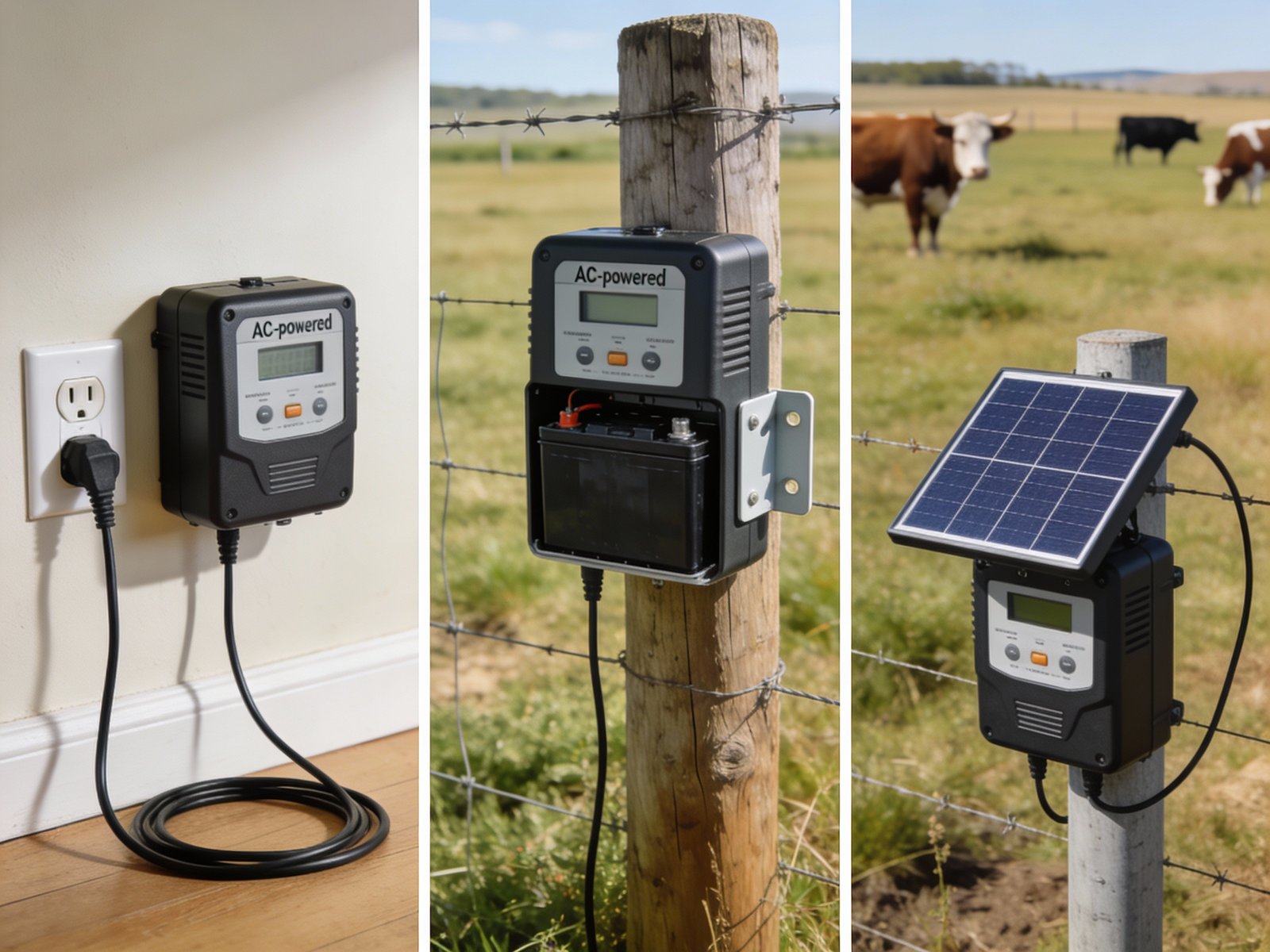
The three main energizer types serve different power availability scenarios. AC-powered units provide maximum output for permanent perimeter fencing. Battery-powered units offer portability for temporary and rotational grazing systems. Solar-powered units enable remote pasture fencing without grid access.
| Fence Scenario | Wire Length | Vegetation | Recommended Output | Best Power Source |
|---|---|---|---|---|
| Small paddock rotational grazing | 0.5–2 miles | Low to moderate | 0.5–1 J | Battery or Solar |
| Medium farm perimeter fence | 2–6 miles | Moderate | 1–3 J | AC or high-capacity Solar |
| Large ranch boundary fence | 6–15 miles | Moderate to heavy | 3–6 J | High-output AC |
| Very large operation or heavy brush | 15+ miles | Heavy vegetation | 6+ J | High-output AC |
| Training untrained cattle | Any length | Any condition | Size up one category | Match to length and vegetation |
Wire length calculation example: A rectangular 100-acre pasture measuring 1,320 feet by 3,300 feet has a perimeter of 9,240 feet or 1.75 miles. With five electrified wires, total wire length equals 8.75 miles. Add interior cross-fencing for rotational paddocks and total wire length may reach 12–15 miles. This scenario requires a 3–6 joule energizer for reliable performance.
For detailed power source selection guidance, see our energizer power source comparison.
Video Guide: Choosing the Right Energizer Output
This video demonstration from a cattle fencing expert explains how energizer output affects real-world fence performance. Watch how joule ratings translate to practical voltage delivery across long fence runs and heavy vegetation conditions.
This video demonstrates why joule ratings matter more than advertised voltage when selecting energizers. It explains how output joules under load conditions determine actual fence performance versus marketing specifications. The demonstration shows voltage measurements at different distances from the energizer, illustrating how properly sized units maintain consistent shock delivery while undersized energizers experience voltage drop. Key insights include matching energizer capacity to total wire length, accounting for vegetation pressure through the seasons, and understanding the relationship between joules, volts, and reliable cattle containment in real ranching operations.
Decision Guide: What Most Cattle Operations Choose
Real-world cattle operations typically use different energizer strategies depending on farm size, management intensity, and fence permanence. Here are the most common and effective approaches based on operation type.
Small Farm and Rotational Grazing
- Battery or solar energizer for portability
- 0.5–2 joules output for 1–4 miles total wire
- Temporary or semi-permanent polywire fencing
- Frequent fence moves for intensive grazing management
- Lower initial investment and operating costs
Best for: Farms under 200 acres with management-intensive grazing, trained cattle, and regular fence line maintenance. Solar systems with 0.5–1 joule output handle most rotational scenarios if vegetation is controlled.
Hybrid System for Medium Operations
- High-output AC energizer for permanent perimeter fence
- Portable battery or solar systems for interior paddocks
- 3–5 joules for main fence covering 6–12 miles
- 0.5–1 joule portable units for rotational subdivisions
- Designed for seasonal vegetation load variations
Best for: Farms 200–1,000 acres combining permanent boundaries with flexible interior grazing management. This approach provides security for perimeter containment while maintaining rotational grazing flexibility. Most cost-effective long-term solution for commercial operations.
Large Ranch and Commercial Operations
- High-capacity AC-powered energizer for all fencing
- 3–6+ joules output for 10–20+ miles total wire
- Permanent high-tensile wire fence construction
- Multiple grounding rods and professional installation
- Remote monitoring and fault detection systems
Best for: Ranches over 1,000 acres with extensive perimeter fencing, challenging vegetation conditions, and minimal fence maintenance capacity. Large bulls, mixed herds, or untrained cattle require higher power delivery. Investment in high-output energizers prevents costly containment failures.
Installation matters as much as energizer selection. Even high-output energizers fail without proper grounding. For detailed installation guidance, see our complete installation guide and grounding system design specifications.
Wire conductor selection also affects energizer performance. High-conductivity wire reduces resistance and allows energizers to power longer distances effectively. Compare options in our wire conductor material guide and poly wire and tape selection guide.
Common Mistakes to Avoid
- Undersizing the energizer for total wire length: Calculate all electrified wire, not just perimeter distance. A 2-mile perimeter with five wires equals 10 miles of total wire requiring significantly more output capacity
- Ignoring vegetation growth over time: Size energizers for peak vegetation conditions in spring and summer, not ideal winter conditions. Voltage adequate in January may fail in May when grass grows tall
- Poor grounding system design: Installing insufficient ground rods or placing them in rocky dry soil prevents even powerful energizers from delivering effective shock. Minimum three feet of ground rod per joule output
- Choosing an energizer based only on price: Undersized cheap energizers fail repeatedly, costing more in replacement, repairs, and escaped cattle than properly sized quality units
- Using battery energizers for permanent fencing: Battery replacement costs and maintenance time exceed AC power costs within one to two years for permanent installations
- Neglecting wire conductor quality: High-resistance wire forces energizers to work harder and reduces effective distance. Aluminum wire or thin polywire increases resistance significantly versus steel or high-tensile options
- Connecting multiple energizers to the same fence: Never connect two energizers to one fence line. Pulses interfere with each other and can damage equipment. Each energizer powers its own separate fence circuit
- Installing energizers in damp or weather-exposed locations: Moisture causes shorts and corrosion. Mount AC energizers in dry protected locations even though modern units feature weather-resistant housings
For comprehensive troubleshooting guidance when voltage problems occur, see our electric fence troubleshooting guide.
Frequently Asked Questions
What size energizer do I need for cattle?
Energizer size depends on total electrified wire length, vegetation load, and cattle type. For trained beef cattle on clean fence lines, use 1 joule per 2 miles of wire. For moderate vegetation or untrained cattle, use 1 joule per 1 mile of wire. Heavy vegetation or challenging conditions require 1 joule per 0.5 miles. Calculate total wire length by multiplying fence perimeter by number of electrified wires.
Is a solar energizer strong enough for cattle?
Yes, when properly sized and installed. Modern solar energizers deliver up to 2–3 joules output, sufficient for 2–6 miles of cattle fencing in moderate vegetation conditions. Solar systems require adequate sun exposure, quality deep-cycle batteries, and regular battery maintenance. For fence lines exceeding 6 miles or areas with heavy vegetation, AC-powered energizers provide more reliable performance.
Can one energizer power multiple paddocks?
Yes, if total fence load remains within energizer capacity. Calculate combined wire length of all connected paddocks and size energizer accordingly. Use 1 joule per mile of total wire as conservative estimate. Interior cross-fences and subdivision wires all count toward total load. Multiple separate paddocks can share one energizer if wired in series or parallel, but each connection point adds resistance.
How many ground rods do I need?
Minimum three feet of galvanized ground rod per joule of energizer output. A 3-joule energizer requires at least 9 feet of ground rod, typically installed as three 3-foot rods spaced 10 feet apart and connected with galvanized ground wire. Dry or rocky soil requires additional grounding capacity. Sandy or clay soils with good moisture retention require less. Test ground system performance with fence tester under load conditions.
What voltage do cattle need to feel shock?
Cattle respond effectively to 4,000–5,000 volts or higher at fence contact points. Below 3,000 volts, many cattle will test or push through fences. Voltage above 7,000 volts provides no additional training benefit. Properly sized energizers maintain 5,000+ volts along entire fence length under normal vegetation load.
Do I need different energizers for calves versus adult cattle?
No. Calves and adult cattle respond to the same voltage levels. Size energizer based on fence length and vegetation, not animal age. However, calves require lower wire heights for nose-level contact. First wire at 12–18 inches for calves, 24–30 inches for adult cattle. Voltage requirements remain the same at 4,000+ volts.
Can I upgrade my energizer later if needed?
Yes. Energizers connect to fence systems via simple wire terminals and ground rods. Upgrading to higher output requires no fence reconstruction, only energizer replacement. However, proper initial sizing avoids the expense and inconvenience of replacement. Size energizers conservatively for anticipated vegetation conditions and potential fence expansion.
How do I know if my energizer is working properly?
Test fence voltage with a digital fence tester at multiple points: near energizer, mid-distance, and far end of fence line. Properly functioning systems maintain 4,000+ volts at all test points under normal load. Voltage drop exceeding 2,000 volts from near to far end indicates undersized energizer, poor grounding, or excessive vegetation load. Test monthly during grazing season.
What is the difference between stored joules and output joules?
Stored joules measure energy stored in energizer capacitors before delivery. Output joules measure actual energy delivered to fence under load. Output joules matter for fence performance. Always compare energizers using output joules at 500 ohms load. Some manufacturers advertise stored joules because numbers appear higher, but these do not reflect real fence performance.
For additional safety considerations and proper installation practices, review our electric fence safety guide and regulations and compliance overview.
Next Steps
Ready to select the right energizer for your cattle operation? Here are your next steps:
- Calculate your total wire length: Measure fence perimeter, multiply by number of electrified wires, add interior cross-fencing
- Assess vegetation conditions: Consider peak growth season vegetation load, not just current conditions
- Determine power source availability: Identify grid power access or need for battery or solar systems
- Size conservatively: Choose energizer output that handles your calculated needs plus 20–30% reserve capacity
- Plan complete installation: Energizer performance depends on proper grounding, quality wire, and correct installation
Need help planning your complete electric fencing system? Contact our fencing experts for personalized guidance on energizer selection, system design, and installation planning for your specific cattle operation.