
Poly Wire and Tape for Electric Fencing
A complete application guide to poly wire, poly tape, and poly rope for electric fencing systems — covering performance, durability, visibility, conductivity, and best-use scenarios for modern cattle operations.
Making the Right Choice: Flexible Conductors for Modern Electric Fencing
Poly wire and poly tape are designed for flexibility, speed, and adaptability in electric fencing systems. They are not replacements for permanent high-tensile wire — they are tools for mobility, rotational grazing, temporary paddocks, and adaptive cattle management.
This guide focuses specifically on poly-based electric fence conductors and how they compare in real-world cattle fencing systems. It is not an installation manual, but a material selection and application reference.
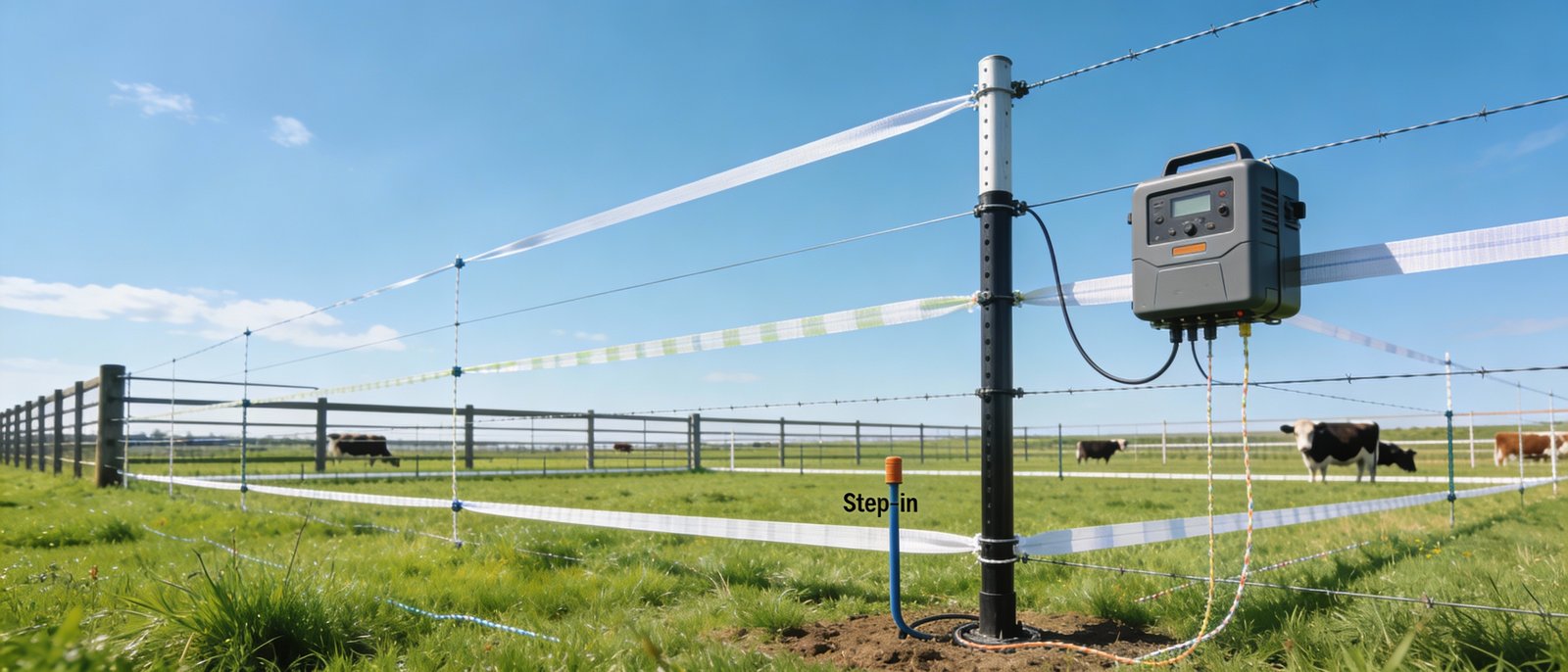
What Are Poly Wire, Poly Tape, and Poly Rope?
Poly conductors are flexible electric fence materials made from polymer filaments woven with conductive metal strands, typically stainless steel or copper. They are designed to carry electric current while remaining lightweight, portable, and easy to install.
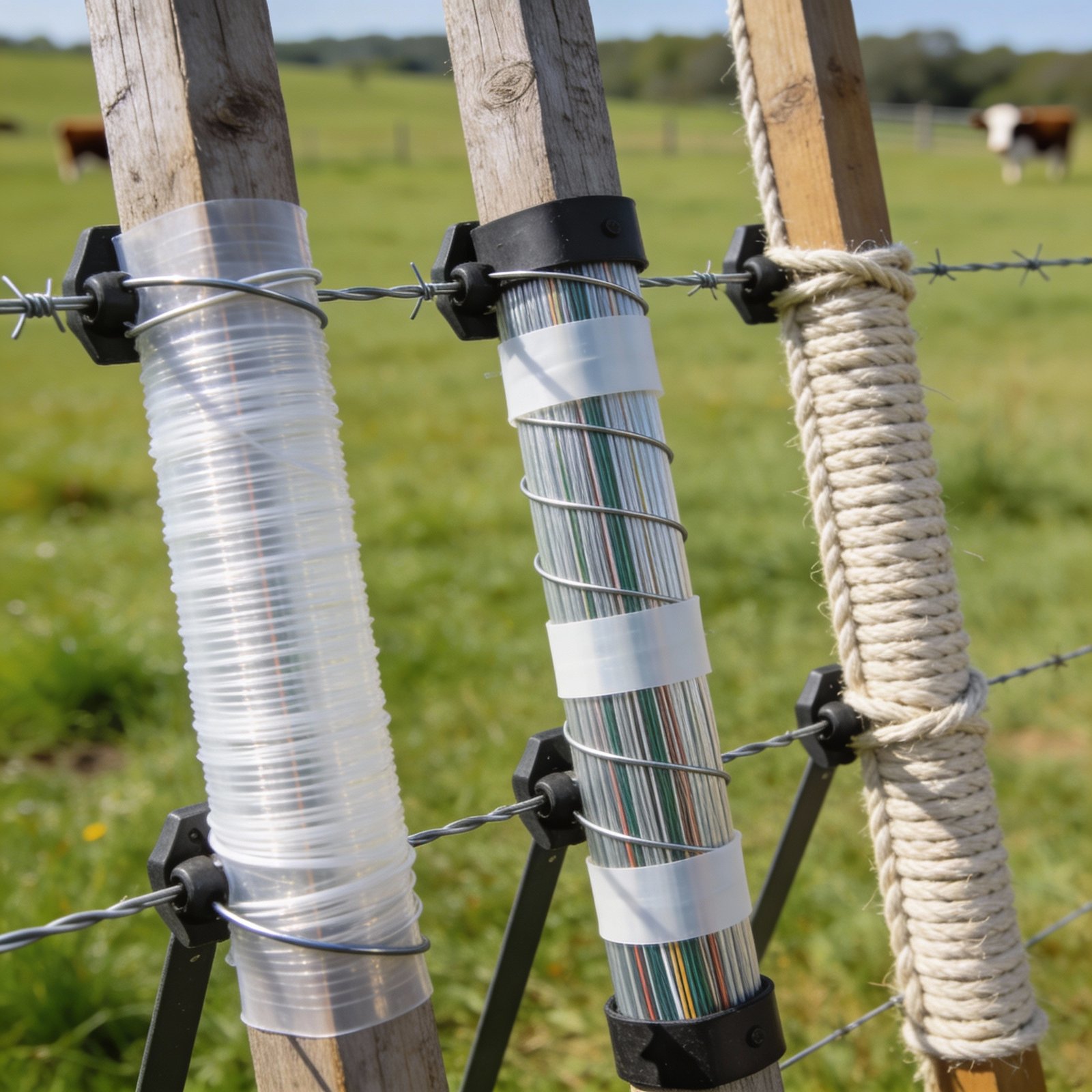
- Poly Wire: thin, lightweight, high flexibility
- Poly Tape: flat, wide, high visibility
- Poly Rope: thick, durable, high tensile strength
These materials are core components of temporary and hybrid electric cattle fencing systems.
Applications in Electric Cattle Fencing
Rotational Grazing
Fast paddock division and daily or weekly rotation systems for optimized pasture management.
Temporary Fencing
Seasonal fencing, pasture recovery zones, and training areas.
Internal Subdivision
Internal paddocks inside permanent perimeter fencing for flexible grazing patterns.
Animal Training
High visibility boundaries for behavioral conditioning and fence respect.
Poly Conductor Types Explained
Poly Wire
Lightweight, cost-effective, easy to deploy. Best for short-term fencing and rotational grazing where visibility is less critical.
Poly Tape
High visibility and animal safety. Ideal for training cattle and high-visibility boundaries, especially near roads or public areas.
Poly Rope
Strongest option with better wind resistance. Best for semi-permanent internal fencing and long-term flexible layouts.
Performance Factors
Conductivity
Number and quality of metal strands determine shock efficiency. Higher conductor counts reduce resistance and improve voltage delivery over long runs.
Durability
UV resistance and filament density affect lifespan. Quality materials withstand sun exposure and repeated installation cycles.
Visibility
Wide tape and rope improve animal recognition and fence respect, critical for training and safety.
Weather Resistance
Wind load and moisture impact long-term performance. Poly tape requires closer post spacing in windy areas.
Poly Wire vs Poly Tape vs Poly Rope
| Feature | Poly Wire | Poly Tape | Poly Rope |
|---|---|---|---|
| Visibility | Low | High | Medium |
| Durability | Medium | Medium | High |
| Conductivity | Medium | Medium | High |
| Wind Resistance | High | Low | Medium-High |
| Resistance Rating | 6000 ohms per km | Variable by width | 130-500 ohms per km |
| Best Use | Temporary fencing, strip grazing | Training & visibility | Semi-permanent fencing, long runs |
| Ideal Animal | Trained cattle, sheep, goats | Horses, untrained cattle | All livestock, high-value animals |
Video Demonstration: Poly Wire Setup for Rotational Grazing
This demonstration shows the practical setup of a solar-charged polywire paddock system for rotational grazing. The video covers post placement, wire tensioning, gate handle creation, and energizer connection for temporary electric fencing applications.
Video Summary: This video demonstrates real-world use of poly wire in cattle fencing systems for rotational grazing. It compares visibility, durability, and setup efficiency under field conditions. The demonstration highlights why poly wire excels in portability and temporary paddock systems, while also showing practical techniques for gate construction, corner post placement, and solar energizer connection. It reinforces best practices for matching poly conductor types to energizer capacity, fence layout, and cattle behavior.
Decision Guide: Best Practice for Poly Conductor Use
- Poly wire for daily or weekly moves
- Battery or solar energizer
- Portable step-in posts
- Reel systems for fast deployment
- Permanent perimeter fencing with high-tensile wire
- Poly wire or tape for internal paddocks
- Rotational grazing systems
- AC-powered energizer for main fence
- Poly rope or heavy-duty poly braid
- AC-powered energizer
- Long-term internal divisions
- 9-strand or higher conductor count
Common Mistakes to Avoid
- Using poly wire as permanent perimeter fencing instead of high-tensile wire
- Undersized energizers for poly systems due to higher resistance
- Poor grounding design that reduces shock effectiveness
- Ignoring wind load on poly tape leading to premature wear
- Mixing incompatible metals at connection points causing corrosion
- Insufficient post spacing for tape in high-wind areas
- Using low-strand-count wire on long runs without boosting voltage
How Poly Conductors Fit into a Complete Electric Fencing System
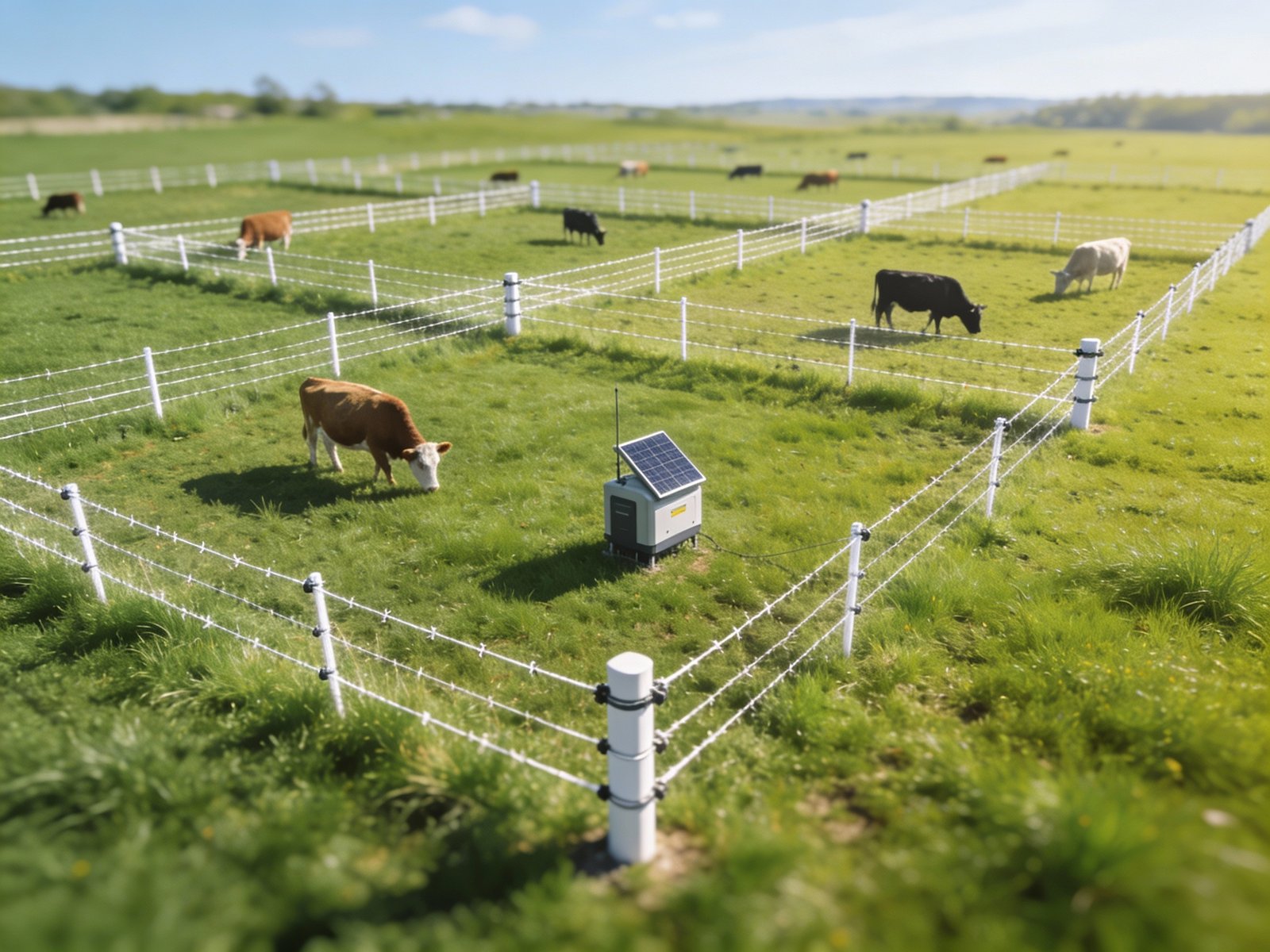
Poly wire, tape, and rope work best as part of a hybrid electric fencing system that combines the permanence of high-tensile wire with the flexibility of poly conductors:
Permanent wire perimeter + poly internal fencing = flexibility + stability
This hybrid approach provides secure perimeter containment while allowing rapid reconfiguration of internal grazing areas. The permanent fence carries primary voltage efficiently, while poly conductors enable adaptive management without infrastructure commitment.
Learn more about complete system design in our electric fence systems guide and installation requirements.
Frequently Asked Questions
Is poly wire strong enough for cattle?
Yes, for trained cattle and internal fencing applications. Poly wire delivers effective electric shock for containment, though it lacks the physical strength of high-tensile wire. It works best inside secure perimeters where cattle have learned to respect electric boundaries.
Can poly tape replace permanent wire fencing?
No. Poly tape is designed for temporary, flexible, or training applications. It lacks the durability and tensile strength required for permanent perimeter fencing. Use high-tensile wire for perimeters and poly materials for internal divisions.
Which is better: poly wire or poly tape?
Poly wire is better for portability and frequent moves in rotational grazing. Poly tape is better for visibility, animal training, and situations where fence recognition is critical. Choose based on your primary need: mobility versus visibility.
How many strands of poly wire do I need for cattle?
For trained cattle in rotational grazing systems, one to three strands is typical. Place the bottom wire at calf nose height if calves are present. Untrained cattle or permanent applications may require additional strands for psychological containment.
What is the lifespan of poly tape and poly wire?
Quality poly wire can last three to five years with proper care. Poly tape typically lasts two to four years, with reduced lifespan in high-wind or high-UV environments. Poly rope offers the longest service life at four to seven years.
Do I need a more powerful energizer for poly conductors?
Yes. Poly conductors have higher resistance than metal wire, requiring energizers with higher joule ratings to maintain effective voltage over distance. Plan for 20 to 30 percent more power capacity than equivalent metal wire runs.
Next Steps
- Explore permanent cattle fence wire options
- Learn about grounding system design
- Build a hybrid electric fencing system
- Contact us for personalized fencing recommendations