
Predator Electric Fence Design | Protect Livestock from Coyotes, Wolves & Bears
How to design electric fencing systems to protect livestock from predators during high-risk periods
Why Predator Protection Matters in Livestock Operations
Predator pressure can cause significant livestock losses, particularly during calving and lambing seasons. In regions with coyotes, wolves, bears, or foxes, conventional fencing alone is often insufficient. A single predator attack can cascade into repeated losses as predators learn that livestock are accessible and vulnerable.
Properly designed electric fencing creates a powerful psychological and physical deterrent that predators quickly learn to avoid. Unlike livestock containment fencing, which relies on animals respecting boundaries after initial training, predator exclusion fencing must deliver an immediate, severe shock on first contact. The goal is not gradual conditioning but instant behavioral avoidance.
Electric Fence Requirements by Predator Type
Different predators require different fence configurations. Thick fur, digging behavior, climbing ability, and body size all influence fence design. A fence designed to deter foxes will fail against wolves. A fence adequate for black bears may not stop grizzlies. Understanding predator-specific behavior is the foundation of effective protection.
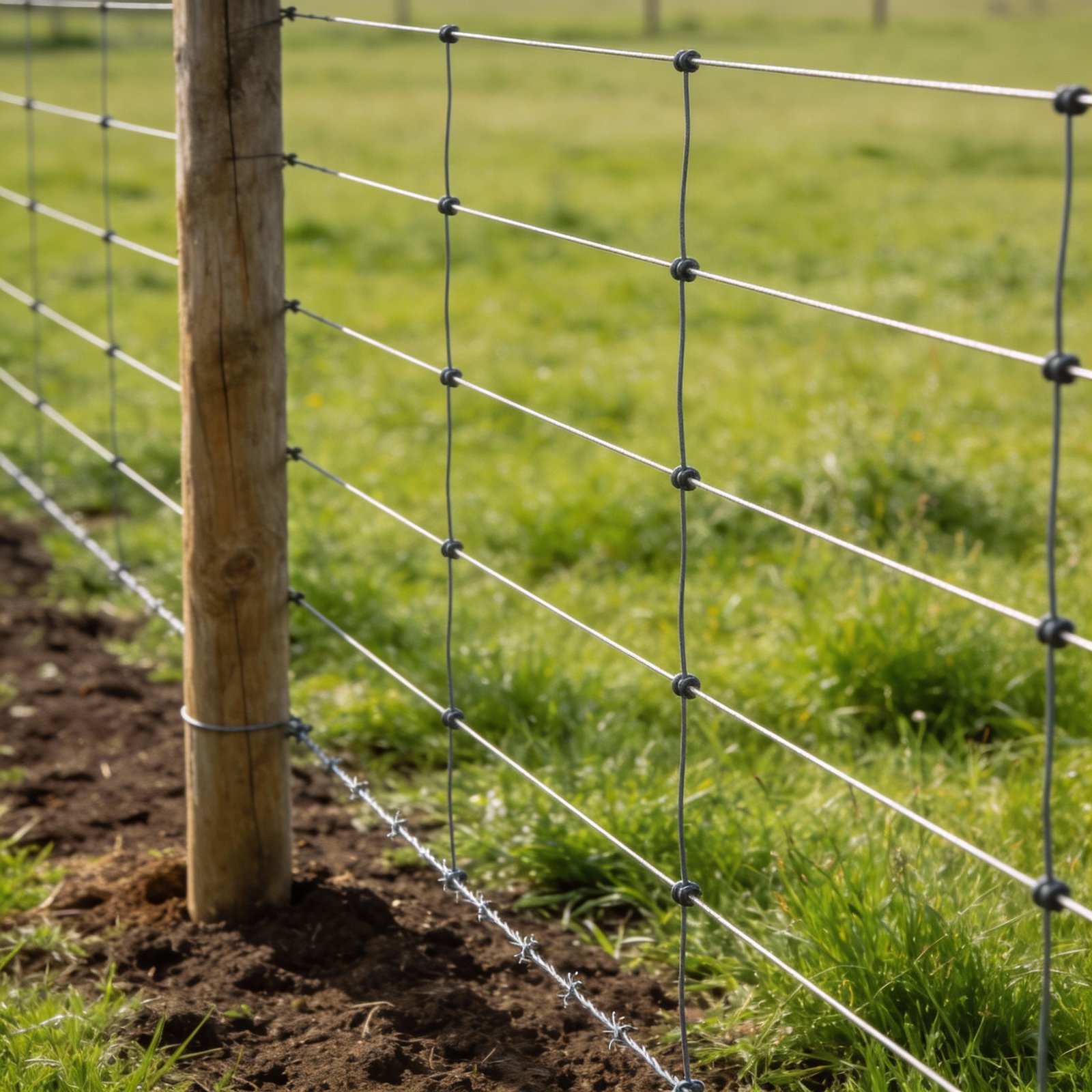
Coyotes and wolves possess thick winter coats that act as natural insulators, reducing the effective shock they receive from lower-voltage systems. Bears have dense fur and considerable determination when they sense food sources. Foxes are agile diggers that exploit ground-level gaps. Each behavior pattern demands a specific engineering response.
| Predator Type | Minimum Voltage | Fence Configuration | Special Considerations |
|---|---|---|---|
| Coyotes / Wolves | 4,000–5,000 V | 7 strands, 6–8 inch spacing, 42–54 inch height | Thick fur requires higher voltage; close spacing prevents slipping through |
| Bears | ≥ 5,000 V | 7 strands, 42 inch (black bear) or 54 inch (grizzly) | Use bait to train bears to avoid fence before livestock arrive |
| Foxes | 4,000–5,000 V | Low bottom wire within 6 inches of ground | Prevent digging under fence; tight vegetation control essential |
Why Voltage Alone Is Not Enough
Many producers mistakenly believe that simply increasing voltage creates effective predator deterrence. In reality, voltage is only one component of a functional deterrent system. Without proper grounding system design and testing, wire spacing, and circuit design, even 10,000 volts can fail to deliver a meaningful shock.
Predators with thick fur or heavy winter coats require voltage to penetrate insulation and reach the skin. But voltage delivery depends entirely on completing an electrical circuit. If the predator does not simultaneously contact the fence and a functional ground path, no shock occurs regardless of fence energizer output. This is why hot and ground wire configuration and soil grounding system quality are as critical as the energizer itself.
Wire density prevents predators from exploiting gaps. Wide spacing between wires allows coyotes and wolves to slip through without contact. Inadequate bottom wire height invites digging or crawling entry. Each design element must work together to force contact and deliver a severe, memorable shock.
Core Design Principles for Predator Electric Fencing
Hot and Ground Alternating Wire Systems
Predator fencing must remain effective in dry, frozen, or snow-covered ground conditions. An alternating hot and ground wire system ensures a shock even when soil conductivity is poor. This design eliminates reliance on soil as the sole return path for electrical current.
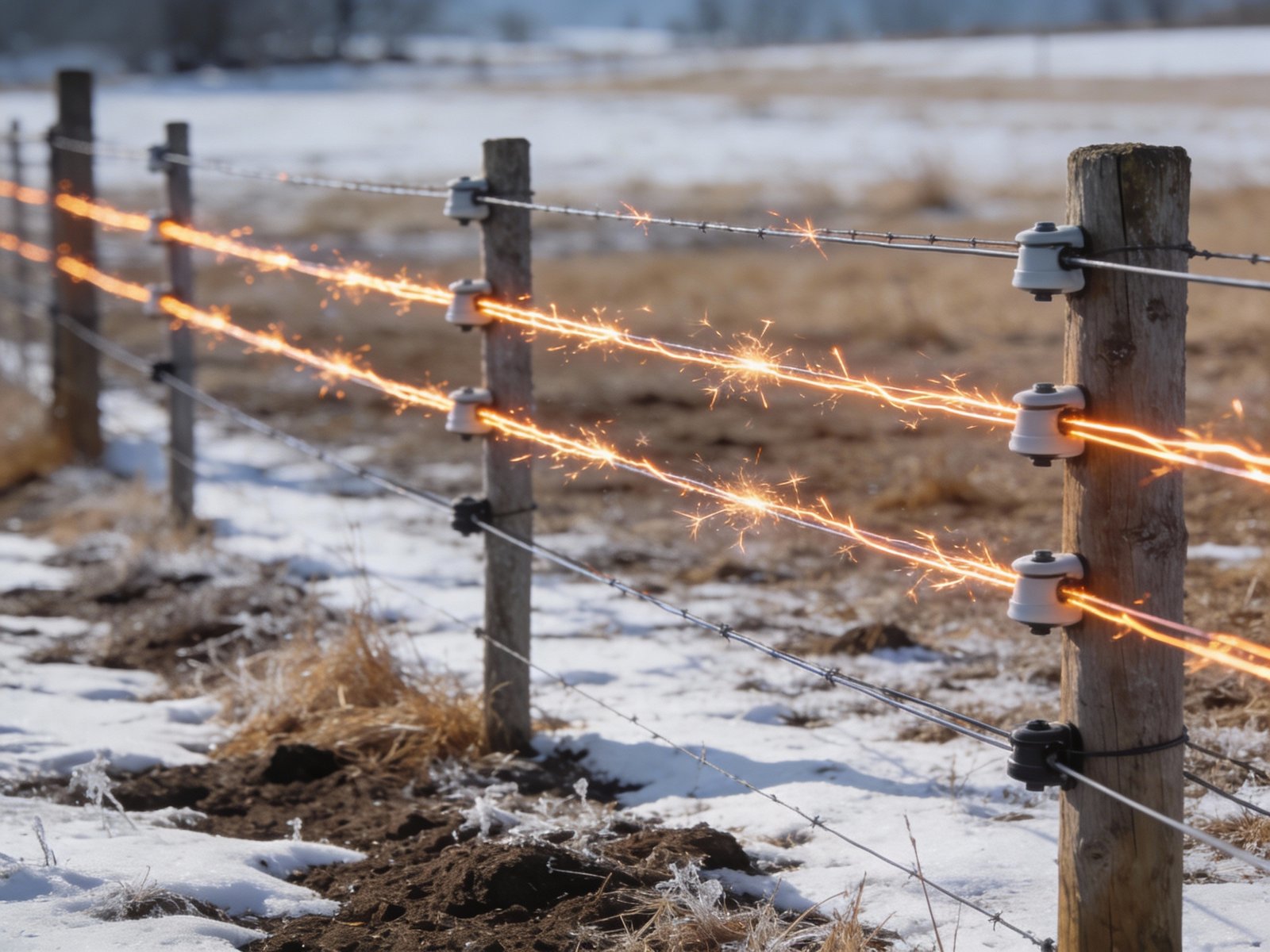
In a hot and ground system, every other wire is connected to the energizer ground terminal rather than the hot terminal. When a predator contacts both a hot wire and a ground wire simultaneously, the circuit completes through the predator’s body rather than through the soil. This delivers full voltage regardless of soil moisture, frost depth, or snow cover.
Standard all-hot fence designs depend on the predator standing on conductive soil while touching the fence. During winter in northern regions, frozen ground acts as an insulator and drastically reduces shock effectiveness. In arid regions, dry soil similarly prevents current flow. Hot and ground systems bypass this limitation entirely and maintain consistent year-round performance.
- Alternate energized and grounded wires throughout the fence height
- Ensure wire spacing forces predators to contact both wire types simultaneously
- Maintain consistent voltage year-round regardless of soil conditions
- Connect ground wires to a dedicated grounding system separate from hot wires
Bottom Wire Placement and Dig Prevention
Many predators attempt to dig under fences rather than jump over them. Foxes, coyotes, and even wolves instinctively test fence lines at ground level where vulnerability is highest. Bottom wire placement is critical to preventing these breaches.
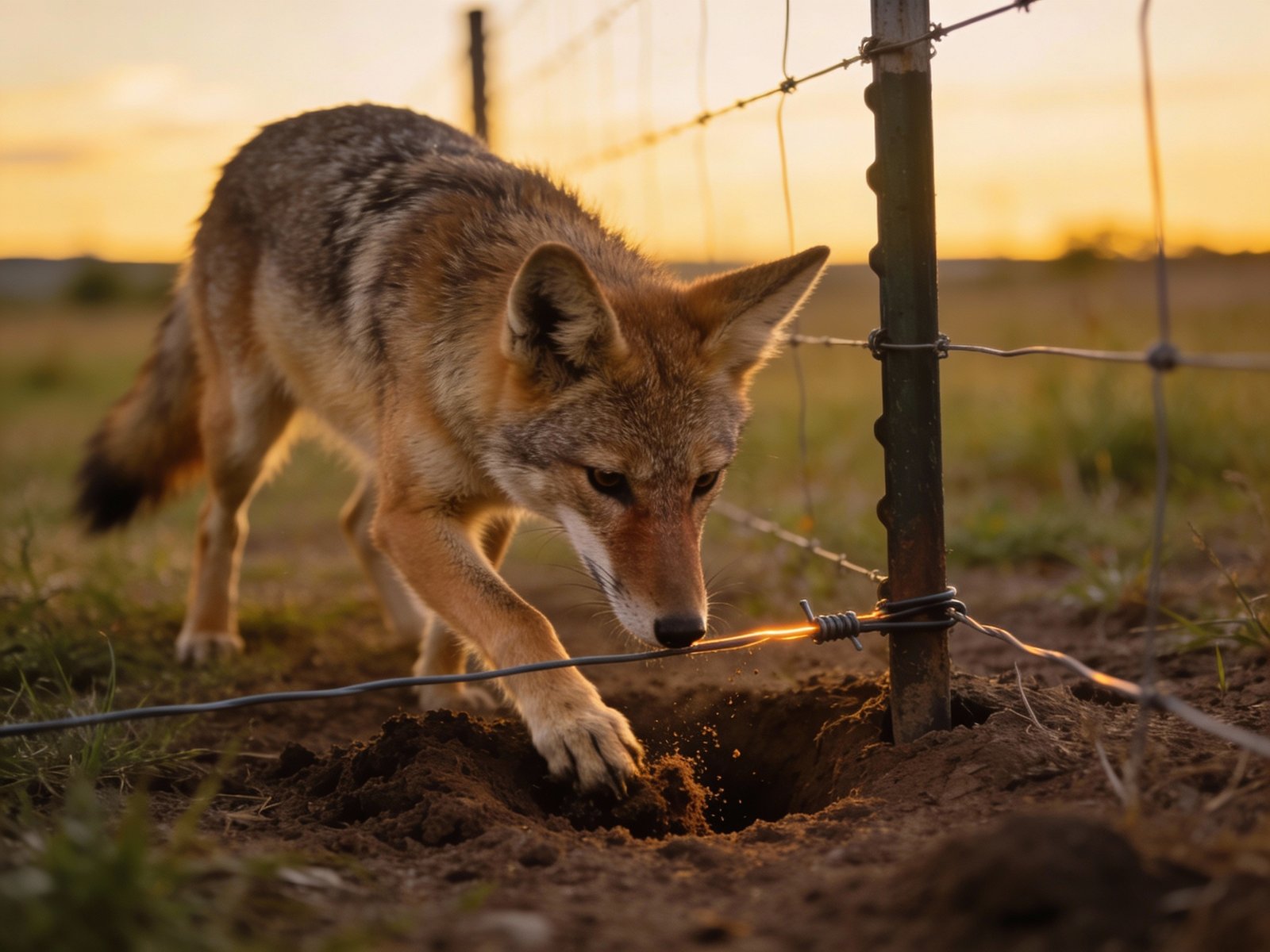
A bottom wire positioned six inches or lower from the ground intercepts digging attempts before predators create passable tunnels. If the wire is higher, predators can excavate beneath it without contact. Vegetation growth under the wire creates a similar problem by providing insulation that prevents shock delivery.
Effective bottom wire protection requires ongoing vegetation management. Grass, weeds, and brush growing against the wire drain voltage and create dead zones. Regular mowing or herbicide application along the fence line maintains clearance and shock effectiveness. This maintenance burden is higher than livestock containment fencing but essential for predator deterrence.
- Bottom wire should be six inches or less from ground surface
- Keep vegetation trimmed under fence to prevent voltage drain
- Inspect for burrows or soil erosion that creates gaps beneath wire
- Use ground-return wire as bottom strand in areas with persistent digging pressure
Seasonal Risk Escalation and Calving Protection
Predator pressure is not constant throughout the year. Risk escalates dramatically during calving and lambing seasons when newborns are vulnerable and afterbirth attracts predators from considerable distances. Temporary reinforcement during these high-risk periods significantly reduces losses without year-round installation costs.
Calving areas require higher voltage, additional wires, and more frequent inspections than normal grazing pastures. Predators that normally avoid electric fences may test them more aggressively when they detect vulnerable prey and strong attractant scents. A fence adequate for general livestock containment often fails during calving season unless specifically reinforced.
Calving Areas
Use higher voltage, additional wires, and frequent inspections during peak calving. Consider installing temporary predator fencing around designated calving pastures rather than reinforcing entire property perimeters. Concentrate protection where newborns are most vulnerable. Voltage should be tested daily during calving season to ensure consistent deterrence.
Lambing Areas
Lambing pastures benefit from denser wire spacing and temporary perimeter reinforcement. Lambs are smaller targets than calves and can slip through wider spacing that would contain cattle. Bottom wire placement becomes even more critical as foxes and coyotes can easily carry off lambs. Night penning with electrified enclosures provides maximum protection during peak vulnerability.
Many producers install reinforced electric fencing only during the 60 to 90 day window when calving or lambing occurs. This seasonal approach concentrates investment where risk is highest. Portable fence systems using step-in posts and polywire allow rapid deployment and removal as seasonal needs change.
Additional Considerations: Understanding Psychological Deterrence Versus Physical Barriers
Electric fencing for predator protection operates fundamentally differently than physical barrier fencing. A woven wire or barbed wire fence relies on strength and height to prevent passage. An electric fence relies on behavioral conditioning. The fence does not physically stop a determined predator; it teaches the predator to stop itself.
This psychological mechanism requires a strong initial shock that creates lasting avoidance behavior. If the first contact delivers insufficient pain, the predator learns the fence is tolerable and will test it repeatedly. Once this testing behavior is established, reinforcement becomes extremely difficult. The fence must work perfectly on first contact or risk failure.
Predators differ from livestock in their motivation and persistence. Cattle learn fence boundaries through gradual conditioning and maintain respect because they have ample forage inside the fence. Predators approach fences with singular focus on prey on the other side. They are willing to endure repeated shocks if the reward is sufficient. This is why predator fencing requires higher voltage, better grounding, and more robust design than livestock containment systems.
Bears in particular will test fences aggressively if they detect food sources. A bear that receives a weak shock may associate the fence with minor discomfort rather than danger. It may then lean into the fence, push through multiple wires, and breach the enclosure despite continued shock. This behavior demonstrates why voltage and proper grounding are non-negotiable for bear deterrence.
Training Predators to Avoid Electric Fences
In some cases, especially with bears, intentional fence training improves effectiveness before livestock are present. This involves applying attractants to hot wires so predators experience a strong shock while investigating appealing scents. The negative association created by this initial contact establishes long-term avoidance behavior.
Training should use highly attractive baits that predators cannot resist. Peanut butter, bacon grease, or fish oil applied to aluminum foil strips hung on hot wires creates irresistible targets. When bears lick or touch the bait, they receive full voltage shock directly to sensitive mouth tissue. This creates stronger behavioral conditioning than incidental contact with fur-covered body parts.
This technique works best in areas with established bear populations before high-value attractants like beehives or livestock are introduced. Once bears learn the fence delivers severe consequences, they avoid it even when highly motivated by hunger. The investment in pre-training prevents losses that would occur during the critical first encounters between predators and unprotected resources.
- Apply attractants such as peanut butter, bacon grease, or fish oil on aluminum foil strips
- Hang attractant strips on hot wires at nose height for target species
- Allow predators to experience a strong initial shock before introducing livestock
- Remove attractants after training period but maintain fence voltage
- Monitor with trail cameras to verify predator avoidance behavior
Differentiation Between Livestock Containment and Predator Exclusion Fencing
Livestock containment fencing and predator exclusion fencing serve opposite purposes and require different engineering approaches. Containment fencing keeps animals inside a boundary. Exclusion fencing keeps threats outside. These different objectives demand different voltage levels, wire spacing, and maintenance protocols.
Livestock containment relies on training animals to respect boundaries and providing sufficient forage so they lack motivation to escape. Lower voltage is acceptable because animals are conditioned gradually and have no strong incentive to breach. Wire spacing can be wider because livestock body size prevents passage through moderate gaps.
Predator exclusion must deliver maximum deterrence on first contact against highly motivated animals. Predators have singular focus on prey and will tolerate significant pain if they believe success is possible. Wire spacing must be tight enough to prevent any passage. Voltage must be high enough to penetrate thick fur and create immediate retreat behavior. Grounding must be flawless because predators will not encounter the fence repeatedly like contained livestock.
These differences mean a fence designed for cattle containment will fail catastrophically for predator exclusion. Producers cannot simply add voltage to an existing livestock fence and expect predator protection. The entire system must be designed from the ground up for exclusion rather than containment.
Common Predator Fence Failures and How to Avoid Them
Most predator fence failures result from predictable design and maintenance errors rather than inherent limitations of electric fencing. Understanding these failure modes allows producers to avoid them through proper initial design and ongoing management. Many of these issues are covered in depth in guides on common electric fence installation mistakes.
When a predator successfully breaches an electric fence once, future deterrence becomes exponentially more difficult. The predator has learned the fence is passable and will test it more aggressively. Prevention through proper initial design is far more effective than attempting to re-establish deterrence after breach. Following proper electric fence safety guidelines ensures the system operates effectively without creating hazards.
Advanced Strategy: Integration with Existing Fence Infrastructure
Many operations already have woven wire, barbed wire, or other physical fencing in place. Adding electric components to existing infrastructure can create effective predator protection without complete fence replacement. This approach reduces cost while improving security.
Offset electric wires mounted outside existing fence lines prevent predators from climbing over or digging under physical barriers. A single hot wire positioned six inches outside and six inches above ground stops digging attempts. Additional hot wires above the existing fence prevent jumping or climbing. This layered approach combines physical barrier strength with electric deterrence.
Existing woven wire or field fence can serve as grounded return wires in hot and ground systems. The mesh is connected to the energizer ground terminal while offset hot wires are mounted outside. When predators contact both the hot wire and the grounded mesh, full circuit completes regardless of soil conditions. This maximizes existing infrastructure value while adding predator-specific protection.
Frequently Asked Questions
Is electric fencing effective against predators?
Yes. When properly designed, electric fencing is one of the most effective non-lethal predator deterrents available. Success requires adequate voltage, proper grounding, appropriate wire spacing, and regular maintenance. Improperly designed systems fail regardless of energizer quality.
Does predator fencing need more maintenance than livestock fencing?
Yes. Higher wire density and voltage requirements demand more frequent inspection and vegetation control. Grass or weeds touching multiple wires create significant voltage drain that reduces shock effectiveness. Weekly inspection during growing season is recommended. Monthly inspection during dormant season is minimum acceptable frequency.
Can predator fencing be temporary?
Yes. Many producers install reinforced electric fencing only during calving or lambing seasons when predator risk peaks. Portable systems using step-in posts and polywire allow rapid deployment and removal. Temporary installations must meet the same voltage and spacing requirements as permanent systems to be effective.
What energizer size is needed for predator fencing?
Predator fencing requires higher joule output than livestock containment due to longer wire lengths and higher voltage requirements. A minimum of one joule output per mile of wire is recommended. Operations with multiple fence lines or heavy vegetation pressure should use two to three joules per mile. Consult energizer specifications for predator-specific applications.
How do I know if my grounding system is adequate?
Proper grounding testing requires a fence voltage tester and specific procedure. Grounding system adequacy cannot be determined by visual inspection alone. Testing procedures and troubleshooting methods are critical knowledge for predator fence reliability.
Will snow reduce fence effectiveness?
Snow can reduce effectiveness in all-hot wire systems by insulating predators from ground contact. Hot and ground alternating wire systems maintain effectiveness regardless of snow depth because the circuit completes through the predator rather than through soil. This is why hot and ground designs are essential for northern operations.
Key Takeaways for Predator Protection
Professional Fence Products and Expert Support
Implementing effective predator protection requires quality materials and expert guidance. While electric components are essential for predator deterrence, the structural foundation matters equally. High-tensile wire, proper posts, and durable insulators ensure long-term system reliability.
For operations requiring permanent perimeter fencing with integrated electric predator protection, fixed knot woven wire provides structural strength while supporting offset electric wires. This combination delivers physical barrier integrity with electric deterrence capability. Hinge joint fencing offers another option for combining traditional livestock containment with predator exclusion upgrades.
Explore professional-grade fence materials at cattlefencewire.com/products including fixed knot and hinge joint options suitable for predator fence applications.
For custom predator protection design consultation or technical support on integrating electric systems with structural fencing, contact fencing professionals at cattlefencewire.com/contact.