
Rotational Grazing with Electric Fencing
How to use electric fencing as the core tool for efficient, flexible rotational grazing systems
Why Electric Fencing Is Essential for Rotational Grazing
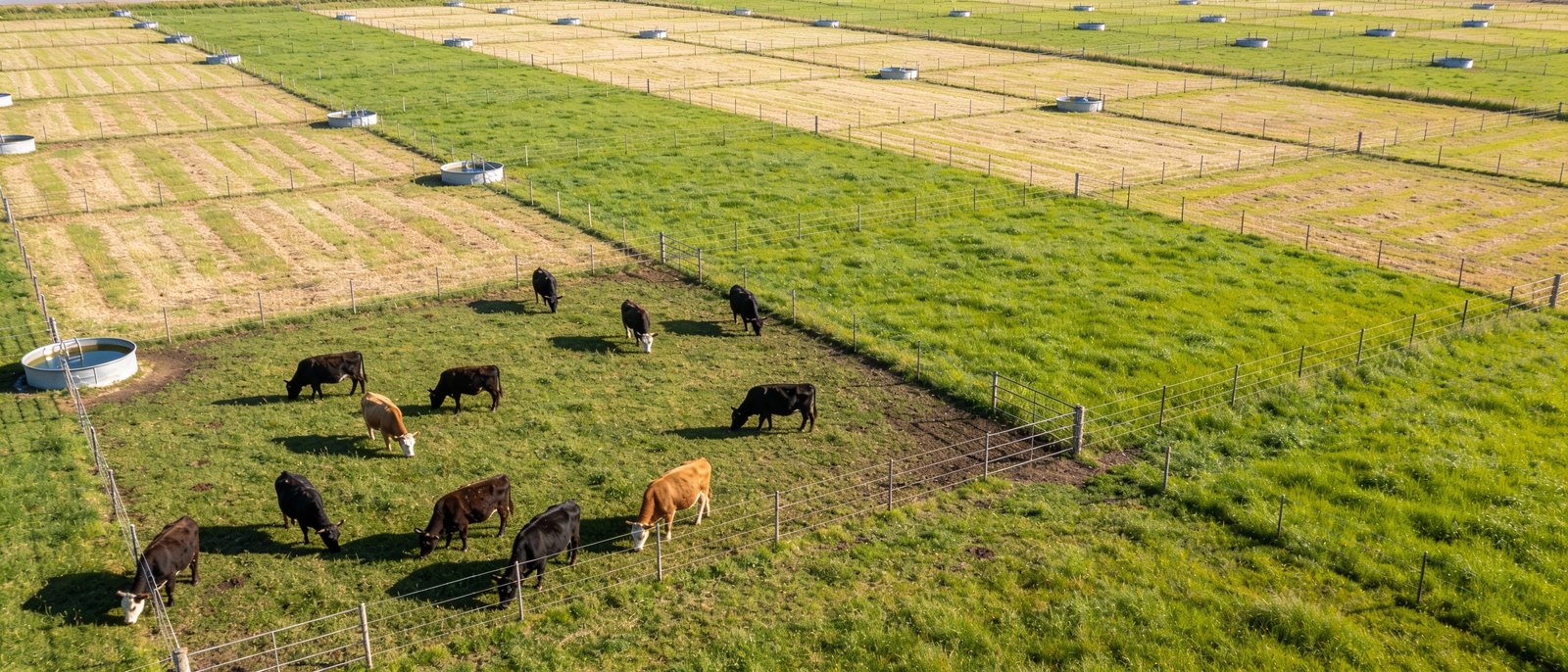
Rotational grazing relies on precise control of livestock movement, grazing pressure, and rest periods. Without flexible fencing, managing pasture utilization becomes inefficient and labor-intensive. Unlike permanent perimeter fencing designed to contain livestock within fixed boundaries, rotational grazing fencing functions as a dynamic management tool that enables daily or weekly paddock adjustments based on forage growth, weather conditions, and stocking density.
Electric fencing provides the flexibility, speed, and cost efficiency needed to divide large pastures into smaller paddocks and adjust grazing plans in real time. Temporary electric fencing creates a psychological barrier rather than a physical one, allowing producers to reconfigure paddock layouts with minimal labor while maintaining effective livestock control. This adaptive capability distinguishes rotational grazing systems from static pasture management and enables precise matching of forage supply to animal demand throughout the grazing season.[1][2]
System Design Principles for Rotational Grazing
Electric Fence Types Used in Rotational Grazing
⚡ Temporary Electric Fencing
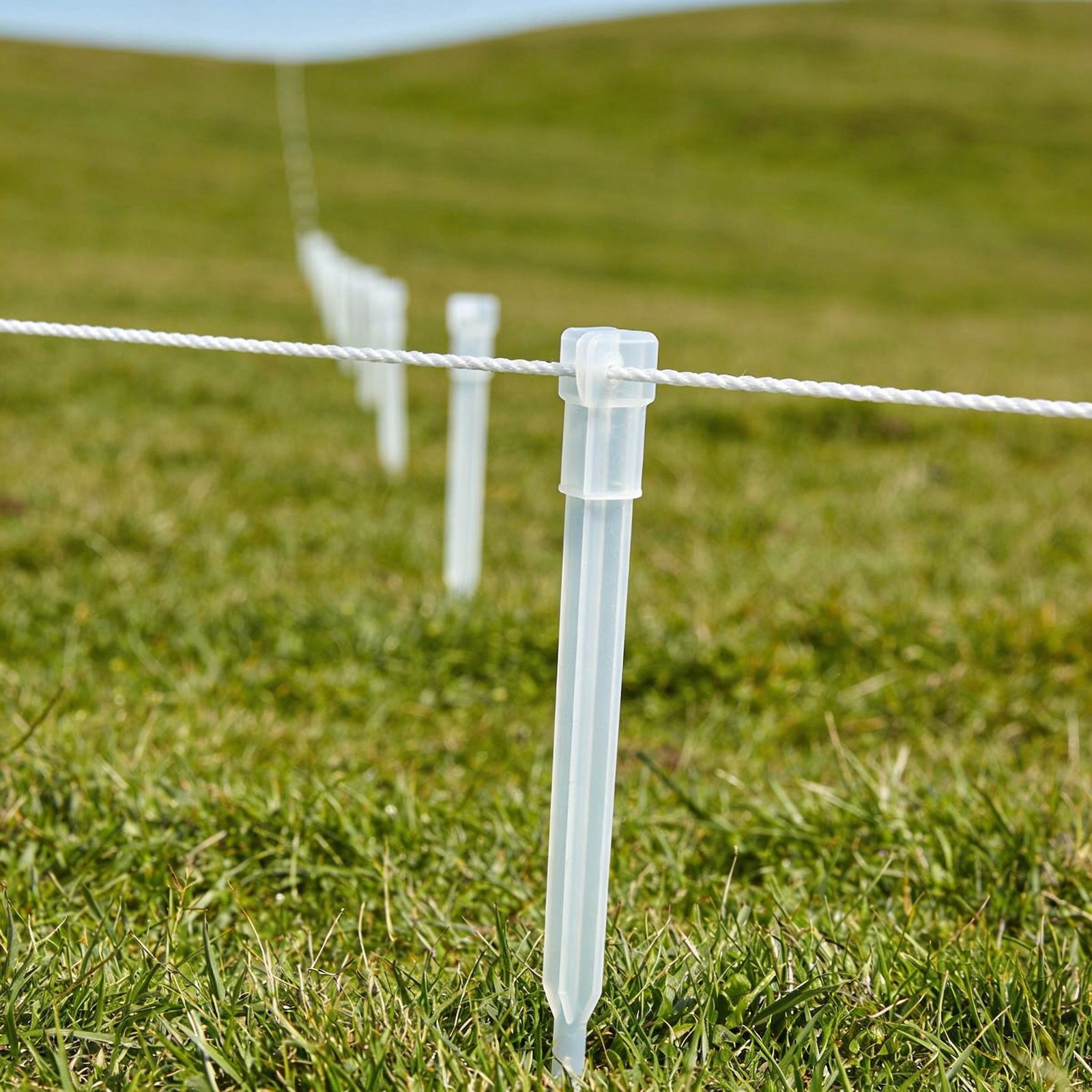
Temporary fencing is the foundation of most rotational grazing systems. It allows frequent movement and adjustment without permanent construction. Step-in posts can be installed and removed in minutes, while polywire and poly tape conductors provide adequate electrical conductivity for cattle control with minimal material cost.
- Poly wire or poly tape conductors with embedded wire filaments
- Step-in posts or pigtail posts for rapid deployment
- Ideal for daily or weekly paddock changes
- Posts can be spaced up to 50 feet apart for cattle applications
- Single strand effective for trained cattle at nose height
🔗 Single-Wire High-Tensile Fencing
In semi-permanent layouts, a single strand of high-tensile wire provides durable internal divisions with minimal material cost. This approach works as a permanent subdivision within larger pastures, with temporary fencing used for fine-scale paddock adjustments.
- Low material usage compared to multi-strand systems
- Effective once cattle are trained to respect electric fences
- Long service life with minimal maintenance
- Can serve as feeder wire for temporary polywire connections
🔌 Energizer and Power Considerations
Energizer selection directly impacts fence effectiveness in rotational systems. Solar-powered energizers offer portability and eliminate the need for electrical infrastructure, making them ideal for remote paddocks. Battery-powered units provide consistent output in shaded locations, while plug-in models deliver the highest joule ratings for extensive fence systems.
For temporary polywire systems, you can effectively power up to one mile of fence by placing the energizer centrally and running wire in both directions. Undersized energizers fail during wet conditions when vegetation contact increases electrical load, while properly sized units maintain 2,000 to 5,000 volts throughout the system. Learn more about energizer sizing for rotational grazing systems.[5][3]
⚡ Grounding System Design
Proper grounding completes the electrical circuit when cattle contact the fence. Without adequate grounding, the shock becomes ineffective regardless of energizer capacity. Temporary fencing requires the same grounding standards as permanent systems: a minimum of three 6-foot galvanized steel ground rods driven 5.5 feet into soil and spaced 10 feet apart.[6][4]
Ground rods should be located near permanent moisture when possible, as moist soil dramatically improves electrical conductivity. Connect rods using 12.5-gauge insulated wire with ground rod clamps, ensuring tight connections to prevent voltage loss. Dry, sandy, or rocky soils may require additional ground rods or implementation of a two-wire system with dedicated ground return wires. Understand proper grounding for temporary electric fencing to maintain system reliability.[7]
Benefits of Rotational Grazing with Electric Fencing
🌱 Increased Forage Yield
- More uniform grazing across paddocks
- Improved regrowth from rest periods
- Higher forage density and biomass production
- Stronger root systems from controlled defoliation
🐄 Reduced Trampling & Selective Grazing
- Better pasture utilization through controlled grazing pressure
- Less wasted forage from trampling
- Improved intake efficiency and animal performance
- Increased average daily gain from higher-quality forage access
🌾 Faster Pasture Recovery
- Controlled rest periods matched to plant growth rates
- Stronger root systems and carbohydrate reserves
- Longer stand persistence and reduced overgrazing
- More diverse plant communities over time
🪱 Improved Soil & Parasite Control
- Enhanced soil organic matter from manure distribution
- Reduced parasite reinfestation through paddock rotation
- Improved manure distribution across pastures
- Better nutrient cycling and soil fertility
Implementing a Rotational Grazing System
Permanent + Temporary Fence Strategy
The most effective systems combine permanent perimeter fencing for security with temporary internal electric fencing for flexibility. This hybrid approach leverages the strengths of each fence type: permanent fencing provides reliable containment and property boundaries, while temporary fencing enables adaptive paddock management without capital-intensive infrastructure.
Understanding the distinction between permanent vs temporary electric fencing systems helps optimize both initial investment and long-term management efficiency.
- Permanent perimeter fencing for security and boundary definition
- Semi-permanent high-tensile electric cross-fencing for major pasture divisions
- Temporary electric fencing for daily and weekly grazing decisions
- Central energizer location with feeder wires to multiple paddock areas
Adjusting Paddock Size
Paddock size should change based on forage availability rather than calendar dates. During peak spring growth, larger paddocks or shorter grazing periods prevent livestock from consuming tender regrowth. During summer heat stress or drought, smaller paddocks or longer rotations maintain adequate forage height for plant recovery.
- Forage growth rate varying by season and precipitation
- Stocking density adjusted for available dry matter
- Seasonal conditions including temperature and moisture
- Target residual forage height after grazing to maintain plant health
Video Guide: Rotational Grazing with Electric Fencing
This demonstration from the University of Kentucky Extension explains practical rotational grazing systems using electric fencing as the primary management tool. The presentation covers temporary fencing components, energizer selection, grounding requirements for managed grazing, paddock sizing strategies, and common implementation mistakes. Key topics include how single-strand temporary fences create effective psychological barriers for trained cattle, proper post spacing and conductor selection, and techniques for rapid fence deployment and removal.[8]
Managing Rest Periods and Seasonal Growth
Proper rest periods are critical to pasture health and long-term productivity. Electric fencing allows precise control of grazing timing, ensuring plants recover adequate leaf area and carbohydrate reserves before regrazing. Insufficient rest leads to declining forage production, weakened root systems, and eventual stand failure.
Rest period requirements vary significantly by forage species, season, and environmental conditions. Cool-season grasses require extended rest during mid-summer heat stress when growth rates slow dramatically, while warm-season species demand longer rest periods during their active summer growth phase. Adjusting paddock rotation schedules based on plant growth stage rather than fixed time intervals optimizes both forage yield and persistence.
| Forage Type | Typical Rest Period | Seasonal Considerations |
|---|---|---|
| Cool-season grasses | 25–40 days | Require longer rest in mid-summer during heat stress; fastest growth in spring and fall |
| Warm-season grasses | 20–30 days | Faster regrowth in heat; peak production June through August |
| Mixed pastures | 30–45 days | Adjust for dominant species; monitor plant height and leaf stage |
Water Placement and Access Planning
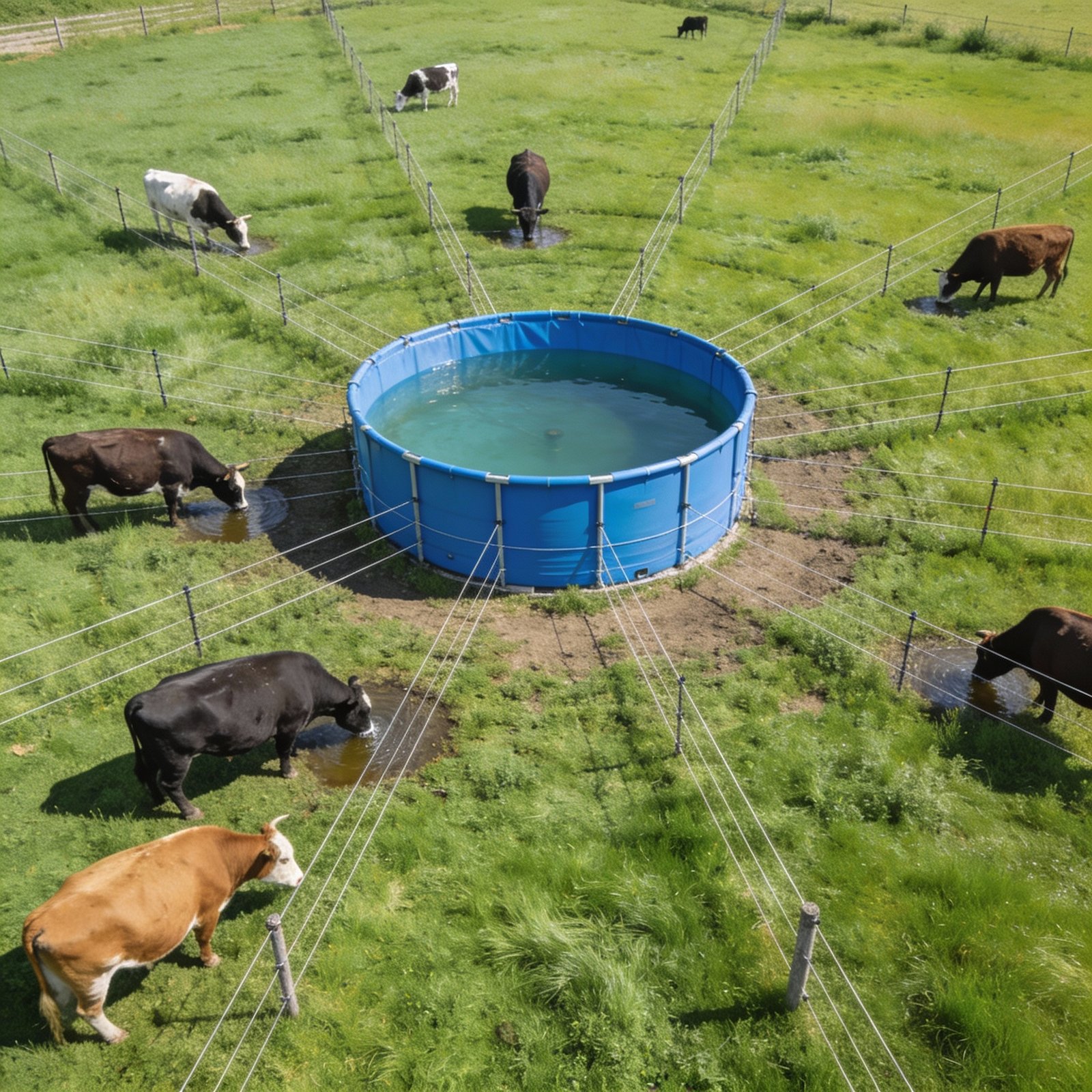
Water availability directly impacts grazing efficiency and animal performance. Research demonstrates that pasture utilization declines sharply beyond 800 feet from water sources, with steeper terrain further reducing the effective grazing radius. Cattle concentrate grazing near water when access points are poorly distributed, leading to localized overgrazing and nutrient accumulation near watering sites.[1]
- Keep walking distance under 800 feet in flat terrain
- Reduce maximum distance to 600 feet or less in steep topography
- Use shared water points between adjacent paddocks when possible
- Adjust paddock layout around water access rather than forcing livestock to travel excessive distances
- Consider water point placement before finalizing permanent fence locations
💧 Mobile Water Systems
Portable water tanks combined with electric fencing offer maximum flexibility in large grazing systems. Tapping into existing pressurized water sources with polyethylene pipe laid on the ground surface allows rapid water delivery to temporary paddocks. Quick-coupling valves at regular intervals enable portable troughs to move with grazing rotations.
Solar-powered pumping systems expand rotational grazing opportunities where pressurized water is unavailable. Surface water sources can be utilized through solar-powered pumps filling reservoir tanks, which then gravity-feed to stock tanks with float valves. Some operations mount solar watering systems on wagons for complete portability throughout the grazing season.[1]
Common Mistakes in Rotational Grazing Systems
Frequently Asked Questions
How often should cattle be moved?
Movement frequency ranges from daily to weekly, depending on forage growth rate, stocking density, and management intensity. High-intensity rotational grazing may involve daily moves or even twice-daily strip grazing during periods of rapid forage growth. Lower-intensity systems rotate weekly or when cattle have grazed 40 to 50 percent of available forage. The optimal frequency balances labor availability against forage utilization goals and pasture recovery requirements.
Is single-wire fencing strong enough?
Yes. Trained cattle respect single-wire electric fencing when voltage is adequate and the fence is positioned at appropriate height. The psychological barrier created by consistent electrical shock proves more effective than physical strength once livestock learn to avoid the fence. Maintaining 2,000 to 5,000 volts throughout the fence line ensures reliable deterrence. However, cattle must be properly trained to respect electric fences before relying on minimal conductor systems.[5]
Can rotational grazing work on small farms?
Absolutely. Electric fencing is especially valuable on small acreages where maximizing forage utilization directly impacts economic viability. Small farms can implement effective rotational systems with minimal investment in temporary fencing materials. Even subdividing a single pasture into two or three paddocks provides substantial benefits over continuous grazing.
What voltage should I maintain in my temporary fence?
Maintain a minimum of 2,000 volts throughout the fence system, with 3,000 to 5,000 volts preferred for reliable cattle control. Test voltage regularly at the point furthest from the energizer to identify weak spots caused by vegetation contact, poor connections, or inadequate grounding. Readings below 2,000 volts indicate problems requiring immediate correction.[3][5]
How many ground rods do I need for temporary fencing?
Install a minimum of three 6-foot ground rods spaced 10 feet apart for most temporary fencing applications. The general guideline is 3 feet of ground rod per joule of energizer output capacity. Dry, sandy, or rocky soils require additional ground rods or implementation of a two-wire system with dedicated ground return wires. Testing ground system adequacy ensures reliable fence performance.[4][6][7]
Should I use polywire or poly tape for cattle?
Both polywire and poly tape work effectively for cattle when properly installed and maintained. Poly tape offers higher visibility, reducing the risk of cattle running through unfamiliar fence lines. Polywire provides adequate conductivity with less wind resistance and lower cost. For trained cattle in established rotational systems, polywire suffices. For new installations or mixed groups containing untrained animals, poly tape improves initial fence respect.
Key Takeaways for Rotational Grazing Success
For producers seeking to implement rotational grazing systems, explore our range of cattle fencing products designed for durable, long-lasting perimeter and subdivision fencing. Our knot fence options including fixed knot and hinge joint designs provide reliable permanent boundaries that complement temporary electric fencing systems. Have questions about designing your rotational grazing system? Contact us for expert guidance on combining permanent and temporary fencing solutions.