
Board Fencing for Cattle: Cost, Design, Materials & Maintenance
Board fencing for cattle is a traditional post-and-rail system that combines strong physical containment with a classic ranch appearance. This guide explains board fence design and height, recommended post spacing and rail counts, cost per foot, wood species and treatments, installation best practices, and long-term maintenance for cattle board fences. Use this as a blueprint whether you are fencing a small calving lot or building a showcase perimeter along roads and driveways.
Board Fencing Fundamentals for Cattle
Board fencing for cattle uses horizontal wood boards (rails) fastened to vertical posts set in the ground. The result is a strong, highly visible barrier that cattle respect naturally without electric shock or barbs. Because animals clearly see the fence line, they are less likely to collide with or challenge it, improving safety for both cattle and handlers.
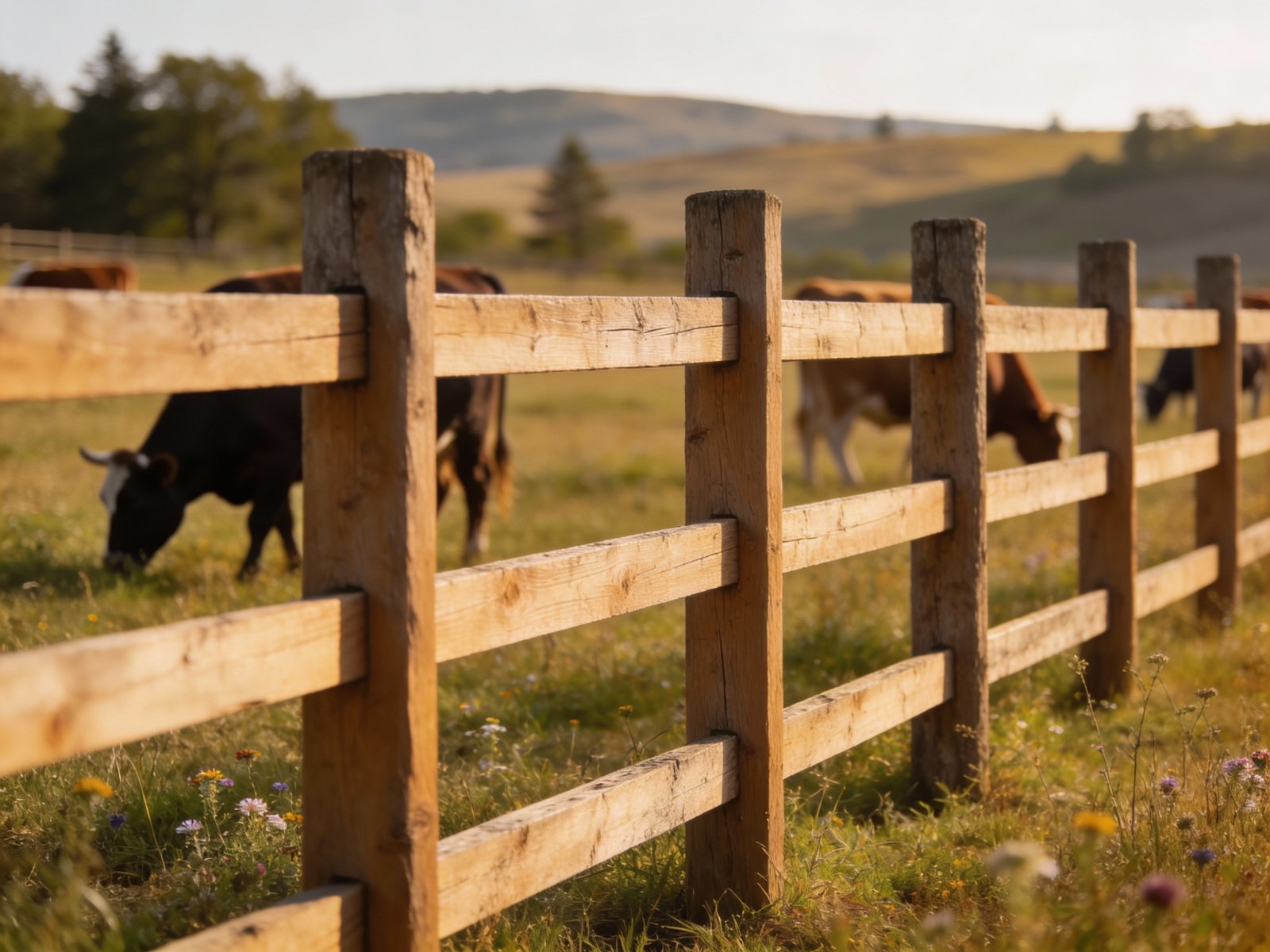
Board fencing offers high visibility with wide, solid rails that are easy for cattle to see in all weather and light conditions. Unlike electric systems, board fences offer strong physical containment even during power outages. The clean lines and natural wood create a traditional ranch look and enhance property value, making this fence type popular on operations where aesthetics matter alongside function.
This fence type works effectively for cattle, horses, and other livestock with minimal modification. Smooth boards reduce cuts and entanglement risk compared to barbed wire, and fence height and rail spacing can be tailored to cattle size and stocking pressure. Board fencing creates a solid physical barrier that cattle see clearly and respect, reducing collision risk and improving overall safety for both animals and handlers.
Board Fence Design Specifications for Cattle
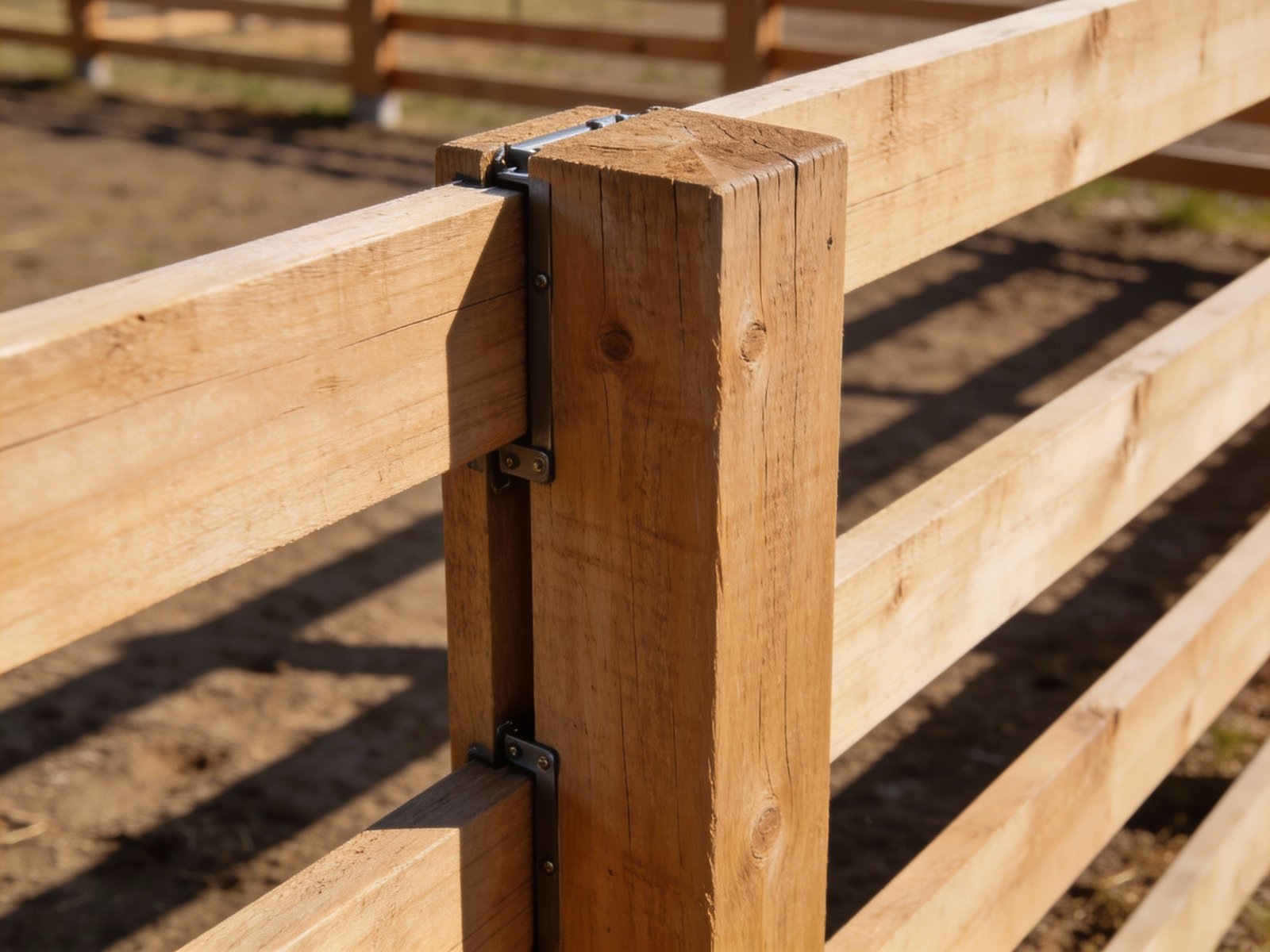
Correct design is critical for safety and longevity. Key decisions include fence height, number of rails, post spacing, and board sizing. Most cattle board fences stand between 48 and 60 inches tall, with three to four horizontal rails depending on the application and cattle type.
| Application | Fence Height | Rails (Boards) | Post Spacing | Board Size | Notes |
|---|---|---|---|---|---|
| General Cattle Pasture | 48-54″ | 3-4 rails | 8 ft on center | 1″×6″ or 2″×6″ | Good for cow-calf pairs and low-pressure areas. |
| High-Pressure Corrals | 54-60″ | 4 rails | 6-8 ft | 2″×6″ | Closer posts, thicker boards for strength. |
| Bull Pens / Working Areas | 60″+ | 4-5 rails | 6-8 ft | 2″×6″ or 2″×8″ | Maximum strength, may combine with electric. |
| Roadside Perimeter | 54-60″ | 3-4 rails | 8 ft | 1″×6″ or 2″×6″ | Prioritize appearance and escape prevention. |
| Calving / Maternity Pens | 48-54″ | 4 rails (narrow gaps) | 8 ft | 1″×6″ | Prevent calves from slipping through gaps. |
| Mixed Cattle & Horses | 54-60″ | 3-4 rails | 8 ft | 1″×6″ surfaced or 2″×6″ | Height and smoothness important for horses. |
Key design principles include attaching boards on the side where cattle are kept, so pressure pushes boards into posts rather than off fasteners. Stagger board joints between posts to avoid weak points in a single line. Use galvanized spiral-shank nails or exterior-rated screws to reduce backing out and rust. Make the top rail the strongest, as cattle often rub and lean on it. Reinforce posts at gates and corners with bracing to resist torque and impact.
Cost of Board Fencing for Cattle
Board fencing is one of the more expensive cattle fencing options per linear foot, but offers advantages in appearance, visibility, and property value. A standard four-rail board fence for livestock typically runs around $9–$10 per linear foot including materials and labor, with regional variation and lumber price swings pushing totals slightly lower or higher.
| Fence Type | Approx. Cost per Foot | Approx. Cost per Mile | Typical Lifespan | Annual Maintenance | Notes |
|---|---|---|---|---|---|
| Board Fence (4-Rail) | $9-$10 | $47,500-$52,800 | 10-20 years | Moderate to High | High appearance value; frequent paint/stain. |
| Barbed Wire (5-Strand) | $1.5-$2.3 | $8,000-$12,000 | 10-15 years | Medium | Low cost but higher injury risk. |
| Woven Wire | $2.0-$4.5 | $10,500-$23,800 | 12-20 years | Medium | Good for calves; less attractive. |
| High-Tensile Wire | $5.0-$5.5 | $26,000-$35,000 | 20-30 years | Low | Excellent long-term value, less visible. |
| Electric (Permanent) | $6-$15 | $3,200-$7,900 | 20-30 years | Low to Medium | Requires power and animal training. |
Board fencing delivers best return on investment in driveways and public road frontages where high visibility justifies premium appearance. It also works well in yards, barns, and headquarters where aesthetics and visitor impression matter most, and in handling and show areas requiring safe, solid containment for cattle and people. Mixed horse–cattle operations benefit from board fence because it satisfies both species’ safety needs. For comprehensive cost analysis across all fence types, see our cattle fencing cost comparison.
Materials, Wood Species & Treatments for Cattle Board Fencing
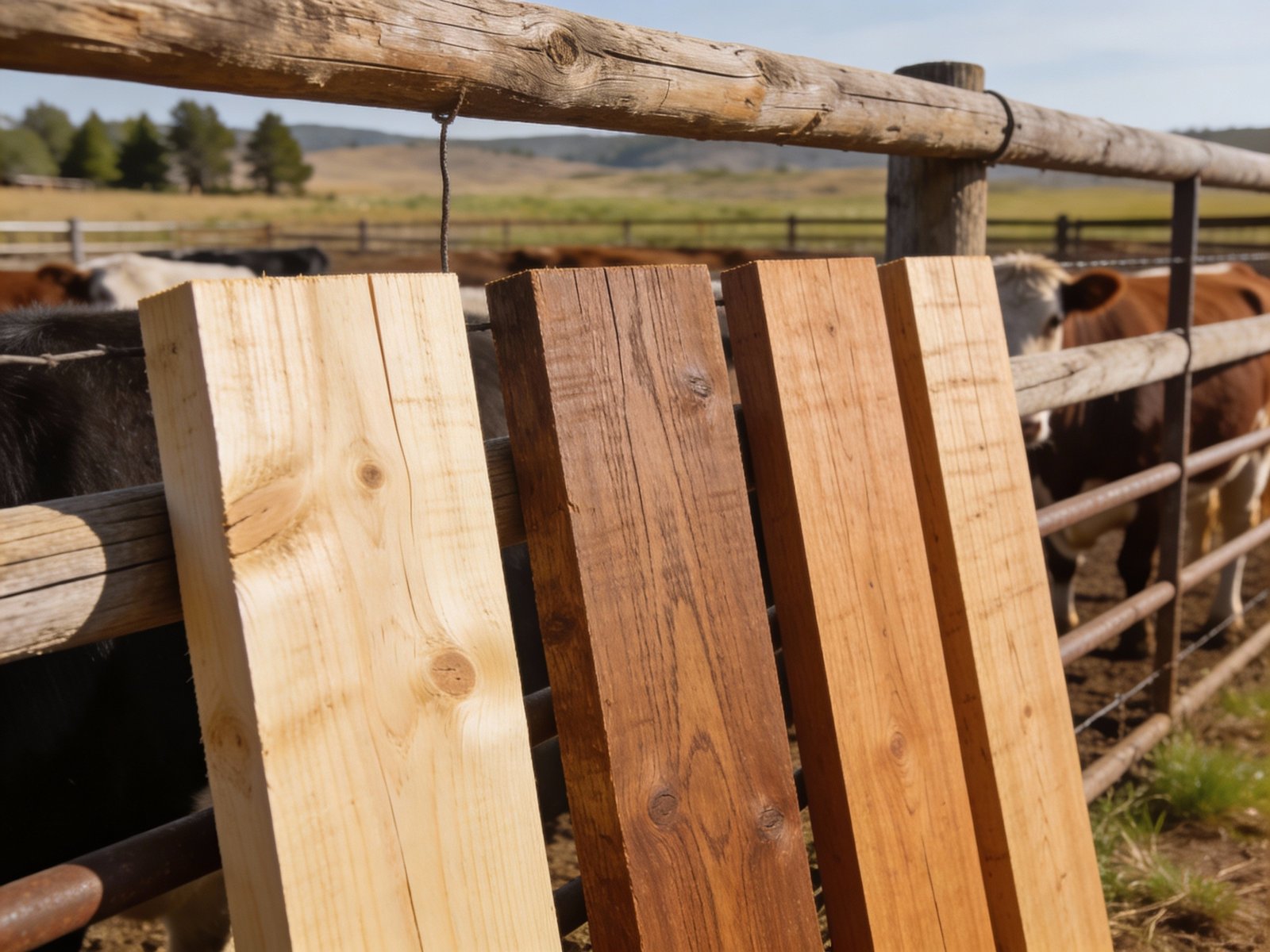
Wood choice and protective treatments have a major impact on fence durability and maintenance requirements. Pressure-treated pine offers good durability at low to medium cost and requires regular stain or paint. Oak provides very good durability at medium to high cost and works well for high-pressure, premium installations. Cedar offers good rot resistance at higher cost and suits decorative runs with lighter pressure.
| Material | Relative Cost | Durability | Maintenance Needs | Best Uses |
|---|---|---|---|---|
| Pressure-Treated Pine | Low to Medium | Good (10-20 years) | Regular stain/paint | General-purpose cattle fences. |
| Oak (Hardwood) | Medium to High | Very Good | Stain or seal as needed | High-pressure, premium installations. |
| Cedar | Higher | Good rot resistance | Light sealing/stain | Decorative runs, lighter pressure. |
| Composite / PVC Boards | Highest | Excellent (20+ years) | Very low | High-end properties, low upkeep. |
Use ground-contact rated treated posts to significantly extend post life. Rough-sawn boards offer better grip and weathering than planed boards. Choose hot-dipped galvanized or exterior-rated screws and nails for fasteners. Sealing board ends slows moisture penetration and checking, while painting or capping the top edges protects areas where water collects and sun exposure is highest.
Board Fence Installation & Maintenance for Cattle
This video demonstrates professional board fence installation techniques for livestock, including setting posts at proper spacing, attaching horizontal rails with staggered joints, maintaining consistent rail spacing for optimal cattle containment, and applying face boards to cover joints and create a finished appearance. The demonstration shows the complete process from post placement through final board attachment using treated rough-cut lumber.
Proper installation and consistent maintenance are essential for achieving the expected 10–20 year lifespan from a cattle board fence. Set posts 24-30 inches deep, or deeper in soft soils, with concrete in high-pressure or wet areas. Keep lines straight using string or sight stakes to avoid waviness and weak spots. Predrill hardwood boards to reduce splitting and use two fasteners per board per post.
Oversize and set gate posts deeper with extra bracing to handle torque and sag. Step rails up or down on slopes to maintain safe gaps and consistent height. Common mistakes include using untreated or interior-grade lumber that rots quickly in contact with soil and weather, over-spacing posts at 10 feet or more leading to sagging rails and structural weakness, and failing to paint or stain the fence which accelerates UV and moisture damage.
Inspect fences at least twice per year during spring and fall and after major storms. Replace cracked, rotted, or broken boards promptly to maintain a solid barrier. Refasten loose boards and tighten or replace failing nails and screws. Repaint or restain every 3–5 years depending on climate and product used. Monitor posts for rot at ground line and replace leaning or soft posts as needed.
Board Fencing vs Other Cattle Fencing Types
Board fencing excels in specific applications but compares differently to other fence types across cost, lifespan, maintenance, and performance criteria. Understanding these trade-offs helps operators choose the right fence for each area of their property.
| Aspect | Board Fence | Barbed Wire | Woven Wire | High-Tensile | Electric |
|---|---|---|---|---|---|
| Upfront Cost | High | Very Low | Low | Medium | Medium |
| Lifespan | 10-20 years | 10-15 years | 12-20 years | 20-30 years | 20-30 years |
| Maintenance | High | Medium | Medium | Low | Low |
| Animal Safety | Excellent | Poor | Good | Good | Good |
| Visibility | Excellent | Fair | Fair | Fair | Poor |
| Training Required | None | None | None | None | Yes |
| Best Use Cases | Road frontage, corrals, attractive perimeters | Budget back pastures | Calf containment, mixed livestock | Large acreages, long-term value | Rotational grazing, temporary paddocks |
Many operations combine fence types strategically, using board fencing in high-visibility areas near roads and buildings while deploying more economical options like barbed wire fencing for cattle, woven wire fencing for cattle, high-tensile fencing for cattle, or electric fencing for cattle in back pastures and remote areas.