
Pipe and Panel Cattle Fencing: Complete Guide to Cost, Specifications & Installation
Overview: Pipe and panel cattle fencing represents one of the most durable and reliable livestock containment systems. This comprehensive guide covers cattle panel dimensions and specifications, pipe fencing cost analysis, material durability, installation methods, and best practices for permanent corral and perimeter installations. Whether you’re building welded pipe cattle fence systems for high-pressure areas or implementing portable cattle panels for managed grazing, this guide provides exact specifications and design recommendations for every application.
Pipe and Panel Cattle Fencing Fundamentals
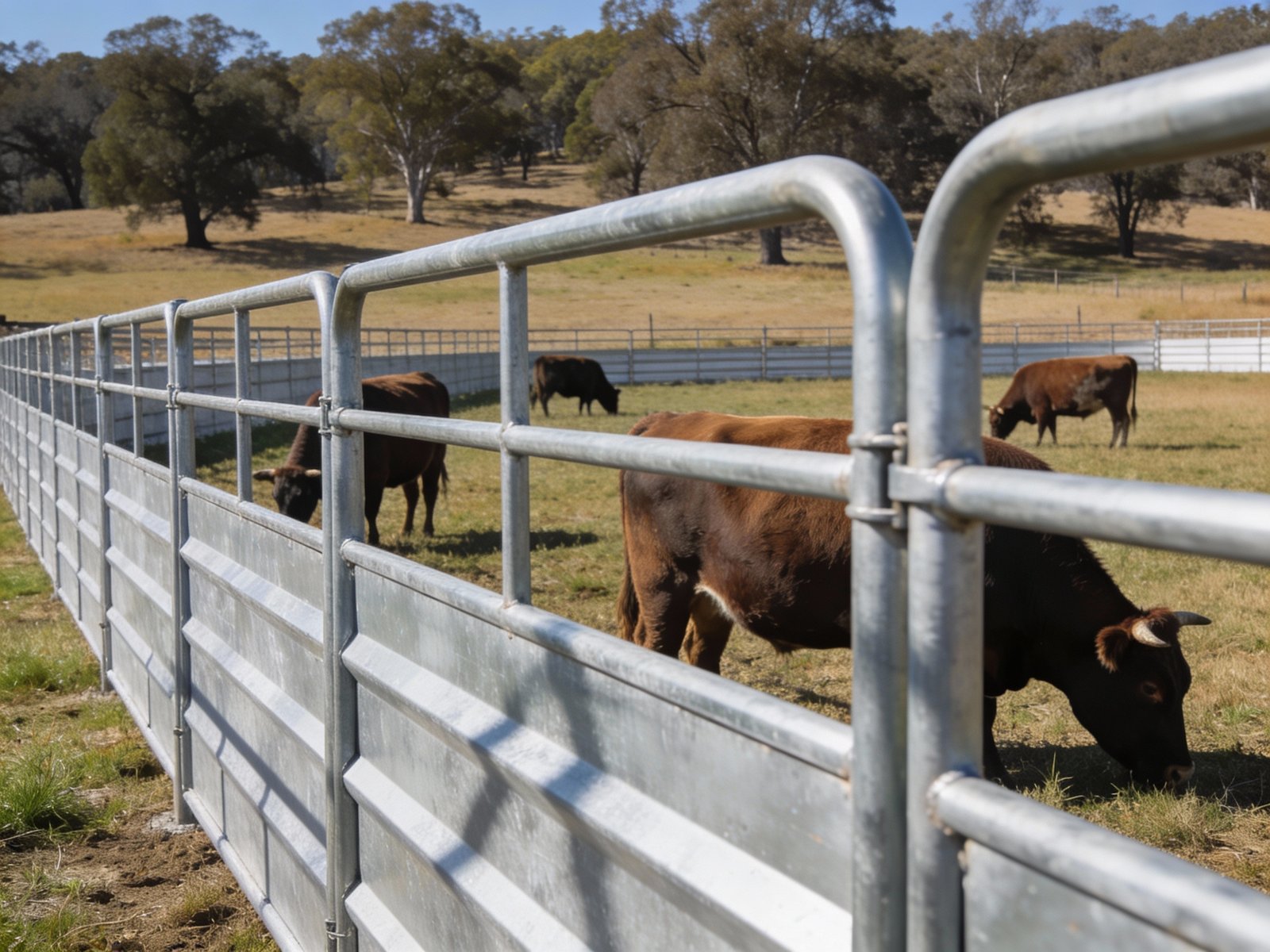
Pipe and panel cattle fencing consists of welded steel or aluminum tubing arranged in a sturdy frame structure. Unlike wire fencing that relies on tension and strength, pipe and panel systems provide solid physical barriers that cattle cannot break, bend, or climb. This makes them ideal for permanent installations, high-pressure areas, and livestock requiring maximum containment.
Key Advantages of Pipe and Panel Fencing
- Solid physical barrier: Cattle cannot push through, jump over, or crawl under properly installed panels.
- No training required: Animals respect panels immediately without conditioning or shocking.
- Extreme durability: 25-40+ year lifespan with minimal maintenance.
- Low maintenance: No tension adjustments, no rust repairs, occasional painting only.
- Safety: Smooth surfaces prevent injury compared to barbed wire; excellent for breeding stock and young animals.
- Strength: Heavy-duty panels withstand bulls, aggressive animals, and high-pressure situations.
- Flexibility: Portable panels enable semi-permanent rotational grazing (2-4 week paddocks).
- Resale value: Panels can be relocated, reused, or sold—no salvage loss.
Standard Cattle Panel Dimensions and Specifications
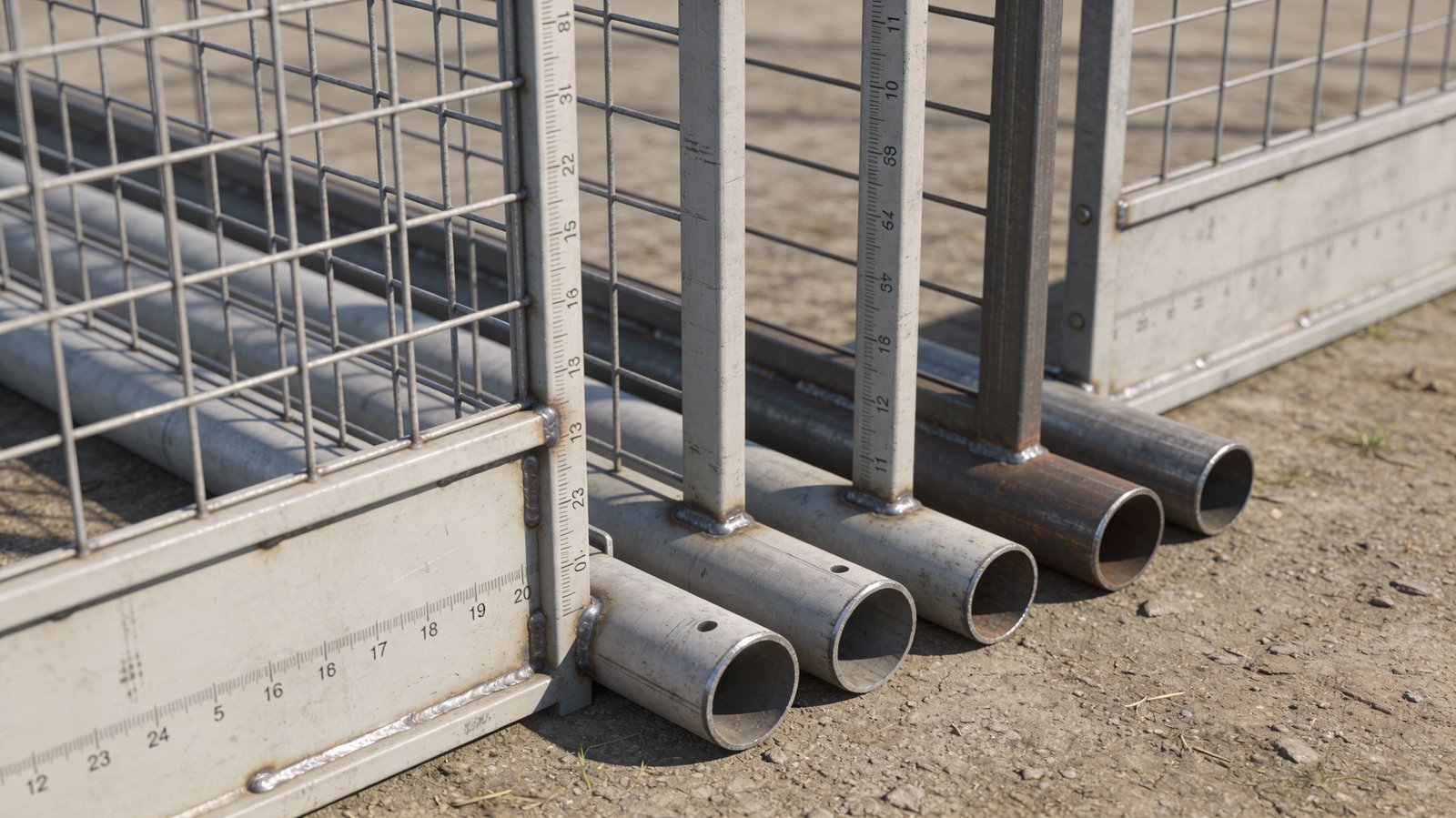
Cattle panel dimensions are standardized within the industry, though variations exist. Understanding specifications is critical for proper containment, animal safety, and structural integrity.
| Panel Type | Length | Height | Weight | Gauge | Material | Best For |
|---|---|---|---|---|---|---|
| Standard Cattle Panel | 16 ft | 50 inches | 36-45 lbs | 16-18 ga | Galvanized steel | General cattle containment |
| Heavy-Duty Cattle Panel | 16 ft | 52 inches | 45-55 lbs | 14-16 ga | Galvanized steel | Larger cattle, bulls |
| HD Ultra-Heavy Panel (Custom) | 16 ft | 50-52″ | 60-70 lbs | 2.75 ga HD | Galvanized steel | Bulls, max durability |
| Light-Duty Corral Panel | 10-12 ft | 48 inches | 25-35 lbs | 19-20 ga | Steel/Aluminum | Calves, temporary use |
| Medium-Duty Corral Panel | 12-16 ft | 52-60″ | 40-50 lbs | 16-18 ga | Powder-coated steel | Mixed livestock |
| Round Pen Panels | 10-12 ft (curved) | 54-60″ | 40-60 lbs | 16-18 ga | Galvanized steel | Training, working cattle |
| Rough Stock Panels | 10-16 ft | 54-68″ | 50-100 lbs | 12-14 ga | Heavy gauge steel | Horses, bulls, extremes |
- Gauge (ga): Measures steel thickness. Lower numbers = thicker, stronger material. Example: 16 gauge is thicker/stronger than 20 gauge.
- HD (Heavy Duty): Designation for premium-grade panels with reinforced frames and thicker tubing (2.75″ diameter tubing vs standard 1.625″).
- Coating type: Galvanized (hot-dipped zinc) = 25-30 year lifespan; Powder-coated = 15-20 years; Class 40 zinc-aluminum = 30-40+ years.
- Tubing diameter: Standard 1.625″ tubing; Heavy-duty 2.75″ tubing for added strength and appearance.
- Drop bolts: Frame connections that allow easy disassembly. Some panels use bolt-down, others are welded permanently.
Pipe and Panel Cattle Fencing: Cost Analysis and ROI
25-Year Total Cost of Ownership: Pipe and Panel vs Other Fencing
When analyzing long-term costs, pipe and panel fencing demonstrates superior value for permanent installations due to minimal maintenance and replacement frequency.
| Fence Type | Per Linear Foot Cost | Per Mile Cost | Lifespan | Annual Maintenance | 25-Year Total Cost |
|---|---|---|---|---|---|
| Pipe & Panel (Permanent) | $13.50-$40 | $7,000-$21,000 | 25-40 years | $50-$150/yr | $8,000-$22,500 |
| Barbed Wire | $3-$8 | $1,600-$4,200 | 8-15 years | $200-$400/yr | $12,000-$18,000 |
| Woven Wire | $4-$10 | $2,100-$5,300 | 10-20 years | $150-$300/yr | $10,500-$17,000 |
| High-Tensile Wire | $5-$12 | $2,600-$6,300 | 15-25 years | $100-$200/yr | $8,100-$11,300 |
| Electric Fence (Permanent) | $6-$15 | $3,200-$7,900 | 20-30 years | $200-$300/yr | $8,000-$15,800 |
When Pipe and Panel Fencing Provides Best Value
- Permanent perimeter installations: 5+ miles of permanent fencing = lowest cost per year.
- High-pressure areas: Bulls, breeding stock, or aggressive livestock justify premium materials.
- Corral and handling systems: Heavy-duty panels prevent escape and ensure safety.
- Long-term ownership: 20+ year projections favor pipe/panel due to minimal maintenance.
- Breeding operations: Safe handling and animal care justify higher upfront cost.
- Property resale: Pipe/panel fences add value and appeal to buyers (wire does not).
Panel Types and Applications for Cattle Fencing
Permanent Welded Pipe Panels
Permanent welded panels are fully welded structures installed on steel posts set 24-30 inches deep. They are designed for long-term installations (25-40+ years) requiring no maintenance beyond occasional paint touch-ups.
- Installation: Posts set in concrete 24-30 inches deep, 10-12 feet apart for cattle.
- Cost: $13.50-$40 per linear foot installed ($7,000-$21,000 per mile).
- Lifespan: 25-40+ years with minimal maintenance (paint only as needed).
- Strength: Can withstand bulls, herd pressure, and rough handling.
- Portability: Not portable; permanent installation intended.
- Best for: Perimeter fences, corrals, breeding facilities, permanent divisions.
Portable/Semi-Portable Panels
Portable panels use hinged connections or detachable posts, allowing movement for rotational grazing or seasonal adjustments. Ideal for flexible management systems.
- Installation: Posts set in T-slot bases or temporary holes (6-12 inch depth).
- Cost: $60-$250+ per panel + posts; move time 10-30 minutes per panel.
- Lifespan: 15-25 years with occasional panel replacement as needed.
- Strength: Medium-duty to heavy-duty; withstands most cattle types.
- Portability: Can be relocated every 2-7 days for rotational grazing.
- Best for: Rotational grazing, seasonal paddocks, rented land, flexible layouts.
Corral and Round Pen Panels
Specialty panels designed for working cattle, training, breeding, and handling operations. Curved panels create round pens for behavioral work and low-stress handling.
- Design: Curved or straight configurations; often include gates and working areas.
- Height: 52-68 inches for maximum control during working.
- Material: Heavy-duty 14-16 gauge or specialty alloys.
- Cost: $5,000-$15,000 per complete corral system (8-12 panels + gates).
- Features: Often include sorting gates, working chutes, loading ramps.
- Best for: Livestock working areas, breeding facilities, training grounds.
Materials and Durability: Galvanized vs Powder-Coated vs Aluminum
| Material | Cost Premium | Lifespan | Maintenance | Appearance | Best For |
|---|---|---|---|---|---|
| Galvanized Steel | Baseline | 20-30 years | Minimal (rare paint touch-ups) | Silver-gray patina | Livestock operations, working areas |
| Powder-Coated Steel | +5-15% | 15-25 years | Occasional paint maintenance | Available in colors (black popular) | Properties with aesthetic concerns |
| Aluminum Panels | +20-30% | 25-35 years | Minimal (weather-resistant) | Natural aluminum or anodized | Coastal areas, high-corrosion environments |
| Class 40 Zinc-Aluminum Coated | +10-20% | 30-40+ years | Minimal (self-healing coating) | Attractive gray patina | Premium installations, long-term investment |
Pipe and Panel Installation and Setup Best Practices
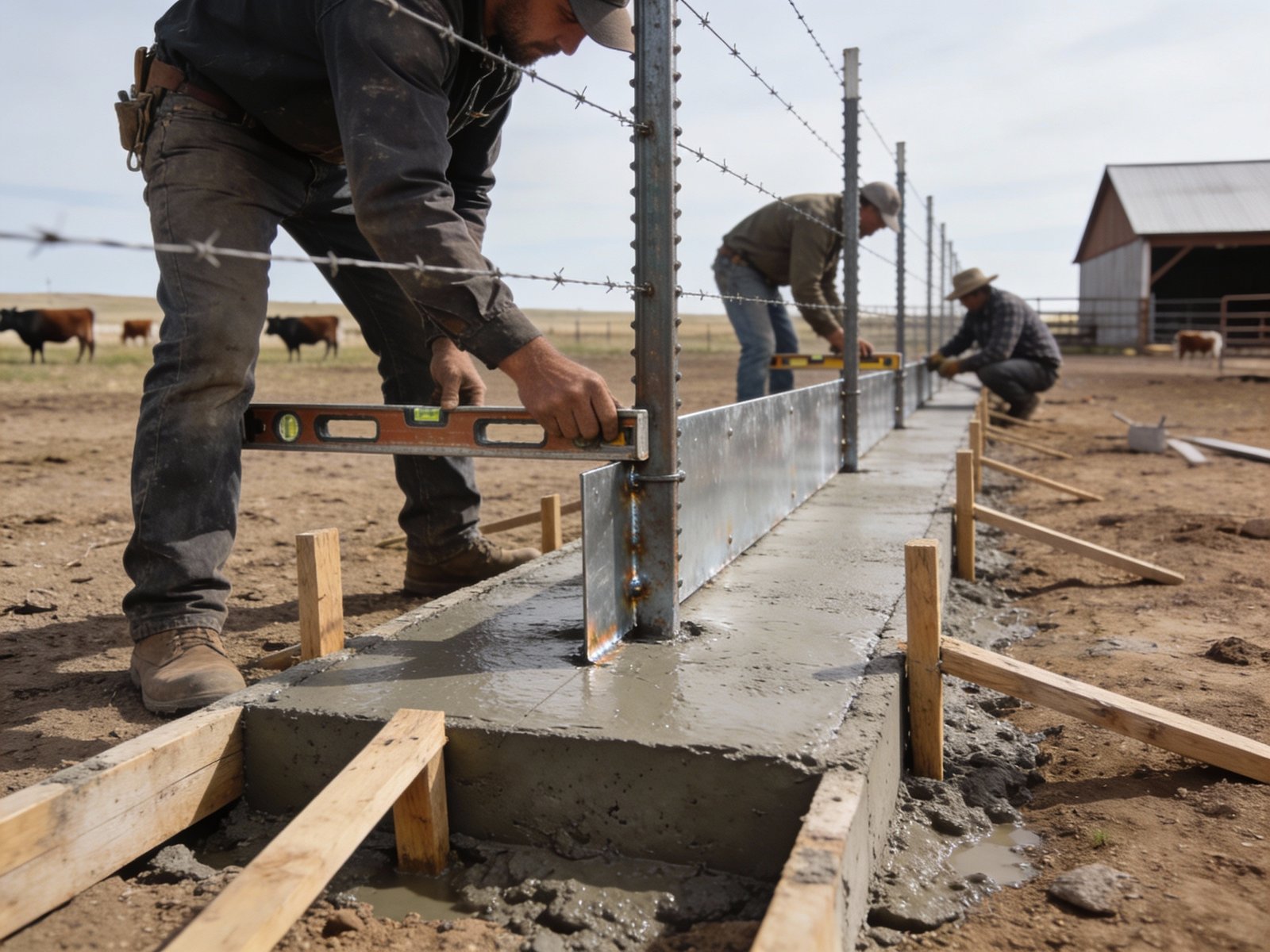
This detailed video demonstrates the complete pipe fence installation process from start to finish on a working ranch. The tutorial covers critical steps including accurate measurements between posts, proper notching techniques for horizontal rails, post clamping methods for solo installation, and professional welding procedures. The step-by-step approach shows how to achieve level and plumb fence sections while maintaining consistent spacing and structural integrity throughout the entire installation.
- Post depth: Set posts minimum 24 inches deep for cattle, 30 inches for heavy-duty use. Deeper = greater strength and longevity.
- Post spacing: Space posts 10-12 feet apart for standard cattle panels; 8-10 feet for high-pressure areas or bulls.
- Concrete footings: Set posts in concrete for permanence; use rapid-set concrete for best results. Minimum 6-inch diameter holes.
- Corner bracing: Install diagonal braces at all corners and gate openings to prevent twisting and failure.
- Panel attachment: Use lag bolts or welding for permanent installations. Ensure tight, square connection.
- Gate hangings: Quality hinges and latches critical for long-term operation and safety.
- Level and plumb: Install panels level and plumb for maximum structural integrity and animal containment.
- Terrain consideration: Account for slope; adjust panel height on downhill side to maintain top-rail consistency.
Common Installation Mistakes
Mistake 1: Shallow post holes (less than 20 inches). Posts fail or shift under animal pressure. Mistake 2: Using lightweight posts without proper bracing at corners. Panels twist and create gaps. Mistake 3: Spacing posts too far apart (15+ feet). Panels sag and create bulges. Mistake 4: Skipping diagonal braces at corners. Gates fail under pressure; panels separate. Mistake 5: Not accounting for terrain. Creates gaps cattle can escape through.
Pipe and Panel vs Other Cattle Fencing Types
| Aspect | Pipe & Panel | Barbed Wire | Woven Wire | High-Tensile | Electric |
|---|---|---|---|---|---|
| Upfront Cost | $$$ (High) | $ (Very Low) | $ (Low) | $$ (Medium) | $$ (Medium) |
| Lifespan | 25-40+ years | 10-15 years | 12-20 years | 20-30 years | 20-30 years |
| Maintenance | Minimal | High | Medium | Low | Low |
| Animal Training | Not needed | Not needed | Not needed | Not needed | Required |
| Strength | Excellent | Good | Good | Very Good | Fair (psychological) |
| Safety | Excellent | Poor (sharp) | Good | Good | Good |
| Portability | Semi (with effort) | Not portable | Not portable | Not portable | Highly portable |
| Visual Appeal | Very Good | Fair | Good | Good | Poor |
| Best For | Permanent, high-pressure | Budget-conscious | General use | Flexible, moderate pressure | Rotational grazing |
Pipe and Panel Cattle Fencing: Frequently Asked Questions
What are standard cattle panel dimensions?
The most common standard cattle panel dimensions are 16 feet long by 50 inches tall. Heavy-duty options include 16′ x 52″ and 16′ x 60″ for larger cattle or bulls. Portable corral panels range from 10-16 feet in length and 48-60 inches in height. Always verify exact dimensions with manufacturers as specifications vary by brand and gauge.
How much does pipe and panel fencing cost per linear foot?
Pipe and panel cattle fencing costs $13.50 to $40 per linear foot installed, with an average of $20-$25 per foot. Material costs alone range $11.50-$34 per foot. Installation labor typically adds $2-$8 per foot depending on terrain and local rates. Individual panels cost $60-$250+ depending on gauge and size.
How heavy is a standard cattle panel?
A standard 16′ x 50″ cattle panel weighs 36-45 pounds depending on gauge and material. Light-duty 19-20 gauge panels weigh 25-35 lbs. Medium-duty 16-18 gauge panels weigh 40-50 lbs. Heavy-duty HD 2.75 gauge panels weigh 60-70 lbs. Weight affects transportability, handling, and installation labor costs.
Can I move pipe and panel panels for rotational grazing?
Yes, welded panels can be relocated for rotational grazing when used with detachable posts or hinged connections. Move time is 15-30 minutes per panel. However, most rotational grazing uses electric or poly-wire fencing for faster moves. Pipe and panel systems work best for semi-permanent paddocks (2-4 week rotations) rather than daily strip grazing.
How long do pipe and panel cattle fences last?
Galvanized pipe and panel fencing lasts 25-40 years with minimal maintenance. Galvanized (Class 3) coating lasts 25-30 years. Zinc-aluminum (Class 40) coatings last 30-40+ years. Powder-coated panels last 15-25 years. Regular inspection and paint touch-ups extend lifespan. Posts may need replacement after 15-20 years depending on installation depth.
Can cattle break through welded pipe panels?
No, well-built welded pipe panels are extremely strong and cattle cannot break through when properly installed. Heavy-duty panels (2.75 gauge or stronger) withstand bulls and large livestock. Ensure posts are securely set 24-30 inches deep and properly braced at all corners for maximum strength and reliability.
What gauge steel should I choose for cattle panels?
For permanent cattle fencing, use 16-18 gauge (medium-duty) or heavier. Heavy-duty 2.75 gauge (HD) panels are ideal for bulls, high-pressure areas, and long-term installations. Light-duty 19-20 gauge panels work for temporary use or younger cattle but are more prone to bending. Remember: lower gauge numbers = thicker, stronger material.
Should I choose aluminum or steel panels?
Steel panels are more affordable and strongest for cattle applications. Aluminum panels (20-30% premium) are ideal for coastal areas or high-corrosion environments due to superior rust resistance. Class 40 zinc-aluminum coatings offer the best durability (30-40+ years) with minimal maintenance, making them excellent for premium, long-term installations.
How do I install pipe and panel fencing properly?
Proper installation requires: 1) Set posts 24-30 inches deep in concrete, 2) Space posts 10-12 feet apart, 3) Install diagonal braces at all corners, 4) Ensure panels are level and plumb, 5) Use quality hinges and latches for gates, 6) Account for terrain slope. Professional installation ensures long-term reliability and animal safety.
Related Cattle Fencing Resources
- Barbed wire fencing for large cattle operations
- Woven wire fencing compared to pipe and panel systems
- High-tensile wire fencing for permanent cattle enclosures
- Electric fencing for rotational cattle grazing
- Cost comparison of different cattle fencing types
- Choosing cattle fencing based on climate conditions