
Temporary Portable Electric Fencing Systems for Rotational Grazing
Temporary portable electric fencing systems are the core of modern intensive pasture management. Unlike permanent high-tensile fencing, these flexible systems allow livestock producers to implement rotational grazing strategies, maximizing forage utilization, improving pasture productivity, and enhancing animal weight gain.
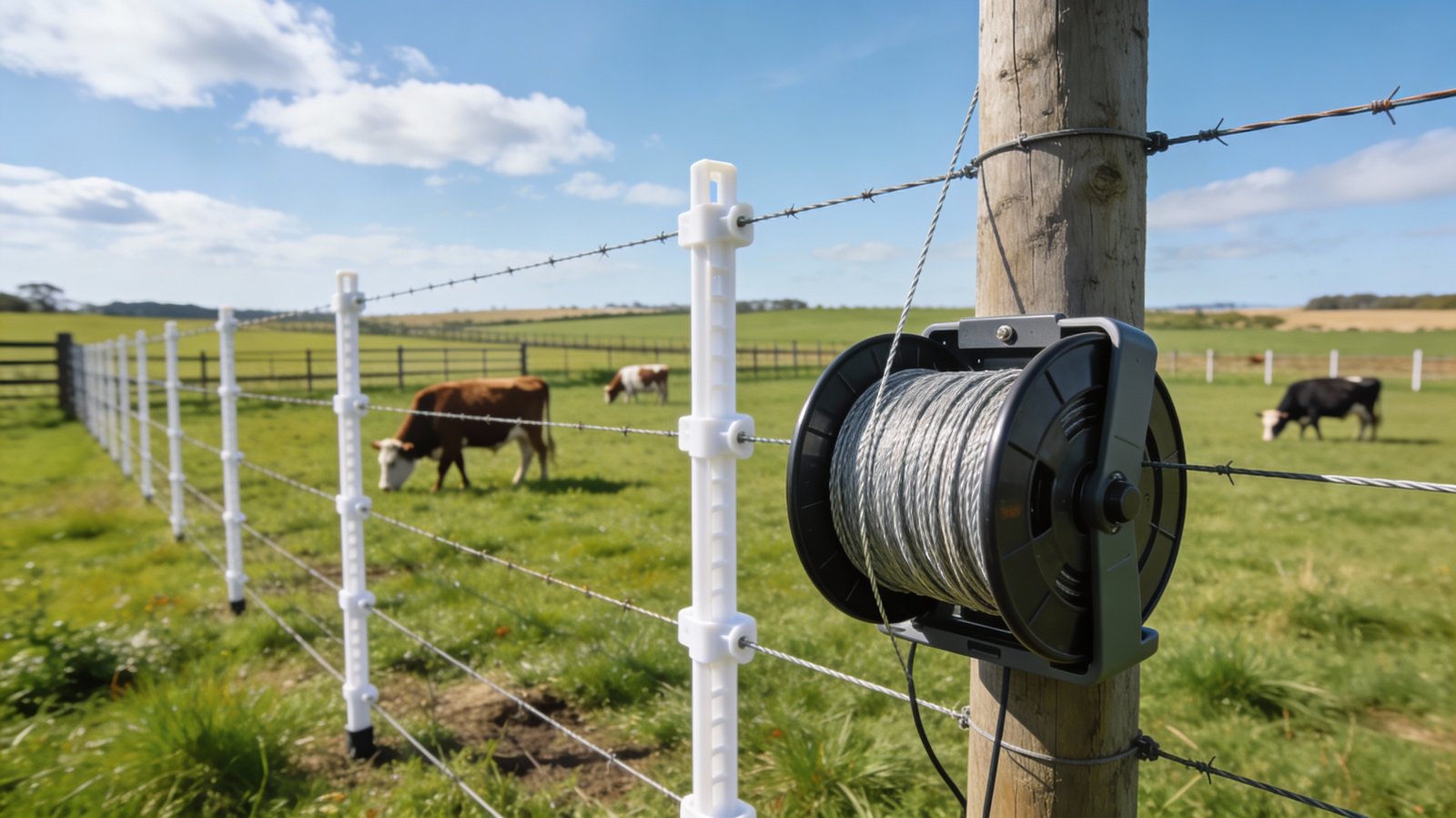
This video demonstrates how temporary portable electric fencing is used in real-world rotational grazing systems. It shows proper setup of polywire, step-in posts, and daily paddock movement to control grazing pressure and improve pasture recovery.
Materials: Wire, Posts & Chargers
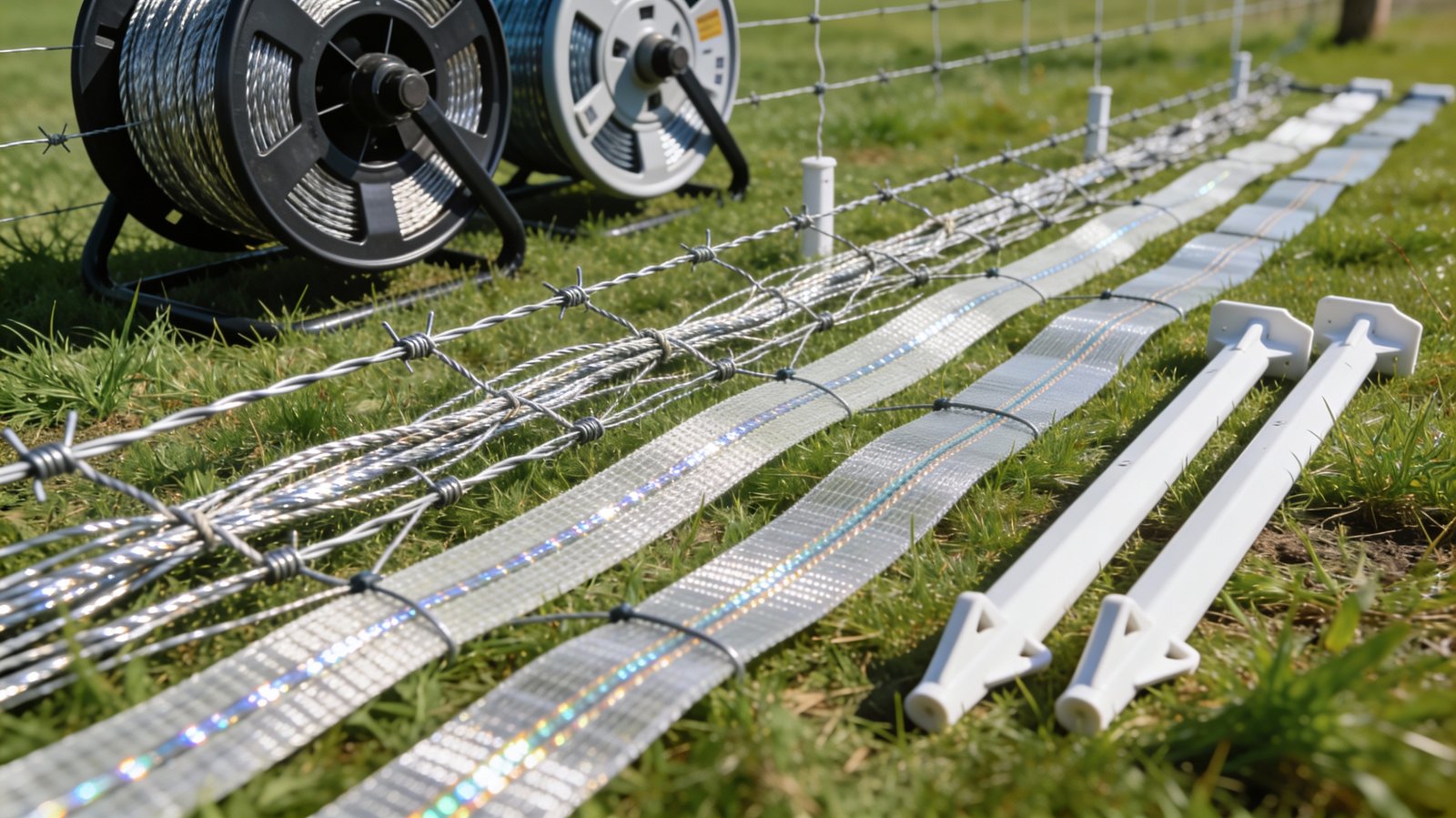
Conductivity & Wire Specifications
| Material Type | Conductivity | Visibility | Lifespan | Cost Range | Best Application |
|---|---|---|---|---|---|
| Polywire 6-strand | Medium (100 Ω/km) | Poor | 5-6 years | $0.05-0.08/ft | Short runs <200m |
| Polywire 9-strand | Good (50% better) | Fair | 5-6 years | $0.08-0.12/ft | Medium runs 200-400m |
| Hi-Tensile Polywire | Excellent (100x) | Fair | 5-6 years | $0.12-0.18/ft | Long runs >400m |
| Standard Polytape | Medium (5-15 strands) | Excellent | 5-7 years | $0.12-0.20/ft | Horses, high visibility |
| IntelliRope 4.5mm | Excellent (50 Ω/1000ft) | Excellent | 8-10 years | $0.06/ft | Long-term heavy use |
| IntelliTwine 2.25mm | Good | Good | 7-9 years | $0.035/ft | Lightweight mobile systems |
Electric Fence Charger Selection Guide
– Single-wire: Ideal for strip grazing, low power requirements (0.25-0.5 joule)
– Multi-wire: For permanent/perimeter fences, requires 1-5+ joules
Power Matching Formula:
– Basic calculation: 1 joule per mile of fence + 0.5 joule for vegetation contact
– Example: 2 miles of polywire with moderate vegetation = 2 × 1 + 1 = 3 joule minimum
Charger Type Comparison:
– Plug-in chargers: $150-400, 5-50 joule output, best for fixed locations
– Battery/solar: $200-600, 0.5-10 joule output, portable, ideal for remote pastures
– Low-impedance: $300-800, works through vegetation, best for challenging conditions
Post Comparison & Selection
| Post Type | Height | Mobility | Lifespan | Unit Cost | Characteristics |
|---|---|---|---|---|---|
| Plastic Step-In | 35-43″ | Frequent | 3-5 years | $3.50-5.50 | Step-in, multi-notch, high visibility |
| Fiberglass | 36-48″ | Moderate | 15-20 years | $3.25-4.50 | Lightweight, durable, easy to drive |
| Steel T-Post | 48-72″ | Infrequent | 20+ years | $24.50+ | Permanent/semi-permanent, high strength |
| Wood Post | Custom | Rare | 10-15 years | $2-8 | Traditional, requires maintenance |
Grazing Systems: Strip Grazing & Mob Grazing
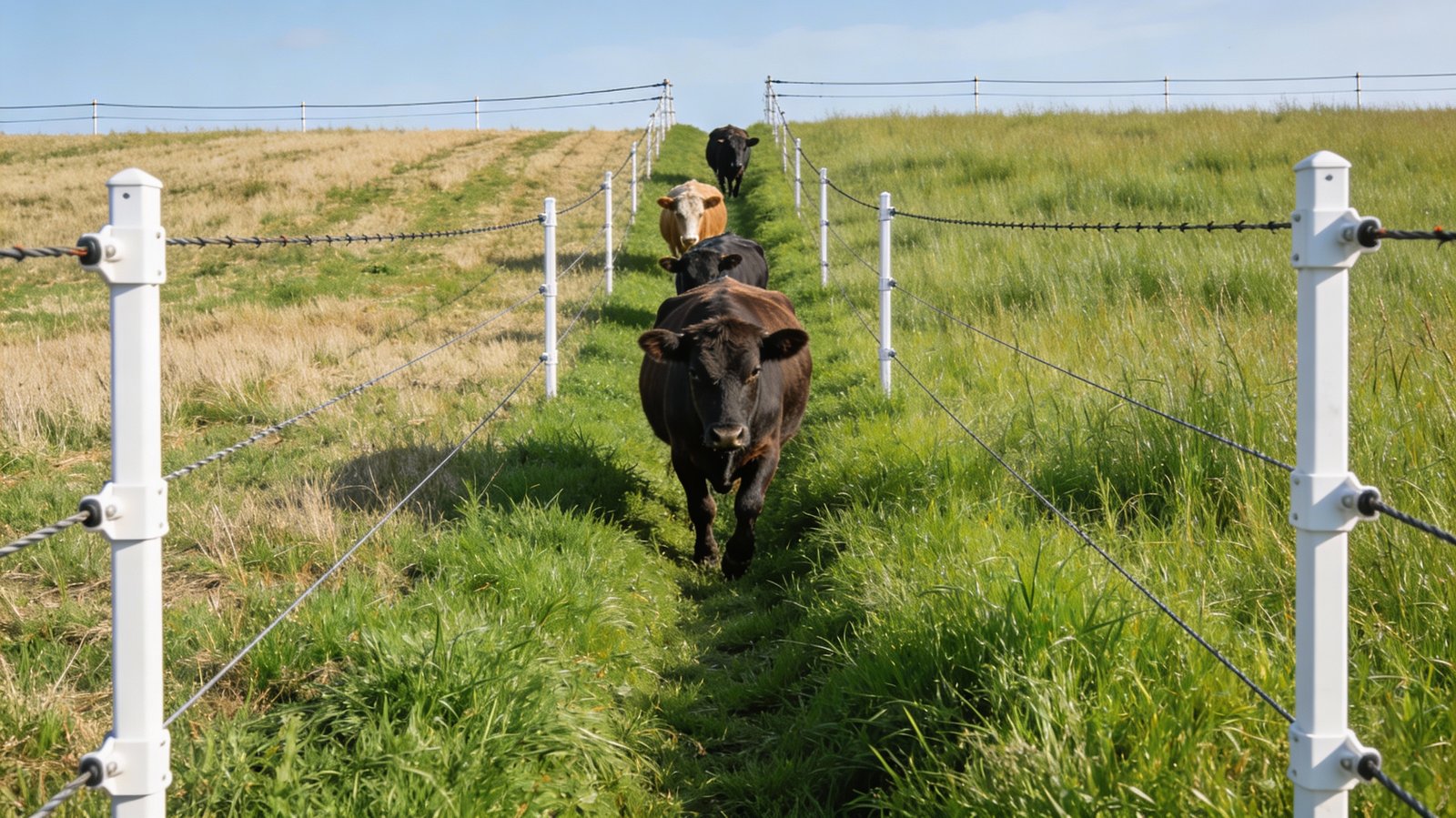
Strip Grazing for Daily Pasture Allocation
Strip grazing provides fresh forage through daily movement of the front fence, while maintaining a back fence to prevent livestock from grazing previously used areas.
Mob Grazing for Intensive Management
Mob grazing is an advanced form of strip grazing where large herds graze small paddocks for 1-2 days, creating high trampling and rapid pasture renewal.
– Stay duration: 1 day or 24 hours
– Trampling effect: High trampling promotes organic matter return, improves soil structure
– Stock density: 50-100 head/acre, forces uniform grazing
– Best application: Removing mature forage, establishing new grass species, rapid pasture renovation
Seasonal Management Strategies
| Season | Grazing Days | Rest Period | Stock Density | Key Considerations |
|---|---|---|---|---|
| Spring | 1-3 days | 21-28 days | High (50-100/acre) | Fast growth, quick rotation, prevent overgrazing new growth |
| Summer | 2-4 days | 28-35 days | Medium (30-60/acre) | Heat stress management, water availability, shade access |
| Fall | 3-5 days | 35-45 days | Medium (25-50/acre) | Prepare for winter, stockpile forage, soil moisture monitoring |
| Winter | 5-7+ days | 45-60+ days | Low (10-30/acre) | Minimize soil compaction, manage frozen ground, supplemental feeding |
System Design & Installation
Calculating Paddock Numbers
The golden formula for determining required paddock count:
Example 1 (temperate pasture):
– Rest Days = 28 days
– Grazing Days = 4 days
– Required Paddocks = (28/4) + 1 = 8 paddocks
Example 2 (intensive strip grazing):
– Rest Days = 35 days
– Grazing Days = 1 day
– Required Paddocks = (35/1) + 1 = 36 paddocks
Example 3 (mob grazing):
– Rest Days = 42 days
– Grazing Days = 1 day
– Required Paddocks = (42/1) + 1 = 43 paddocks
Livestock Training for Electric Fencing
– Set up small training paddock with highly visible polytape
– Ensure strong charge (minimum 5,000 volts at fence)
– Introduce animals with ample fresh forage inside paddock
Step 2: Controlled Exposure:
– Place attractant (salt/mineral) near fence line
– Most animals will investigate and receive mild shock
– Repeat 2-3 times until animals respect fence
Step 3: Expansion:
– Gradually increase paddock size over 7-10 days
– Monitor for any escape attempts (rare after proper training)
– Check fence voltage daily during training period
Budget, ROI & Cost Analysis
Initial Investment Costs
Download our complete guides and calculators for your rotational grazing planning:
System Integration & Maintenance
Classic Model: Permanent Perimeter + Temporary Interior
The optimal fencing strategy combines permanent high-tensile fencing with temporary electric fencing to minimize total investment while maximizing management flexibility.
Monthly Maintenance Checklist
– Check fence voltage (should be >5,000V for cattle)
– Inspect for vegetation contact and clear if needed
– Verify posts are upright and wire tension correct
Weekly:
– Test ground system resistance (should be <500 ohms)
– Check all connections and insulators
– Inspect charger operation and battery (if solar)
Monthly:
– Deep test entire fence line for faults
– Check for rodent damage or corrosion
– Clean solar panel (if applicable)
– Document voltage readings for trend analysis