Essential Tools & Equipment for Cattle Fence Installation
- The right tools can reduce fence installation time by 40-60% while improving structural integrity.
- Core hand tools include a post hole digger ($40-$120), fence stretcher ($85-$250) and fencing pliers ($25-$60); a hydraulic post driver ($1,200-$3,500) sets 60-100 posts/hour.
- A powered post driver pays off on projects exceeding 500 posts or 1 mile of fencing.
- Annual tool and equipment budgets range from $500-$1,200 for small operations (under 5 acres) up to $5,000-$15,000+ for large operations (20+ acres).
- Proper safety equipment (cut-resistant gloves, ANSI Z87.1 glasses, steel-toe boots, hearing protection) prevents about 85% of common fencing injuries.
Selecting the appropriate tools is fundamental to constructing durable, reliable cattle fencing. The right equipment enhances precision, reduces labor intensity, and prevents structural deficiencies that compromise fence longevity.
Core Principle: Quality tools represent an investment in operational efficiency and safety, not merely an expense. Proper equipment selection can reduce installation time by 40-60%, while improving structural integrity and long-term performance.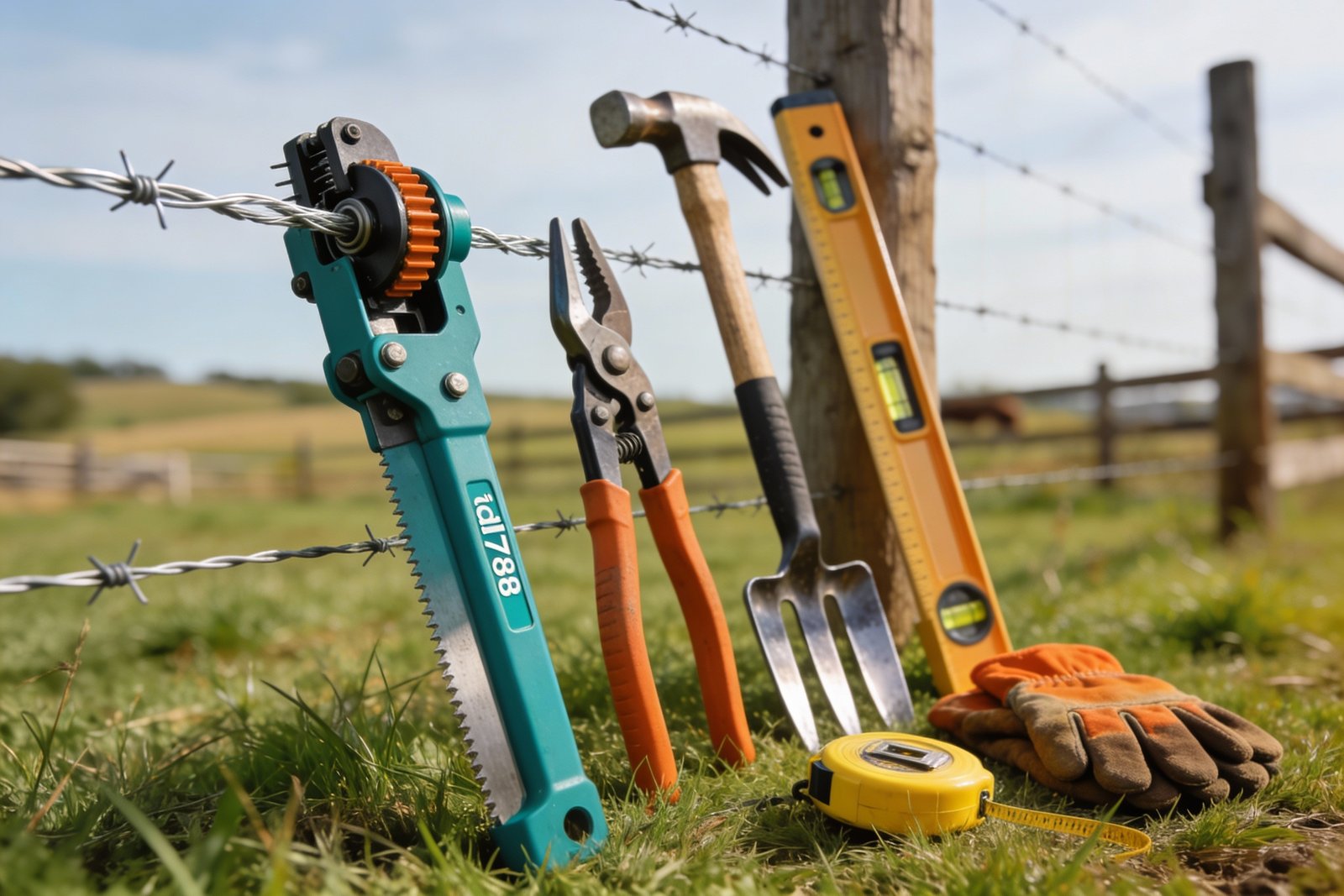 A well-organized professional tool setup significantly improves installation efficiency and safety
Basic Hand Tools: Foundational Equipment
Essential Manual Tools for Every Installation
⛏️Post Hole Digger
Primary Function: Excavating post holes in various soil conditions
Optimal Use: Small-scale projects, repairs, and finishing work
Technical Specifications:
- Blade width: 6-8 inches
- Handle length: 48-60 inches
- Weight capacity: 50-100 lbs soil
- Material: Forged steel with hardwood handles
Professional Fence Stretcher
Primary Function: Applying uniform tension across wire fencing
Critical Importance: Prevents wire fatigue and structural weakness
Technical Specifications:
- Tension capacity: 1,000-2,000 lbs
- Wire gauge compatibility: 12.5-16 gauge
- Ratchet mechanism: 24-36 teeth
- Material: Heat-treated alloy steel
Heavy-Duty Fencing Pliers
Primary Function: Multipurpose wire cutting and manipulation
Design Features: Integrated staple puller and serrated jaws
Technical Specifications:
- Cutting capacity: Up to 10 gauge wire
- Handle material: Cushioned vinyl or rubber
- Length: 9-11 inches
- Weight: 1.5-2.5 lbs
Additional Essential Hand Tools
| Tool | Primary Use | Specifications | Cost Range | Lifespan |
|---|---|---|---|---|
| Fencing Hammer | Driving staples and nails | 16-20 oz head, curved claw | $20-$45 | 10-15 years |
| Wire Reel Stand | Wire deployment and management | Adjustable height, 500-1000 lb capacity | $80-$180 | 15-20 years |
| Corner Brace Kit | Structural reinforcement | Includes brackets, bolts, and plates | $45-$95 | 20-25 years |
| Tensioning Grips | Wire tension maintenance | Adjustable jaw, rubberized handles | $35-$75 | 8-12 years |
Before beginning your fence installation project, understanding the complete process of how to install woven cattle fence wire is essential to ensure you select and use the correct tools and techniques for optimal results.
Power Tools & Mechanical Equipment
Enhanced Efficiency Through Powered Solutions
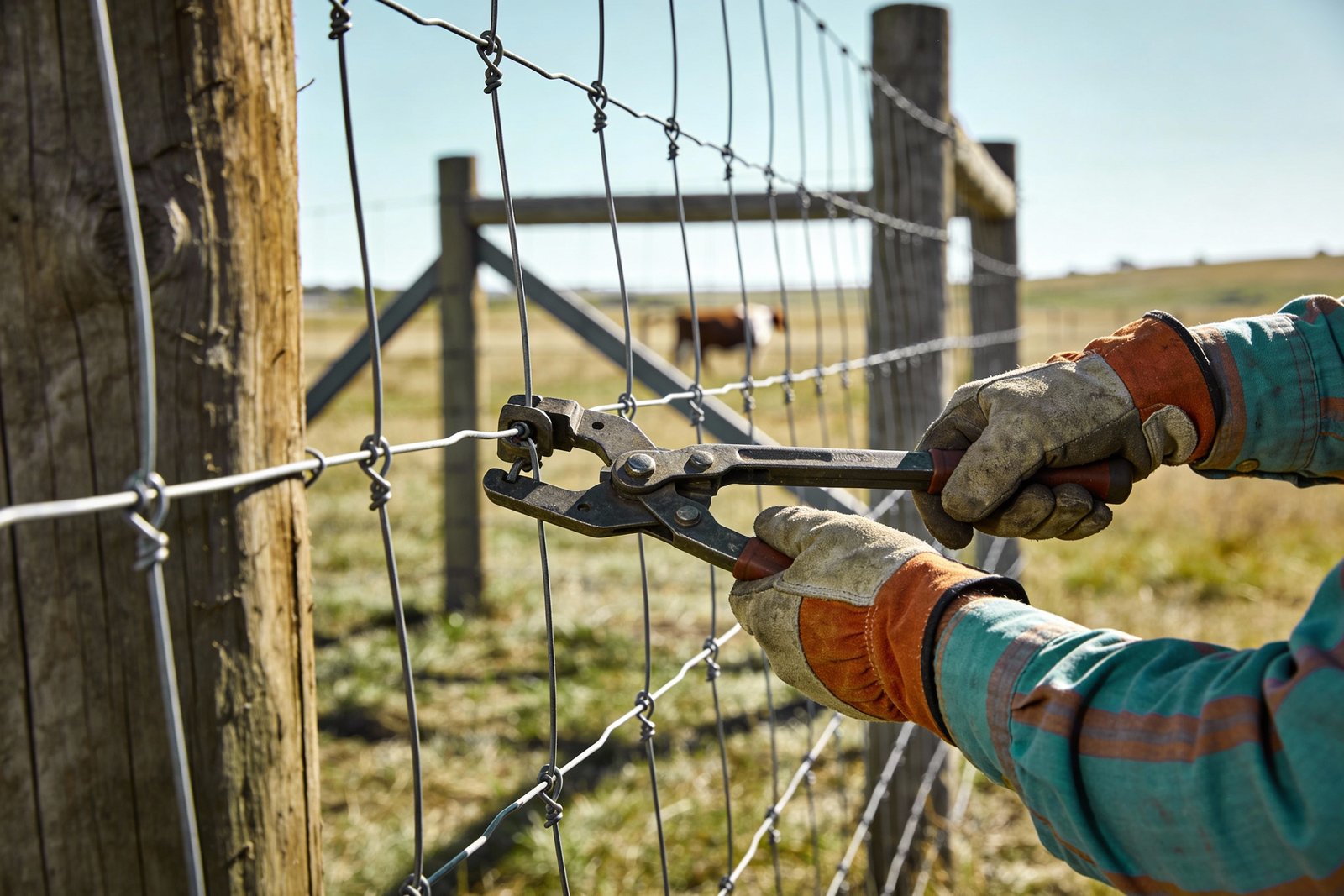 Powered equipment dramatically reduces physical labor while improving installation consistency and precision
Hydraulic Post Driver
Primary Advantage: Direct ground penetration without extensive excavation
Manual Efficiency 100%- Installation rate: 60-100 posts/hour
- Power source: Tractor PTO or standalone engine
- Post size capacity: 2-6 inch diameter
- Soil penetration: Up to 4 feet depth
Mechanical Auger System
Primary Advantage: Consistent hole diameter in challenging soils
Manual Efficiency 400%- Drilling rate: 20-40 holes/hour
- Auger sizes: 6-12 inch diameter
- Power options: Gas, electric, or hydraulic
- Depth capacity: Up to 5 feet
Power Tool Specifications Comparison
| Equipment Type | Daily Output | Power Requirement | Maintenance Interval | Skill Level Required |
|---|---|---|---|---|
| Compact Post Driver | 200-400 posts | 15-25 HP tractor | 50 hours | Intermediate |
| 3-Point Auger | 150-250 holes | 20-35 HP tractor | 100 hours | Intermediate |
| Track-Mounted Driver | 400-600 posts | 40-60 HP engine | 250 hours | Professional |
| Hydraulic Tensioner | 1-2 miles wire | Portable power pack | 200 hours | Professional |
Proper corner bracing is essential to withstand the tension produced by these powered tools and maintain long-term fence integrity. Learn how corner bracing systems for cattle fences provide the structural support necessary for durable installations.
Measurement & Alignment Systems
Precision Tools for Professional Results
📏Laser Measurement System
Accuracy: ±1/16 inch over 300 feet
Features: Digital display, memory storage, outdoor visibility
Cost: $150-$400 🎯Digital Inclinometer
Function: Post verticality verification
Accuracy: ±0.1 degree
Cost: $80-$200 🧭Alignment String System
Components: High-tension line, markers, reels
Capacity: Up to 1/4 mile continuous
Cost: $60-$140 Critical Note: Alignment errors compound over distance. A 1-degree error in post plumb over 100 feet results in 1.75 feet of lateral deviation at the endpoint, compromising both aesthetics and structural integrity.Safety Equipment: Non-Negotiable Protection
Comprehensive Personal Protective Equipment
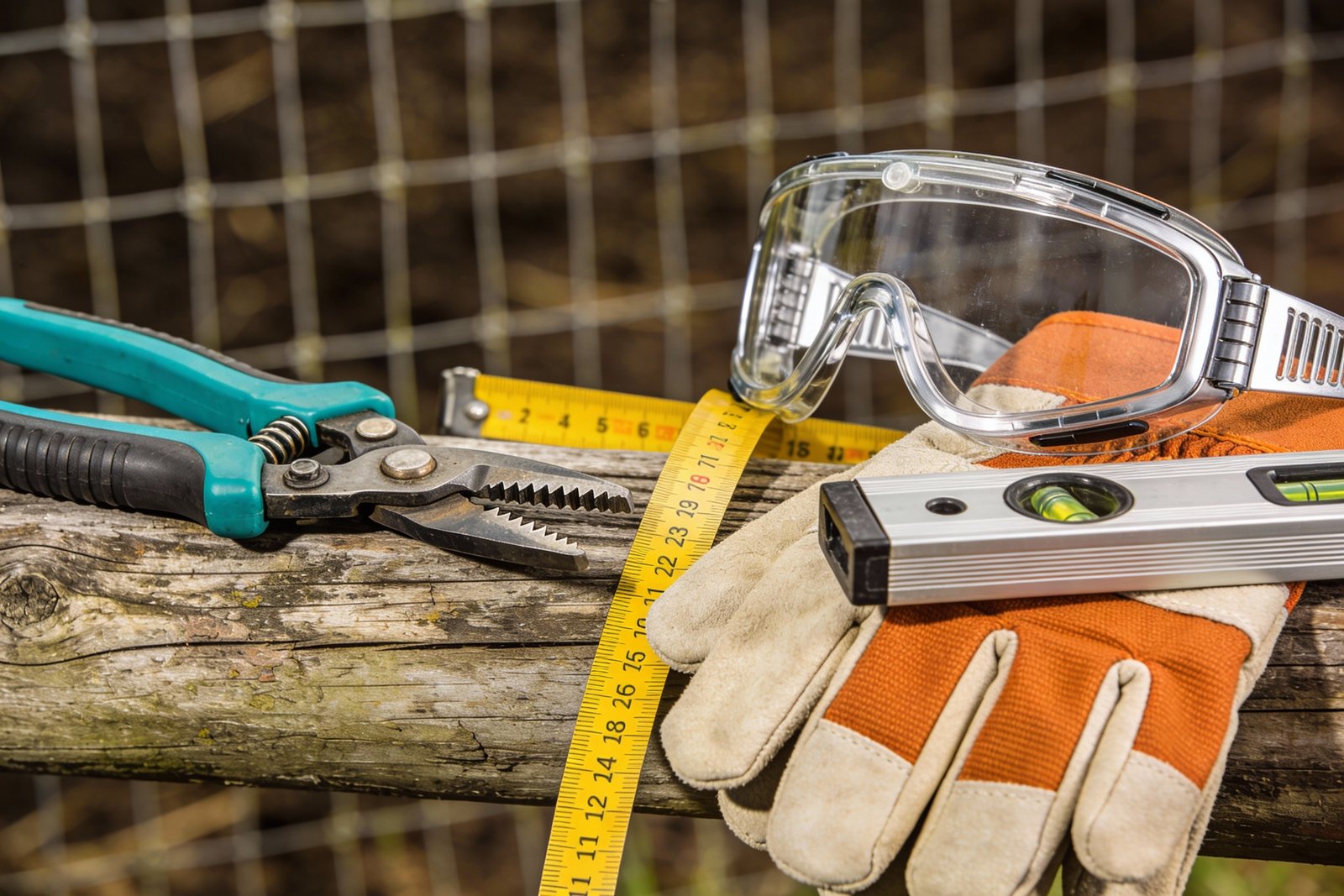 Proper safety equipment prevents 85% of common fencing-related injuries
| Safety Item | Protection Provided | Specifications | Certification | Replacement Schedule |
|---|---|---|---|---|
| Cut-Resistant Gloves | Hand protection from wire and sharp edges | Level 4 cut resistance, reinforced palms | ANSI/ISEA 105-2016 | 6-12 months |
| Safety Glasses | Eye protection from debris and wire ends | Polycarbonate lenses, side shields | ANSI Z87.1-2020 | 2-3 years |
| Steel-Toe Boots | Foot protection from heavy objects | ASTM F2413-18, waterproof membrane | ASTM/ANSI certified | 12-18 months |
| Hearing Protection | Noise reduction from power equipment | NRR 25-30 dB, electronic enhancement | EPA/ANSI certified | 3-5 years |
Budget Planning & Equipment Strategy
Strategic Investment Analysis by Farm Size
Small Operations (Under 5 Acres)
Recommended Strategy: Tool rental with essential hand tool purchase
- Essential hand tools: Purchase
- Power equipment: Rent as needed
- Safety equipment: Full purchase
- Storage solution: Basic shed or toolbox
Medium Farms (5-20 Acres)
Recommended Strategy: Mixed ownership with selective rentals
- All hand tools: Purchase
- Basic power tools: Purchase
- Specialized equipment: Rent
- Storage solution: Equipment shed
Large Operations (20+ Acres)
Recommended Strategy: Full equipment ownership
- Complete tool set: Purchase
- Full power equipment: Purchase
- Maintenance equipment: Purchase
- Storage solution: Dedicated workshop
Before making significant tool investment decisions, use our fence installation cost and labor calculator to estimate total project budgets, including tools, materials, and labor across different operation sizes.
10-Year Cost of Ownership Analysis
| Equipment Category | Purchase Cost | Annual Maintenance | 10-Year Total | Equivalent Rental Cost | Break-Even Point |
|---|---|---|---|---|---|
| Basic Hand Tools | $300 | $20 | $500 | $1,200 | 2.5 years |
| Post Driver | $2,200 | $150 | $3,700 | $6,500 | 3.4 years |
| Mechanical Auger | $1,800 | $120 | $3,000 | $5,800 | 3.1 years |
| Complete Tool Set | $8,500 | $500 | $13,500 | $24,000 | 3.5 years |
Tool Maintenance & Storage Solutions
Extending Equipment Lifespan Through Proper Care
🛠️Cleaning Protocol
- Daily: Remove soil and debris
- Weekly: Lubricate moving parts
- Monthly: Deep clean and inspect
- Seasonal: Apply protective coating
Storage Requirements
- Temperature: 40-80°F (4-27°C)
- Humidity: Below 60% relative humidity
- Organization: Wall-mounted systems
- Security: Lockable storage
Power Tool Care
- Battery: Store at 40-80% charge
- Blades/Bits: Regular sharpening
- Filters: Monthly replacement
- Fluids: Seasonal changes
Professional Recommendations & Best Practices
Strategic Equipment Selection Guidelines
Rule #1: Invest in quality tools for critical functions—tensioning, alignment, and safety equipment should never be compromised. High-quality tools provide superior reliability and longevity. Rule #2: Match tool quality to usage frequency. High-use tools warrant premium investment; occasional-use tools can be mid-range. This approach optimizes your capital allocation and project profitability. Rule #3: Consider total cost of ownership, not just purchase price. Quality tools typically offer better long-term value through reduced maintenance, fewer replacements, and improved efficiency gains. Critical Safety Reminder: Never modify tools for unintended purposes. Use each tool according to manufacturer specifications to maintain safety certifications and prevent liability issues.Conclusion: Building Your Tool Strategy
Developing a comprehensive cattle fence installation tool strategy requires balancing immediate operational needs with long-term investment requirements. The optimal approach varies significantly by operation size, terrain complexity, labor availability, and budget constraints.
Key Decision Factors:
- Project Scale: Small repairs versus major installations and expansions
- Soil Conditions: Soft loam versus rocky terrain requiring different equipment
- Labor Availability: Owner-operated versus hired crews for project efficiency
- Budget Constraints: Immediate tools versus phased long-term investment
- Future Expansion: Current needs versus projected growth requirements
For complete guidance on proper installation techniques using these tools, consult our detailed cattle fence installation guide. To protect your fence investment over time, review our cattle fence maintenance and repair guide for comprehensive long-term care strategies.
To explore the complete system of materials, installation methods, comparisons, and planning resources, return to our woven cattle fence wire guide .
Need cattle fence wire for your ranch?
Get factory-direct pricing, specifications and lead times.
Request a QuoteFrequently Asked Questions
What tools do I need to install a cattle fence?
Core hand tools are a post hole digger ($40-120), a professional fence stretcher ($85-250) for uniform wire tension, and heavy-duty fencing pliers ($25-60) that cut up to 10 gauge wire and pull staples. Add a fencing hammer, wire reel stand, corner brace kit, and tensioning grips. The right tools can cut installation time 40-60% while improving structural integrity.
Is a hydraulic post driver worth buying?
A hydraulic post driver costs $1,200-3,500 but sets 60-100 posts per hour and handles 2-6 inch posts to about 4 feet deep. It pays for itself on projects with 500+ posts or over a mile of fence. For smaller jobs, a mechanical auger ($800-2,800, 20-40 holes/hour, up to 5 ft deep) or renting equipment is more cost-effective than buying.
What is a fence stretcher and how much tension does it apply?
A fence stretcher, or strainer, applies uniform tension across wire so the fence stays tight and stock-tight. A professional model costs $85-250 and delivers 1,000-2,000 lbs of tension, working with 12.5-16 gauge wire. Even, controlled tensioning prevents sagging and premature loosening, which is why a quality stretcher is one of the most important tools in any fencing kit.
What safety equipment do I need for fence work?
Proper gear prevents about 85% of common fencing injuries. Wear Level 4 cut-resistant gloves (ANSI/ISEA certified), ANSI Z87.1-2020 polycarbonate safety glasses against snapping wire, and ASTM F2413-18 steel-toe boots. Add hearing protection rated NRR 25-30 dB when running power equipment like drivers and augers. Wire under tension can recoil violently, so eye and hand protection are non-negotiable.
How much should I budget for fencing tools and equipment?
Budget by operation size. Small operations under 5 acres should plan $500-1,200 annually, medium farms of 5-20 acres $1,500-3,500, and large operations of 20+ acres $5,000-15,000+ per year. Investing in quality tools pays back through a 40-60% reduction in installation time and stronger, longer-lasting fences, lowering your true per-foot cost over the fence's life.