
Woven Wire vs Barbed Wire Cattle Fence: Complete Comparison Guide
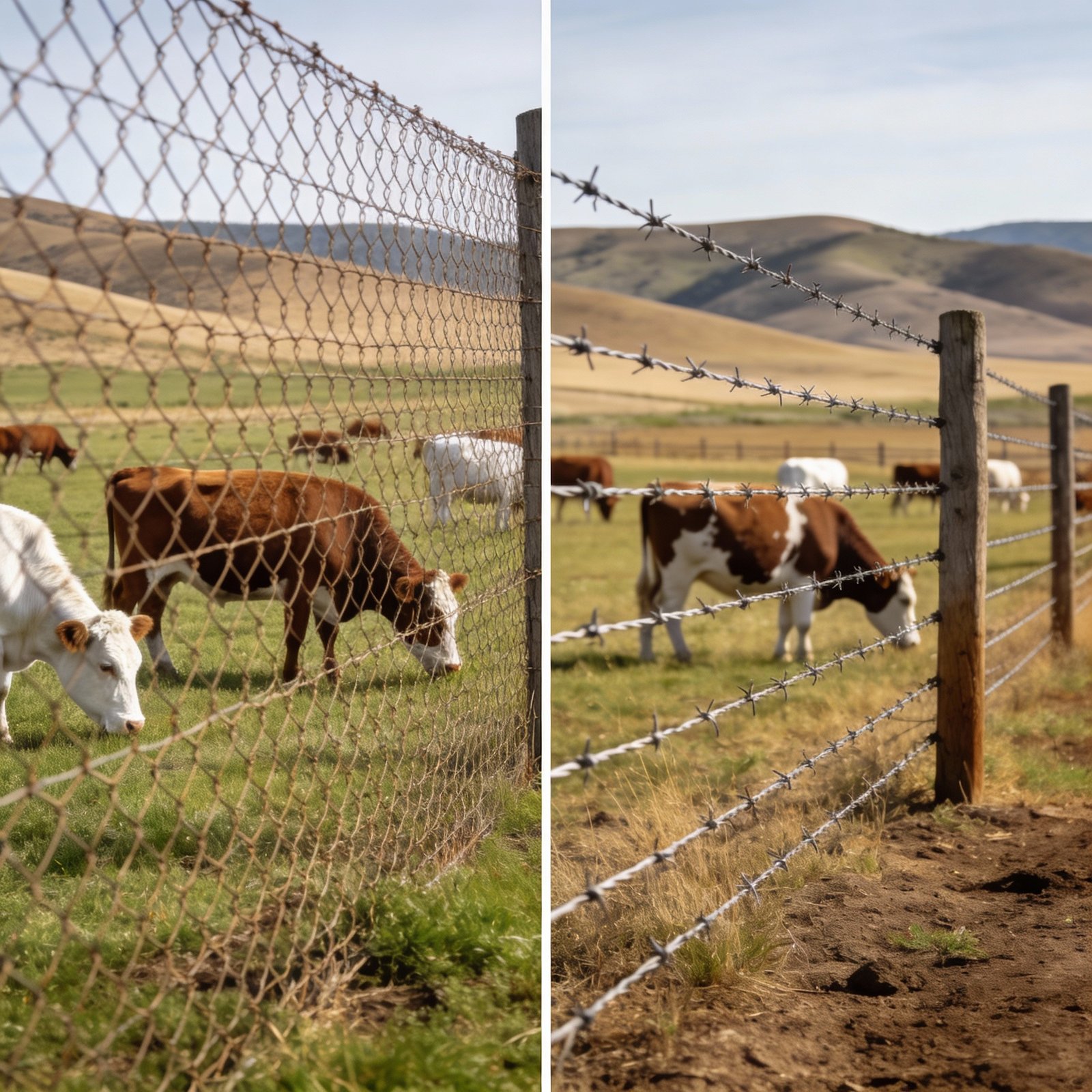
In livestock management, fence selection is a critical decision that ensures animal safety, property protection, and long-term economic benefits. Woven wire fence and barbed wire fence, as the two most common agricultural fencing types, each have distinct characteristics suitable for different application scenarios. This comprehensive report, based on industry data, professional advice, and practical case studies, provides ranchers and farm operators with thorough decision-making guidance.
Cost Analysis Comparison
Initial Installation Costs
Both fence types are relatively close in initial investment, but specific costs are influenced by multiple factors. Barbed wire fence material costs range from $1.25 to $6 per linear foot, approximately $31,734 per mile. This price range reflects differences in specifications and quality grades. A standard 4-5 strand barbed wire fence system is the most economical choice for large ranches, particularly when covering several miles of fence line.
Woven wire fence material costs range from $1.50 to $6 per linear foot, in the same price range as barbed wire. However, labor costs are typically higher, with installation fees of $40-$60 per hour, or $1.10-$2.50 per linear foot. For one acre of land with a perimeter of approximately 835 linear feet, labor costs total approximately $920-$2,090.
High-tensile fixed knot fence, as a premium option, has material costs of $5.46 per foot, or $35,117.80 per mile. Although the initial investment is higher, its superior durability makes it a long-term value choice. For detailed selection logic and budget planning, refer to our comprehensive cattle fence wire buying guide.
Long-Term Cost Effectiveness
The total cost of ownership for fencing depends not only on initial installation expenses but is significantly influenced by service life and maintenance requirements.
Service Life Comparison
- Barbed wire fence: 15-20 years
- Woven wire fence: 20-30 years
- High-tensile fixed knot: Up to 30 years
- Welded wire fence: Only 5-10 years
Annualized Cost Analysis
Barbed wire fence annual costs are approximately $2,115.65 per mile (based on 15-year lifespan), while fixed knot high-tensile fence annual costs are only $1,163 per mile (based on 30-year lifespan). This means that although fixed knot fence initial costs are approximately 10% higher, its annualized cost is reduced by 45%, demonstrating significant long-term economic advantages.
Maintenance Costs
Barbed wire fence requires regular inspection and repair, with repair costs of $2-$5 per linear foot and medium-scale replacement projects costing between $600-$1,500. Common maintenance issues include wire stretching and sagging, staples pulling out, and wire breakage.
Woven wire fence has significantly lower maintenance requirements. When properly installed, it can last 25-50 years with minimal maintenance. Primary maintenance work includes priming and painting wooden components, and regular inspection for damage and rust. You can estimate your project maintenance costs using our fence installation cost and labor calculator.
Material Strength and Durability
Wire Specifications and Breaking Strength
Fence wire strength directly determines its ability to withstand animal pressure and environmental stress. Wire strength primarily depends on carbon content in the steel—the higher the carbon content, the stronger the wire.
High-Tensile Wire (12.5 Gauge)
- Breaking strength: 1,500-1,600 pounds
- Elongation rate: Only 1.5-2%
- Carbon content: 0.28%, tensile strength 200 KSI
- Performance advantages: 3 times stronger than low-carbon wire, quickly recovers original tension after animal impact
A single strand of 12.5-gauge high-tensile wire has a breaking strength nearly twice that of standard 2-point barbed wire. When cattle lean against it, it bounces back without permanent stretching.
Low-Carbon Wire (12.5 Gauge)
- Breaking strength: Approximately 500 pounds
- Elongation rate: 13-14%
- Carbon content: 0.10-0.25%
- Maintenance requirements: Requires more frequent re-tightening
Medium-Tensile Wire (13 Gauge)
- Breaking strength: 750 pounds
- Elongation rate: Up to 6%
- Performance advantages: 64% stronger than 12.5-gauge low-carbon wire, budget-friendly upgrade option
For complete wire gauge specifications and technical parameters, consult our detailed cattle fence wire specifications guide.
Weather Resistance and Corrosion Protection
Fence durability largely depends on its ability to resist environmental erosion, particularly under different climate conditions.
Galvanization Protection Grades
Modern fence wire uses a graded galvanization system. Class 3 galvanization provides 2.0 ounces per square foot of zinc coating, with corrosion resistance 3 times stronger than traditional farm store wire. This protection level is especially important in humid climates and coastal areas.
| Climate Condition | Recommended Wire Type | Protection Characteristics |
|---|---|---|
| Humid/Coastal Areas | PVC-coated, stainless steel, hot-dip galvanized | Rust prevention, salt damage resistance, protective coating |
| Cold/Snow Regions | Galvanized steel, high-carbon steel | Low-temperature flexibility, corrosion resistance, maintains strength in freezing conditions |
| Hot/Arid Climates | Aluminum wire, UV-resistant coating, high-tensile steel | Heat resistance, UV degradation prevention, rust resistance |
| Rainy/Flood-Prone Areas | Zinc-aluminum coating, stainless steel | Waterproof, erosion resistance |
Special Coating Technologies
- PVC coating provides additional rust and salt damage protection layers
- Stainless steel naturally resists corrosion in high-salinity environments
- Zinc-aluminum alloy coating has superior corrosion resistance compared to standard galvanization
Safety Evaluation
Animal Injury Risk
Fence safety is a critical consideration when selecting, with significantly different injury risks between fence types for different animals.
Barbed Wire Fence Safety Hazards
The most significant drawback of barbed wire fence is its potential to cause serious injuries to humans and animals. Sharp barbs can lead to severe lacerations, puncture wounds, and infections, especially dangerous when animals become entangled.
Special Dangers for Horses: The combination of horses and barbed wire is almost always a mistake. Horses striking barbed wire at full speed suffer tearing injuries requiring hundreds of stitches and months of recovery. Leg entanglement can cause tendon damage that ends careers or even lives. Horses explore with their noses, rub on fences, and can enter full flight mode within seconds—all behaviors that turn barbed wire into a weapon against them. Even minor barbed wire cuts frequently become infected, heal poorly, and leave permanent scars.
Impact on Other Animals
- Sheep: Thick wool coats make barbed wire impractical, as wool can become caught on barbs
- Goats: Can suffer severe injuries; fencing that cannot withstand constant poking and chewing should be avoided
- Wildlife: Deer, owls, and other wildlife can become trapped on barbed wire, suffering painful injuries with no escape
Woven Wire Fence Safety Advantages
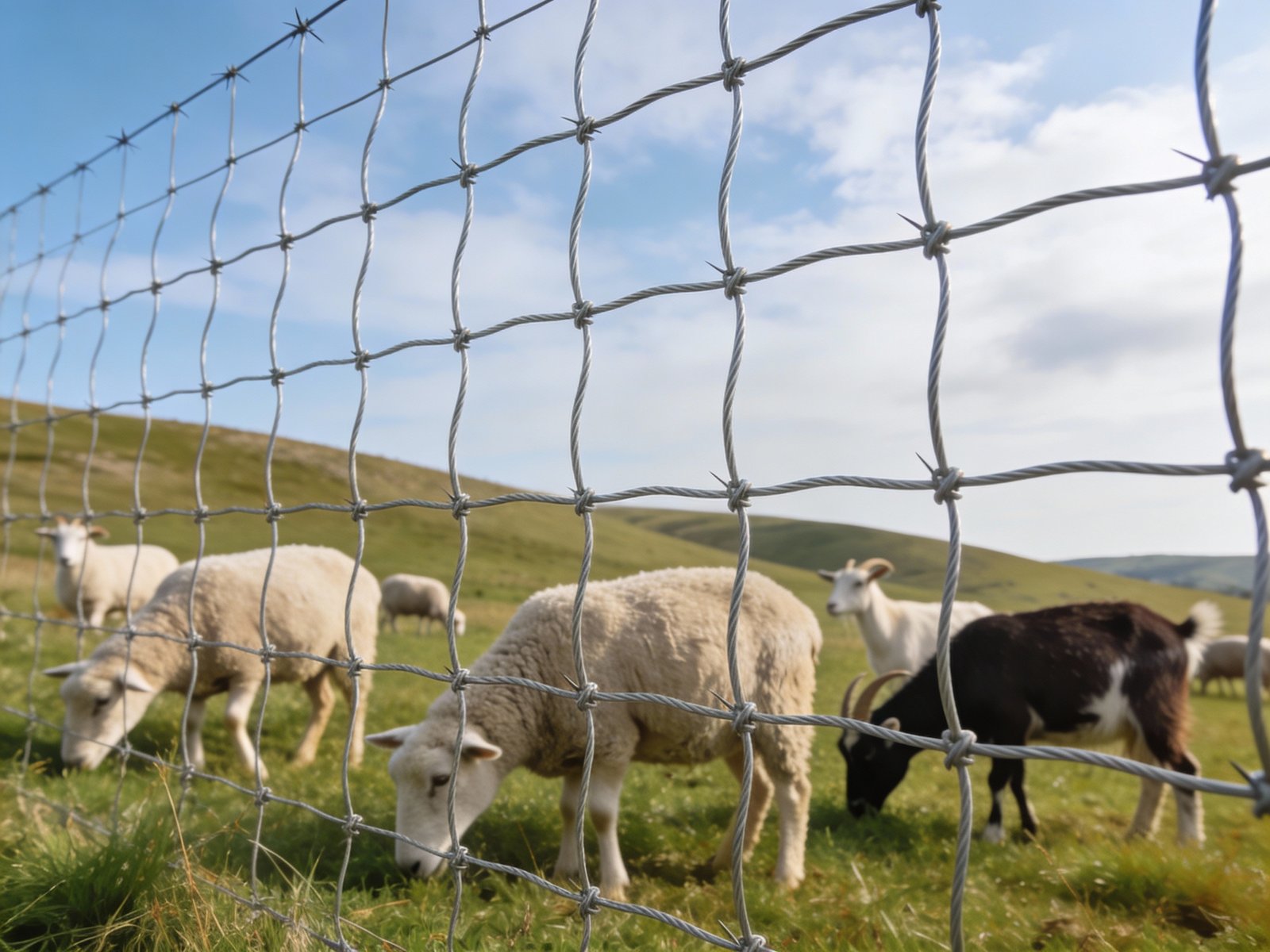
Woven wire fence provides a smooth surface that significantly reduces injury risk. Its design maximizes reduction of cuts, abrasions, and other injuries that might occur with more aggressive fence types. The 4×4-inch mesh spacing (for sheep and goat fencing) prevents heads and horns from becoming trapped while being small enough to prevent young lambs or kids from slipping through.
The flexibility of woven wire also contributes to safety—when pressure is applied, the fence bends rather than breaks, recovering when pressure is removed. This characteristic is particularly suitable for curious and active animals like goats, which constantly test fence boundaries.
Human Safety Considerations
Barbed Wire Dangers to Humans
Barb points pose significant injury risks to anyone who comes into contact, including children, pets, or maintenance workers. Many local governments regulate or even prohibit the use of barbed wire in certain residential or commercial zones due to the harm it can cause. Injury risk is especially serious on properties with young children, pets, or frequent visitors.
Old, unmaintained barbed wire is particularly dangerous. After prolonged exposure to the elements, it rusts, and because rust is commonly associated with tetanus, people who trip over old barbed wire may face health risks and legal liability. Even removed barbed wire fencing continues to pose serious threats to the surrounding environment.
Woven Wire Fence Human-Friendly Features
Woven wire fence poses no danger to children and pets, making it an attractive choice for residential farms. Its smooth woven structure eliminates the puncture and tearing risks inherent in barbed wire fencing while still providing effective containment functionality.
Application Scenarios and Best Practices
Ideal Applications for Barbed Wire Fence
Large Cattle Ranch Operations
Barbed wire fence performs best in large cattle ranch operations where economic considerations and scale make it a practical choice. When managing 1,000 head of cattle across 50,000 acres with the nearest neighbor 20 miles away, economic factors change. Smooth wire costs more, requires different installation techniques, and may not always contain cattle as effectively as barbed wire.
Recommended Configuration
- 4-5 strands of barbed wire (minimum 5 strands for pastures where cattle might push through)
- Post spacing: 10-16 feet
- Fence height: 42-48 inches
- Top two wire spacing: At least 10 inches (wildlife-friendly design)
Suitable Scenarios
- Remote boundary fencing with minimal animal contact
- Open large pastures
- Experienced cattle herds that have learned to respect barbed wire
- Budget-constrained projects
Wildlife Passage Considerations
In areas with dense wildlife populations, 3 strands of barbed wire plus a bottom smooth wire is recommended. This configuration allows wildlife to pass through or jump over the fence more easily without tearing down the fence. The bottom smooth wire should be set 16 inches above ground, with the top wire not exceeding 42 inches.
Ideal Applications for Woven Wire Fence
Horse Containment
Woven wire fence is the superior choice for horses, especially “no-climb” models featuring tight 4×4-inch mesh. Square Deal Knot fencing is particularly ideal for horses because its smoothness eliminates sharp edges that could scratch or cut skin. The fence rigidity prevents horses from climbing, regardless of how many animals attempt it.
Horse fencing should be:
- Height: 48-60 inches to prevent jumping
- Mesh spacing: 4×4 inches maximum
- Knot type: Square or fixed knot for rigidity
Learn more about different knot types in our specialized guide on fixed knot vs hinge joint vs S-knot fencing.
Sheep and Goat Containment
Woven wire fence is the industry standard for sheep and goat fencing. These animals require special considerations for their unique characteristics—sheep need predator protection, while goats are renowned for their escape abilities.
Recommended Specifications (Red Brand Sheep and Goat Fence)
- Height: 48 inches
- Mesh spacing: 4×4 inches
- Wire gauge: 12.5-gauge heavy-duty
- Knot type: Square knot (prevents sagging and bending)
- Galvanization grade: Class 1 or Class 3
The tight 4×4-inch weave prevents heads and horns from becoming trapped while blocking predators from harming the flock. The fence is tall enough to prevent jumping or climbing, while heavy-duty 12.5-gauge wire withstands goat chewing and constant pressure.
Reinforcement Recommendations
Reinforcing the lower fence area is recommended, as goats frequently test boundaries near ground level. In areas where predators are a primary concern, adding a strand of high-tensile electric wire at the bottom can provide additional protection.
Mixed Livestock and Small Animals
Woven wire fence excels in mixed livestock operations, accommodating animals of different sizes and behaviors. Its versatility makes it suitable for a wide range of applications from poultry to cattle.
For poultry and small livestock, smaller-gauge woven wire fencing with wooden or steel posts provides the necessary strength and safety. The tight weave structure maintains poultry and small livestock containment while preventing unwelcome visitors.
Predator Protection
Woven wire fence excels in predator defense, which is one of its key advantages over barbed wire fence. The tight mesh prevents predators from squeezing through or climbing, effectively countering coyotes, foxes, and stray dogs.
Multi-Layer Defense Strategy
- Woven wire fence + top electric wire: Physical barrier plus psychological deterrent
- Woven wire fence + top and bottom electric wire: Prevents climbing and digging
- Apron or skirt: Extends at fence bottom to prevent predators from digging under
Many farms find the combination of woven wire fence, cattle panels, and electric fence most ideal. For example, using woven wire fence in corners and high-traffic areas, paired with electric net fencing for flexible grazing areas.
Combination Systems and Hybrid Approaches
Woven Wire Fence Plus Top Barbed Wire/Electric Wire
One of the most common and effective configurations is adding 1-2 strands of barbed wire or electric wire atop a 4-foot woven wire fence. This combination provides:
- Physical barrier and safety of woven wire fence
- Additional height and deterrent of barbed wire or electric wire
- Enhanced predator protection
For sheep and goats, top barbed wire helps prevent climbing animals (such as goats) from jumping over the fence. The electric wire option provides a psychological barrier without the injury risk of barbed wire.
Important Safety Note: Never attempt to electrify existing barbed wire or woven wire, as it is too dangerous for livestock. Instead, use wooden post extenders or T-post extenders to add high-tensile wire, polywire, or polytape above existing fencing.
High-Tensile Smooth Wire Alternative
High-tensile smooth wire serves as a modern alternative combining the strength of barbed wire with the safety of woven wire fence.
Key Advantages
- Smooth surface safer than barbed wire
- Single strand of 12.5-gauge high-tensile wire has breaking strength nearly twice that of 2-point barbed wire
- Class 3 galvanization resists corrosion 3 times longer than traditional wire
- Requires fewer posts, reducing installation costs
- More forgiving tension, easier to install
Applications
High-tensile smooth wire is suitable for cattle and other slow-moving animals, excelling in large ranch perimeter fencing. It can be electrified to enhance containment effectiveness and is particularly suitable for rotational grazing systems.
Considerations
While high-tensile smooth wire offers many advantages, it requires proper installation techniques. Some ranchers find its maintenance challenging, requiring more specialized knowledge compared to barbed wire. For horses, it is not recommended as primary fencing, though some ranchers have successfully used it with added electric deterrent.
Fence Knot Types and Structural Characteristics
Woven wire fence performance largely depends on its knot design—the connection points that join horizontal line wires and vertical stay wires. Three main knot types each have unique advantages.
Fixed Knot (Cross Lock Knot)
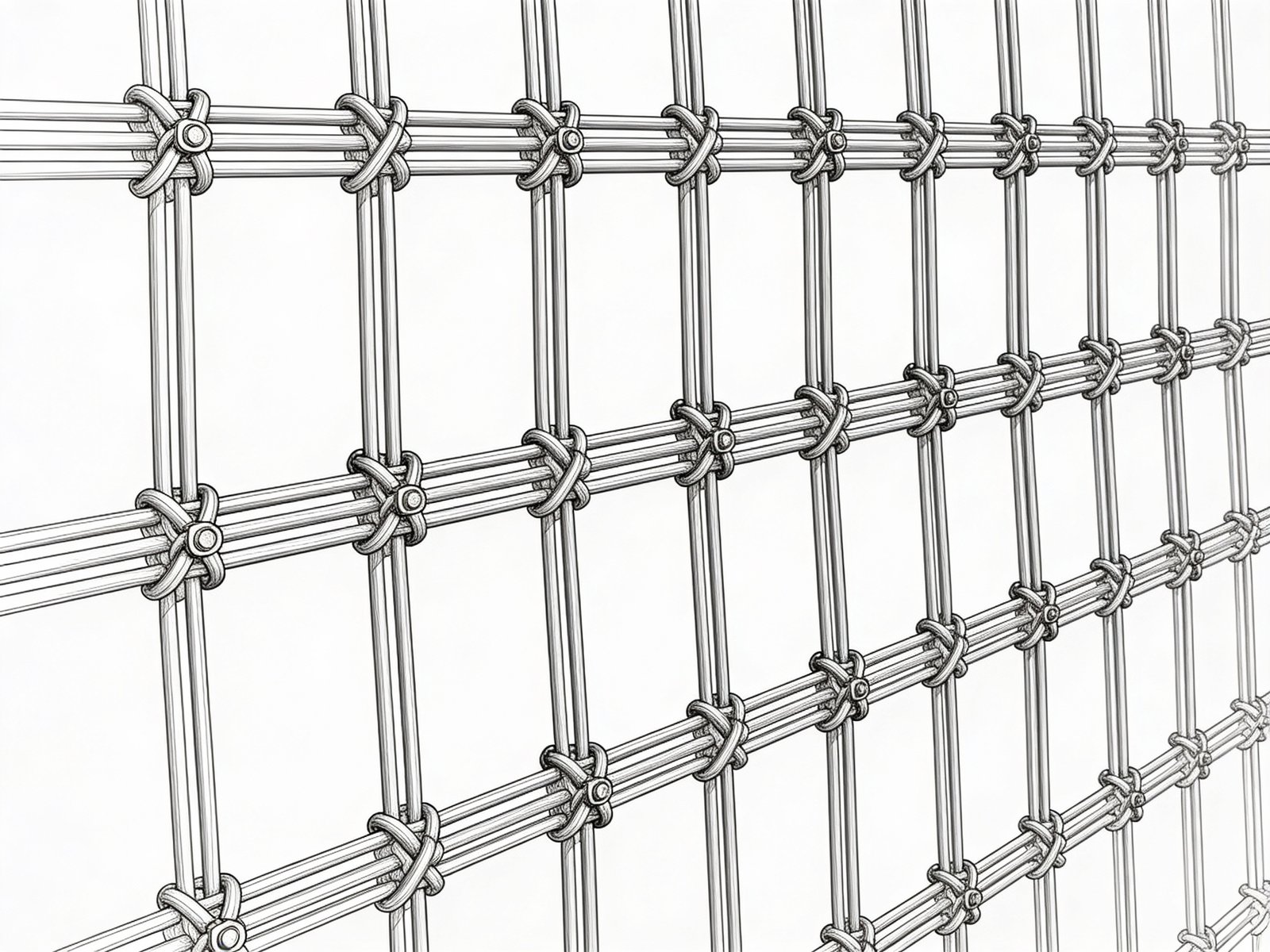
Fixed knot is the strongest knot type in woven wire fencing. This knot uses an independent third wire that wraps around vertical and horizontal wires under pressure, forming a knot and locking the connection.
Performance Characteristics
- Provides far superior vertical and horizontal load-bearing strength compared to other types
- Even under heavy pressure, the fence cannot be torn apart unless pressure is sufficient to cause wire breakage—an extremely unlikely event
- Allows use of fewer posts because the fence can stand independently even before tightening
- Posts can be spaced farther apart, reducing installation costs
Applications
Fixed knot fence was originally developed for deer containment in New Zealand and is now widely used in the United States for livestock, game, and exotic animals. It is an excellent all-around choice for almost any livestock type due to its durability and high resistance to animal impact. Explore comprehensive installation techniques in our woven cattle fence wire installation guide.
Hinge Joint (Monarch Knot)
Hinge joint is one of the most common knots in fencing. Vertical stay wires wrap around horizontal line wires, creating a hinge-like connection that allows the fence to bend slightly under pressure.
Performance Characteristics
- Provides superior flexibility—may bend slightly under pressure but always bounces back to position
- Designed to absorb animal impact
- Better adapts to uneven terrain than fixed knot
- Economical choice with lower initial cost than fixed knot fence
Applications
Hinge joint fence is commonly called “field fence” and is often used for general livestock fencing, particularly in applications where fence line pressure is not high, such as sheep and goats.
Square Deal Knot (S-Knot)
Square Deal Knot uses a compact knot design, with small pieces of wire “hugging” horizontal and vertical wires at each intersection. Shaped like a square, this knot firmly grips both wires.
Performance Characteristics
- Makes fence more resistant to bending or sagging
- Smooth to the touch
- Provides continuous support for easier installation
- Maintains strength on hilly terrain
Applications
Square Deal Knot fence is perfect for horse “no-climb” fencing. The fence smoothness eliminates points that could scratch or cut skin, while rigidity keeps the fence standing regardless of how many animals attempt to climb. Also recommended for Red Brand sheep and goat fencing, with design preventing knots from sliding or moving that could create fence openings.
Deep Wire Crimp and Temperature Adaptation
Fixed knot and Square Deal Knot fences have deeper crimps in the wire than traditional fencing. This design feature is crucial for two reasons:
- Temperature compensation: Deep crimps allow the fence to expand and contract with temperature changes. During hot summers fence wire expands; during cold winters it contracts. Crimps provide space for this movement, preventing excessive tension that leads to breakage.
- Impact recovery: Deep crimps increase fence flexibility, allowing the fence to recover its original structure after impact. When a tree falls on the fence or livestock lean against it, the fence can absorb the force then bounce back.
When installing woven wire fence, wire should be pulled until approximately half the curves are pulled from the wire. This ensures the fence has sufficient tension to remain tight while still retaining ability to adapt to temperature changes and impacts.
Terrain and Installation Considerations
Sloped and Uneven Terrain Challenges
Installing fence on rocky or sloped terrain presents unique challenges that can make the process much more difficult than on flat ground. Uneven landscape creates issues with post stability, soil erosion, and digging difficulties, all of which can compromise fence durability over time.
Common Challenges
- Post stability issues: On rocky ground, it’s difficult to drive posts deep enough for proper support; on loose soil, posts may shift over time due to erosion and ground movement.
- Soil erosion and water flow: Sloped landscapes are more prone to soil erosion and water flow, which can undermine fence posts and cause shifting over time.
- Fence line alignment: Maintaining straight, even fence lines on sloped or rugged ground is challenging. Unlike flat ground, posts cannot be placed at uniform heights and distances.
- Effective fence height: Fences on slopes are harder for animals to cross. Any height fence when placed on steep slopes or beside deep gullies is much harder to cross. For example, a 42-inch fence might be passable on flat ground, but a 10% slope increases effective fence height to 48.6 inches; 30% slope increases to 62 inches; 50% slope creates a 75-inch barrier for animals.
For specialized techniques and solutions for challenging installations, see our detailed guide on cattle fence installation on difficult terrain.
Best Techniques for Uneven Terrain
Drilling Posts and Reinforced Bracing
Where traditional wooden posts cannot be embedded deep enough, drive steel T-posts. In areas where soil is too loose to hold posts firmly, use concrete foundations. Drill through bedrock with specialized equipment when necessary.
Key Reinforcement Strategies
- H-braces and corner bracing: Critical for keeping posts upright and maintaining fence tension. Learn proper techniques in our corner bracing systems guide.
- Extra-deep posts: Set posts deeper than standard depth (e.g., 3-4 feet) to resist ground movement
- Concrete foundations: Adding concrete around posts provides additional support, especially on erosion-prone slopes
Bracing is particularly important at gate openings, corners, and transition points where fencing experiences additional strain.
Stepped Fencing for Sloped Terrain
When installing fence on slopes, deciding whether to follow the land’s natural contour or use a step-down method to maintain proper tension and alignment is critical.
Why Stepped Fencing Works
- Prevents excessive gaps at fence bottom that could allow livestock to escape
- Maintains proper fence line tension by adjusting elevation changes in segments
- Easier installation compared to following natural slope, which can lead to misalignment
With stepped fencing, posts are installed in a step pattern rather than at an angle, ensuring secure and uniform fence lines that effectively contain livestock and protect property boundaries.
Square Deal Knot Fence Advantages on Hilly Terrain
Red Brand’s Square Deal Knot fence is specifically designed for hilly terrain applications. The knot shape provides extra strength and flexibility. This resilience allows the fence to automatically relieve high-pressure areas while maintaining rigidity in low-pressure areas.
Fence tends to sag on uneven terrain because fence posts are on relatively flat planes, creating uneven pressure throughout the fence. Square Deal Knot design relieves this uneven pressure, preventing fence sagging or bending.
Preventing Erosion and Maintaining Fence Stability
On rocky or sloped terrain, preventing erosion is crucial for maintaining fence stability, as soil displacement and water flow can undermine posts over time.
Erosion Control Strategies
- Use gravel or concrete foundations in high-risk areas to anchor posts and improve drainage
- Plant deep-rooted vegetation or use erosion control fabric to stabilize ground
- Position fencing perpendicular to water flow to further reduce soil erosion by directing runoff away from fence posts
- Create drainage ditches or channels to manage excess water
These strategies ensure long-term fence durability while protecting surrounding landscape from erosion.
Bracing and Tension Management
Importance of Proper Bracing
Regardless of terrain, good fencing starts with good bracing. Bracing is the structural component that supports fence tension, typically consisting of two or three posts and horizontal brace wires forming an H-frame or A-frame.
Bracing Spacing Guidelines
- General rule: Shorter is better
- Absolute maximum on flat ground: Quarter mile
- Steep terrain: Add bracing at low points, even if just simple H-braces
In gullies and depressions, proper bracing typically holds the fence when posts are set correctly. “We don’t use posts smaller than 6 inches in diameter for most bracing in that type of terrain. Smaller posts don’t have enough anchoring mass.”
Tension Considerations
Fence should be tight and straight between posts without sagging, but not so tight that it vibrates when struck. If you can play a tune by pounding nails on brace posts with a hammer, the fence is too tight and may break.
The longer the run, the harder it is to judge how tight to pull—experience is the best teacher. It’s recommended to have another person or two check the pull along the line.
Barbed Wire Fence Disadvantages and Limitations
Aesthetic and Legal Limitations
Aesthetic Limitations
While barbed wire fence is highly effective in providing security, it is not visually appealing. The rough industrial appearance of barbed wire can detract from the overall appearance of residential or commercial properties, making them look unwelcoming or even hostile.
For residential properties, barbed wire fence can reduce curb appeal, making the property less attractive to potential buyers. Many homeowners prefer fencing that is not only functional but also contributes positively to overall landscape design.
In commercial settings, particularly in upscale communities or tourist areas, the appearance of barbed wire fencing can negatively impact business image. More decorative yet still secure alternatives may be more appropriate for maintaining a professional and welcoming appearance.
Legal and Regulatory Issues
In many municipalities, there are legal restrictions on the use of barbed wire fence. Some jurisdictions prohibit or strictly limit the use of barbed wire in residential zones due to safety concerns. Before installing barbed wire fence, it is crucial to check local zoning laws and homeowners association (HOA) guidelines to ensure compliance.
Failure to comply with these regulations can not only result in fines and legal issues but may also create liability risks in the event of injury. Because rusty barbed wire is commonly associated with tetanus, people who trip over old barbed wire may become resentful of unmaintained wire and file lawsuits.
Maintenance Challenges
Common Maintenance Issues
Although barbed wire fence is generally considered a low-maintenance option, it actually requires significant ongoing attention:
- Wire stretching and sagging: Over time, barbed wire stretches and becomes loose, especially when using low-carbon wire. This requires regular re-tightening to maintain effective containment.
- Staples pulling out: Staples that secure wire to posts pull out and need replacement.
- Wire breakage: Individual wire strands can break, requiring splicing or replacement.
- Post rot: Wooden posts rot underground and must be replaced as needed, until eventually rebuilding the entire fence line.
One experienced rancher described: “Wire breaks, staples pull out, wire stretches over time and becomes loose. Posts rot underground, so you have to replace them as needed until you rebuild the entire fence line.”
Scale Challenges
For a small five-acre property, this maintenance may not be a big deal, but on large ranches it’s almost a full-time job. Another rancher noted: “If it’s just five acres it’s no big deal, but on a ranch it’s almost a full-time job.”
Galvanization Degradation
Over time, the galvanized coating on fence wire wears away, particularly with frequent handling or harsh environmental conditions. Once the coating is compromised, the wire rusts and corrodes, weakening the fence’s structural integrity.
If the galvanized coating wears off, corrosion or rust can develop in the barb sections. Property owners must be diligent about inspecting for these issues and making necessary repairs to maintain fence integrity. If galvanized fence contacts the ground, it may start showing rust within 2-5 years.
Woven Wire Fence Advantages Summary
Structural Integrity
Welded vs. Woven Construction
Heavy pressure and extreme weather can weaken welded wire and cause breakage. Injury risk is high, as is the possibility of escape or death by predators. Woven wire gives owners peace of mind, providing a safe and reliable fence solution that won’t break or collapse.
Woven wire fence creates woven connections by wrapping intersecting wires at each junction, providing greater strength than spot-welded fence. This construction method creates fencing that can withstand goat chewing and strong pressure.
Lasting Performance
Properly installed woven wire fence can last 20-30 years, with some applications expecting properly maintained fence to last 25-50 years. This longevity makes it a cost-effective long-term choice due to reduced need for frequent repairs or replacement.
In contrast, welded fence lasts only 5-10 years, meaning over a 30-year period, one woven wire fence installation may be more cost-effective than three to six welded wire fence installations.
Versatility and Adaptability
Terrain Adaptability
Whether your livestock fencing is on flat ground, hilly terrain, or uneven ground, woven wire fence easily adapts to the landscape. Its flexibility allows installation on various terrains without compromising its integrity or effectiveness.
This adaptability makes woven wire fence ideal for properties unsuitable for barbed wire fence or other rigid fence types. The flexible mesh installs easily on all terrain types because sheep and goats don’t like wet feet—slopes are often preferred by flocks.
Wide Application Range
Woven wire fence versatility extends to its application range. Sheep and goat fencing can also safely contain other species such as dogs, poultry, pigs, cattle, and horses. This versatility makes it a valuable investment for mixed livestock operations where a single fence type can meet multiple needs.
Common Applications
- Agricultural applications: Containing sheep, goats, and pigs while protecting them from predators
- Residential uses: Defining property boundaries, keeping pets in, preventing wildlife from entering gardens
- Commercial properties: Security purposes or creating boundaries within larger properties
- Roads and infrastructure: Preventing animals from wandering onto roads or tracks, reducing accidents
Ease of Installation and Maintenance
Installation
Woven wire fence is relatively easy to install, making it a practical choice for livestock owners. While proper techniques and tools are required, the process is straightforward for experienced fence builders.
Key installation steps include:
- Set corner posts and mark T-post and anchor post locations
- Place anchors first, as they require the most time
- Unroll and splice fence rolls
- Stretch fence on the inside of line posts so animals leaning don’t push out staples
- Don’t drive staples completely tight to posts—leave a little room for fence movement to accommodate temperature changes
Minimal Maintenance Requirements
Once installed, woven wire fence requires minimal maintenance, saving long-term time and resources compared to other fence types. Regular inspection and occasional wire tightening are typically sufficient to keep the fence in excellent condition.
This contrasts sharply with the ongoing maintenance demands of barbed wire fence—broken wires, pulled staples, stretched wires, and rotted posts all require regular attention. The robust construction and durable materials of woven wire fence eliminate most of these issues.
Wooden Component Maintenance
While woven wire itself requires minimal maintenance, wooden posts will need repair or replacement long before worrying about replacing the woven wire itself. Priming and painting wooden components (such as posts) helps prevent rot. Regularly inspect all wire for signs of damage, rust, or structural problems.
Decision Framework and Recommendations
Key Decision Factors
When choosing between barbed wire fence and woven wire fence, several key factors should guide your decision.
Livestock Type and Behavior
The type of animals you raise plays a critical role in fencing decisions. Farmers with large livestock such as cattle and horses typically prefer high-tensile fencing due to its inherent strength and safety characteristics. In contrast, barbed wire may be sufficient for smaller animals, provided safety concerns and predator threats are minimal.
- Cattle: Barbed wire or high-tensile fence effective; requires strong durable fence to withstand pressure
- Horses: Woven wire fence (no-climb type) or high-tensile smooth wire; smooth visible fence is essential
- Sheep and goats: Woven wire fence is standard; requires tight spacing and predator protection
- Mixed livestock: Woven wire fence or electric fence; versatile option accommodates different sized animals
- Poultry: Mesh fence or electric netting; protection from ground predators
Property Size
The area of land requiring fencing significantly impacts cost-effectiveness and practical considerations.
- Small properties: Permanent fencing like rail or woven wire works well in smaller areas. Higher initial costs are acceptable because total area is limited.
- Large properties: High-tensile or electric fence is cost-effective and easy to install on extensive land. When covering several miles of fence line, the lower per-foot cost of barbed wire becomes a significant advantage.
Budget Considerations
Budget is a key aspect that significantly influences your fence type choice. It’s important to consider both initial installation costs and long-term expenses associated with maintenance and repairs.
| Fence Type | Initial Cost (per linear foot) | Initial Cost (per mile) | Lifespan | Annual Cost (per mile) |
|---|---|---|---|---|
| Barbed Wire | $1.25 – $6 | $31,734 | 15 years | $2,115.65 |
| Woven Wire | $1.50 – $6 | Similar range | 20-30 years | Lower long-term |
| Fixed Knot High-Tensile | $5.46 | $35,117 | 30 years | $1,163 |
Long-Term Value Analysis
While fixed knot fence initial costs are 10% higher, its 30-year lifespan makes its annual cost 45% lower ($1,163 vs. $2,115 per mile). This demonstrates the importance of considering total cost of ownership rather than just initial price.
“Choose the best fence your money can buy, because fence costs only about 30% of the overall project.” Regardless of fence type chosen, certain materials are required, including posts, fasteners, bracing, gates, labor, and tools.
Safety Priority
If safety is the primary concern—whether preventing livestock injury or protecting children and pets—woven wire fence provides significant advantages. Its smooth surface eliminates the puncture and tearing risks inherent in barbed wire.
Safety considerations are particularly important for:
- Residential farms with children or pets
- Horse facilities (barbed wire is almost always an inappropriate choice)
- Vulnerable or easily frightened animals
- High-traffic areas where humans frequently interact with fencing
Predator Pressure
Areas where predators are a significant concern strongly favor woven wire fence. The tight mesh provides a solid physical barrier preventing predators from squeezing through or climbing, effectively countering coyotes, foxes, and stray dogs.
Barbed wire fence offers limited predator protection. While it may deter certain large predators, it cannot prevent determined predators or small predators that can squeeze through the wires.
Terrain and Installation Conditions
Your property terrain influences fence selection and installation complexity.
- Flat ground: Both fence types work well; choice mainly based on other factors such as livestock type and budget
- Hilly/uneven terrain: Square Deal Knot woven wire fence is specifically designed for these conditions. Its flexibility allows automatic relief of high-pressure areas while maintaining rigidity in low-pressure areas
- Rocky ground: May require drilling posts or concrete foundations. Woven wire fence flexibility has advantages in these challenging conditions
- Erosion-prone areas: Requires additional consideration for drainage and post stability. Proper bracing and erosion control measures are critical for both fence types
Climate and Environmental Factors
Your local climate influences fence durability and maintenance requirements. Different materials respond differently to weather conditions such as humidity, temperature fluctuations, and exposure to salt air.
Choosing materials that can withstand your region’s specific environmental challenges ensures longevity and minimal maintenance. Class 3 galvanized high-tensile wire resists rust in humid climates and red clay conditions. Coastal areas benefit from PVC-coated or stainless steel options.
Recommended Scenarios
Choose Barbed Wire Fence When
- Large-scale cattle ranch operations (1,000+ head, spanning tens of thousands of acres)
- Budget is strictly constrained and initial cost is the primary driver
- Cattle herd is experienced and has learned to respect the fence
- Wildlife passage is important (with smooth bottom wire and appropriate spacing)
- Remote boundary fencing with minimal animal contact
- Temporary or rotational grazing requiring flexibility
Choose Woven Wire Fence When
- Horse facilities (barbed wire is almost never appropriate)
- Sheep and goat operations (industry standard)
- Mixed livestock farms requiring versatile fencing
- High predator pressure areas
- Safety is the primary consideration (children, pets, vulnerable animals)
- Hilly or uneven terrain
- Long-term investment perspective prioritized over initial cost savings
- Smaller properties with limited total fencing costs
Consider Combination Systems When
- Woven wire fence + top barbed wire/electric wire: Suitable for additional height to deter predators or climbing animals
- Woven wire fence + top and bottom electric wire: Maximum predator protection, preventing digging and climbing
- High-tensile smooth wire + electrification: Modern alternative combining strength and safety
- Woven wire fence for high-traffic areas + electric netting for rotational grazing: Balances permanence and flexibility
Final Recommendations
There is no one-size-fits-all fence. The best choice depends on your specific situation, needs, and constraints. A successful fencing system finds the appropriate balance among:
- Animal safety and welfare
- Predator protection
- Initial cost and long-term value
- Maintenance requirements and available labor
- Terrain challenges
- Environmental durability
- Regulatory compliance
For most livestock owners, particularly those with sheep, goats, horses, or mixed animals, woven wire fence provides the best overall value. Its superior safety, predator protection capability, durability, and versatility justify the higher initial investment.
For operations exclusively running large cattle ranches where cost is the primary consideration, barbed wire fence remains a viable option. However, even in these applications, modern high-tensile smooth wire offers a compelling alternative combining strength, safety, and long-term value.
Investing in quality is crucial. Choose the best fence your budget allows, considering that fence costs represent only about 30% of total project costs. A quality installation using appropriate materials (such as Class 3 galvanized wire, proper post spacing, and adequate bracing) will provide reliable service for decades, while cheap installations may require expensive repairs or even complete replacement within a few years.
Remember: The true cost of fencing is not what you pay today—it’s what you will pay over its entire service life. By considering all factors and prioritizing long-term value over short-term savings, you can select a fencing system that protects your livestock, property, and investment for decades to come.
Recommended Guides
- Complete Cattle Fence Wire Buying Guide
- Cattle Fence Wire Specifications & Technical Details
- Fixed Knot vs Hinge Joint vs S-Knot Fence Comparison
- Hinge Joint Fence: Flexibility and Applications
- S-Knot Fence: Square Deal Knot for Premium Livestock Fencing
- How to Install Woven Cattle Fence Wire: Step-by-Step Guide
- Cattle Fence Installation on Difficult Terrain
- Corner Bracing Systems for Cattle Fence
- Fence Installation Cost & Labor Calculator
Woven Wire vs Barbed Wire Cattle Fence: Complete Comparison Guide
In livestock management, fence selection is a critical decision that ensures animal safety, property protection, and long-term economic benefits. Woven wire fence and barbed wire fence, as the two most common agricultural fencing types, each have distinct characteristics suitable for different application scenarios. This comprehensive report, based on industry data, professional advice, and practical case studies, provides ranchers and farm operators with thorough decision-making guidance.
Cost Analysis Comparison
Initial Installation Costs
Both fence types are relatively close in initial investment, but specific costs are influenced by multiple factors. Barbed wire fence material costs range from $1.25 to $6 per linear foot, approximately $31,734 per mile. This price range reflects differences in specifications and quality grades. A standard 4-5 strand barbed wire fence system is the most economical choice for large ranches, particularly when covering several miles of fence line.
Woven wire fence material costs range from $1.50 to $6 per linear foot, in the same price range as barbed wire. However, labor costs are typically higher, with installation fees of $40-$60 per hour, or $1.10-$2.50 per linear foot. For one acre of land with a perimeter of approximately 835 linear feet, labor costs total approximately $920-$2,090.
High-tensile fixed knot fence, as a premium option, has material costs of $5.46 per foot, or $35,117.80 per mile. Although the initial investment is higher, its superior durability makes it a long-term value choice. For detailed selection logic and budget planning, refer to our comprehensive cattle fence wire buying guide.
Long-Term Cost Effectiveness
The total cost of ownership for fencing depends not only on initial installation expenses but is significantly influenced by service life and maintenance requirements.
Service Life Comparison
- Barbed wire fence: 15-20 years
- Woven wire fence: 20-30 years
- High-tensile fixed knot: Up to 30 years
- Welded wire fence: Only 5-10 years
Annualized Cost Analysis
Barbed wire fence annual costs are approximately $2,115.65 per mile (based on 15-year lifespan), while fixed knot high-tensile fence annual costs are only $1,163 per mile (based on 30-year lifespan). This means that although fixed knot fence initial costs are approximately 10% higher, its annualized cost is reduced by 45%, demonstrating significant long-term economic advantages.
Maintenance Costs
Barbed wire fence requires regular inspection and repair, with repair costs of $2-$5 per linear foot and medium-scale replacement projects costing between $600-$1,500. Common maintenance issues include wire stretching and sagging, staples pulling out, and wire breakage.
Woven wire fence has significantly lower maintenance requirements. When properly installed, it can last 25-50 years with minimal maintenance. Primary maintenance work includes priming and painting wooden components, and regular inspection for damage and rust. You can estimate your project maintenance costs using our fence installation cost and labor calculator.
Material Strength and Durability
Wire Specifications and Breaking Strength
Fence wire strength directly determines its ability to withstand animal pressure and environmental stress. Wire strength primarily depends on carbon content in the steel—the higher the carbon content, the stronger the wire.
High-Tensile Wire (12.5 Gauge)
- Breaking strength: 1,500-1,600 pounds
- Elongation rate: Only 1.5-2%
- Carbon content: 0.28%, tensile strength 200 KSI
- Performance advantages: 3 times stronger than low-carbon wire, quickly recovers original tension after animal impact
A single strand of 12.5-gauge high-tensile wire has a breaking strength nearly twice that of standard 2-point barbed wire. When cattle lean against it, it bounces back without permanent stretching.
Low-Carbon Wire (12.5 Gauge)
- Breaking strength: Approximately 500 pounds
- Elongation rate: 13-14%
- Carbon content: 0.10-0.25%
- Maintenance requirements: Requires more frequent re-tightening
Medium-Tensile Wire (13 Gauge)
- Breaking strength: 750 pounds
- Elongation rate: Up to 6%
- Performance advantages: 64% stronger than 12.5-gauge low-carbon wire, budget-friendly upgrade option
For complete wire gauge specifications and technical parameters, consult our detailed cattle fence wire specifications guide.
Weather Resistance and Corrosion Protection
Fence durability largely depends on its ability to resist environmental erosion, particularly under different climate conditions.
Galvanization Protection Grades
Modern fence wire uses a graded galvanization system. Class 3 galvanization provides 2.0 ounces per square foot of zinc coating, with corrosion resistance 3 times stronger than traditional farm store wire. This protection level is especially important in humid climates and coastal areas.
| Climate Condition | Recommended Wire Type | Protection Characteristics |
|---|---|---|
| Humid/Coastal Areas | PVC-coated, stainless steel, hot-dip galvanized | Rust prevention, salt damage resistance, protective coating |
| Cold/Snow Regions | Galvanized steel, high-carbon steel | Low-temperature flexibility, corrosion resistance, maintains strength in freezing conditions |
| Hot/Arid Climates | Aluminum wire, UV-resistant coating, high-tensile steel | Heat resistance, UV degradation prevention, rust resistance |
| Rainy/Flood-Prone Areas | Zinc-aluminum coating, stainless steel | Waterproof, erosion resistance |
Special Coating Technologies
- PVC coating provides additional rust and salt damage protection layers
- Stainless steel naturally resists corrosion in high-salinity environments
- Zinc-aluminum alloy coating has superior corrosion resistance compared to standard galvanization
Safety Evaluation
Animal Injury Risk
Fence safety is a critical consideration when selecting, with significantly different injury risks between fence types for different animals.
Barbed Wire Fence Safety Hazards
The most significant drawback of barbed wire fence is its potential to cause serious injuries to humans and animals. Sharp barbs can lead to severe lacerations, puncture wounds, and infections, especially dangerous when animals become entangled.
Special Dangers for Horses: The combination of horses and barbed wire is almost always a mistake. Horses striking barbed wire at full speed suffer tearing injuries requiring hundreds of stitches and months of recovery. Leg entanglement can cause tendon damage that ends careers or even lives. Horses explore with their noses, rub on fences, and can enter full flight mode within seconds—all behaviors that turn barbed wire into a weapon against them. Even minor barbed wire cuts frequently become infected, heal poorly, and leave permanent scars.
Impact on Other Animals
- Sheep: Thick wool coats make barbed wire impractical, as wool can become caught on barbs
- Goats: Can suffer severe injuries; fencing that cannot withstand constant poking and chewing should be avoided
- Wildlife: Deer, owls, and other wildlife can become trapped on barbed wire, suffering painful injuries with no escape
Woven Wire Fence Safety Advantages
Woven wire fence provides a smooth surface that significantly reduces injury risk. Its design maximizes reduction of cuts, abrasions, and other injuries that might occur with more aggressive fence types. The 4×4-inch mesh spacing (for sheep and goat fencing) prevents heads and horns from becoming trapped while being small enough to prevent young lambs or kids from slipping through.
The flexibility of woven wire also contributes to safety—when pressure is applied, the fence bends rather than breaks, recovering when pressure is removed. This characteristic is particularly suitable for curious and active animals like goats, which constantly test fence boundaries.
Human Safety Considerations
Barbed Wire Dangers to Humans
Barb points pose significant injury risks to anyone who comes into contact, including children, pets, or maintenance workers. Many local governments regulate or even prohibit the use of barbed wire in certain residential or commercial zones due to the harm it can cause. Injury risk is especially serious on properties with young children, pets, or frequent visitors.
Old, unmaintained barbed wire is particularly dangerous. After prolonged exposure to the elements, it rusts, and because rust is commonly associated with tetanus, people who trip over old barbed wire may face health risks and legal liability. Even removed barbed wire fencing continues to pose serious threats to the surrounding environment.
Woven Wire Fence Human-Friendly Features
Woven wire fence poses no danger to children and pets, making it an attractive choice for residential farms. Its smooth woven structure eliminates the puncture and tearing risks inherent in barbed wire fencing while still providing effective containment functionality.
Application Scenarios and Best Practices
Ideal Applications for Barbed Wire Fence
Large Cattle Ranch Operations
Barbed wire fence performs best in large cattle ranch operations where economic considerations and scale make it a practical choice. When managing 1,000 head of cattle across 50,000 acres with the nearest neighbor 20 miles away, economic factors change. Smooth wire costs more, requires different installation techniques, and may not always contain cattle as effectively as barbed wire.
Recommended Configuration
- 4-5 strands of barbed wire (minimum 5 strands for pastures where cattle might push through)
- Post spacing: 10-16 feet
- Fence height: 42-48 inches
- Top two wire spacing: At least 10 inches (wildlife-friendly design)
Suitable Scenarios
- Remote boundary fencing with minimal animal contact
- Open large pastures
- Experienced cattle herds that have learned to respect barbed wire
- Budget-constrained projects
Wildlife Passage Considerations
In areas with dense wildlife populations, 3 strands of barbed wire plus a bottom smooth wire is recommended. This configuration allows wildlife to pass through or jump over the fence more easily without tearing down the fence. The bottom smooth wire should be set 16 inches above ground, with the top wire not exceeding 42 inches.
Ideal Applications for Woven Wire Fence
Horse Containment
Woven wire fence is the superior choice for horses, especially “no-climb” models featuring tight 4×4-inch mesh. Square Deal Knot fencing is particularly ideal for horses because its smoothness eliminates sharp edges that could scratch or cut skin. The fence rigidity prevents horses from climbing, regardless of how many animals attempt it.
Horse fencing should be:
- Height: 48-60 inches to prevent jumping
- Mesh spacing: 4×4 inches maximum
- Knot type: Square or fixed knot for rigidity
Learn more about different knot types in our specialized guides on Fixed Knot Fence, Hinge Joint Fence, and S-Knot Fence.
Sheep and Goat Containment
Woven wire fence is the industry standard for sheep and goat fencing. These animals require special considerations for their unique characteristics—sheep need predator protection, while goats are renowned for their escape abilities.
Recommended Specifications (Red Brand Sheep and Goat Fence)
- Height: 48 inches
- Mesh spacing: 4×4 inches
- Wire gauge: 12.5-gauge heavy-duty
- Knot type: Square knot (prevents sagging and bending)
- Galvanization grade: Class 1 or Class 3
The tight 4×4-inch weave prevents heads and horns from becoming trapped while blocking predators from harming the flock. The fence is tall enough to prevent jumping or climbing, while heavy-duty 12.5-gauge wire withstands goat chewing and constant pressure.
Reinforcement Recommendations
Reinforcing the lower fence area is recommended, as goats frequently test boundaries near ground level. In areas where predators are a primary concern, adding a strand of high-tensile electric wire at the bottom can provide additional protection.
Mixed Livestock and Small Animals
Woven wire fence excels in mixed livestock operations, accommodating animals of different sizes and behaviors. Its versatility makes it suitable for a wide range of applications from poultry to cattle.
For poultry and small livestock, smaller-gauge woven wire fencing with wooden or steel posts provides the necessary strength and safety. The tight weave structure maintains poultry and small livestock containment while preventing unwelcome visitors.
Predator Protection
Woven wire fence excels in predator defense, which is one of its key advantages over barbed wire fence. The tight mesh prevents predators from squeezing through or climbing, effectively countering coyotes, foxes, and stray dogs.
Multi-Layer Defense Strategy
- Woven wire fence + top electric wire: Physical barrier plus psychological deterrent
- Woven wire fence + top and bottom electric wire: Prevents climbing and digging
- Apron or skirt: Extends at fence bottom to prevent predators from digging under
Many farms find the combination of woven wire fence, cattle panels, and electric fence most ideal. For example, using woven wire fence in corners and high-traffic areas, paired with electric net fencing for flexible grazing areas.
Combination Systems and Hybrid Approaches
Woven Wire Fence Plus Top Barbed Wire/Electric Wire
One of the most common and effective configurations is adding 1-2 strands of barbed wire or electric wire atop a 4-foot woven wire fence. This combination provides:
- Physical barrier and safety of woven wire fence
- Additional height and deterrent of barbed wire or electric wire
- Enhanced predator protection
For sheep and goats, top barbed wire helps prevent climbing animals (such as goats) from jumping over the fence. The electric wire option provides a psychological barrier without the injury risk of barbed wire.
Important Safety Note: Never attempt to electrify existing barbed wire or woven wire, as it is too dangerous for livestock. Instead, use wooden post extenders or T-post extenders to add high-tensile wire, polywire, or polytape above existing fencing.
High-Tensile Smooth Wire Alternative
High-tensile smooth wire serves as a modern alternative combining the strength of barbed wire with the safety of woven wire fence.
Key Advantages
- Smooth surface safer than barbed wire
- Single strand of 12.5-gauge high-tensile wire has breaking strength nearly twice that of 2-point barbed wire
- Class 3 galvanization resists corrosion 3 times longer than traditional wire
- Requires fewer posts, reducing installation costs
- More forgiving tension, easier to install
Applications
High-tensile smooth wire is suitable for cattle and other slow-moving animals, excelling in large ranch perimeter fencing. It can be electrified to enhance containment effectiveness and is particularly suitable for rotational grazing systems.
Considerations
While high-tensile smooth wire offers many advantages, it requires proper installation techniques. Some ranchers find its maintenance challenging, requiring more specialized knowledge compared to barbed wire. For horses, it is not recommended as primary fencing, though some ranchers have successfully used it with added electric deterrent.
Fence Knot Types and Structural Characteristics
Woven wire fence performance largely depends on its knot design—the connection points that join horizontal line wires and vertical stay wires. Three main knot types each have unique advantages.
Fixed Knot (Cross Lock Knot)
Fixed knot is the strongest knot type in woven wire fencing. This knot uses an independent third wire that wraps around vertical and horizontal wires under pressure, forming a knot and locking the connection.
Performance Characteristics
- Provides far superior vertical and horizontal load-bearing strength compared to other types
- Even under heavy pressure, the fence cannot be torn apart unless pressure is sufficient to cause wire breakage—an extremely unlikely event
- Allows use of fewer posts because the fence can stand independently even before tightening
- Posts can be spaced farther apart, reducing installation costs
Applications
Fixed knot fence was originally developed for deer containment in New Zealand and is now widely used in the United States for livestock, game, and exotic animals. It is an excellent all-around choice for almost any livestock type due to its durability and high resistance to animal impact. Explore comprehensive installation techniques in our woven cattle fence wire installation guide.
Hinge Joint (Monarch Knot)
Hinge joint is one of the most common knots in fencing. Vertical stay wires wrap around horizontal line wires, creating a hinge-like connection that allows the fence to bend slightly under pressure.
Performance Characteristics
- Provides superior flexibility—may bend slightly under pressure but always bounces back to position
- Designed to absorb animal impact
- Better adapts to uneven terrain than fixed knot
- Economical choice with lower initial cost than fixed knot fence
Applications
Hinge joint fence is commonly called “field fence” and is often used for general livestock fencing, particularly in applications where fence line pressure is not high, such as sheep and goats.
Square Deal Knot (S-Knot)
Square Deal Knot uses a compact knot design, with small pieces of wire “hugging” horizontal and vertical wires at each intersection. Shaped like a square, this knot firmly grips both wires.
Performance Characteristics
- Makes fence more resistant to bending or sagging
- Smooth to the touch
- Provides continuous support for easier installation
- Maintains strength on hilly terrain
Applications
Square Deal Knot fence is perfect for horse “no-climb” fencing. The fence smoothness eliminates points that could scratch or cut skin, while rigidity keeps the fence standing regardless of how many animals attempt to climb. Also recommended for Red Brand sheep and goat fencing, with design preventing knots from sliding or moving that could create fence openings.
Deep Wire Crimp and Temperature Adaptation
Fixed knot and Square Deal Knot fences have deeper crimps in the wire than traditional fencing. This design feature is crucial for two reasons:
- Temperature compensation: Deep crimps allow the fence to expand and contract with temperature changes. During hot summers fence wire expands; during cold winters it contracts. Crimps provide space for this movement, preventing excessive tension that leads to breakage.
- Impact recovery: Deep crimps increase fence flexibility, allowing the fence to recover its original structure after impact. When a tree falls on the fence or livestock lean against it, the fence can absorb the force then bounce back.
When installing woven wire fence, wire should be pulled until approximately half the curves are pulled from the wire. This ensures the fence has sufficient tension to remain tight while still retaining ability to adapt to temperature changes and impacts.
Terrain and Installation Considerations
Sloped and Uneven Terrain Challenges
Installing fence on rocky or sloped terrain presents unique challenges that can make the process much more difficult than on flat ground. Uneven landscape creates issues with post stability, soil erosion, and digging difficulties, all of which can compromise fence durability over time.
Common Challenges
- Post stability issues: On rocky ground, it’s difficult to drive posts deep enough for proper support; on loose soil, posts may shift over time due to erosion and ground movement.
- Soil erosion and water flow: Sloped landscapes are more prone to soil erosion and water flow, which can undermine fence posts and cause shifting over time.
- Fence line alignment: Maintaining straight, even fence lines on sloped or rugged ground is challenging. Unlike flat ground, posts cannot be placed at uniform heights and distances.
- Effective fence height: Fences on slopes are harder for animals to cross. Any height fence when placed on steep slopes or beside deep gullies is much harder to cross. For example, a 42-inch fence might be passable on flat ground, but a 10% slope increases effective fence height to 48.6 inches; 30% slope increases to 62 inches; 50% slope creates a 75-inch barrier for animals.
For specialized techniques and solutions for challenging installations, see our detailed guide on cattle fence installation on difficult terrain.
Best Techniques for Uneven Terrain
Drilling Posts and Reinforced Bracing
Where traditional wooden posts cannot be embedded deep enough, drive steel T-posts. In areas where soil is too loose to hold posts firmly, use concrete foundations. Drill through bedrock with specialized equipment when necessary.
Key Reinforcement Strategies
- H-braces and corner bracing: Critical for keeping posts upright and maintaining fence tension. Learn proper techniques in our corner bracing systems guide.
- Extra-deep posts: Set posts deeper than standard depth (e.g., 3-4 feet) to resist ground movement
- Concrete foundations: Adding concrete around posts provides additional support, especially on erosion-prone slopes
Bracing is particularly important at gate openings, corners, and transition points where fencing experiences additional strain.
Stepped Fencing for Sloped Terrain
When installing fence on slopes, deciding whether to follow the land’s natural contour or use a step-down method to maintain proper tension and alignment is critical.
Why Stepped Fencing Works
- Prevents excessive gaps at fence bottom that could allow livestock to escape
- Maintains proper fence line tension by adjusting elevation changes in segments
- Easier installation compared to following natural slope, which can lead to misalignment
With stepped fencing, posts are installed in a step pattern rather than at an angle, ensuring secure and uniform fence lines that effectively contain livestock and protect property boundaries.
Square Deal Knot Fence Advantages on Hilly Terrain
Red Brand’s Square Deal Knot fence is specifically designed for hilly terrain applications. The knot shape provides extra strength and flexibility. This resilience allows the fence to automatically relieve high-pressure areas while maintaining rigidity in low-pressure areas.
Fence tends to sag on uneven terrain because fence posts are on relatively flat planes, creating uneven pressure throughout the fence. Square Deal Knot design relieves this uneven pressure, preventing fence sagging or bending.
Preventing Erosion and Maintaining Fence Stability
On rocky or sloped terrain, preventing erosion is crucial for maintaining fence stability, as soil displacement and water flow can undermine posts over time.
Erosion Control Strategies
- Use gravel or concrete foundations in high-risk areas to anchor posts and improve drainage
- Plant deep-rooted vegetation or use erosion control fabric to stabilize ground
- Position fencing perpendicular to water flow to further reduce soil erosion by directing runoff away from fence posts
- Create drainage ditches or channels to manage excess water
These strategies ensure long-term fence durability while protecting surrounding landscape from erosion.
Bracing and Tension Management
Importance of Proper Bracing
Regardless of terrain, good fencing starts with good bracing. Bracing is the structural component that supports fence tension, typically consisting of two or three posts and horizontal brace wires forming an H-frame or A-frame.
Bracing Spacing Guidelines
- General rule: Shorter is better
- Absolute maximum on flat ground: Quarter mile
- Steep terrain: Add bracing at low points, even if just simple H-braces
In gullies and depressions, proper bracing typically holds the fence when posts are set correctly. “We don’t use posts smaller than 6 inches in diameter for most bracing in that type of terrain. Smaller posts don’t have enough anchoring mass.”
Tension Considerations
Fence should be tight and straight between posts without sagging, but not so tight that it vibrates when struck. If you can play a tune by pounding nails on brace posts with a hammer, the fence is too tight and may break.
The longer the run, the harder it is to judge how tight to pull—experience is the best teacher. It’s recommended to have another person or two check the pull along the line.
Barbed Wire Fence Disadvantages and Limitations
Aesthetic and Legal Limitations
Aesthetic Limitations
While barbed wire fence is highly effective in providing security, it is not visually appealing. The rough industrial appearance of barbed wire can detract from the overall appearance of residential or commercial properties, making them look unwelcoming or even hostile.
For residential properties, barbed wire fence can reduce curb appeal, making the property less attractive to potential buyers. Many homeowners prefer fencing that is not only functional but also contributes positively to overall landscape design.
In commercial settings, particularly in upscale communities or tourist areas, the appearance of barbed wire fencing can negatively impact business image. More decorative yet still secure alternatives may be more appropriate for maintaining a professional and welcoming appearance.
Legal and Regulatory Issues
In many municipalities, there are legal restrictions on the use of barbed wire fence. Some jurisdictions prohibit or strictly limit the use of barbed wire in residential zones due to safety concerns. Before installing barbed wire fence, it is crucial to check local zoning laws and homeowners association (HOA) guidelines to ensure compliance.
Failure to comply with these regulations can not only result in fines and legal issues but may also create liability risks in the event of injury. Because rusty barbed wire is commonly associated with tetanus, people who trip over old barbed wire may become resentful of unmaintained wire and file lawsuits.
Maintenance Challenges
Common Maintenance Issues
Although barbed wire fence is generally considered a low-maintenance option, it actually requires significant ongoing attention:
- Wire stretching and sagging: Over time, barbed wire stretches and becomes loose, especially when using low-carbon wire. This requires regular re-tightening to maintain effective containment.
- Staples pulling out: Staples that secure wire to posts pull out and need replacement.
- Wire breakage: Individual wire strands can break, requiring splicing or replacement.
- Post rot: Wooden posts rot underground and must be replaced as needed, until eventually rebuilding the entire fence line.
One experienced rancher described: “Wire breaks, staples pull out, wire stretches over time and becomes loose. Posts rot underground, so you have to replace them as needed until you rebuild the entire fence line.”
Scale Challenges
For a small five-acre property, this maintenance may not be a big deal, but on large ranches it’s almost a full-time job. Another rancher noted: “If it’s just five acres it’s no big deal, but on a ranch it’s almost a full-time job.”
Galvanization Degradation
Over time, the galvanized coating on fence wire wears away, particularly with frequent handling or harsh environmental conditions. Once the coating is compromised, the wire rusts and corrodes, weakening the fence’s structural integrity.
If the galvanized coating wears off, corrosion or rust can develop in the barb sections. Property owners must be diligent about inspecting for these issues and making necessary repairs to maintain fence integrity. If galvanized fence contacts the ground, it may start showing rust within 2-5 years.
Woven Wire Fence Advantages Summary
Structural Integrity
Welded vs. Woven Construction
Heavy pressure and extreme weather can weaken welded wire and cause breakage. Injury risk is high, as is the possibility of escape or death by predators. Woven wire gives owners peace of mind, providing a safe and reliable fence solution that won’t break or collapse.
Woven wire fence creates woven connections by wrapping intersecting wires at each junction, providing greater strength than spot-welded fence. This construction method creates fencing that can withstand goat chewing and strong pressure.
Lasting Performance
Properly installed woven wire fence can last 20-30 years, with some applications expecting properly maintained fence to last 25-50 years. This longevity makes it a cost-effective long-term choice due to reduced need for frequent repairs or replacement.
In contrast, welded fence lasts only 5-10 years, meaning over a 30-year period, one woven wire fence installation may be more cost-effective than three to six welded wire fence installations.
Versatility and Adaptability
Terrain Adaptability
Whether your livestock fencing is on flat ground, hilly terrain, or uneven ground, woven wire fence easily adapts to the landscape. Its flexibility allows installation on various terrains without compromising its integrity or effectiveness.
This adaptability makes woven wire fence ideal for properties unsuitable for barbed wire fence or other rigid fence types. The flexible mesh installs easily on all terrain types because sheep and goats don’t like wet feet—slopes are often preferred by flocks.
Wide Application Range
Woven wire fence versatility extends to its application range. Sheep and goat fencing can also safely contain other species such as dogs, poultry, pigs, cattle, and horses. This versatility makes it a valuable investment for mixed livestock operations where a single fence type can meet multiple needs.
Common Applications
- Agricultural applications: Containing sheep, goats, and pigs while protecting them from predators
- Residential uses: Defining property boundaries, keeping pets in, preventing wildlife from entering gardens
- Commercial properties: Security purposes or creating boundaries within larger properties
- Roads and infrastructure: Preventing animals from wandering onto roads or tracks, reducing accidents
Ease of Installation and Maintenance
Installation
Woven wire fence is relatively easy to install, making it a practical choice for livestock owners. While proper techniques and tools are required, the process is straightforward for experienced fence builders.
Key installation steps include:
- Set corner posts and mark T-post and anchor post locations
- Place anchors first, as they require the most time
- Unroll and splice fence rolls
- Stretch fence on the inside of line posts so animals leaning don’t push out staples
- Don’t drive staples completely tight to posts—leave a little room for fence movement to accommodate temperature changes
Minimal Maintenance Requirements
Once installed, woven wire fence requires minimal maintenance, saving long-term time and resources compared to other fence types. Regular inspection and occasional wire tightening are typically sufficient to keep the fence in excellent condition.
This contrasts sharply with the ongoing maintenance demands of barbed wire fence—broken wires, pulled staples, stretched wires, and rotted posts all require regular attention. The robust construction and durable materials of woven wire fence eliminate most of these issues.
Wooden Component Maintenance
While woven wire itself requires minimal maintenance, wooden posts will need repair or replacement long before worrying about replacing the woven wire itself. Priming and painting wooden components (such as posts) helps prevent rot. Regularly inspect all wire for signs of damage, rust, or structural problems.
Decision Framework and Recommendations
Key Decision Factors
When choosing between barbed wire fence and woven wire fence, several key factors should guide your decision.
Livestock Type and Behavior
The type of animals you raise plays a critical role in fencing decisions. Farmers with large livestock such as cattle and horses typically prefer high-tensile fencing due to its inherent strength and safety characteristics. In contrast, barbed wire may be sufficient for smaller animals, provided safety concerns and predator threats are minimal.
- Cattle: Barbed wire or high-tensile fence effective; requires strong durable fence to withstand pressure
- Horses: Woven wire fence (no-climb type) or high-tensile smooth wire; smooth visible fence is essential
- Sheep and goats: Woven wire fence is standard; requires tight spacing and predator protection
- Mixed livestock: Woven wire fence or electric fence; versatile option accommodates different sized animals
- Poultry: Mesh fence or electric netting; protection from ground predators
Property Size
The area of land requiring fencing significantly impacts cost-effectiveness and practical considerations.
- Small properties: Permanent fencing like rail or woven wire works well in smaller areas. Higher initial costs are acceptable because total area is limited.
- Large properties: High-tensile or electric fence is cost-effective and easy to install on extensive land. When covering several miles of fence line, the lower per-foot cost of barbed wire becomes a significant advantage.
Budget Considerations
Budget is a key aspect that significantly influences your fence type choice. It’s important to consider both initial installation costs and long-term expenses associated with maintenance and repairs.
| Fence Type | Initial Cost (per linear foot) | Initial Cost (per mile) | Lifespan | Annual Cost (per mile) |
|---|---|---|---|---|
| Barbed Wire | $1.25 – $6 | $31,734 | 15 years | $2,115.65 |
| Woven Wire | $1.50 – $6 | Similar range | 20-30 years | Lower long-term |
| Fixed Knot High-Tensile | $5.46 | $35,117 | 30 years | $1,163 |
Long-Term Value Analysis
While fixed knot fence initial costs are 10% higher, its 30-year lifespan makes its annual cost 45% lower ($1,163 vs. $2,115 per mile). This demonstrates the importance of considering total cost of ownership rather than just initial price.
“Choose the best fence your money can buy, because fence costs only about 30% of the overall project.” Regardless of fence type chosen, certain materials are required, including posts, fasteners, bracing, gates, labor, and tools.
Safety Priority
If safety is the primary concern—whether preventing livestock injury or protecting children and pets—woven wire fence provides significant advantages. Its smooth surface eliminates the puncture and tearing risks inherent in barbed wire.
Safety considerations are particularly important for:
- Residential farms with children or pets
- Horse facilities (barbed wire is almost always an inappropriate choice)
- Vulnerable or easily frightened animals
- High-traffic areas where humans frequently interact with fencing
Predator Pressure
Areas where predators are a significant concern strongly favor woven wire fence. The tight mesh provides a solid physical barrier preventing predators from squeezing through or climbing, effectively countering coyotes, foxes, and stray dogs.
Barbed wire fence offers limited predator protection. While it may deter certain large predators, it cannot prevent determined predators or small predators that can squeeze through the wires.
Terrain and Installation Conditions
Your property terrain influences fence selection and installation complexity.
- Flat ground: Both fence types work well; choice mainly based on other factors such as livestock type and budget
- Hilly/uneven terrain: Square Deal Knot woven wire fence is specifically designed for these conditions. Its flexibility allows automatic relief of high-pressure areas while maintaining rigidity in low-pressure areas
- Rocky ground: May require drilling posts or concrete foundations. Woven wire fence flexibility has advantages in these challenging conditions
- Erosion-prone areas: Requires additional consideration for drainage and post stability. Proper bracing and erosion control measures are critical for both fence types
Climate and Environmental Factors
Your local climate influences fence durability and maintenance requirements. Different materials respond differently to weather conditions such as humidity, temperature fluctuations, and exposure to salt air.
Choosing materials that can withstand your region’s specific environmental challenges ensures longevity and minimal maintenance. Class 3 galvanized high-tensile wire resists rust in humid climates and red clay conditions. Coastal areas benefit from PVC-coated or stainless steel options.
Recommended Scenarios
Choose Barbed Wire Fence When
- Large-scale cattle ranch operations (1,000+ head, spanning tens of thousands of acres)
- Budget is strictly constrained and initial cost is the primary driver
- Cattle herd is experienced and has learned to respect the fence
- Wildlife passage is important (with smooth bottom wire and appropriate spacing)
- Remote boundary fencing with minimal animal contact
- Temporary or rotational grazing requiring flexibility
Choose Woven Wire Fence When
- Horse facilities (barbed wire is almost never appropriate)
- Sheep and goat operations (industry standard)
- Mixed livestock farms requiring versatile fencing
- High predator pressure areas
- Safety is the primary consideration (children, pets, vulnerable animals)
- Hilly or uneven terrain
- Long-term investment perspective prioritized over initial cost savings
- Smaller properties with limited total fencing costs
Consider Combination Systems When
- Woven wire fence + top barbed wire/electric wire: Suitable for additional height to deter predators or climbing animals
- Woven wire fence + top and bottom electric wire: Maximum predator protection, preventing digging and climbing
- High-tensile smooth wire + electrification: Modern alternative combining strength and safety
- Woven wire fence for high-traffic areas + electric netting for rotational grazing: Balances permanence and flexibility
Final Recommendations
There is no one-size-fits-all fence. The best choice depends on your specific situation, needs, and constraints. A successful fencing system finds the appropriate balance among:
- Animal safety and welfare
- Predator protection
- Initial cost and long-term value
- Maintenance requirements and available labor
- Terrain challenges
- Environmental durability
- Regulatory compliance
For most livestock owners, particularly those with sheep, goats, horses, or mixed animals, woven wire fence provides the best overall value. Its superior safety, predator protection capability, durability, and versatility justify the higher initial investment.
For operations exclusively running large cattle ranches where cost is the primary consideration, barbed wire fence remains a viable option. However, even in these applications, modern high-tensile smooth wire offers a compelling alternative combining strength, safety, and long-term value.
Investing in quality is crucial. Choose the best fence your budget allows, considering that fence costs represent only about 30% of total project costs. A quality installation using appropriate materials (such as Class 3 galvanized wire, proper post spacing, and adequate bracing) will provide reliable service for decades, while cheap installations may require expensive repairs or even complete replacement within a few years.
Remember: The true cost of fencing is not what you pay today—it’s what you will pay over its entire service life. By considering all factors and prioritizing long-term value over short-term savings, you can select a fencing system that protects your livestock, property, and investment for decades to come.
Recommended Guides
- Complete Cattle Fence Wire Buying Guide
- Cattle Fence Wire Specifications & Technical Details
- Fixed Knot Fence: Strength and Durability Guide
- Hinge Joint Fence: Flexibility and Applications
- S-Knot Fence: Square Deal Knot for Premium Livestock Fencing
- How to Install Woven Cattle Fence Wire: Step-by-Step Guide
- Cattle Fence Installation on Difficult Terrain
- Corner Bracing Systems for Cattle Fence
- Fence Installation Cost & Labor Calculator