
Hybrid Cattle Fence Systems
Hybrid cattle fence systems combine multiple fencing technologies to create superior livestock containment solutions that balance strength, durability, and cost-effectiveness. By integrating traditional materials like woven wire with modern electric fencing components, ranchers achieve better control over their herds while reducing long-term maintenance expenses and adapting to diverse terrain challenges.
What Is a Hybrid Fence System?
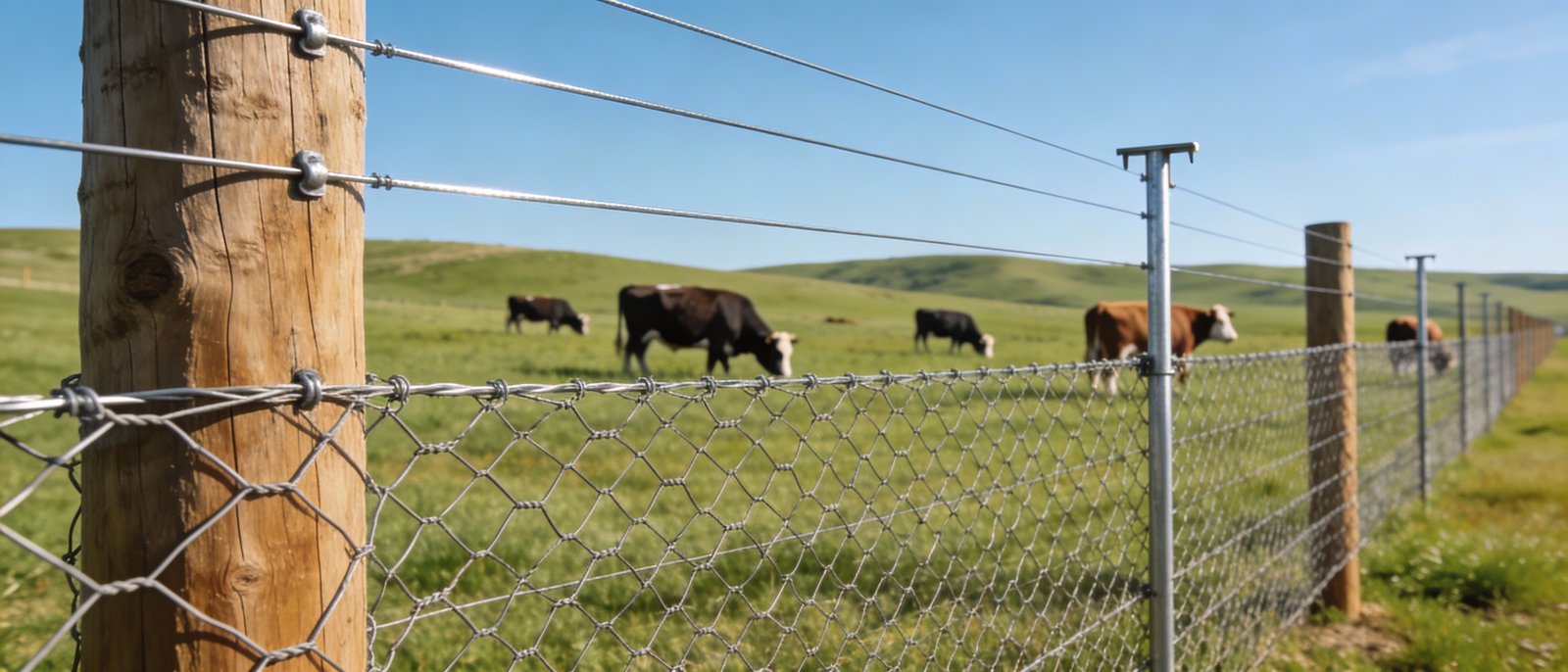
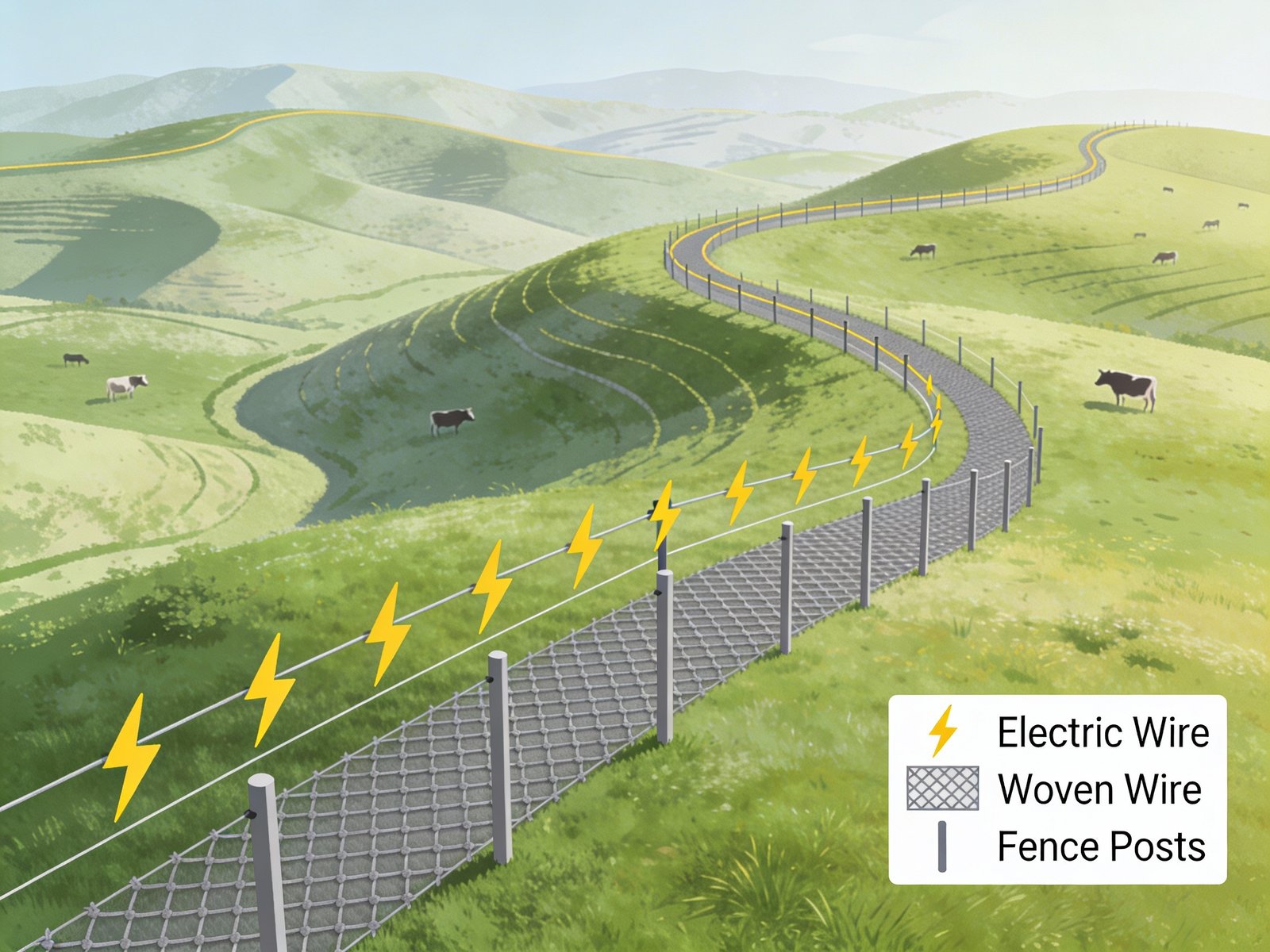
A hybrid fence system integrates two or more fencing types into a single structure, typically combining physical barriers with psychological deterrents. The most common configuration pairs woven wire mesh as a foundational barrier with electric wire strands positioned strategically along the top or throughout the fence line. This dual-layer approach addresses both the physical containment needs and behavioral training of cattle.
Why Hybrid Systems Are Used in Cattle Fencing
Cattle producers adopt hybrid fencing systems for several compelling reasons that directly impact operational efficiency and animal welfare.
Keeping Livestock Safe
Hybrid systems provide both physical containment and psychological barriers. The woven wire component prevents cattle from pushing through fence lines, while electric strands discourage testing behavior. This combination significantly reduces escape incidents and protects animals from wandering into dangerous areas or roadways.
Durability vs Cost Effectiveness
While initial installation costs may exceed single-material fences, hybrid systems deliver superior long-term value. Fixed-knot high tensile hybrid fencing can last up to 30 years with minimal maintenance, resulting in annual costs as low as $1,163 per mile compared to traditional barbed wire systems that require frequent repairs. The woven wire foundation withstands impact pressure from large animals, while electric components reduce physical stress on the structure by training cattle to maintain distance.
Preventing Escapes and External Intrusions
The dual-layer design creates formidable barriers against both livestock escapes and predator intrusions. Woven wire mesh with small openings prevents smaller animals from squeezing through, while electric strands deter climbing or digging attempts by predators. For operations managing valuable breeding stock or dealing with predator pressure, this enhanced security justifies the additional investment.
Typical Components of Hybrid Systems
Understanding the core elements helps ranchers make informed decisions about system design and installation.
Woven-Wire Base
The foundation typically consists of galvanized woven wire mesh with graduated spacing. Common specifications include 7-35-18 configurations with tighter spacing near ground level to contain calves and prevent predator entry. The mesh distributes physical stress evenly across the fence structure, reducing weak points that cattle might exploit.
Electric Strands
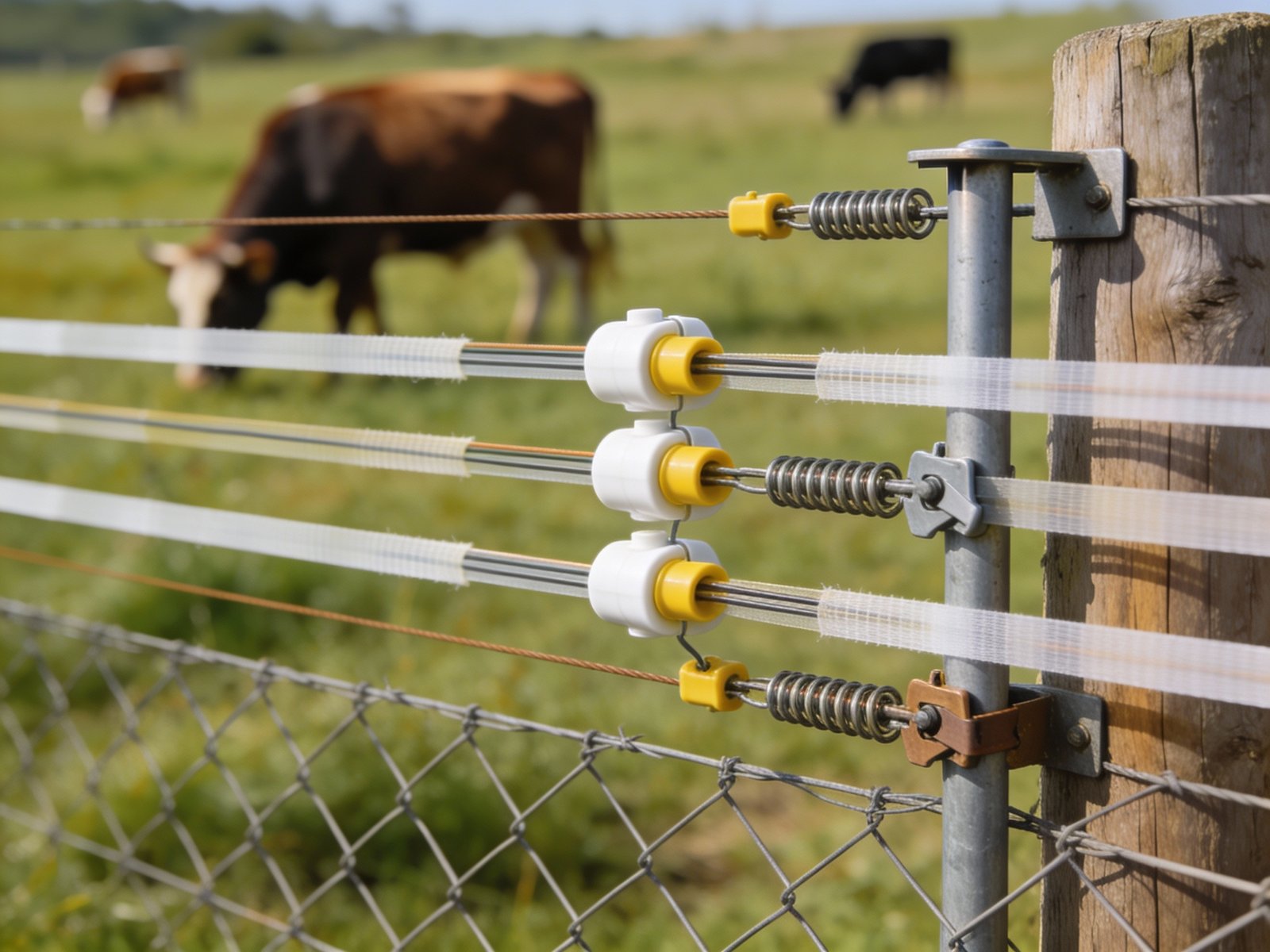
High-tensile electric wires positioned along the top and sometimes at intermediate heights create psychological barriers. These wires carry electrical pulses from an energizer unit, delivering safe but memorable shocks that train cattle to respect boundaries. Electric components require proper insulation from physical fence materials using specialized insulators mounted on posts.
High-Tensile Tension System
Tension management hardware including in-line tighteners, crimping sleeves, and spring tensioners maintain optimal wire tautness. Each electric wire strand should include one tensioner per quarter-mile of straight run to compensate for thermal expansion and contraction. Proper tensioning ensures consistent electrical conductivity and prevents sagging that reduces fence effectiveness.
Most Common Hybrid Cattle Fence Combinations
Ranchers select specific hybrid configurations based on their operational requirements, terrain characteristics, and livestock management strategies. Exploring the types of cattle fencing available helps identify the optimal combination for specific ranch conditions.
Woven Wire + Electric Energizer
This classic combination integrates woven wire fence basics with electric enhancement for comprehensive containment.
Use Scenarios
This configuration excels in perimeter fencing applications where maximum security meets cost management. Operations with mixed livestock including smaller animals benefit from the mesh barrier preventing escapes through gaps, while the electric component manages larger cattle behavior. Dairy operations frequently adopt this system around high-value breeding areas and maternity pastures where both calf containment and cow control matter.
Advantages vs Disadvantages
The primary advantage lies in comprehensive containment across all animal sizes and ages. Woven wire handles physical pressure from large cattle while preventing calf escapes, and electric strands reduce fence testing behavior that causes premature wear. However, this system requires higher initial material costs compared to single-technology options. Installation demands more labor due to coordinating two fence types, and ongoing maintenance includes both physical repairs to mesh and electrical system monitoring. The woven wire component can pose injury risks if cattle hooves become entangled, particularly with lower-quality hinge-joint designs.
High Tensile + Electric Fence
Combining multiple strands of high tensile fencing solutions with electrical current creates efficient systems ideal for expansive ranch operations.
Suitable for Large-Area Ranches
This streamlined configuration minimizes material costs while maintaining effective control over vast acreage. Ranchers managing hundreds or thousands of acres appreciate the reduced post requirements, with spacing extending 40 to 50 feet between line posts compared to 10 to 12 feet for barbed wire systems. The high tensile wire strength of 180,000 to 200,000 psi withstands impact without breaking, while the electrical charge prevents sustained pressure that might cause deformation.
Installation Tips
Success depends on proper corner and gate post construction using H-braces with kicker supports to handle tension loads. Each wire strand requires appropriate tensioning to maintain effectiveness, typically using in-line tighteners positioned strategically along fence runs. Proper grounding proves critical, requiring minimum three 6-foot galvanized ground rods driven 6 feet apart and connected with 12-gauge copper wire. Position ground rods at least 50 feet from utility ground systems to prevent interference. Wire spacing varies by livestock age and size; mature cattle operations typically use 3 to 5 electrified strands spaced 10 inches apart, while operations with calves require closer spacing near ground level.
Pipe & Panel + Electric Elements
Integrating permanent panel structures with electric deterrents serves specialized containment needs around handling facilities and bull management areas.
Bull Pen and Temporary Fence Combinations
Heavy-duty cattle panels provide indestructible barriers in high-stress areas like working pens, loading chutes, and bull breeding pens where animals exert maximum pressure. Adding electric cattle fence systems along panel tops or as offset strands prevents bulls from challenging panels or attempting to jump barriers. This hybrid approach works effectively for bull pen fencing systems where safety cannot be compromised. For rotational grazing operations, ranchers combine permanent panel perimeters with temporary electric fencing options for internal paddock division. The panels establish fixed boundaries while portable electric systems enable flexible pasture subdivision without permanent infrastructure investment.
Benefits of Hybrid Fence Systems
The strategic integration of multiple fencing technologies delivers measurable advantages that justify the additional planning and investment required for hybrid installations.
Improved Livestock Control
Against Charging Behavior
Bulls and dominant cows occasionally test fence boundaries through physical challenges. Hybrid systems address this behavior through layered deterrence. The physical barrier component absorbs and distributes impact forces, preventing breakthroughs, while electric elements deliver immediate negative reinforcement that modifies future behavior. Research from livestock management studies confirms that cattle quickly learn to respect electric boundaries after minimal exposure, typically within just a few days of initial training.
Special Breed Control
Different cattle breeds exhibit varying containment challenges. Smaller heritage breeds may slip through wider wire spacing, while larger aggressive breeds require stronger physical barriers. Hybrid systems accommodate diverse breed requirements through customizable configurations. Operations managing Brahman or other heat-adapted breeds prone to fence testing benefit particularly from electric enhancement of physical barriers. Similarly, operations transitioning between different livestock types can adjust electric strand positioning without completely rebuilding fence infrastructure.
Cost Savings Over Time
Maintenance vs Initial Installation Costs
While hybrid systems demand higher upfront investment, typically ranging from $3.50 to $7.00 per linear foot for woven wire combinations compared to $0.25 to $1.50 for basic barbed wire, the long-term economics favor hybrid approaches. Fixed-knot high tensile hybrid fencing delivers 30-year service life with annual costs around $1,163 per mile, significantly undercutting barbed wire systems requiring replacement after 10 years at annual costs exceeding $3,500 per mile. The electric components reduce physical wear on barrier materials by discouraging cattle from pushing, rubbing, or testing fence lines, extending the service life of woven wire and panel components. Maintenance requirements focus primarily on vegetation management around electric strands and periodic energizer inspection rather than frequent wire repairs and post replacement.
Flexible Layout for Terrain & Climate
Hills, Wetlands, and Cold Regions
Hybrid systems adapt to challenging environmental conditions that compromise single-technology fences. On rolling terrain, high-tensile electric strands maintain effectiveness across elevation changes where rigid materials might fail, while woven wire foundations conform to ground contours preventing gaps at dips and swales. In wetland areas with saturated soils, the reduced post requirements of high-tensile components minimize soil disturbance and foundation challenges, while electric grounding systems can be strategically positioned on drier ground away from fence lines using proper grounding techniques. Cold climate operations benefit from high-tensile wire’s thermal expansion tolerance and the reduced brittleness compared to low-carbon steel alternatives. Snow accumulation poses less risk to electric strand configurations than dense woven barriers that catch drifts and experience increased pressure loads.
How to Choose the Right Hybrid System
Selecting the optimal hybrid configuration requires systematic evaluation of operational factors, environmental conditions, and budget constraints.
Livestock Type Considerations
Beef Cattle vs Dairy Cattle vs Calves
Beef operations focused on mature animals can utilize wider wire spacing and fewer electric strands, typically 3 to 5 strands positioned at heights corresponding to cattle shoulder and head levels. Dairy operations managing mixed age groups require tighter woven wire mesh near ground level to contain curious calves, with specifications like 7-35-18 providing graduated spacing that prevents escapes. Calving operations demand the most comprehensive containment with small mesh openings below 6 inches from ground level and electric strands positioned high enough to deter cows but safely above calf height. Operations managing bulls require the most robust configurations combining heavy-gauge woven wire or cattle panels with multiple electric strands, as breeding bulls exhibit more aggressive fence testing behavior.
Terrain and Weather Impact
Snow, High Wind, and Flood Areas
Snow-prone regions should minimize solid barrier density to prevent drift accumulation that creates fence breaches or collapse risks. Electric strand systems with minimal physical barriers perform well in heavy snow climates, though ranchers must ensure energizers maintain adequate voltage during cold conditions using insulated cables and protected battery systems. High-wind areas demand robust post anchoring with deeper installations, typically 30 to 36 inches for corner posts and 24 inches for line posts, plus additional guy wire support for tall fence configurations. Wind-driven debris can damage electric insulators, necessitating higher-quality UV-stabilized components despite increased costs. Flood-prone bottomland pastures require careful grounding system design to maintain electrical effectiveness when soil moisture varies dramatically. Consider positioning ground rod arrays on elevated terrain with consistent moisture levels, using long ground wires to connect back to fence energizers. Physical barrier components should use galvanized steel with superior corrosion resistance, as periodic flooding accelerates rust and structural degradation.
Budget and Maintenance Planning
Comprehensive financial analysis should evaluate total lifecycle costs rather than focusing solely on installation expenses. Calculate per-mile costs including materials, labor, expected service life, and annual maintenance requirements. High-tensile electric systems may cost $1.50 to $3.00 per foot installed but deliver 20 to 30-year service life with minimal maintenance, while woven wire combinations cost $3.50 to $7.00 per foot but provide maximum security for high-value livestock. Budget for energizer replacement every 10 to 15 years and factor in electricity costs for AC-powered units or battery and solar panel replacement for off-grid systems. Maintenance planning should allocate time for quarterly fence line inspections, vegetation control around electric strands, annual tension adjustments, and energizer testing. Operations with limited labor availability may favor simpler configurations with fewer components requiring monitoring.
Installation & Best Practices
Proper installation determines long-term performance and return on investment. While comprehensive installation guides exist for specific fence types, hybrid systems demand additional coordination between components.
Proper Staking & Bracing
Corner assemblies bear the greatest stress in any fence system. H-brace construction using 6 to 8-inch diameter corner posts set 3 to 4 feet deep provides foundation strength. Horizontal brace rails connect corner posts, with diagonal compression members transferring tension loads into the ground. High-tensile hybrid systems require particularly robust bracing due to cumulative tension across multiple wire strands. Line post spacing depends on fence configuration; high-tensile electric systems allow 40 to 50-foot spacing on flat ground, while woven wire sections require posts every 12 to 16 feet. Use T-posts for line support in woven wire sections, driving posts deep enough that top clips position at least 6 inches below the top wire strand.
Energizer Placement
Position energizers in protected locations shielded from weather and accessible for maintenance. Solar-powered units require southern exposure without shade obstruction, while AC-powered energizers need weatherproof electrical outlets with ground fault protection. Size energizers appropriately for total fence length; underpowered units fail to maintain adequate voltage across extensive systems. Industry guidelines recommend energizers with slightly more capacity than calculated requirements to ensure consistent performance. Install lightning protection devices between energizers and fence lines to prevent equipment damage during storms. Use properly rated lightning diverters positioned on the hot wire side with ground connections separate from energizer ground systems.
Safety & Animal Training
Before releasing cattle into newly fenced areas, conduct training sessions in smaller pens with clearly visible electric strands. Tie strips of bright cloth or colored plastic ribbon to electric wires, helping animals associate visual markers with shock boundaries. Well-behaved livestock familiar with electric fencing treat single hot wires with respect equivalent to multi-strand barbed wire barriers. Initial training typically requires just a few days, during which cattle receive shocks and learn boundary respect. Ensure fence lines remain clear of vegetation that might ground electric strands, as cattle quickly learn when fences lose effectiveness. Maintain voltage above 3,000 volts for cattle containment, testing regularly with voltage meters at multiple fence locations.
Frequently Asked Questions
What makes a hybrid fence system better?
Hybrid systems combine the physical containment strength of traditional fencing with the psychological deterrence of electric components, creating more effective barriers than single-technology approaches. The physical layer prevents breaches during power outages or energizer failures, while electric elements reduce wear on physical components by discouraging fence testing behavior. This combination delivers superior long-term value through extended service life and reduced maintenance requirements.
Is hybrid fencing good for predator control?
Yes, hybrid systems provide excellent predator deterrence when properly configured. Woven wire mesh with small openings prevents entry by climbing or squeezing, while electric strands positioned near ground level deter digging attempts. The electric shock discourages predators from attempting breaches, making hybrid systems significantly more effective than non-electric woven wire alone. Operations experiencing predator pressure should consider configurations with tighter mesh specifications and multiple electric strands positioned at predator-relevant heights.
How long do hybrid fences last?
Service life depends on component quality and maintenance practices. Fixed-knot high tensile hybrid systems properly installed with quality materials deliver 25 to 30 years of service. Woven wire components typically last 15 to 20 years before requiring replacement, though galvanized wire with proper coating extends durability. Electric components have shorter replacement cycles, with energizers lasting 10 to 15 years and insulators requiring periodic replacement as UV exposure causes degradation. Regular maintenance including vegetation control, tension adjustments, and prompt repair of damaged sections maximizes system longevity.