
Cost Comparison by Fence Type
Choosing cattle fencing based solely on installation price delivers short-term savings but frequently results in long-term financial loss. The true cost of any fence system encompasses initial materials and labor, ongoing maintenance requirements, climate-specific degradation patterns, and eventual replacement cycles. A barbed wire fence installed for $3 per linear foot may appear economical compared to high-tensile fencing at $5.42 per foot, yet over a 20-year ownership period, the high-tensile system often costs $6,000 to $19,000 less per mile when maintenance labor, repairs, and replacement are properly accounted for.
This cost analysis examines eight primary cattle fence types across their complete ownership lifecycle, incorporating real-world data on installation expenses, maintenance patterns, climate-driven degradation, and operational variables that affect total cost. The analysis reveals that fence cost optimization requires matching fence type to specific operational conditions rather than simply selecting the lowest bid. For a broader structural overview of how these systems fit together, see the Types of Cattle Fencing pillar.
Why Fence Cost Comparison Must Go Beyond Initial Price
Purchase price represents only the initial chapter in fence economics. The total cost narrative extends across decades and varies dramatically based on climate exposure, terrain characteristics, livestock type, and management intensity. A complete cost assessment requires evaluating what industry professionals term Total Cost of Ownership: the sum of acquisition, installation, maintenance, repairs, and eventual replacement expenses across the fence’s service life.
Initial Cost vs Total Cost of Ownership
Initial installation costs capture material expenses, labor, equipment rental, site preparation, and corner assemblies. These costs are visible, immediate, and easy to compare across fence contractors. However, they account for only 40 to 70 percent of the true lifecycle expense for most fence systems. The remaining 30 to 60 percent accumulates through annual maintenance, unscheduled repairs, climate-driven degradation, and premature replacement.
Barbed wire fencing exemplifies this disconnect between initial and total cost. With installation costs ranging from $3 to $6 per linear foot, barbed wire presents as the most economical perimeter solution for large cattle operations. A typical mile costs $15,840 to $31,680 installed. Yet barbed wire demands annual maintenance averaging $200 to $400 per mile for wire stretching, post straightening, and staple replacement. Over a 15-year service life, maintenance adds $3,000 to $6,000 per mile. Wire stretches, posts rot, and staples pull loose under livestock pressure. At year 15, complete replacement becomes necessary, triggering another $15,840 to $31,680 capital expense.
High-tensile fixed-knot fencing costs more initially at $5.42 to $5.75 per linear foot, totaling $28,616 to $30,360 per mile installed. Annual maintenance averages only $50 to $150 per mile due to the fence’s superior tensile strength and fixed wire knots that prevent shifting. Over a 25-year service life, maintenance totals $1,250 to $3,750 per mile. At year 25, the fence typically retains sufficient integrity to continue service for another decade, whereas barbed wire is approaching its second complete replacement cycle.
How Climate, Terrain, and Maintenance Change Real Costs
Geographic location and climate patterns alter fence degradation rates dramatically. Coastal properties within one mile of saltwater experience accelerated corrosion that can reduce fence lifespan by 40 to 60 percent compared to inland locations. Airborne salt particles settle on wire, absorb moisture from humid air, and create an aggressive electrolyte solution that drives corrosion. Barbed wire that might last 18 years in Kansas deteriorates in 8 to 12 years along the Texas coast. Annual maintenance costs increase from $200 per mile to $500 to $800 per mile as ranchers combat rust, replace corroded staples, and address structural failures.
Cold climates with heavy snow loading and freeze-thaw cycles introduce different cost pressures. Temperature cycling causes expansion and contraction that loosens staples, shifts wire tension, and cracks protective coatings. Snow accumulation creates lateral loading forces that lean posts and strain corner assemblies. Annual maintenance in northern climates typically runs $100 to $300 higher per mile than temperate regions for the same fence type.
Hot, dry climates with intense UV exposure accelerate degradation of plastic components, particularly electric fence insulators and polywire. Standard polywire rated for 10 years in moderate climates may require replacement in 5 to 7 years in high-UV environments. UV-resistant insulators add $0.05 to $0.10 per foot to initial costs but prevent premature failure and maintain electrical effectiveness.
Terrain complexity affects both installation and maintenance costs. Flat pastures with minimal obstacles allow efficient post spacing, straight fence runs, and mechanized installation. Rough terrain with rocks, ravines, and heavy vegetation increases installation costs by 30 to 50 percent due to hand labor, specialized equipment, and additional bracing. Maintenance costs rise proportionally as technicians navigate difficult access points and address drainage issues.
Why Cheap Fences Often Cost More Over Time
The economic principle of false economy applies directly to cattle fencing. Systems that minimize upfront expense frequently maximize long-term cost through accelerated degradation, higher maintenance labor requirements, and shorter replacement cycles. Four-strand barbed wire using lightweight 14-gauge wire and untreated wooden posts might install for $2.50 per linear foot, but the fence will require wire replacement within 8 to 10 years and complete post replacement at 12 to 15 years. The apparent $10,000 savings on a mile of fence transforms into a $15,000 to $20,000 additional expense across 20 years.
Similarly, standard electric fence using non-UV-rated polywire and economy insulators costs $1 to $2 per foot initially but demands wire replacement every 5 to 7 years and insulator replacement every 8 to 10 years. Premium UV-rated polywire and commercial-grade insulators add $0.50 to $1.00 per foot to initial cost but extend service life to 15 to 20 years for wire and 20+ years for insulators. The premium materials reduce total lifecycle cost by 35 to 45 percent despite higher acquisition cost.
Labor availability represents another hidden cost driver. Cheap fence systems that require frequent maintenance create ongoing labor obligations. Operations with limited labor capacity or high labor costs find that low-maintenance fence systems with higher initial costs deliver superior economic returns. A ranch paying $25 per hour for fence maintenance labor will spend $3,750 to $7,500 across 20 years maintaining barbed wire fencing on a single mile, compared to $1,250 to $3,750 for high-tensile fencing. When labor costs exceed the material cost differential, premium fencing becomes the economical choice.
Key Cost Factors That Affect All Fence Types
Understanding the fundamental cost drivers that influence all fence systems enables more accurate budgeting and cost comparison. Material costs, labor complexity, maintenance frequency, and expected service life combine to determine total fence investment across any timeline.
Material Cost Differences
Wire gauge, protective coating quality, post material, and hardware specifications create substantial cost variation within each fence category. Barbed wire ranges from $0.05 to $0.15 per foot for the wire alone, depending on gauge and coating. Economy 14-gauge wire with Class 1 galvanization costs approximately $0.05 per foot, while premium 12.5-gauge wire with Class 3 galvanization costs $0.12 to $0.15 per foot. The heavier gauge provides 40 percent greater tensile strength and resists stretching under livestock pressure. The enhanced galvanization coating extends corrosion resistance from 12-15 years to 20-25 years.
High-tensile wire exhibits similar cost gradients. Standard 170,000 PSI wire costs $0.12 to $0.18 per foot, while premium 200,000 PSI wire with enhanced coating costs $0.18 to $0.25 per foot. The higher tensile strength allows 40-foot post spacing versus 12-foot spacing for standard wire, reducing post requirements by 70 percent and offsetting the premium wire cost through reduced post expenses.
Post costs vary dramatically by material and quality. Untreated wooden posts cost $2 to $5 each, pressure-treated posts cost $5 to $12, steel T-posts cost $3.30 to $8 depending on height and gauge, and steel pipe posts cost $15 to $50 depending on diameter and length. Post spacing requirements multiply these unit costs significantly. Policies for barbed wire fence cost typically assume posts every 8 to 12 feet, while high-tensile systems can run posts every 40 feet without sacrificing performance.
Hardware costs including staples, clips, wire ties, insulators, gates, and tensioning systems add $0.50 to $2.00 per linear foot depending on fence type. Electric fence systems require energizers ($100 to $600), grounding systems ($50 to $200), and insulators ($0.05 to $0.30 each), while non-electric systems need only staples and clips.
Labor and Installation Complexity
Labor represents 30 to 50 percent of total installation cost for most fence types. Simple barbed wire installation costs $0.50 to $1.75 per linear foot for labor, while complex woven wire installation requiring precise stretching and numerous staples costs $1.10 to $2.50 per foot. High-tensile installation demands specialized equipment and technical expertise, commanding $1.50 to $2.50 per foot despite requiring fewer posts.
Installation complexity increases with terrain difficulty, corner frequency, gate requirements, and vegetation density. Professional crews on flat, cleared pasture can install 300 to 500 linear feet of barbed wire daily. Rough terrain with heavy brush and numerous corners reduces productivity to 150 to 250 feet daily, effectively doubling labor cost per foot. Rocky soil requiring specialized post-driving equipment or pre-drilled holes adds $50 to $150 per day in equipment rental costs.
Corner assemblies require heavy posts, proper bracing, and deep installation. Each corner costs $300 to $600 installed, incorporating materials and labor for 6- to 8-inch diameter corner posts, H-bracing or other tension systems, and 42+ inch installation depth. A square 20-acre parcel has 4 corners costing $1,200 to $2,400 total. Irregular property shapes with 8 to 12 corners can add $2,400 to $7,200 to fence costs.
DIY installation eliminates labor costs but introduces equipment rental expenses, extended timelines, and quality risks. Inexperienced installers frequently under-tension wire, set posts too shallow, or improperly space components, leading to premature failure. Professional installation typically costs 40 to 50 percent of total fence expense but includes proper materials selection, code compliance, warranty protection, and installation quality that maximizes fence lifespan.
Maintenance Frequency and Repair Cost
Annual maintenance requirements vary from less than one hour per mile for premium high-tensile systems to 15+ hours per mile for aging barbed wire. Maintenance activities include wire re-tensioning, vegetation control, post straightening, staple replacement, and damage repair from fallen trees, vehicle impacts, or livestock pressure.
Barbed wire requires annual inspection and maintenance averaging 8 to 15 hours per mile. Wire stretches over time, requiring re-tensioning every 1 to 3 years. Wooden posts rot at ground level, requiring replacement every 8 to 15 years depending on wood species and treatment. Metal posts rust and lean, particularly in wet or coastal climates. Staples pull loose under wire tension and livestock rubbing. Annual maintenance costs average $200 to $400 per mile when labor is valued at $20 to $25 per hour.
High-tensile fence demands minimal annual maintenance due to superior wire strength and fixed-knot construction that prevents wire shifting. Inspection and minor adjustments typically require 2 to 4 hours per mile annually. Wire rarely requires re-tensioning during the fence’s 25-30 year service life barring catastrophic damage. Annual maintenance costs average $50 to $150 per mile.
Electric fence systems require energizer maintenance, insulator inspection, vegetation control along hot wires, and grounding system verification. Vegetation growing into hot wires creates shorts that reduce effectiveness. Insulators fail from UV exposure or impact damage. Annual maintenance averages 5 to 8 hours per mile costing $100 to $300.
Unscheduled repairs create additional costs. Minor repairs addressing fallen trees or vehicle damage cost $100 to $250 per incident. Panel replacement costs $300 to $800. Post replacement costs $150 to $400 per post including labor. Operations should budget $200 to $500 annually per mile for unscheduled repairs across all fence types.
Expected Service Life and Replacement Cycles
Service life determines replacement frequency and long-term capital requirements. Barbed wire lasts 15 to 20 years in moderate climates, 12 to 18 years in cold or UV-intense climates, and 8 to 12 years in coastal environments. Complete replacement every 15 years means a ranch will replace each mile of barbed wire 3 to 4 times across a 50-year planning horizon.
High-tensile fixed-knot fencing lasts 25 to 30 years in most climates, 20 to 25 years in cold regions, and 15 to 20 years in coastal areas. Replacement every 25 years means 2 replacements across 50 years, reducing lifecycle capital requirements by 33 to 50 percent compared to barbed wire.
Woven wire exhibits similar longevity to high-tensile at 20 to 30 years in moderate climates. Electric fence components have varied lifespans: energizers last 10 to 20 years, wire lasts 15 to 20 years with proper maintenance, and insulators last 15 to 25 years depending on UV exposure. Portable electric systems using polywire and step-in posts last 5 to 10 years before requiring replacement.
Pipe and panel fencing offers the longest service life at 30 to 50+ years. Properly galvanized and powder-coated steel pipe fencing can exceed 50 years in moderate climates with minimal maintenance. This exceptional longevity justifies the $13.50 to $40 per foot installation cost for high-value applications like bull pens, breeding facilities, and corral systems where replacement downtime creates operational disruption.
Average Cost Breakdown by Fence Type
Detailed cost analysis of each major fence type reveals the specific cost structure, maintenance requirements, and total ownership expenses that distinguish economical from expensive fencing decisions.
Barbed Wire Fence Cost Overview
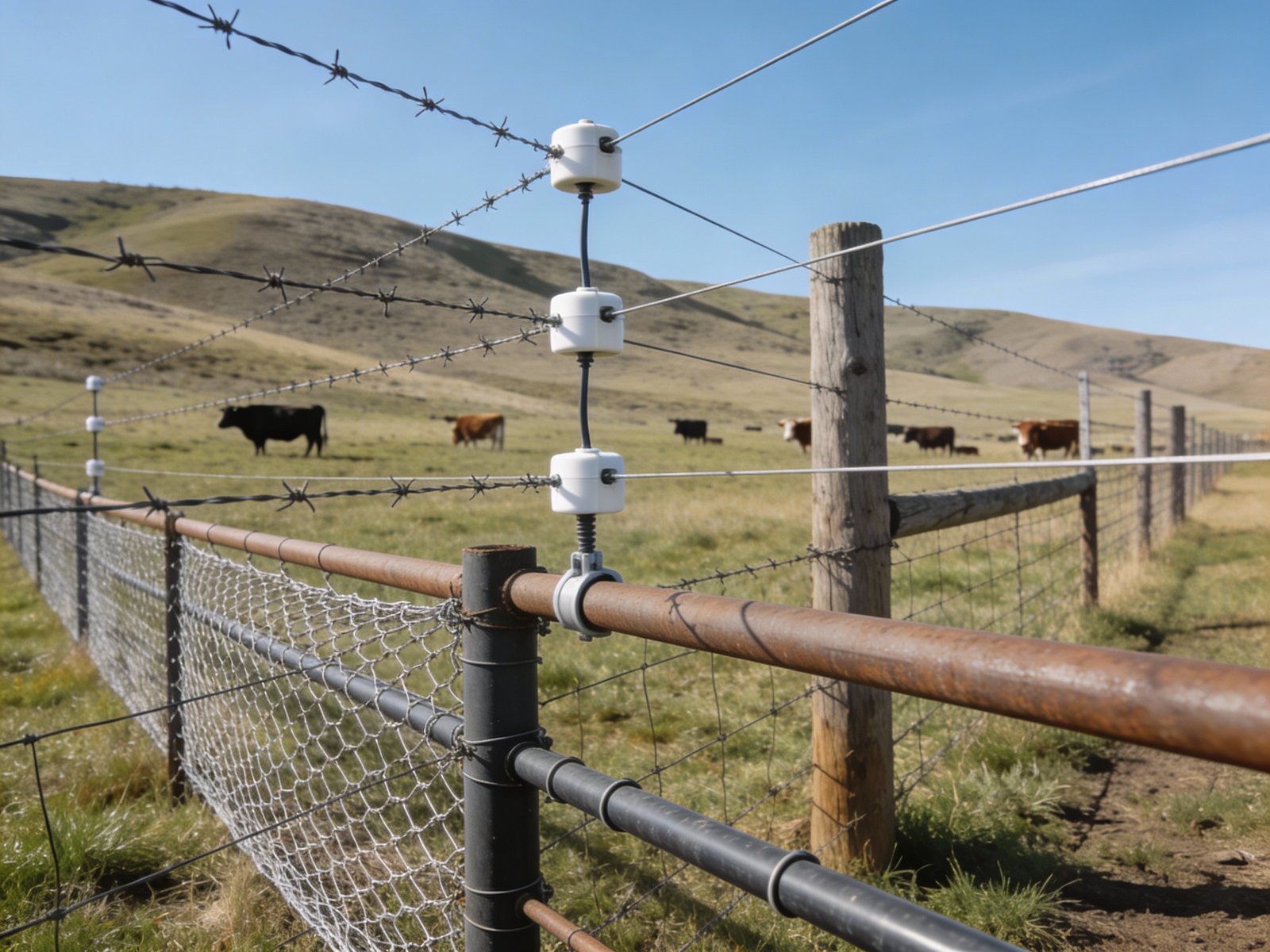
Barbed wire remains the most common cattle fence type across large ranches due to low initial cost and wide contractor availability. Standard 5-strand barbed wire using 12.5-gauge wire, steel T-posts every 8 to 12 feet, and wooden corner posts costs $3 to $6 per linear foot installed. Material costs account for $2.50 to $4.25 per foot including wire, posts, staples, and corner assemblies. Labor adds $0.50 to $1.75 per foot depending on terrain complexity and regional wage rates. For more detail on design choices and performance, see the dedicated barbed wire fencing page.
Per-acre costs range from $2,000 to $2,200 for rectangular parcels, though irregular shapes with more perimeter can reach $2,500 to $3,000 per acre. A typical mile of 5-strand barbed wire costs $15,840 to $31,680 installed. Discount pricing applies to large projects exceeding 5 miles as contractors reduce mobilization costs per linear foot.
Annual maintenance averages $200 to $400 per mile, primarily for wire re-tensioning and vegetation control. Every 3 to 5 years, several hours of additional labor become necessary for comprehensive wire tightening and staple replacement. At year 8 to 12, wooden corner posts begin requiring replacement at $300 to $600 per corner. Complete wire replacement becomes necessary at year 12 to 18 depending on climate and livestock pressure.
Over a 20-year period, total cost per mile approaches $19,840 to $39,680 including initial installation, annual maintenance, and one complete wire replacement cycle. This translates to annual cost of $0.25 per linear foot across the fence’s service life.
High-Tensile Fence Cost Overview
High-tensile wire fencing divides into two categories: standard hinge-joint with movable knots and premium fixed-knot with permanently locked wire intersections. Standard high-tensile costs $4.50 to $5.50 per linear foot installed and delivers marginal improvement over barbed wire. Fixed-knot high-tensile costs $5.42 to $5.75 per linear foot but provides dramatically superior performance and longevity. For structural details, performance characteristics, and design patterns, refer to high-tensile cattle fencing.
Material costs for fixed-knot systems run $3.50 to $4.00 per foot including 12.5-gauge 200,000 PSI wire, specialized fixed knots, steel T-posts at 40-foot spacing, and robust corner assemblies. Labor costs $1.50 to $2.50 per foot, reflecting the specialized tensioning equipment and technical expertise required for proper installation. The wider post spacing enabled by high-tensile strength reduces post costs by approximately 70 percent compared to barbed wire, offsetting the premium wire cost.
A mile of fixed-knot high-tensile costs $28,616 to $30,360 installed. Annual maintenance averages only $50 to $150 per mile, totaling $1,250 to $3,750 over 25 years. The fence typically retains full functionality for 25 to 30 years, with many installations remaining effective for 35+ years in moderate climates.
Twenty-year total cost per mile runs $29,866 to $33,360, including installation and maintenance but no replacement since the fence remains viable. Thirty-year total cost reaches $30,116 to $34,860. Annual cost per linear foot averages $0.12 to $0.16, making fixed-knot high-tensile the most economical fence type on a lifecycle basis despite higher initial cost.
Electric Fence Cost Overview
Electric fence systems range from simple single-strand temporary installations to sophisticated multi-strand permanent perimeter systems. Permanent electric fence using 5 to 7 strands of smooth wire or polywire, steel or fiberglass posts at 40 to 60-foot spacing, insulators, and a quality energizer costs $1.50 to $7 per linear foot installed. The wide cost range reflects enormous variation in system quality, wire type, and component specifications. For design patterns, energizer sizing, and safety considerations, consult the electric fencing for cattle hub.
Budget systems using economy polywire, plastic step-in posts, and small battery-powered energizers cost $1 to $2.50 per foot installed and function adequately for trained cattle on small acreages. Premium systems using high-tensile smooth wire, commercial insulators, steel posts, and solar or AC-powered energizers cost $4 to $7 per foot and deliver reliable performance across large operations.
Material costs for mid-grade systems average $1 to $4 per foot including wire, posts, insulators, and energizer cost amortized across total fence length. Labor costs $0.12 to $0.20 per foot for straightforward installations, rising to $1 to $3 per foot for complex layouts requiring multiple zones and controllers.
Energizers represent a significant one-time cost ranging from $100 for basic battery units to $600 for commercial solar units. A single energizer can power 5 to 20 miles of fence depending on output capacity and vegetation loading, effectively amortizing energizer cost to $0.05 to $0.20 per linear foot across the installation.
Annual maintenance averages $100 to $300 per mile for vegetation control, insulator inspection, and energizer verification. Polywire requires replacement every 10 to 15 years at $0.50 to $1 per foot. Insulators last 15 to 25 years. Energizers typically function for 10 to 20 years before requiring replacement.
Twenty-year total cost for permanent electric fence ranges from $9,920 to $42,960 per mile depending on system quality and maintenance intensity. Annual cost per foot averages $0.12 for well-designed systems, matching or exceeding high-tensile economics while offering greater flexibility for rotational grazing applications.
Woven Wire Fence Cost Overview
Woven wire fence provides excellent livestock containment through a continuous mesh of horizontal and vertical wires with either hinge-joint or fixed-knot construction. Standard 4-foot height woven wire costs $3.50 to $6 per linear foot installed. Material costs run $2 to $3.50 per foot for the wire mesh alone, with additional expenses for posts, staples, and top barbed wire strand that many installations include. You can dive deeper into mesh options and spacing choices on the woven wire cattle fencing page.
Labor costs $1.10 to $2.50 per linear foot, reflecting the labor-intensive installation process requiring precise mesh stretching and extensive stapling to prevent sagging. Posts must be spaced 8 to 12 feet apart to support the mesh weight and livestock pressure. Corner assemblies require robust construction to handle the significant tension load of stretched mesh.
Eight-foot height woven wire for wildlife exclusion or property boundaries costs $3.75 to $5.50 per linear foot installed, with higher costs driven by specialized 8-foot mesh, taller posts, and additional labor for handling the larger panels. Per-acre costs average $3,500 to $5,000 for 4-foot mesh and $5,500 to $7,500 for 8-foot mesh on standard rectangular parcels.
Annual maintenance averages $100 to $200 per mile for inspection, minor staple replacement, and vegetation control. Woven wire rarely requires re-stretching if properly installed initially. Service life extends 20 to 30 years in most climates, with coastal environments reducing longevity to 15 to 22 years due to salt-driven corrosion.
Twenty-year total cost per mile runs $20,480 to $35,680 including installation and maintenance. Annual cost per linear foot averages $0.33, higher than high-tensile or electric systems but justified in applications requiring maximum physical security such as small pastures with valuable breeding stock or properties adjacent to highways.
Pipe and Panel Fence Cost Overview
Steel pipe and panel fencing represents the premium tier of cattle containment systems, offering unmatched strength, longevity, and professional appearance. Pipe fencing costs $13.50 to $40 per linear foot installed depending on pipe diameter, rail count, and finish quality. Material costs account for $11.50 to $34 per foot including steel pipe rails, posts, hardware, and galvanization or powder-coating. Further layout ideas and use cases are detailed on the pipe and panel fencing overview.
Labor costs $2 to $6 per foot, reflecting welding requirements, heavy lifting, and precise alignment needs. Continuous fence panels using 1.25-inch diameter steel tubing in 4-rail configuration cost approximately $100 to $125 per 20-foot panel. Five-rail and 6-rail configurations increase costs to $125 to $150 per panel and $150 to $175 per panel respectively.
Per-acre costs range from $11,300 to $33,400 for standard installations, averaging $21,300 per acre. This substantial investment limits pipe fencing to high-value applications including bull pens, breeding facilities, show cattle operations, corral systems, and property entrances where fence failure creates safety hazards or operational disruption.
Annual maintenance averages only $50 to $100 per mile, primarily for inspection and occasional touch-up painting. Properly galvanized and powder-coated pipe fencing requires no significant maintenance for 15 to 25 years. Service life extends 30 to 50+ years, with many installations remaining fully functional beyond 50 years.
Twenty-year total cost per mile approaches $72,280 to $213,200, a substantial investment that proves economical only when fence failure costs exceed the price differential versus lighter systems. For registered bull operations where a single breeding injury can cost $50,000 to $150,000 in lost genetics, pipe fencing represents rational risk management rather than unnecessary expense.
Board Fence Cost Overview
Steel board fencing combines the traditional appearance of wooden board fences with the longevity and low maintenance of steel construction. Originally developed for horse operations, steel board fencing has gained adoption in premium cattle operations for show animals, breeding facilities, and property frontage. Installation costs range from $8 to $12 per linear foot, with material costs of $6 to $9 per foot and labor costs of $2 to $3 per foot. Decorative use cases and profile variations are covered in depth in board fencing for cattle.
The system uses horizontal steel boards powder-coated to resemble painted wood, mounted to steel posts. Board spacing and height vary based on livestock type, with cattle applications typically using 3 to 4 rails at 4 to 5 feet total height. The powder-coated finish eliminates painting requirements and resists corrosion, chipping, and fading.
Annual maintenance averages $100 to $250 per mile for inspection and minor repairs. Service life extends 25 to 40 years depending on finish quality and climate exposure. Coastal environments may require additional protective measures to prevent salt-driven corrosion of the powder coating.
Twenty-year total cost per mile runs $45,000 to $75,000 including installation and minimal maintenance. While substantially more expensive than wire-based systems, board fencing delivers aesthetic appeal, livestock safety, and professional appearance that justify the premium for operations emphasizing presentation, visitor experience, or property value enhancement.
Temporary & Portable Electric Fence Cost Overview
Temporary and portable electric fence systems enable rotational grazing, seasonal paddock division, and flexible pasture management at minimal capital investment. Simple portable systems using polywire, step-in fiberglass posts, and battery-powered energizers cost $0.30 to $2 per linear foot including all components. When planning layouts and grazing cell sizes, see the dedicated guide to temporary electric fencing.
Budget portable systems suitable for trained cattle cost $0.30 to $0.60 per foot using single-strand polywire, lightweight posts at 40-foot spacing, and small battery energizers. A complete 200-foot portable corral kit costs approximately $400, providing enough materials to create a 50-foot by 50-foot temporary paddock for cattle moves or camping applications.
Mid-grade systems using multi-strand polywire or mixed-metal poly braid, commercial fiberglass posts, and solar energizers cost $1 to $1.50 per foot. Premium portable systems using electrified netting with integrated posts cost $1.50 to $2 per foot and offer superior visibility and containment for inexperienced livestock.
Rotational grazing systems for 40-acre pastures divided into 8 paddocks require approximately 2,640 linear feet of portable fence costing $800 to $5,300 total depending on system quality. Single-strand installations can cost as little as $200 for basic subdivision needs.
Annual maintenance costs $50 to $150 per mile for storage, post replacement, and wire inspection. Service life averages 5 to 10 years for polywire and posts depending on UV exposure and handling wear. Energizers last 10 to 15 years with proper battery or solar panel maintenance.
Ten-year total cost for portable electric systems ranges from $2,584 to $13,560 per mile including one complete replacement cycle. Annual cost per linear foot averages $0.09, making portable electric the most economical option per linear foot while sacrificing the permanence and security of fixed fence systems.
Bull Pen & Heavy-Duty Containment Fence Costs
Bull pens and heavy-duty containment facilities require fence systems capable of withstanding extreme livestock pressure from animals weighing 1,800 to 2,500 pounds. Standard cattle fence fails rapidly under bull pressure, leading to escape, injury, and facility damage. Specialized heavy-duty systems combine robust materials, reinforced construction, and proven designs. For layouts, panel specs, and gate strategies, the bull pen fencing systems page provides dedicated design guidance.
Heavy-duty pipe panels using 2-inch diameter schedule 40 steel pipe in 6-rail configuration cost $13.50 to $25 per linear foot installed. Feedlot panels using 16-foot by 50-inch welded steel construction cost approximately $28 to $40 per panel installed. Bull pen panels with extra-heavy construction cost $227 to $390 per panel depending on size and rail count.
Complete bull pen installations including panels, gates, and working facilities cost $6,000 to $15,000 for small operations handling 5 to 10 bulls, rising to $25,000 to $50,000 for commercial operations managing 20 to 40 bulls. These facilities typically incorporate adjustable panel systems allowing pen size modification, working chutes for veterinary procedures, and robust gate systems with multiple latching points.
Annual maintenance costs remain minimal at $25 to $75 per pen for inspection and hardware tightening. Service life exceeds 30 years for properly maintained installations. The substantial initial investment protects valuable breeding animals, prevents escape-related property damage, and enables safe handling for health procedures.
Cost Comparison Table (Installation + Lifecycle)
Comprehensive cost comparison requires evaluating installation expenses, annual maintenance requirements, and total lifecycle costs across multiple timeframes. The following analyses present per-foot installation costs, long-term ownership expenses, and maintenance cost trajectories.
Per-Foot Installation Cost Comparison
Installation costs provide the initial baseline for fence budgeting but tell only part of the economic story. The table below presents installed costs per linear foot including materials, labor, and standard components for each fence type. These costs assume moderate terrain difficulty, professional installation, and standard specifications for each fence category.
| Fence Type | Install Cost ($/ft) | Material Cost ($/ft) | Labor Cost ($/ft) | Lifespan (years) | Annual Maintenance Cost | 20-Year Total Cost (per mile) |
|---|---|---|---|---|---|---|
| Barbed Wire (5-strand) | $3.00-6.00 | $2.50-4.25 | $0.50-1.75 | 15-20 | $200-400/mile | $18,700-35,000 |
| High-Tensile (Fixed-Knot) | $5.42-5.46 | $3.50-4.00 | $1.50-2.50 | 25-30 | $50-150/mile | $22,600-32,000 |
| Electric (Permanent) | $1.50-7.00 | $1.00-4.00 | $0.12-0.20 | 15-20 | $100-300/mile | $15,000-28,000 |
| Woven Wire | $3.50-6.00 | $2.00-3.50 | $1.10-2.50 | 20-30 | $100-200/mile | $26,900-38,000 |
| Pipe and Panel | $13.50-40.00 | $11.50-34.00 | $2.00-6.00 | 30-50+ | $50-100/mile | $72,000-212,000 |
| Board Fence (Steel) | $8.00-12.00 | $6.00-9.00 | $2.00-3.00 | 25-40 | $100-250/mile | $45,000-75,000 |
| Temporary Electric (Portable) | $0.30-2.00 | $0.10-1.00 | $0.05-0.50 | 5-10 | $50-150/mile | $8,000-18,000 |
Installation costs vary by 1,200 percent from the least expensive portable electric systems at $0.30 per foot to premium pipe fencing at $40 per foot. Yet this 133-fold cost differential narrows dramatically when evaluated across a 20-year ownership period. Barbed wire at $3 to $6 per foot installed accumulates to $18,700 to $35,000 per mile over 20 years including maintenance and partial replacement. High-tensile at $5.42 to $5.75 per foot reaches $22,600 to $32,000 per mile over the same period despite 80 percent higher initial cost, reflecting dramatically lower maintenance requirements and superior longevity.
10-Year vs 20-Year Cost Comparison
Comparing total ownership costs at 10-year and 20-year intervals reveals the compounding effect of maintenance expenses and replacement cycles. Operations planning 5 to 10-year ownership horizons face different economic calculations than multi-generational ranches planning 20 to 50-year infrastructure investments.
| Fence Type | Initial Install (mile) | 10-Year Maintenance | 10-Year Total | 20-Year Maintenance | 20-Year Total | Annual Cost/Foot |
|---|---|---|---|---|---|---|
| Barbed Wire | $15,840-31,680 | $2,000-4,000 | $17,840-35,680 | $4,000-8,000 | $19,840-39,680 | $0.25 |
| High-Tensile Fixed-Knot | $28,616-28,829 | $500-1,500 | $29,116-30,329 | $1,000-3,000 | $29,616-31,829 | $0.12-0.16 |
| Electric Permanent | $7,920-36,960 | $1,000-3,000 | $8,920-39,960 | $2,000-6,000 | $9,920-42,960 | $0.12 |
| Woven Wire | $18,480-31,680 | $1,000-2,000 | $19,480-33,680 | $2,000-4,000 | $20,480-35,680 | $0.33 |
| Pipe and Panel | $71,280-211,200 | $500-1,000 | $71,780-212,200 | $1,000-2,000 | $72,280-213,200 | $0.15-0.30 |
| Temporary Electric | $1,584-10,560 | $500-1,500 | $2,084-12,060 | $1,000-3,000 | $2,584-13,560 | $0.09 |
At the 10-year mark, barbed wire total cost has reached $17,840 to $35,680 per mile versus $29,116 to $30,329 for high-tensile, maintaining apparent barbed wire economy. However, the barbed wire fence is approaching mid-life and will require significant wire replacement within 5 to 8 years. The high-tensile fence has barely begun its service life and will function effectively for another 15 to 20 years with minimal additional investment.
By year 20, the cost relationship has shifted. Barbed wire has accumulated $4,000 to $8,000 in maintenance costs and likely requires complete wire replacement adding another $10,000 to $20,000, though this replacement cost is not fully reflected in the 20-year total shown. High-tensile has accumulated only $1,000 to $3,000 in maintenance and requires no replacement. The initial $10,000 to $12,000 premium for high-tensile has been recovered through reduced maintenance and avoided replacement costs.
Maintenance Cost Trends by Fence Type
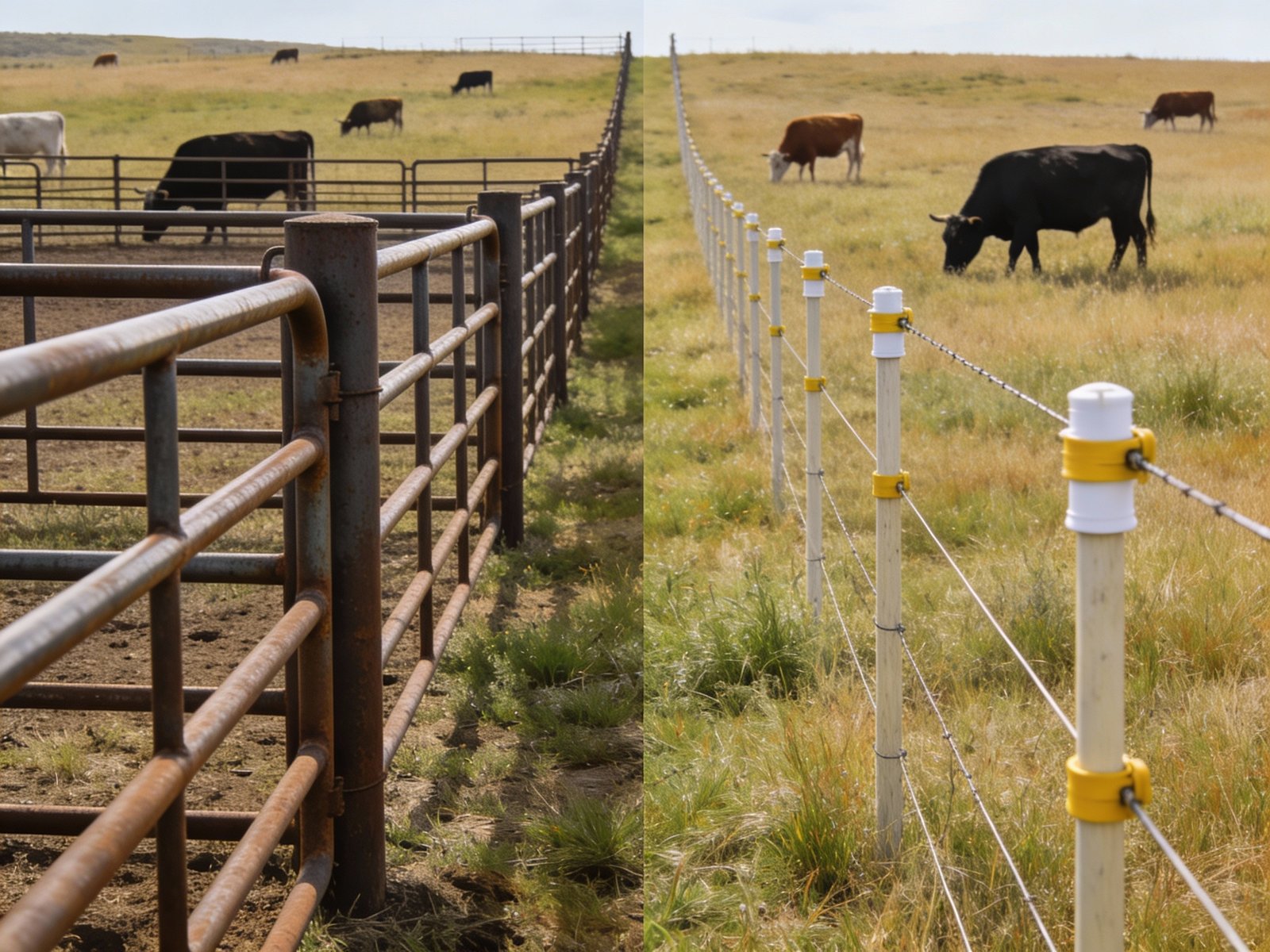
Maintenance costs accelerate as fence systems age, with degradation patterns varying by fence type. Understanding maintenance cost trajectories enables accurate long-term budgeting and informs replacement timing decisions.
| Fence Type | Year 1-5 Annual | Year 6-10 Annual | Year 11-15 Annual | Year 16-20 Annual | Maintenance as % Initial Cost |
|---|---|---|---|---|---|
| Barbed Wire | $150-250 | $250-400 | $350-500 | $450-600+ | 8% |
| High-Tensile | $50-100 | $75-125 | $100-150 | $100-200 | 5% |
| Electric | $100-200 | $150-300 | $200-350 | $250-400 | 6% |
| Woven Wire | $75-150 | $125-200 | $175-250 | $200-300 | 8% |
| Pipe/Panel | $25-75 | $50-100 | $75-125 | $100-150 | 2% |
| Temporary Electric | $50-100 | $100-200 | Replacement Needed | N/A | 10-15% |
Barbed wire exhibits the steepest maintenance cost escalation, rising from $150 to $250 annually in years 1 through 5 to $450 to $600+ annually in years 16 through 20. This 200 to 240 percent increase reflects cumulative degradation as wire stretches, posts rot, and staples fail. By year 15, many barbed wire installations require complete wire replacement to maintain functionality, effectively resetting the maintenance cycle but incurring substantial capital expense.
High-tensile maintenance costs increase only 100 to 200 percent across the same period, rising from $50 to $100 annually to $100 to $200 annually. The fence retains structural integrity and tension throughout its service life, requiring only minor repairs and vegetation control. Annual maintenance as a percentage of initial cost averages 5 percent for high-tensile versus 8 percent for barbed wire, compounding the lifecycle cost advantage.
Pipe and panel fencing demonstrates the flattest maintenance cost trajectory, increasing from $25 to $75 annually to $100 to $150 annually across 20 years. Annual maintenance represents only 2 percent of initial cost, the lowest among all fence types. This minimal maintenance burden combined with 30 to 50+ year service life justifies the substantial initial investment for applications requiring maximum reliability and minimal downtime.
Fence Cost Performance Under Different Conditions
Climate and environmental conditions dramatically alter fence cost performance through accelerated degradation, increased maintenance requirements, and shortened service life. A fence type proving economical in temperate Kansas may become prohibitively expensive in coastal Louisiana or northern Montana. Understanding climate-specific cost impacts enables accurate regional budgeting and appropriate fence selection, which is explored in more detail in the dedicated climate-based fence selection guide.
Fence Cost Behavior in Cold and Snowy Climates
Cold climates with sustained freezing temperatures, heavy snow loading, and freeze-thaw cycling create specific cost pressures on cattle fencing systems. Temperature cycling causes metal expansion and contraction that loosens staples, shifts wire tension, and cracks protective coatings. Snow accumulation creates lateral loading forces that lean posts and strain corner assemblies. Frost heaving pushes posts upward, reducing installation depth and compromising stability.
Barbed wire in cold climates experiences lifespan reduction from 15 to 20 years in moderate climates to 12 to 18 years in northern regions. Annual maintenance costs increase by $100 to $300 per mile due to frequent re-tensioning requirements as wire contracts in cold temperatures and relaxes during warming periods. Wooden posts suffer accelerated rot from moisture trapped in freeze-thaw cycles. Corner assemblies require reinforcement to handle snow loading, adding $100 to $200 per corner to initial installation costs.
High-tensile fence performs well in cold climates due to superior wire strength and flexibility that accommodates thermal expansion. Service life reduces only modestly from 25 to 30 years to 20 to 25 years. The fixed-knot construction prevents wire shifting during temperature changes, maintaining consistent tension across seasons. Additional maintenance costs average $50 to $150 per mile annually for snow damage inspection and minor repairs.
Electric fence systems face specific challenges in cold climates. Snow accumulation can contact hot wires and create shorts that drain energizer power. Frozen ground reduces electrical conductivity, requiring additional grounding rods at $50 to $100 per installation. Insulator failures increase due to thermal stress, adding $50 to $100 per mile to annual maintenance costs. Many operators temporarily de-energize electric fence during heavy snow periods, reducing its year-round effectiveness.
Woven wire and pipe fencing perform well in cold climates with minimal additional maintenance. Snow loading requires proper post spacing and depth to prevent leaning, typically adding 10 to 15 percent to installation costs. Total cost increases average 15 to 25 percent across all fence types in cold climates compared to temperate regions when accounting for reduced lifespan, increased maintenance, and enhanced installation specifications.
Fence Cost Behavior in Hot, Dry, High-UV Regions
Hot, arid climates with intense UV exposure and minimal precipitation create different degradation patterns focused on UV damage to plastic components, thermal expansion stress, and protective coating breakdown. Sustained temperatures exceeding 100°F cause expansion-related stress on fence components, while UV radiation degrades plastic insulators, polywire coatings, and protective finishes.
Barbed wire performs well in hot, dry climates with service life at or exceeding the 15 to 20-year standard. The lack of moisture prevents rust and corrosion, the primary barbed wire failure mechanisms. Galvanized coatings remain effective longer in dry air. Annual maintenance costs typically run at the lower end of the $200 to $400 range due to reduced vegetation growth and minimal rust formation. Total lifecycle costs decrease 10 to 15 percent compared to humid regions.
High-tensile fence similarly benefits from dry conditions, with service life potentially extending to 30 to 35 years. UV-resistant coatings prevent wire surface degradation. The primary maintenance requirement involves vegetation control during brief rainy seasons. Annual costs average $50 to $100 per mile, at the low end of the maintenance spectrum.
Electric fence systems face significant challenges in high-UV environments. Standard polywire rated for 10 to 15 years in moderate climates may require replacement in 5 to 7 years under intense UV exposure. UV-resistant polywire adds $0.20 to $0.40 per foot to material costs but extends service life to 12 to 18 years. Standard plastic insulators become brittle and crack within 5 to 8 years. UV-rated commercial insulators cost $0.10 to $0.20 each versus $0.05 to $0.10 for standard units but last 15 to 25 years. Failing to specify UV-resistant components in high-UV climates can double total lifecycle costs through premature replacement requirements.
Woven wire and pipe fencing perform well in hot, dry climates with minimal additional costs. Powder-coated finishes may fade slightly under intense UV but retain protective properties. Service life matches or exceeds performance in moderate climates. Total costs typically decrease 5 to 10 percent due to reduced maintenance requirements and extended service life.
Fence Cost Behavior in Wet and Coastal Areas
Coastal and wet environments represent the most aggressive conditions for cattle fencing, combining salt-driven corrosion, constant moisture exposure, and coastal wind loading. Properties within one mile of saltwater experience accelerated metal corrosion that can reduce fence lifespan by 40 to 60 percent compared to inland locations. High humidity prevents fencing from drying, maintaining electrolyte solutions that drive rust formation.
Barbed wire suffers dramatic lifespan reduction in coastal environments, dropping from 15 to 20 years to 8 to 12 years. Standard Class 1 galvanization provides insufficient corrosion protection. Class 3 galvanization with additional zinc coating extends service life to 12 to 15 years but adds $0.03 to $0.05 per foot to material costs. Annual maintenance costs escalate to $500 to $800 per mile as operators combat rust, replace corroded staples, and address frequent failures. Total 20-year costs can reach $45,000 to $60,000 per mile, nearly double the cost in moderate climates.
High-tensile fence performs better in coastal conditions due to heavier wire gauge and superior galvanization, but still experiences reduced service life from 25 to 30 years to 15 to 20 years. Marine-grade galvanization and protective coating systems add $0.50 to $1.00 per foot to material costs but prove essential for coastal applications. Annual maintenance averages $150 to $300 per mile for rust inspection and protective coating touch-up. Twenty-year total costs reach $35,000 to $42,000 per mile, approximately 30 percent higher than inland installations.
Electric fence wire faces similar corrosion challenges. Insulators must be marine-grade plastic or porcelain to prevent salt accumulation and electrical shorting. Energizers require weatherproof enclosures and corrosion-resistant grounding systems. Component costs increase 25 to 40 percent for coastal-rated specifications. Annual maintenance averages $200 to $400 per mile for insulator cleaning, grounding system verification, and corrosion management. For a complete decision framework on matching materials to salt, humidity, and rainfall, reference how climate affects fence cost.
Woven wire experiences severe corrosion in coastal environments, with service life dropping to 12 to 18 years. The extensive mesh surface area provides maximum exposure to salt air. Annual maintenance costs reach $300 to $500 per mile. Many coastal operators avoid woven wire entirely due to poor cost performance in salt environments.
Pipe and panel fencing proves most cost-effective in coastal applications when properly specified. Dual-layer protection systems using hot-dip galvanization plus architectural powder coating create redundant barriers against salt penetration. Single-layer systems fail within 8 to 12 years, but dual-layer systems function effectively for 25 to 35 years. Material costs increase 30 to 50 percent for marine-grade specifications, but the extended service life and minimal maintenance justify the investment. Annual maintenance costs $75 to $150 per mile primarily for inspection and hardware tightening. Twenty-year total costs reach $80,000 to $225,000 per mile, a substantial investment that proves economical when compared to repeated replacement of failed wire systems.
Fence Cost Performance in Flood-Prone or Windy Zones
Flood-prone areas and high-wind regions create additional cost factors through debris impact damage, water current forces, and wind loading that stresses posts and corners. River bottom pastures, coastal plains, and prairie ranches face these specific challenges requiring enhanced fence specifications and higher maintenance budgets.
Flood-prone areas require specialized fence designs that allow water and debris passage while retaining livestock containment. Smooth wire systems perform better than mesh systems as debris flows through wire spacing rather than accumulating against solid mesh. Barbed wire in flood zones requires posts set 6 to 12 inches deeper than standard installations, adding $50 to $150 per mile to installation costs. Water crossings demand specialized assemblies including slip gates or hinged panels that release under water pressure, costing $500 to $2,000 per crossing.
Annual maintenance in flood-prone areas increases 50 to 100 percent over standard costs due to debris removal, post straightening, and wire re-tensioning after flood events. A single major flood can require $500 to $2,000 in repairs per mile. Operations in 100-year floodplains should budget an additional $200 to $400 per mile annually for flood-related maintenance and repairs.
High-wind zones require deeper post installation and reinforced corner assemblies to resist sustained wind loading. Standard corner posts set 36 inches deep prove insufficient in high-wind areas, requiring 42 to 48-inch depth at additional equipment rental costs of $100 to $200 per day. Corner bracing must be upgraded from H-brace to box brace or concrete-encased assemblies, adding $150 to $300 per corner. Total installation costs increase 15 to 25 percent in high-wind zones.
Wire systems in windy areas experience accelerated fatigue from constant movement. High-tensile fence handles wind loading better than barbed wire due to superior strength and flexibility. Service life reduction averages 10 to 15 percent across all wire types in windy environments. Annual maintenance costs increase $100 to $250 per mile for inspection and repair of wind-related damage.
Pipe fencing performs exceptionally well in both flood-prone and windy environments. The heavy, rigid construction resists both water current forces and wind loading. Properly installed pipe systems require minimal additional specifications for harsh environments beyond standard construction practices. This resilience combined with minimal maintenance makes pipe fencing cost-competitive with wire systems in extreme environments despite 3 to 8 times higher initial cost. For a structured walk-through of tradeoffs by region and terrain, consult the full fence cost by climate conditions resource.
Hybrid Fence Systems: Cost Optimization Strategy
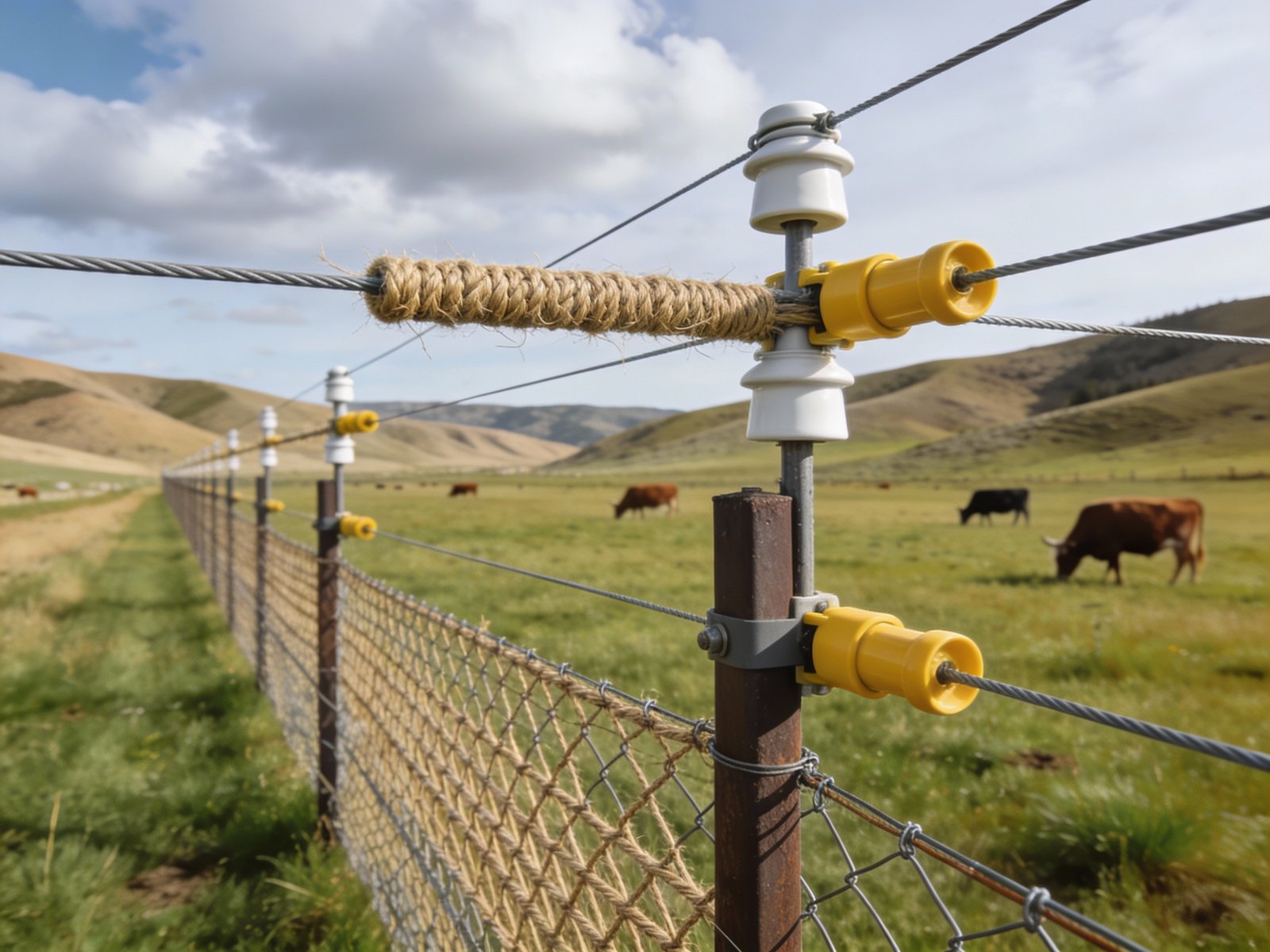
Hybrid fence systems combine multiple fence types within a single operation, matching fence specifications to specific needs rather than applying a single fence type across diverse applications. This strategic approach optimizes total cost by investing in premium fencing where performance demands justify expense while using economical systems where conditions permit lighter construction. Implementation patterns and templates are detailed on the hybrid fence systems pillar.
Why Hybrid Systems Lower Long-Term Cost
Single fence type installations force compromise. Using barbed wire everywhere minimizes initial cost but accepts higher maintenance and shorter service life across the entire operation. Using pipe fencing everywhere maximizes longevity but wastes capital on internal paddocks where lighter systems would function adequately. Hybrid approaches eliminate these compromises by deploying each fence type where its specific characteristics deliver maximum value.
Typical hybrid systems use fixed-knot high-tensile or woven wire for perimeter fencing where security, longevity, and neighbor relations demand premium performance. Installation costs run $5.42 to $6 per linear foot for approximately 3,730 feet on a square 20-acre parcel, totaling $20,217 to $22,380 for perimeter fence. Interior paddock subdivision uses portable or semi-permanent electric fence at $0.30 to $1.50 per linear foot. Dividing the 20 acres into 8 paddocks of 2.5 acres each requires approximately 2,000 additional linear feet of electric fence costing $600 to $3,000.
Total hybrid system cost runs $20,817 to $25,380 for the complete 20-acre installation compared to $20,958 to $33,720 for all woven wire or $15,840 to $31,680 for all barbed wire. The hybrid system delivers perimeter security matching the all-woven approach while providing interior flexibility exceeding either single-type system. Over 20 years, the hybrid system typically costs 45 percent less than all-woven wire and delivers superior operational flexibility compared to all-barbed wire while matching or beating barbed wire total cost.
Research comparing five grazing scenarios on 3,200-acre operations found that hybrid rotational systems using permanent perimeter fence with temporary electric subdivision reduced labor costs by 20 to 60 percent compared to continuously-grazed scenarios with all-permanent fencing. Infrastructure costs increased modestly, but labor savings offset the additional fence investment within 3 to 5 years. The hybrid approach also enabled flexible grazing management that improved forage utilization and livestock performance.
High-Traffic vs Low-Traffic Cost Zoning
Traffic intensity drives fence specification requirements and cost optimization opportunities. High-traffic areas including working corrals, breeding pens, property entrances, and boundary fences adjacent to highways demand maximum strength, safety, and reliability. Low-traffic interior paddocks used for rotational grazing or seasonal pasture experience minimal livestock pressure and allow lighter, less expensive fence systems.
Bull pens and breeding facilities represent the highest-traffic, highest-risk fence applications. A single fence failure resulting in bull escape can cause $50,000 to $150,000 in losses through breeding season disruption, vehicle collisions, or crop damage on neighboring properties. Pipe and panel fencing at $13.50 to $25 per linear foot proves economical despite high cost when evaluated against failure risk. A typical bull pen containing 8 to 12 bulls requires 200 to 300 linear feet of heavy-duty fence costing $2,700 to $7,500 installed, representing rational insurance against catastrophic loss.
Working corrals handling multiple cattle movements weekly require similar heavy-duty construction. Portable pipe panels costing $190 to $390 per 16-foot to 20-foot section provide flexibility for pen reconfiguration while delivering the strength necessary for safe livestock handling. A complete working facility including holding pens, working chute, and loading area requires 15 to 25 panels costing $2,850 to $9,750 total.
Perimeter fences establish property boundaries, maintain neighbor relations, and provide security against livestock escape onto roads. These fences justify premium investment through legal liability protection and operational reliability. Fixed-knot high-tensile at $5.42 to $5.75 per foot or woven wire at $3.50 to $6 per foot prove appropriate for perimeter applications, with choice driven by local preference, contractor availability, and livestock type.
Interior paddock fences for rotational grazing experience minimal stress. Trained cattle respect single-strand electric fence at $0.30 to $0.60 per foot. Untrained cattle or mixed herds benefit from 2 to 3-strand electric at $0.60 to $1.50 per foot. These lightweight systems provide adequate containment at 5 to 10 percent of perimeter fence cost while offering maximum flexibility for grazing management adjustments, which is exactly the kind of pattern covered in the hybrid cattle fence cost strategy guide.
Seasonal pastures used only 3 to 6 months annually allow temporary portable systems costing $0.30 to $1 per foot. The fence can be completely removed during off-season to prevent snow damage and theft, then reinstalled when needed. This approach proves especially cost-effective for operations leasing seasonal grazing or managing fire-prone areas requiring periodic fence removal.
Phased Investment and Upgrade Cost Control
Large-scale fence installations represent substantial capital requirements that can strain cash flow, particularly for beginning operations or expansion projects. Phased implementation strategies allow spreading costs across multiple years while establishing functional livestock containment from initial installation.
Phase one typically establishes secure perimeter fencing using permanent systems capable of preventing livestock escape and establishing legal property boundaries. This foundational investment runs $5 to $7 per foot for high-tensile or woven wire on most operations. A 100-acre rectangular parcel has approximately 5,280 linear feet of perimeter requiring $26,400 to $36,960 for complete perimeter fence. This investment enables livestock stocking and revenue generation while deferring interior subdivision costs.
Phase two implements basic interior subdivision using economical temporary electric fence. Dividing the 100 acres into 4 paddocks requires approximately 2,640 linear feet of electric fence at $0.60 to $1.50 per foot, totaling $1,584 to $3,960. This modest investment enables rotational grazing and improved forage management. The temporary nature allows experimentation with paddock layouts before committing to permanent subdivision fence.
Phase three upgrades high-use interior corridors and working facilities. Livestock lanes connecting pastures to working facilities experience heavy traffic and justify permanent fence at $3.50 to $6 per foot. A typical 100-acre operation might require 800 to 1,200 linear feet of permanent interior fence costing $2,800 to $7,200. Working facilities cost an additional $5,000 to $15,000 depending on scale and sophistication.
This phased approach spreads the total $35,000 to $65,000 fence investment across 3 to 5 years, matching capital deployment to revenue growth. The operation remains functional throughout the build-out period while management gains experience with livestock behavior, seasonal forage patterns, and operational needs that inform optimal permanent fence placement.
Phased systems also enable technology adoption and specification improvements as fence sections require replacement. An operation installing barbed wire perimeter in year 1 can transition to high-tensile replacement when the original fence reaches end-of-life in year 15 to 20, capturing improved fence technology and operational knowledge gained during the initial fence’s service life. This evolutionary approach optimizes long-term cost performance while maintaining operational functionality, and is a core use case for hybrid fencing for cost optimization.
Choosing the Most Cost-Effective Fence for Your Operation
Cost-effective fence selection requires matching fence specifications to operational scale, labor availability, livestock type, climate conditions, and management intensity. No single fence type proves economical across all applications. The optimal choice balances initial investment, maintenance requirements, operational needs, and ownership timeline.
Small Pastures vs Large Ranch Cost Logic
Operation scale fundamentally alters fence economics through material cost leverage, labor efficiency, and infrastructure density. Small pastures under 10 acres experience concentrated cost impacts from corners, gates, and access points. A square 5-acre pasture has 933 linear feet of perimeter requiring 4 corners at $300 to $600 each. Corner costs of $1,200 to $2,400 represent 25 to 35 percent of total fence cost on this scale, compared to 8 to 12 percent on large installations.
Small operations benefit from hybrid systems using permanent perimeter fence for security and property definition combined with portable electric interior subdivision. A 5-acre hobby farm might invest $4,000 to $6,000 in perimeter fence using woven wire or high-tensile, then add $400 to $800 in portable electric fence for paddock rotation. This $4,400 to $6,800 total investment provides full functionality while preserving flexibility.
Medium ranches from 40 to 200 acres gain efficiency through reduced corner density and bulk material purchasing. A 100-acre square parcel has 5,280 feet of perimeter with 4 corners. Corner costs of $1,200 to $2,400 represent only 4 to 7 percent of total perimeter fence cost. Contractors typically offer discount pricing for projects exceeding one mile, reducing per-foot costs by 10 to 20 percent. These operations can justify permanent interior subdivision for frequently-used paddocks while using temporary systems for seasonal or occasional subdivision.
Large ranches exceeding 500 acres achieve maximum economies of scale. A square 640-acre section has 13,267 feet of perimeter with 4 corners. Corner costs remain fixed at $1,200 to $2,400 while total fence costs reach $46,000 to $93,000, making corners only 1.5 to 3 percent of total cost. Material suppliers offer bulk pricing reducing wire costs by 15 to 25 percent on multi-mile projects. Professional crews achieve maximum efficiency on long, straight fence runs, reducing labor costs to the bottom of the range.
Large operations typically use barbed wire or high-tensile for perimeter fence, with choice driven by long-term economics. Fixed-knot high-tensile costs $12,000 to $18,000 more initially on a 3-mile perimeter than barbed wire but saves $450 to $900 annually in maintenance labor. The payback period runs 13 to 40 years, favoring high-tensile for operations with long ownership horizons and barbed wire for operations planning sale within 10 to 15 years.
Low Labor Availability vs High Maintenance Capacity
Labor availability profoundly affects optimal fence choice. Operations with limited labor capacity or high labor costs should prioritize low-maintenance fence systems even when initial costs exceed alternatives. Operations with abundant labor or low labor costs can economically maintain higher-maintenance systems, capturing initial cost savings.
Commercial ranches paying $20 to $30 per hour for labor face substantial fence maintenance costs. Barbed wire requiring 8 to 15 hours of annual maintenance per mile costs $160 to $450 per mile in labor alone. Over 20 years, this accumulates to $3,200 to $9,000 per mile in labor costs. High-tensile requiring 2 to 4 hours annually costs $40 to $120 per mile in labor, accumulating to $800 to $2,400 over 20 years. The $2,400 to $6,600 labor savings per mile over 20 years justify the $10,000 to $12,000 initial premium for high-tensile installation.
Part-time operations where owner-operators provide labor but opportunity cost remains high also benefit from low-maintenance systems. An owner working full-time off-ranch values weekend time at $50 to $100 per hour in lost recreation or family time. Fifteen hours of annual barbed wire maintenance represents $750 to $1,500 in opportunity cost, strongly favoring low-maintenance fence systems that preserve limited personal time.
Family operations with surplus labor during slow seasons can economically maintain higher-maintenance fence systems. Teen and young adult family members can perform fence maintenance during summer months when labor has minimal opportunity cost. For these operations, barbed wire offering $10,000 to $12,000 initial savings per mile proves economical despite higher maintenance requirements, as the maintenance labor draws from otherwise unproductive capacity.
Retirement operations where owners seek productive outdoor activity may prefer maintenance-intensive fence systems that provide regular engagement with the property. The fence maintenance becomes recreational activity rather than operational burden, reversing typical labor economics and favoring systems that provide frequent maintenance opportunities.
When to Spend More Upfront (and When Not To)
Premium fence systems justify higher initial investment in six specific circumstances: long ownership horizons, high labor costs, valuable livestock, liability exposure, challenging climates, and aesthetic requirements. Budget systems prove appropriate when these factors are absent.
Long ownership horizons favor premium fence systems. Operations planning 20+ year ownership should optimize lifecycle costs rather than initial costs. High-tensile at $28,600 to $30,400 per mile proves cheaper than barbed wire at $19,800 to $39,700 over 20 years when maintenance and replacement are included. The longer the planning horizon, the stronger the case for premium systems.
Operations planning sale within 5 to 10 years should minimize initial investment as they will not realize long-term cost savings from premium systems. Barbed wire at $3 to $6 per foot or basic electric at $1.50 to $3 per foot provides adequate functionality while preserving capital for other investments. The next owner captures the lifecycle cost benefits while the selling owner minimizes upfront expense.
High-value livestock operations justify premium fence investment through loss prevention. Registered cattle breeding operations with individual animals valued at $15,000 to $100,000 should use pipe fencing or woven wire on breeding facilities despite high cost. A single fence failure resulting in breeding injury or genetic loss can exceed total fence cost for the entire facility.
Properties adjacent to highways or residential areas face liability exposure from livestock escapes. Vehicle collisions with cattle create legal liability potentially exceeding $500,000 in wrongful death cases. Premium perimeter fence costing $5 to $7 per foot provides superior containment and demonstrates reasonable care in negligence defense. This liability protection justifies premium fence investment regardless of operation size or profitability.
Challenging climates including coastal areas, extreme cold, or high-wind zones demand premium fence specifications or face accelerated replacement cycles. Coastal operations should invest in marine-grade materials despite 30 to 50 percent cost premiums, as standard materials will fail in 8 to 12 years versus 20 to 30 years for properly specified systems. The upfront premium proves cheaper than frequent replacement, and paired with climate impact on cattle fencing can guide correct material selection.
Aesthetic requirements for property entrance, road frontage, or agritourism operations justify board fencing or decorative pipe systems at $8 to $40 per foot. The fence becomes marketing infrastructure supporting business objectives beyond simple livestock containment. Operations without visibility or visitor requirements should avoid aesthetic premiums and select purely functional systems.
Common Fence Cost Mistakes to Avoid
Fence cost mistakes compound across decades, transforming initial savings into long-term losses. Three categories of errors prove most consequential: underestimating maintenance labor requirements, ignoring climate-specific degradation patterns, and overbuilding where infrastructure adds no operational value.
Underestimating Maintenance Labor
The most common fence cost error involves underestimating or ignoring ongoing maintenance labor requirements. Fence salespeople and contractors emphasize installation costs while minimizing maintenance discussions. Buyers focus on immediate cash outlays while discounting future labor obligations. This short-term focus frequently leads to fence selections that minimize installation cost while maximizing lifetime expense.
Barbed wire requiring 8 to 15 annual hours of maintenance per mile appears economical at $3 to $6 per foot installed. Yet this maintenance obligation continues for 15 to 20 years, accumulating 120 to 300 total hours per mile across the fence’s service life. At $25 per hour labor cost, this represents $3,000 to $7,500 in maintenance labor alone, not including materials for repairs and re-tensioning.
Operations should calculate total ownership cost using realistic labor rates and time requirements. Even operations using owner labor should value that time at opportunity cost rather than zero cost. Time spent on fence maintenance represents time unavailable for other productive activities, recreation, or rest. Undervaluing this time leads to fence decisions that optimize dollars while wasting hours.
Realistic maintenance time estimates require consulting with operators of similar systems in similar climates rather than relying on contractor estimates. Contractors focus on installation and may have limited knowledge of long-term maintenance requirements. Neighboring ranchers operating similar fence systems provide practical data on actual annual maintenance hours, common failures, and typical repair costs.
Ignoring Climate-Driven Degradation
Fence lifespan estimates typically assume moderate climate conditions with balanced precipitation, moderate temperatures, and minimal salt exposure. Many regions deviate substantially from these assumptions, yet operators frequently use standard lifespan estimates when budgeting fence costs. This oversight leads to surprise replacement requirements and budget shortfalls.
Coastal properties should assume 40 to 60 percent lifespan reduction for wire-based fence systems and specify marine-grade materials despite 30 to 50 percent cost premiums. An operation budgeting 20-year barbed wire lifespan faces replacement at year 12 in coastal environments, creating an unexpected $15,000 to $30,000 capital requirement per mile. Proper initial specification using Class 3 galvanization and enhanced corner construction adds $5,000 to $10,000 per mile upfront but extends service life to 15 to 18 years, reducing surprise replacement frequency.
High-UV environments demand UV-resistant components for electric fence systems. Standard polywire and insulators will fail in 5 to 8 years despite 10 to 15-year ratings. UV-resistant specifications add $0.30 to $0.60 per foot but deliver rated service life. Failing to specify UV protection leads to premature replacement of entire wire systems, doubling total lifecycle costs.
Cold climates require deeper post installation and enhanced corner bracing to handle frost heaving and snow loading. Standard 30-inch post depth proves inadequate in freeze-thaw zones, leading to post heaving and fence failure within 5 to 8 years. Proper 36 to 42-inch installation adds $0.50 to $1.50 per foot but prevents premature failure and maintains fence functionality across its designed service life.
Overbuilding Where It Adds No Value
Overbuilding represents the inverse error: investing in premium fence systems where operational conditions do not justify the expense. Using pipe fencing for interior paddocks used only for rotational grazing wastes capital that delivers no operational benefit. Using woven wire where electric fence would provide adequate containment unnecessarily increases both initial and maintenance costs.
Interior paddock fences for rotational grazing rarely justify permanent construction exceeding $1.50 to $2 per foot. Trained cattle respect single-strand electric at $0.30 to $0.60 per foot. Installing woven wire at $3.50 to $6 per foot for interior paddocks wastes $3 to $5.40 per foot in unnecessary expense. On a 2,000-foot interior subdivision, this represents $6,000 to $10,800 in wasted investment providing no operational benefit.
Seasonal pastures used only 3 to 6 months annually do not justify permanent fence systems. Portable electric fence at $0.30 to $1 per foot provides adequate seasonal containment while allowing complete removal during off-season to prevent snow damage and theft. Installing permanent fence costing $3 to $6 per foot creates year-round maintenance obligations and weather exposure for a fence used only part-time.
Facilities handling lightweight stock including replacement heifers or cow-calf pairs do not require heavy-duty fence systems designed for bulls. Using pipe panels costing $13.50 to $25 per foot for heifer facilities wastes capital on unnecessary strength. Woven wire at $3.50 to $6 per foot or high-tensile at $5 to $6 per foot provides adequate containment at 40 to 75 percent lower cost.
Cost-effective fence strategies match fence specifications precisely to operational needs, investing premium dollars where performance demands justify expense while using economical systems where conditions permit lighter construction. This discipline requires resisting contractor upselling, marketing pressure, and aesthetic preferences that add cost without improving functionality.
Frequently Asked Questions About Fence Costs
Which cattle fence is cheapest long term?
Fixed-knot high-tensile fencing proves cheapest over long-term ownership periods exceeding 15 years, with annual costs of $0.12 to $0.16 per linear foot compared to $0.25 for barbed wire and $0.33 for woven wire. Despite 80 percent higher installation costs at $5.42 to $5.75 per foot versus $3 to $6 per foot for barbed wire, high-tensile accumulates only $1,000 to $3,000 in maintenance costs over 20 years versus $4,000 to $8,000 for barbed wire. Service life of 25 to 30 years eliminates replacement costs that barbed wire faces at year 15 to 20. Over a 25-year period, high-tensile costs $6,000 to $19,000 less per mile than barbed wire on a total ownership basis.
Permanent electric fence matches or exceeds high-tensile economics at $0.12 per linear foot annual cost when properly designed using quality components. However, electric systems require active management including energizer verification, vegetation control, and livestock training that some operations find burdensome. High-tensile provides passive containment requiring no ongoing operational attention beyond minimal annual inspection.
Operations with ownership horizons under 10 years may find barbed wire more economical as they will not hold the fence long enough to realize high-tensile lifecycle savings. For these short-term operators, barbed wire at $3 to $6 per foot provides adequate functionality while minimizing initial capital deployment.
Is electric fencing really lower cost?
Electric fencing delivers the lowest per-foot cost of all permanent systems at $1.50 to $7 installed, but total ownership cost depends critically on system quality, component selection, and maintenance execution. Budget electric systems using economy polywire, plastic step-in posts, and small battery energizers cost $1 to $2.50 per foot installed and function adequately for trained cattle on small acreages. These systems require wire replacement every 5 to 8 years and frequent maintenance for vegetation control and energizer battery replacement.
Premium electric systems using high-tensile smooth wire, commercial insulators, steel posts, and solar or AC-powered energizers cost $4 to $7 per foot and deliver reliable long-term performance. Wire lasts 15 to 20 years, insulators last 20+ years, and quality energizers function 15 to 20 years. Annual maintenance averages $100 to $300 per mile, competitive with high-tensile fence. These premium systems achieve annual costs of $0.12 per foot, matching high-tensile economics while providing superior flexibility for rotational grazing.
Electric fence proves most economical for interior subdivision and rotational grazing where flexibility justifies the active management requirements. Perimeter applications where security and passive containment prove critical may favor physical fence systems despite higher cost, as electric fence failures from vegetation shorts, energizer failures, or power outages can allow complete herd escape.
Do hybrid fence systems cost more or less overall?
Hybrid fence systems typically cost 15 to 45 percent less than single-type installations while delivering superior operational flexibility. The cost advantage emerges from strategic deployment of expensive permanent fence only where performance demands justify the investment, while using economical temporary systems for applications where lighter construction proves adequate.
A typical 100-acre operation using all woven wire fence costs $46,200 to $79,200 total for perimeter and interior subdivision. The same operation using hybrid design with woven wire perimeter and electric interior costs $28,380 to $40,920, saving $17,820 to $38,280 in initial investment. The hybrid system provides equivalent perimeter security while offering superior interior flexibility through moveable electric paddock divisions.
Over 20 years, the cost advantage persists. All-woven wire accumulates maintenance costs of $5,280 to $10,560 plus materials for repairs. Hybrid systems accumulate $3,300 to $6,600 in maintenance plus $1,000 to $3,000 for periodic polywire replacement on interior fence. Total 20-year costs run $51,480 to $89,760 for all-woven versus $32,680 to $50,520 for hybrid, maintaining the 25 to 40 percent cost advantage. For implementation patterns, see the full combining fence types to reduce cost playbook.
The hybrid approach also reduces risk by diversifying fence technologies. A disease outbreak requiring quarantine subdivision can be accomplished quickly with portable electric fence. Drought requiring pasture rest benefits from moveable fence allowing precise grazing control. These operational capabilities add value beyond simple cost comparison.