
Types of Cattle Fencing: Complete Guide to Materials, Designs and Costs
In short: The best type of cattle fencing depends on your herd size, terrain, budget, and management style—ranging from low-cost barbed wire to long-life high tensile and heavy-duty pipe systems.
Choosing the right cattle fencing system represents one of the most critical infrastructure decisions for livestock operations. The optimal fence type directly impacts animal safety, pasture management efficiency, long-term operational costs, and overall ranch productivity. This comprehensive guide examines the primary cattle fencing options available in 2026, comparing materials, designs, costs, durability, and safety considerations to help you make an informed decision for your specific operation.
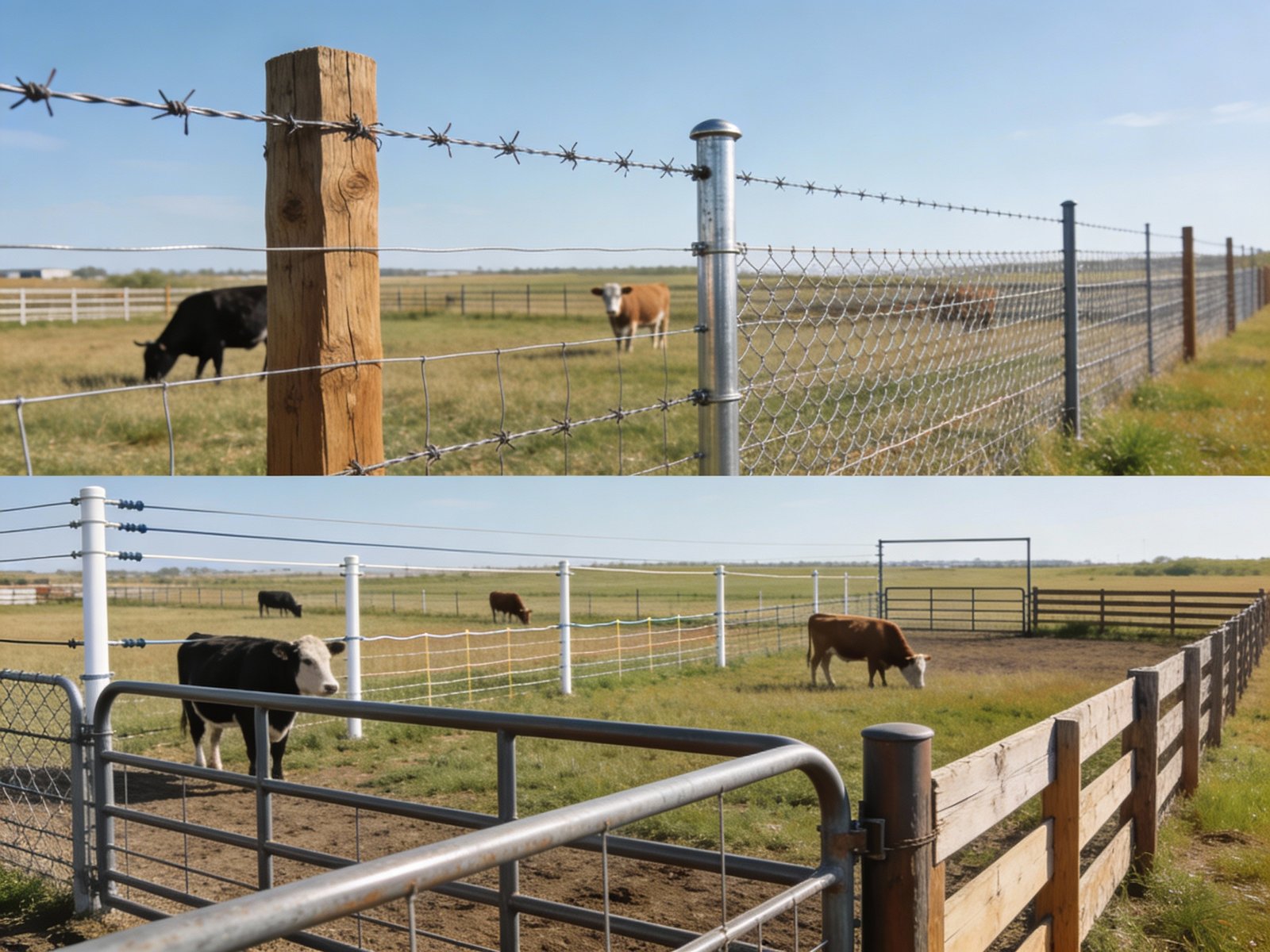
Understanding Permanent vs Temporary Cattle Fencing Systems
Before selecting specific materials, ranchers must first determine whether permanent or temporary fencing best suits their operational needs. This fundamental decision shapes everything from material selection to installation methods and long-term management strategies.
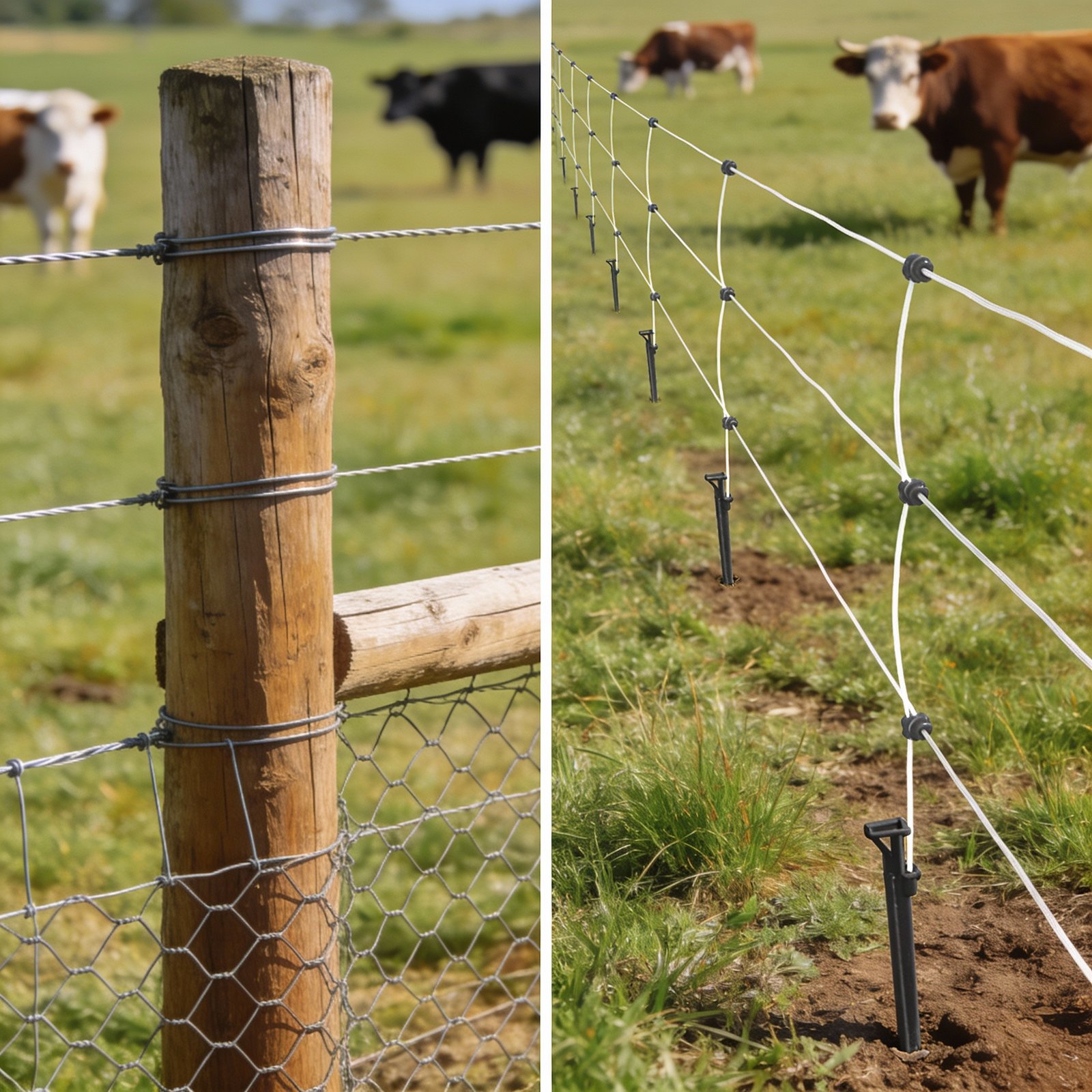
Permanent Cattle Fencing: Long-Term Infrastructure Investment
Permanent fencing serves as the backbone of established cattle operations, providing durable boundaries that define property lines, protect perimeter areas, and support rotational grazing systems for decades. These structures utilize robust materials including high tensile wire, wooden posts, steel panels, and reinforced concrete footings designed to withstand years of animal pressure and weather exposure.
Key Advantages of Permanent Fencing
- Maximum durability with lifespans exceeding 25-50 years when properly installed and maintained
- Consistent livestock containment without daily monitoring or adjustment requirements
- Enhanced property value through improved aesthetics and defined boundaries
- Superior predator deterrence and exclusion capabilities
- Reduced long-term labor costs after initial installation
Primary Use Cases for Permanent Fencing
- Perimeter boundary fencing for property lines
- Permanent corral systems and handling facilities
- Dividing large pastures into managed paddocks
- High-traffic areas near water sources and feeding stations
Temporary Cattle Fencing: Flexible Pasture Management
Temporary fencing systems empower ranchers to implement adaptive grazing strategies, protect sensitive areas, and respond quickly to changing operational needs without permanent infrastructure investment. Modern temporary solutions center around portable electric systems that can be installed, modified, or removed within hours.
Key Advantages of Temporary Fencing
- Unmatched flexibility to reconfigure pasture layouts based on forage conditions
- Lower initial investment compared to permanent installations
- Rapid installation and removal without heavy equipment
- Ideal for rotational grazing management and pasture recovery
- Ability to test paddock configurations before committing to permanent installation
Primary Use Cases for Temporary Fencing
- Subdividing large pastures for intensive rotational grazing
- Seasonal pasture management during peak growth periods
- Protecting riparian areas, water sources, or newly seeded pastures
- Temporary holding pens during sorting or veterinary procedures
Hybrid Systems: Combining Strength with Flexibility
Many progressive operations implement integrated fencing strategies that leverage permanent perimeter fencing combined with temporary interior cross-fencing. This approach provides the security of robust boundary fencing while maintaining the adaptability needed for effective rotational grazing management. Gates installed between permanent paddocks allow animals to move systematically through the grazing system, optimizing forage utilization while minimizing labor requirements.
Barbed Wire Fencing for Cattle
Barbed wire remains the most traditional and widely recognized cattle fencing option, particularly for large pasture operations where cost-effectiveness and straightforward installation are paramount.
Construction and Specifications
Barbed wire consists of two or more strands of smooth galvanized steel wire twisted together with sharp barbs spaced every 4-5 inches. Standard cattle fences typically utilize 3-6 strands of 12.5-gauge barbed wire stretched between posts spaced 15-25 feet apart on flat terrain.
Recommended Configuration:
- Fence height: 48-54 inches for mature cattle
- Wire spacing: Bottom wire 6-8 inches from ground, subsequent wires spaced 10-12 inches apart
- Post spacing: 15-20 feet for standard installations, reduced to 10-12 feet in hilly terrain or high-wind areas
- Strand count: 4-5 strands for interior cross-fencing, 5-6 strands for perimeter security
Cost Analysis
Barbed wire fencing offers the lowest initial investment among permanent cattle fencing options. Material costs range from $0.05-$0.15 per linear foot, with complete installed costs averaging $3.00-$6.00 per linear foot for livestock applications. For a typical mile of fencing, total installation costs approximate $31,735, translating to an annual cost of $2,116 over a 15-year lifespan.
Performance Characteristics
Durability
Class 1 galvanized barbed wire typically lasts 8-12 years in non-coastal climates, while Class 3 galvanized coating extends lifespan to 13-30 years. The wire’s strength effectively deters cattle from pushing against boundaries, though sharp barbs can cause hide damage and increase injury risk during handling.
Maintenance Requirements
Annual inspection and tension adjustment are necessary to maintain effectiveness. Vegetation control along fence lines is critical to prevent grounding and reduce fire hazards.
Best Applications
Large perimeter pastures, range land management, and situations where cost constraints outweigh premium safety considerations.
High Tensile Cattle Fencing
High tensile fencing represents a modern advancement in cattle containment technology, offering superior strength, longevity, and adaptability compared to traditional barbed wire systems.
Material Composition and Strength
High tensile wire contains 0.28-0.80% carbon content, creating steel wire with 170,000-200,000 PSI tensile strength—approximately three times stronger than conventional low-carbon wire. This exceptional strength allows the wire to absorb significant animal impact without permanent deformation, springing back to its original tension.
Construction Specifications
Wire Configuration:
- Gauge: 12.5-gauge wire standard for cattle operations
- Strand count: 4-5 strands for perimeter fencing, 3 strands for interior cross-fencing
- Spacing: 10-12 inches between wires for perimeter, 18-24 inches for interior divisions
- Height: 48-54 inches total fence height for mature cattle
Post Requirements:
High tensile systems allow wider post spacing of 25-30 feet on flat terrain, reducing material costs and installation labor. Pressure-treated wood posts or galvanized steel posts provide adequate support when properly braced at corners and gates.
Cost Analysis
High tensile fencing costs approximately $5.46 per linear foot installed, or $35,118 per mile. While initial investment exceeds barbed wire by 15-20%, the extended lifespan of 25-50 years with Class 3 galvanization significantly reduces lifetime costs. Over a 25-year period, high tensile systems can save $6,350-$19,200 compared to barbed wire alternatives.
Performance Advantages
Superior Longevity
Class 3 galvanized high tensile wire resists corrosion for 25-30 years, while zinc-aluminum Class 40 coatings extend lifespan to 50 years in non-coastal environments.
Enhanced Safety
Smooth wire construction eliminates barb-related injuries. When combined with electric fencing, high tensile systems provide effective containment with minimal animal stress.
Low Maintenance
Once properly tensioned, high tensile fences require minimal annual adjustment. The wire’s resistance to sagging reduces vegetation management requirements.
Versatility
Easily adapted for electric fencing integration, predator control, and multi-species livestock operations.
Installation Considerations
Professional installation is recommended to achieve proper wire tension (200-250 pounds per strand) and ensure correct brace assembly. Specialized tensioning equipment and knowledge of proper knot techniques are essential for maximizing system performance and longevity.
Woven Wire and Field Fencing for Cattle
Woven wire fencing, commonly called field fence, provides a continuous mesh barrier that excels at containing cattle while excluding predators and preventing hoof entrapment.
Design Characteristics
Woven wire consists of horizontal line wires and vertical stay wires woven together to form a uniform mesh pattern. Standard cattle fence designs feature 10-12 horizontal wires with heights ranging from 39-54 inches. Stay wire spacing typically measures 6 inches for small animals and 12 inches for large livestock.
Common Design Numbers:
- 1047-12-11: 10 horizontal wires, 47 inches high, 12-inch stay spacing, 11-gauge filler wire
- 339-12-11: Popular configuration for cattle with appropriate height and spacing
Cost Structure
Woven wire fencing costs $1.50-$6.00 per linear foot installed, with material costs higher than barbed wire due to the complex manufacturing process. A mile of woven wire fencing typically costs $24,000-$33,600, reflecting the premium for enhanced containment security.
Performance Profile
Containment Security
The continuous mesh prevents cattle from pushing through or reaching through the fence, reducing the likelihood of escapes and minimizing fence damage from animal pressure. The smooth construction also prevents leg injuries that can occur with barbed wire.
Predator Exclusion
Closely spaced bottom wires effectively exclude coyotes, dogs, and other predators from calf-rearing areas, providing additional herd protection.
Durability Concerns
While woven wire maintains its shape well under normal conditions, heavy animal impact can cause permanent deformation. The fence’s rigidity means it doesn’t flex like high tensile wire, potentially leading to breakage and sharp wire ends that pose safety hazards.
Best Applications
Woven wire excels in situations requiring maximum security, such as perimeter fencing near roadways, bull pens, and calving areas. It’s also ideal for mixed livestock operations where predator exclusion is critical.
Electric Cattle Fencing Systems
Modern electric fencing provides a psychological barrier that trains cattle to respect boundaries while offering unmatched flexibility for pasture management.
System Types
Permanent Electric Fencing
Combines wooden, metal, or fiberglass posts with high tensile steel wire, insulators, and powerful energizers. These systems provide long-term containment with minimal physical barrier requirements.
Temporary Electric Fencing
Utilizes portable polywire, polybraid, or polytape on lightweight step-in posts. These systems enable rapid paddock subdivision and are ideal for rotational grazing management.
Electrical Specifications
Energizer Requirements:
One joule of output per mile of fence ensures adequate voltage distribution, regardless of strand count. Low-impedance chargers are recommended for rotational grazing systems as they resist power leakage and maintain effective voltage.
Grounding System:
Proper grounding is critical for system performance. Most manufacturers recommend a minimum of three 6-foot galvanized ground rods driven 5.5 feet into the soil, spaced at least 10 feet apart. More powerful units may require 8-10 ground rods for optimal performance.
Wire Selection
Polywire
The most economical option, featuring multiple stainless steel strands woven into polyethylene. Lightweight design requires fewer posts but has higher electrical resistance.
Polybraid/Polyrope
Offers superior visibility and wind resistance compared to polywire, with lower resistance and better conductivity. These represent the premium temporary fencing option.
High Tensile Steel Wire
Provides the lowest electrical resistance and maximum durability for permanent electric installations. Heavy weight requires closer post spacing to maintain proper wire height.
Training and Management
Cattle require proper training to respect electric fencing. Starting with 4-5 hot wires in the training paddock teaches animals to avoid contact. Well-trained cattle can eventually be contained with a single hot wire, significantly reducing material costs. The key is ensuring the initial experience delivers a memorable but safe shock.
Cost Considerations
Temporary electric fencing costs $1.00-$6.00 per linear foot installed, making it highly economical for interior cross-fencing applications. Permanent electric systems utilizing high tensile wire range from $2.50-$7.50 per linear foot, depending on post selection and energizer capacity.
Pipe and Panel Fencing for Cattle
Steel pipe fencing provides maximum strength and durability for high-pressure applications including corrals, working facilities, and bull pens.
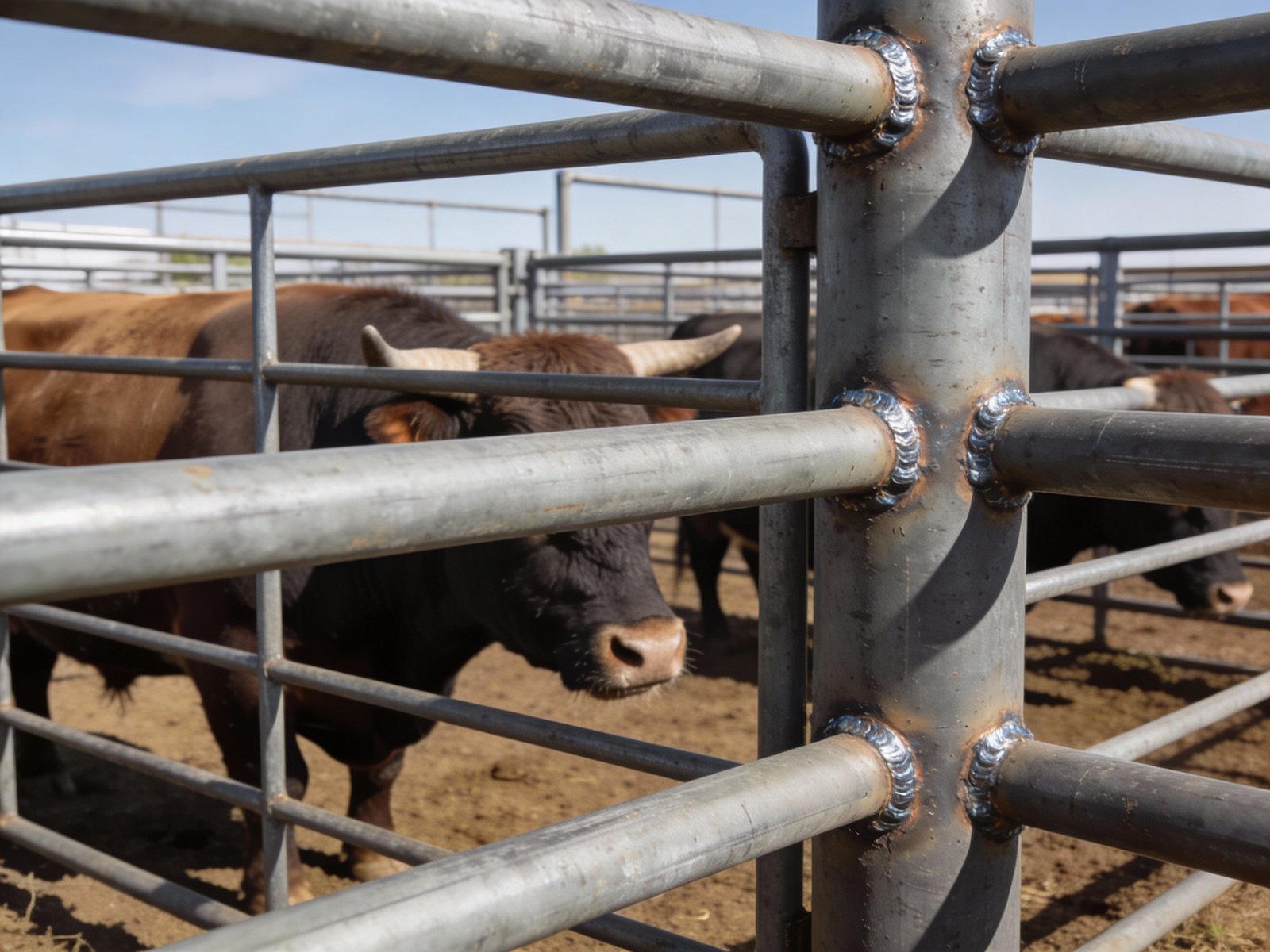
Construction Features
Pipe fences utilize welded steel pipe rails (typically 2-3 inches in diameter) secured to heavy-duty steel posts set in concrete. Panels are often prefabricated for rapid installation and can be powder-coated for enhanced corrosion resistance.
Performance Characteristics
Maximum Durability
Steel pipe fencing withstands extreme animal pressure, harsh weather conditions, and decades of use without significant degradation. The rigid construction prevents flexing or bending under load.
Enhanced Safety
Smooth, rounded rails eliminate sharp edges and reduce injury risk during handling. Visibility is excellent, allowing cattle to easily see and respect boundaries.
Maintenance
Requires minimal maintenance beyond occasional painting or touch-up of rust spots. The initial investment is substantial, but lifetime costs are competitive over 30+ year lifespans.
Cost Analysis
Pipe fencing represents the highest initial investment, typically ranging from $10.00-$20.00 per linear foot installed. However, for working facilities and high-traffic areas, the durability and safety benefits justify the premium cost.
Ideal Applications
Pipe fencing excels in corral systems, sorting pens, bull breeding facilities, and anywhere maximum strength and visibility are paramount. It’s also ideal for operations handling large numbers of cattle regularly.
Board Fencing for Cattle
Traditional wooden board fencing provides aesthetic appeal and effective containment for cattle operations where appearance matters, such as farms with public visibility or equine-cattle mixed operations.
Design Specifications
Board fences typically feature 1-2 inch thick hardwood boards (oak, treated pine) spanning 8-12 feet between wooden posts. Standard configurations use 3-4 boards for cattle containment, with the top board placed at 48-54 inches.
Performance Attributes
Safety
Smooth, solid construction eliminates injury risks associated with wire fencing. Cattle easily see and respect board fences, reducing pressure and maintenance requirements.
Aesthetics
Provides a classic, professional appearance that enhances property value and public perception of the operation.
Maintenance
Requires regular inspection for loose boards, rotting posts, and damaged rails. Painting or staining every 3-5 years extends lifespan but adds to maintenance costs.
Cost Considerations
Board fencing costs $8.00-$15.00 per linear foot installed, reflecting premium material and labor requirements. While more expensive than wire options, the aesthetic benefits and safety advantages justify the investment for certain applications.
Best Use Cases
Board fencing is ideal for perimeter fencing near roadways, farm entrances, and properties where cattle and horses are pastured together. The visibility and safety features make it particularly suitable for operations with public interaction.
Best Cattle Fencing by Use Case
- Best low-cost option: Barbed wire fencing for large perimeter pastures
- Best long-term value: High tensile fencing with Class 3 or zinc-aluminum coating
- Best for rotational grazing: Permanent perimeter fencing combined with temporary electric fencing
- Best for bull pens and high-pressure areas: Pipe and panel fencing systems
- Best for predator protection: Woven wire fencing reinforced with electric offsets
- Best for mixed cattle and horse operations: Board fencing or smooth high tensile with electric
Cattle Fence Cost Comparison and Budget Planning
Selecting the right fencing requires balancing upfront investment against long-term value, maintenance requirements, and operational goals. The following sections provide detailed cost analysis and planning guidance.
Complete Cost Comparison Table
| Fence Type | Initial Cost per Foot | Cost per Mile | Expected Lifespan | Annual Cost per Mile | Best Application |
|---|---|---|---|---|---|
| Barbed Wire | $3.00-$6.00 | $31,735 | 8-15 years (Class 1) 13-30 years (Class 3) | $2,116-$3,969 | Large perimeter pastures, budget-conscious operations |
| High Tensile | $5.46-$7.00 | $35,118-$37,000 | 25-50 years (Class 3/40) | $702-$1,405 | Permanent boundaries, rotational grazing systems |
| Woven Wire | $5.00-$9.00 | $24,000-$33,600 | 15-25 years | $960-$2,240 | Maximum security, predator exclusion |
| Electric (Temporary) | $1.00-$6.00 | Variable | 5-10 years (polywire) | Variable | Rotational grazing, interior divisions |
| Pipe/Panel | $10.00-$20.00 | $52,800-$105,600 | 30+ years | $1,760-$3,520 | Corrals, high-pressure areas, bull pens |
| Board | $8.00-$15.00 | $42,240-$79,200 | 20-30 years | $1,408-$3,960 | Aesthetic perimeters, mixed livestock |
Cost Factors Beyond Materials
Terrain Impact
Hilly terrain requires closer post spacing, increasing costs 15-30% compared to flat ground installations. Rocky soils may necessitate specialized equipment for post installation, adding $2.00-$5.00 per post.
Labor Costs
Professional installation typically doubles material costs but ensures proper tensioning, bracing, and long-term performance. DIY installation can reduce costs 30-50% but requires specialized tools and knowledge.
Coating Class
Class 3 galvanized coating costs 20-30% more than Class 1 but extends lifespan 2-3 times, significantly reducing lifetime costs. Zinc-aluminum Class 40 coatings command a 40-50% premium but offer 50+ year lifespans.
Corner Assemblies
Each corner or gate requires reinforced bracing that costs $150-$300 per assembly. Multiple corners and gates significantly impact total project costs.
Cattle Fencing Material Specifications and Durability
High Tensile vs Low Carbon Wire: Technical Comparison
Understanding the differences between high tensile and low-carbon wire helps ranchers make informed decisions about long-term value and performance.
Tensile Strength
- High Tensile Wire: 170,000-200,000 PSI breaking strength
- Low Carbon (Barbed) Wire: 60,000-80,000 PSI breaking strength
- Advantage: High tensile allows 3x wider post spacing and superior durability
Carbon Content
- High Tensile: 0.28-0.80% carbon content, specialized manufacturing
- Low Carbon: Less than 0.25% carbon, traditional manufacturing
- Impact: Higher carbon creates greater strength but requires proper handling during installation
Galvanization Classes and Lifespan
Coating specifications dramatically impact fence longevity in different climate conditions.
Class 1 Galvanizing:
- Minimum 0.20 oz/sq ft zinc coating
- Typical lifespan: 8-15 years (non-coastal)
- Most economical option, suitable for temporary installations
- Not recommended for humid or coastal environments
Class 3 Galvanizing:
- Minimum 1.50 oz/sq ft zinc coating
- Typical lifespan: 13-30 years (Class 1), 25-30 years (Class 3 on high tensile)
- Better corrosion protection, recommended for humid climates
- 20-30% cost premium vs Class 1
Zinc-Aluminum Class 40 Coating:
- Premium coating with zinc-aluminum alloy
- Typical lifespan: 50+ years (even in coastal environments)
- Superior salt spray and corrosion resistance
- 40-50% cost premium, best for long-term durability
Installing Cattle Fencing: Specifications and Best Practices
Post Spacing Guidelines by Terrain
Flat Terrain:
- Barbed wire: 15-20 feet
- High tensile: 25-30 feet
- Woven wire: 15-20 feet
- Board: 8-12 feet
Hilly Terrain:
- Barbed wire: 10-15 feet
- High tensile: 15-25 feet
- Woven wire: 10-15 feet
- Board: 6-8 feet
High Wind Areas:
- All wire fencing: Reduce spacing by 25%
- Use reinforced corner bracing
- Increase post diameter or wall thickness by 15-20%
Wire Spacing and Height Recommendations
Barbed Wire Configuration:
- Total height: 48-54 inches
- Bottom wire: 6-8 inches from ground
- Wire spacing: 10-12 inches apart
- Standard strands: 4-5 (interior), 5-6 (perimeter)
High Tensile Configuration:
- Total height: 48-54 inches
- Bottom wire: 6-8 inches from ground
- Wire spacing: 10-12 inches (perimeter), 18-24 inches (interior)
- Standard strands: 4-5 (perimeter), 3 (interior)
Explore Cattle Fencing Systems by Category
The following pages break down cattle fencing systems by material, function, environment, and risk profile. Each guide dives deeper into design specifications, costs, and real-world use cases.
This video provides a practical overview of common cattle fencing systems, helping producers visually understand how different fence types function in real ranch environments.
Frequently Asked Questions: Cattle Fencing Types and Selection
What is the best type of fencing for cattle?
The best fence type depends on your specific operation. High tensile fencing offers the best long-term value with 25-50 year lifespans and low maintenance. Electric fencing provides maximum flexibility for rotational grazing. Barbed wire is the most economical. Pipe fencing offers maximum strength for high-pressure applications. Woven wire provides maximum security for mixed livestock.
How much does cattle fencing cost per foot?
Costs vary significantly by type: Barbed wire ($3-$6/foot), High tensile ($5.46-$7/foot), Woven wire ($5-$9/foot), Electric temporary ($1-$6/foot), Pipe ($10-$20/foot), and Board ($8-$15/foot). A complete mile of fencing ranges from $24,000 (woven wire) to $105,600 (pipe/panel).
How tall should cattle fencing be?
Standard cattle fencing height is 48-54 inches (4-4.5 feet) for mature cattle. This height prevents jumping while maintaining good visibility and keeping construction costs reasonable. Calves may require bottom wire placement of 6-8 inches from ground to prevent crawling under.
How many strands of wire do I need for cattle fencing?
Strand requirements vary by application: Barbed wire perimeter: 5-6 strands. Barbed wire interior: 4-5 strands. High tensile perimeter: 4-5 strands. High tensile interior: 3 strands. Electric (after training): 1-2 strands.
What is the difference between permanent and temporary fencing?
Permanent fencing uses durable materials (high tensile, woven wire, pipe) with lifespans of 25-50 years, designed for long-term property boundaries and perimeter security. Temporary fencing uses portable electric systems that can be installed and removed quickly, ideal for rotational grazing and interior paddock division. Many operations use both—permanent perimeter with temporary interior cross-fencing.
Is high tensile or low carbon barbed wire better for cattle?
High tensile wire is superior in almost every way: 3x stronger (170,000 PSI vs 60,000 PSI), allows 50% wider post spacing, lasts 25-50 years vs 8-15 years, smoother construction prevents injuries, and reduces lifetime costs despite higher initial investment. The only advantage of low-carbon barbed wire is lower upfront cost.
What is Class 3 galvanized vs Class 1 galvanized fencing?
Class 1 has minimum 0.20 oz/sq ft zinc coating, lasting 8-15 years. Class 3 has minimum 1.50 oz/sq ft coating, lasting 25-30 years. Class 3 costs 20-30% more but extends lifespan 2-3 times, making it more economical for permanent installations. For humid or coastal climates, Class 3 is essential.
Can I use the same fencing for cattle and horses?
Yes, but with considerations. Board fencing is ideal for mixed operations, offering safety and visibility. Woven wire works well if smooth and strong enough. Avoid barbed wire for horses as it causes severe injuries. High tensile smooth wire combined with electric fencing works for both species. Always prioritize safety for the most vulnerable animal.
How long does cattle fencing last?
Lifespan varies dramatically by type and coating: Barbed wire (8-30 years), High tensile (25-50 years), Woven wire (15-25 years), Electric polywire (5-10 years), Pipe (30+ years), Board (20-30 years). Class 3 galvanization and zinc-aluminum coatings extend lifespan significantly compared to Class 1 galvanizing.
What is the best fencing for rotational grazing?
A hybrid approach is best: Permanent high tensile or woven wire perimeter fencing combined with temporary electric interior cross-fencing. This allows flexible paddock configurations while maintaining secure boundaries. Temporary electric enables rapid reconfiguration based on forage conditions and recovery needs.
Do I need to treat wooden fence posts?
Yes. Pressure-treated wood posts extend lifespan to 15-20 years in wet soil conditions. Without treatment, posts may rot in 5-8 years. For permanent installations, pressure-treated posts (rated for ground contact) are essential. Cedar and oak offer natural durability but cost more. Budget $8-$15 per post for quality pressure-treated options.
Not sure which fence is right? Start with terrain and herd pressure—then narrow by budget and lifespan.