
Understanding Woven Cattle Fence Wire Systems: A Comprehensive Overview
Woven cattle fence wire represents a fundamental livestock management solution that combines structural engineering with agricultural practicality. Unlike simple strand barriers, woven wire systems integrate horizontal line wires and vertical stay wires through specialized knot formations, creating a mesh pattern that provides both physical containment and visual deterrence for cattle, horses, sheep, and other livestock.
This overview explores the architectural components, installation frameworks, material considerations, and long-term maintenance requirements that define effective woven wire fencing systems. Understanding how these elements interact—from knot mechanics and wire tensile properties to terrain adaptation and seasonal stress—enables property owners to make informed decisions about perimeter security, pasture division, and livestock safety.
This page serves as a structural overview of woven cattle fence wire systems. Detailed engineering analysis, installation techniques, material science research, and application-specific guidance are addressed in dedicated technical resources linked throughout this page. The following sections provide navigational guidance through the essential domains of woven cattle fence systems: construction methodology, structural design variations, material specifications, comparative performance analysis, and ongoing care protocols. Each section connects to specialized resources that address specific implementation challenges and technical requirements.
Installation Framework & Construction Methodology
Installation of woven cattle fence systems follows a structured sequence that begins with site assessment and extends through post placement, bracing construction, wire tensioning, and final attachment. The process demands attention to soil conditions, topographical variation, and structural load distribution. Corner assemblies function as the primary tension anchors, typically utilizing H-brace or floating brace configurations to counteract the longitudinal forces generated when wire is stretched to specification. Line posts, spaced according to wire type and terrain characteristics, maintain fence alignment and distribute vertical loads. Proper execution of these foundational steps determines fence longevity and containment effectiveness across diverse landscapes and weather conditions.
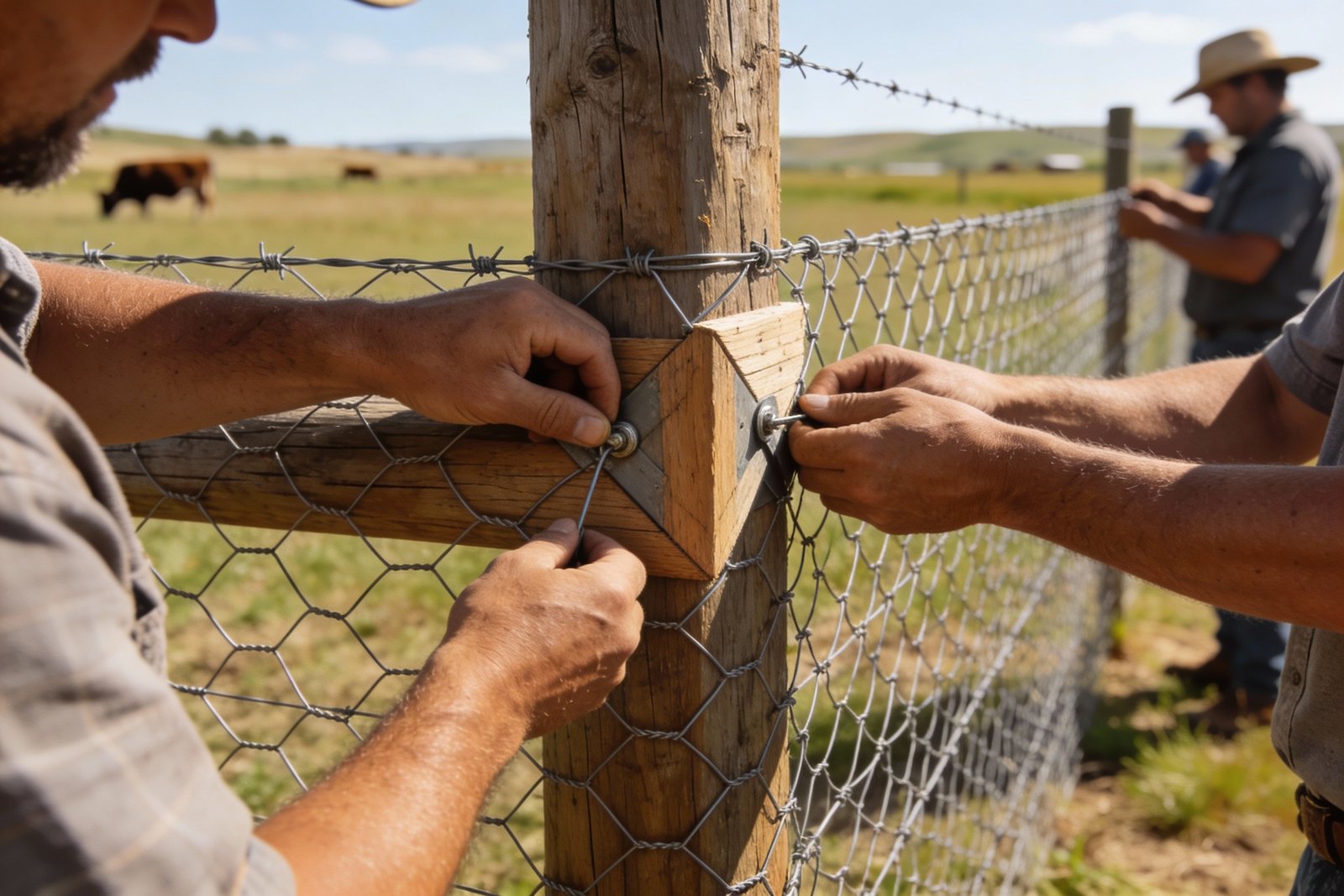
Installation methodology varies significantly based on terrain profile. Level ground permits standard post spacing and straightforward wire runs, while sloped or uneven terrain requires specialized techniques such as step-down construction or contour-following installations. Rocky substrates may necessitate drilled post holes or driven steel posts when traditional augering proves impractical. Each environmental factor influences tool selection, labor requirements, and construction timelines. Successful installations balance engineering principles with site-specific adaptation.
Corner bracing systems serve as the structural foundation for fence tension. These assemblies—whether traditional H-braces with diagonal wire compression or floating braces with extended reach—must withstand sustained pulling forces that can exceed several hundred pounds per wire strand. Post depth, diameter, and brace configuration directly correlate with system stability. Inadequate bracing represents the primary cause of fence failure, manifesting as leaning posts, wire sag, and compromised containment. Professional installation emphasizes robust corner construction as the prerequisite for long-term performance. Detailed step-by-step installation procedures, tool selection, and terrain-specific engineering solutions are covered in the dedicated installation resources below.
Visual Overview: Woven Wire Fence System Components
Understanding woven wire fence construction benefits from visual demonstration of the physical components and assembly processes. The following resource illustrates fundamental concepts including wire identification, knot pattern recognition, post positioning, and tension application techniques that form the basis of successful installations.
This overview demonstrates the structural differences between common knot systems and illustrates how wire configuration affects fence behavior under load. For comprehensive video tutorials covering advanced installation techniques, maintenance procedures, and troubleshooting scenarios, explore the complete cattle fence wire video library.
Structural Design: Knot Systems & Fence Architecture
Knot configuration represents the critical engineering distinction between woven wire fence types. Fixed knot systems employ a separate wire element wrapped tightly around the intersection of each horizontal line wire and vertical stay wire, creating a rigid connection that resists movement. Hinge joint designs wrap the vertical stay around the horizontal line, allowing controlled flexibility at each junction. S-knot construction utilizes a single wire piece twisted around both horizontal and vertical elements, forming an intermediate design between fixed and hinge configurations. Each knot type exhibits distinct performance characteristics regarding impact absorption, wire movement under load, vertical strength, and installation requirements.
Fixed knot fencing delivers maximum vertical strength and minimal wire slippage, making it appropriate for high-pressure applications including cattle containment on range operations, predator exclusion, and wildlife management. The rigid knot construction maintains precise wire spacing even after repeated animal impacts. However, this rigidity comes with reduced flexibility on extremely uneven terrain compared to hinge joint alternatives. Fixed knot systems typically command premium pricing but offer extended service life and reduced maintenance frequency.
Hinge joint fence provides controlled flexibility that helps absorb impacts from livestock leaning or pushing against the barrier. The wrapping configuration permits slight vertical movement at each intersection, allowing the fence to flex rather than transfer full force to corner posts. This characteristic makes hinge joint fencing well-suited for rolling terrain and general livestock applications where ultimate strength takes lower priority than cost-effectiveness. Traditional field fence represents the most common hinge joint application, with lower material costs offsetting the requirement for closer post spacing compared to fixed knot designs.
Wire spacing patterns and overall fence height combine with knot selection to determine containment effectiveness for specific livestock types. Graduated spacing—with narrower gaps near ground level progressing to wider spacing at the top—prevents small animals from penetrating while minimizing material costs. Standard cattle fence configurations typically feature 9 to 13 horizontal wires spanning 39 to 49 inches in height, with vertical stay spacing at 6 or 12 inches depending on animal size and pressure expectations. Each knot system is examined in depth—including mechanical behavior, load distribution, and application suitability—within its dedicated technical resource.
Material Specifications & System Parameters
Technical specifications for woven cattle fence systems encompass wire gauge measurements, tensile strength classifications, galvanization standards, height configurations, and stay wire spacing intervals. Wire gauge indicates diameter—with lower numbers representing thicker wire—while tensile strength distinguishes high-tensile steel (containing higher carbon content and exhibiting minimal stretch) from low-carbon alternatives that offer greater malleability but require more frequent re-tensioning. Galvanization class determines corrosion resistance, with Class 3 coatings providing approximately triple the zinc protection of Class 1 standards. These parameters collectively define fence durability, installation requirements, post spacing capabilities, and expected service life under regional environmental conditions.
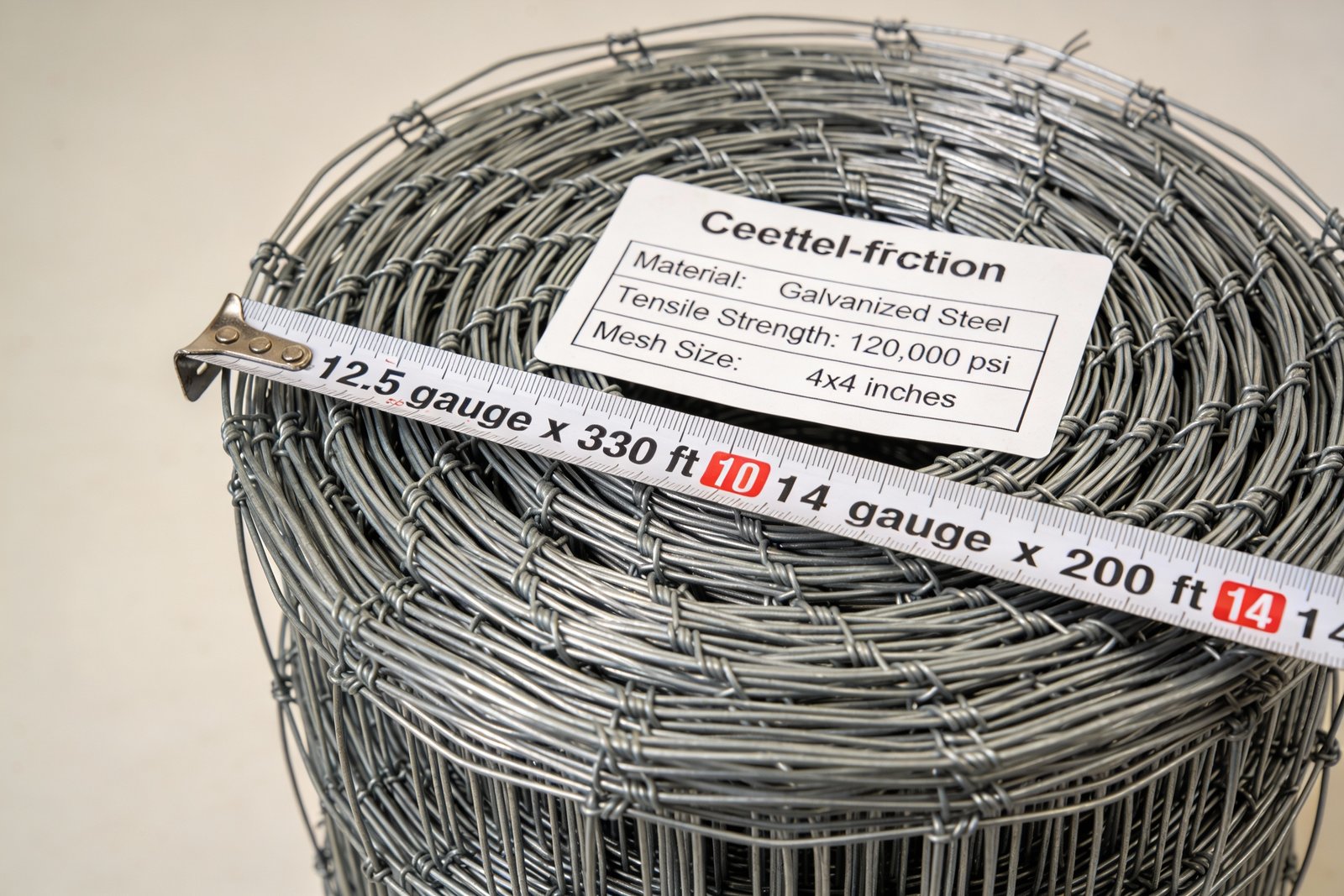
High-tensile wire contains elevated carbon content (typically 0.28% compared to 0.10% in low-carbon steel), resulting in breaking strengths exceeding 1,200 pounds while maintaining lighter weight and thinner diameter than low-carbon equivalents. This strength-to-weight advantage permits post spacing up to 20 feet for properly braced high-tensile installations, compared to 8-12 foot requirements for low-carbon systems. High-tensile wire exhibits only 1-4% elongation under load, meaning fences remain tight across seasonal temperature fluctuations without requiring periodic re-stretching. These characteristics translate to reduced material costs and lower long-term maintenance demands.
Galvanization class directly impacts fence longevity in corrosive environments. Class 3 galvanized wire carries a minimum 0.80 ounces of zinc per square foot of surface area—nearly three times the 0.28 ounces provided by Class 1 coating. This enhanced protection extends expected service life from 15-20 years to 25-30 years in typical agricultural conditions, with even greater longevity in arid climates. Coastal installations, regions with high humidity, and areas receiving significant precipitation benefit disproportionately from Class 3 galvanization. The premium typically ranges from 15-25% above Class 1 pricing but amortizes favorably when calculated across the extended replacement cycle.
Standard fence designations employ a three-number system indicating configuration details. For example, a “1047-12-11” specification denotes 10 horizontal line wires, 47-inch total height, 12-inch vertical stay spacing, and 11-gauge intermediate wire. Understanding these designation systems enables accurate specification matching to livestock requirements, terrain conditions, and operational objectives. Different applications demand distinct configurations—high-traffic handling areas may utilize 3-inch stay spacing for enhanced strength, while perimeter fencing for mature cattle operates effectively with 12-inch stays. Complete wire designation tables and engineering limits are detailed in the dedicated specification resources linked below.
Fence Lifespan, Durability & Service Expectations
Properly installed woven cattle fence systems deliver 20-30 years of functional service when subjected to appropriate maintenance protocols. Wire thickness, protective coating quality, post construction, and environmental exposure collectively determine service life. High-tensile wire contains 0.28% carbon content compared to 0.10% in low-carbon wire, exhibiting only 1-4% elongation versus 13% elongation in low-carbon alternatives. This minimal stretch characteristic means high-tensile fences maintain tension across temperature fluctuations without requiring frequent re-tensioning. Class 3 galvanization coating contains 0.80 ounces of zinc per square foot—nearly triple that of Class 1 coating—extending expected lifespan from 15-20 years to 25-30 years. Fixed knot construction further enhances durability by preventing wire slippage at junctions, while hinge joint systems may require more frequent adjustments under sustained pressure.
Environmental factors significantly influence fence lifespan. Coastal regions exposed to salt air accelerate corrosion, making Class 3 galvanization essential for these locations. High-precipitation areas benefit from enhanced zinc protection, while arid climates may exceed standard longevity expectations. Freeze-thaw cycles cause post movement and soil displacement, necessitating spring inspections to identify winter damage. Snow load and ice accumulation impose additional stress on lighter low-carbon wire, while high-tensile systems resist these forces more effectively due to their higher breaking strength and minimal elongation. Post quality and bracing integrity directly affect overall system durability—even premium wire cannot compensate for weak corner assemblies or rotted wood posts.
The interaction between material selection and installation quality determines achieved lifespan. Properly tensioned, adequately braced, and correctly fastened high-tensile fixed knot fence may exceed 30 years of service, while poorly installed premium materials might fail within 15 years. Regular inspection and proactive maintenance extend the functional life of any system. Specific maintenance protocols, seasonal stress management, and preventive care strategies for extending fence longevity are examined in the durability analysis linked below.
Large-Scale Ranch & Farm Applications
Large ranch and farm operations present unique requirements for woven wire fence systems, combining extensive perimeter security with flexible internal division needs. Properties spanning thousands of acres require economic planning that balances initial material costs, installation labor, and long-term maintenance. High-tensile fixed knot fence excels in these applications due to post spacing reaching 20-25 feet, significantly reducing post requirements compared to traditional low-carbon systems requiring 8-12 foot spacing. This reduced post density translates to substantial material and labor savings on large-scale projects.
Ranch-scale fencing projects must address diverse animal pressure scenarios, predator threats, and terrain variations. Perimeter fencing demands maximum strength and reliability, often specifying 6-inch or tighter vertical stay spacing to prevent penetration. Internal pasture divisions may employ 12-inch stay spacing to balance containment effectiveness with material economy. Corner bracing systems become critical in large installations—each mile of fence contains multiple direction changes, each requiring properly engineered H-brace or floating brace assemblies. Extended runs lacking adequate bracing lead to wire sag, post lean, and eventual system failure requiring expensive repairs.
Large operations gain disproportionate value from reduced maintenance requirements. High-tensile systems exhibiting 1-4% elongation eliminate annual re-tensioning needs—a significant labor savings when managing miles of fence. Fixed knot construction resists wire slippage that prevents sag development requiring periodic adjustment. Class 3 galvanization protection extends replacement cycles, reducing the frequency of large-scale material procurement and installation projects. While the initial investment in these premium materials exceeds basic options, the per-mile annual cost calculated across a 30-year service life proves cost-effective for large ranch and farm applications. Detailed guidance on scale-specific planning, economic modeling, and system configuration is provided in the dedicated large-scale application resources.
Considerations for Fence System Selection
Selecting appropriate woven wire fencing involves navigating intersecting variables including containment objectives, livestock type and behavior patterns, property topography, climate exposure, budget parameters, and maintenance capacity. Material specifications, installation complexity, and regional labor availability contribute to total project economics. These factors form a decision framework rather than a prescriptive formula—each property presents unique requirements that influence optimal fence configuration.
Decision criteria begin with fundamental needs assessment: primary livestock species determines fence height (cattle require 48-54 inches while goats need tighter wire spacing to prevent climbing or squeezing through). Predator threats influence perimeter security requirements—areas with wolf packs or coyote populations benefit from fixed knot construction whose rigid connections resist tearing. Terrain characteristics guide material selection: rolling landscapes may favor the flexibility of hinge joint systems, while flat ground allows maximizing fixed knot strength advantages. Climate considerations affect galvanization class selection, with coastal or high-precipitation regions justifying the premium for Class 3 coating.
Budget planning must address both initial expenditure and lifecycle costs. High-tensile fixed knot fence demands higher upfront investment—approximately $5.42 per foot installed—but delivers 30-year service life reducing annual cost per mile to $1,163.55. In contrast, traditional barbed wire costs around $4.74 per foot but 15-year lifespan results in $2,115.65 annual cost per mile. Maintenance capacity influences system selection: operations with limited labor availability should prioritize low-maintenance high-tensile systems requiring minimal ongoing attention. Properties with dedicated fencing personnel may accept lower-cost options requiring more frequent maintenance.
Comprehensive exploration of these considerations—including detailed cost modeling and specification matching—resides in dedicated resources designed to support thorough evaluation and informed system selection. The buying guide and planning tools linked below provide decision frameworks, economic comparisons, and implementation pathways tailored to your operational context and management objectives.
Comparative Analysis: Woven Wire vs Alternative Systems
Woven wire fencing occupies a specific position within the broader spectrum of livestock containment systems. Electric fencing provides psychological deterrence through controlled shock, offering lower material costs and simplified installation but requiring consistent power supply, regular vegetation management, and animal training. Barbed wire delivers physical barrier function at minimal expense yet presents injury risk and limited small animal containment. High-tensile smooth wire systems reduce installation labor but demand precise tensioning and provide less visual deterrence. Each alternative exhibits distinct trade-offs regarding initial investment, maintenance obligations, livestock safety, predator resistance, and operational flexibility. Effective system selection requires understanding these comparative performance characteristics within the context of specific property requirements and management capabilities.
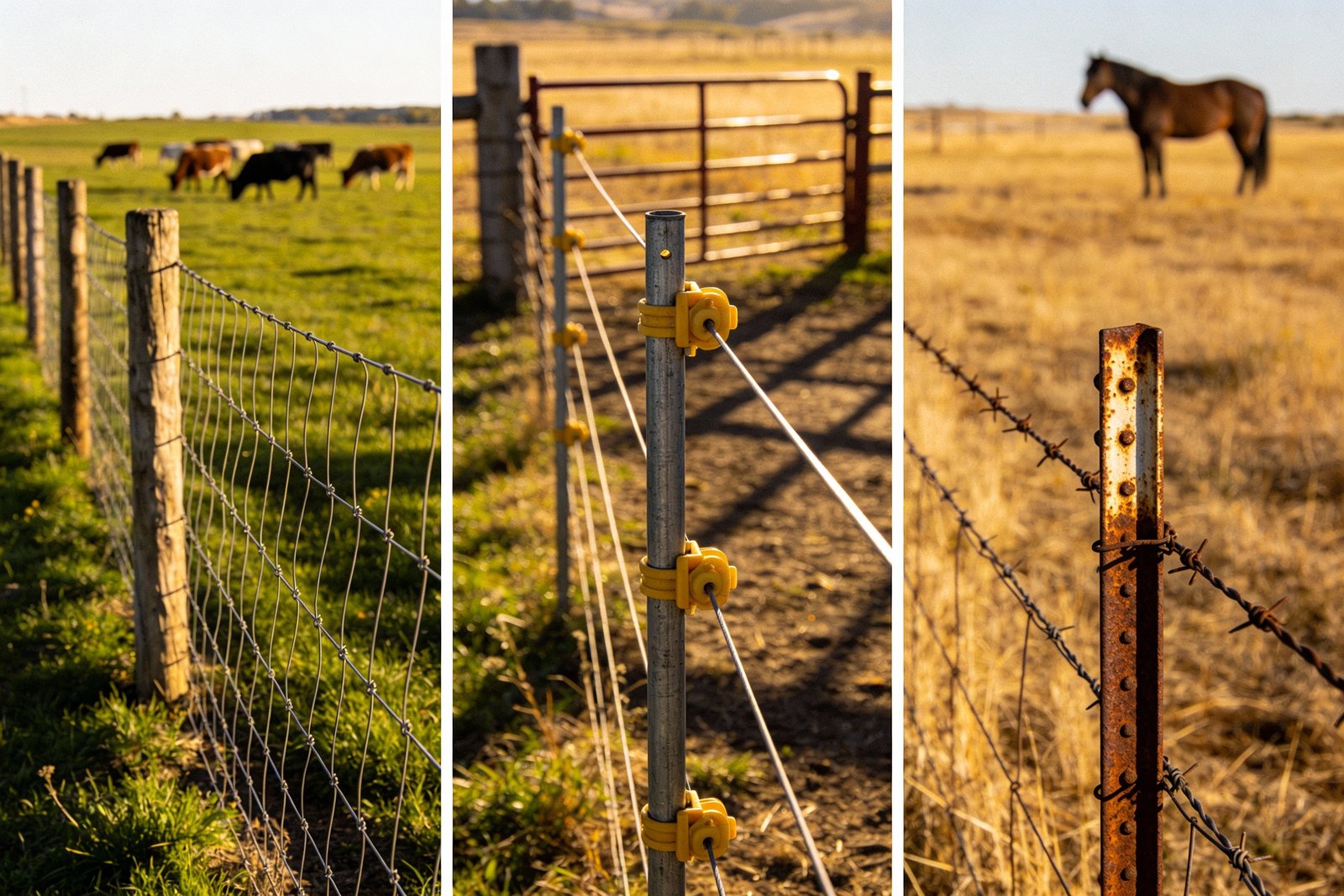
Woven wire functions as a permanent physical barrier requiring minimal ongoing attention once properly installed, while electric systems demand regular voltage monitoring, grounding system maintenance, and vegetation control to prevent shorts. Electric fencing excels in temporary applications and rotational grazing scenarios where fence relocation occurs frequently. However, drought conditions reduce ground conductivity, compromising shock effectiveness. Dense vegetation or heavy snow can ground out electric systems, creating containment failures during critical periods. Woven wire maintains consistent performance independent of weather conditions or ground moisture levels.
Barbed wire represents the traditional perimeter solution for cattle operations, offering low material cost and straightforward installation. However, the exposed barbs create injury potential for livestock and humans, particularly in high-traffic areas or facilities handling show animals. Woven wire eliminates this hazard while providing superior containment for mixed livestock operations including sheep, goats, or horses. The mesh pattern prevents animals from getting heads or legs caught, reducing veterinary incidents. This safety advantage proves particularly valuable for operations maintaining liability insurance or hosting public activities.
Cost analysis must account for total lifecycle economics rather than initial material expenditure alone. Woven wire commands higher upfront investment than barbed wire or basic electric systems but delivers extended service life with minimal maintenance. High-tensile woven wire installations properly executed with Class 3 galvanization can exceed 25 years of functional service, while barbed wire may require replacement at 15-20 years and electric systems necessitate ongoing component replacement. Labor for repairs, re-tensioning, and vegetation management accrues over time, favoring low-maintenance permanent barriers for perimeter applications. Full economic and performance comparison is available in the dedicated comparative resources linked below.
Maintenance Protocols & Long-Term Performance
Properly installed woven cattle fence systems deliver 20-30 years of functional service when subjected to appropriate maintenance protocols. Routine inspection cycles identify emerging issues before they escalate into containment failures—wire breaks from fallen trees, post movement in shifting soil, staple pullout from freeze-thaw cycling, or localized corrosion at ground contact points. Seasonal maintenance addresses vegetation encroachment along fence lines, tension verification after temperature extremes, and prompt repair of damage from wildlife, livestock pressure, or weather events. Understanding common failure modes and implementing preventive maintenance extends fence lifespan while minimizing emergency repairs and livestock escape incidents. Systematic attention to fence condition represents a fundamental component of effective livestock management and property security.
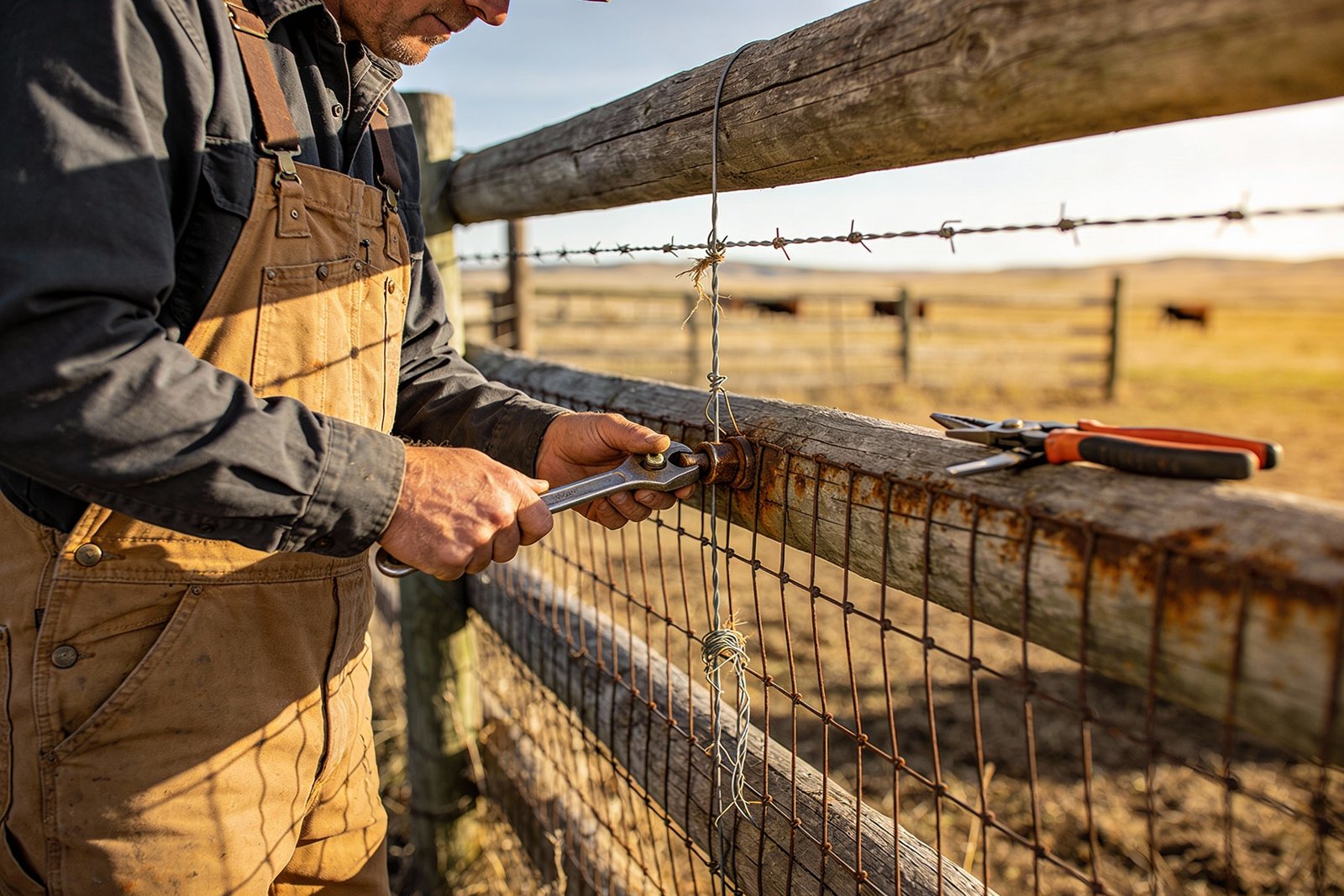
Spring and fall inspection protocols provide optimal timing for comprehensive fence evaluation. Spring assessments identify winter damage from ice loading, snow pressure, falling branches, and freeze-thaw ground movement. Post-winter inspection catches issues before turning livestock onto fresh pasture. Fall evaluation prepares fencing for winter stress, addressing weak points that might fail under snow accumulation or during low-supervision winter months. These biannual inspections typically require 1-2 hours per mile of fence line, representing minimal investment relative to the cost of livestock escape or predator breach.
Common failure modes include corner post lean resulting from inadequate bracing or insufficient depth, wire breaks at splice points or rust-through locations, and post rot at ground level after extended service. Fixed knot systems resist wire slippage that can plague hinge joint installations subjected to sustained pressure. Monitoring tension consistency along fence runs identifies sections requiring attention before complete failure occurs. Addressing minor issues during routine maintenance prevents cascading failures that compromise entire fence sections.
Repair techniques for woven wire vary with damage extent and location. Single wire breaks respond to splice sleeves or wrap-around repairs, while extensive damage may necessitate panel replacement. Maintaining inventory of common repair components—splice sleeves, fence clips, staples, and wire remnants matching installed specifications—enables rapid response to unexpected damage. Professional fence contractors can execute major repairs more efficiently than farm labor for complex situations, but routine maintenance remains practical for most operators with basic tools and understanding of tensioning principles. Detailed maintenance schedules and repair procedures are documented in the comprehensive guide linked below.
Navigate Your Next Steps in Fence System Planning
This overview has mapped the structural, material, and operational landscape of woven cattle fence systems—from knot mechanics and installation methodology to specification frameworks and maintenance protocols. The depth of your fence system understanding now supports informed exploration of specific implementation paths aligned with your property requirements.
For comprehensive system selection guidance, examine the detailed fence specification and decision framework. To model project economics and resource requirements, access the cost estimation and planning tools. When ready to understand installation sequences and construction techniques, review the complete installation methodology documentation.
Questions about your specific terrain conditions, livestock requirements, or regional considerations? Connect with fence system specialists who can provide site-specific guidance based on your operational context and management objectives.