
Woven Wire Fence vs Electric Fence for Cattle: Complete Comparison Guide (2026)
Executive Summary
Woven wire fencing and electric fencing represent two fundamentally different approaches to cattle containment in modern ranching. Woven wire provides durable physical barriers through high-tensile steel mesh construction, while electric fencing relies on psychological deterrence through intermittent electrical pulses. Each system offers distinct advantages and limitations that ranchers must carefully evaluate based on farm scale, budget constraints, livestock types, and long-term management objectives.
1. Basic Principles and Structural Characteristics
Woven Wire Fence
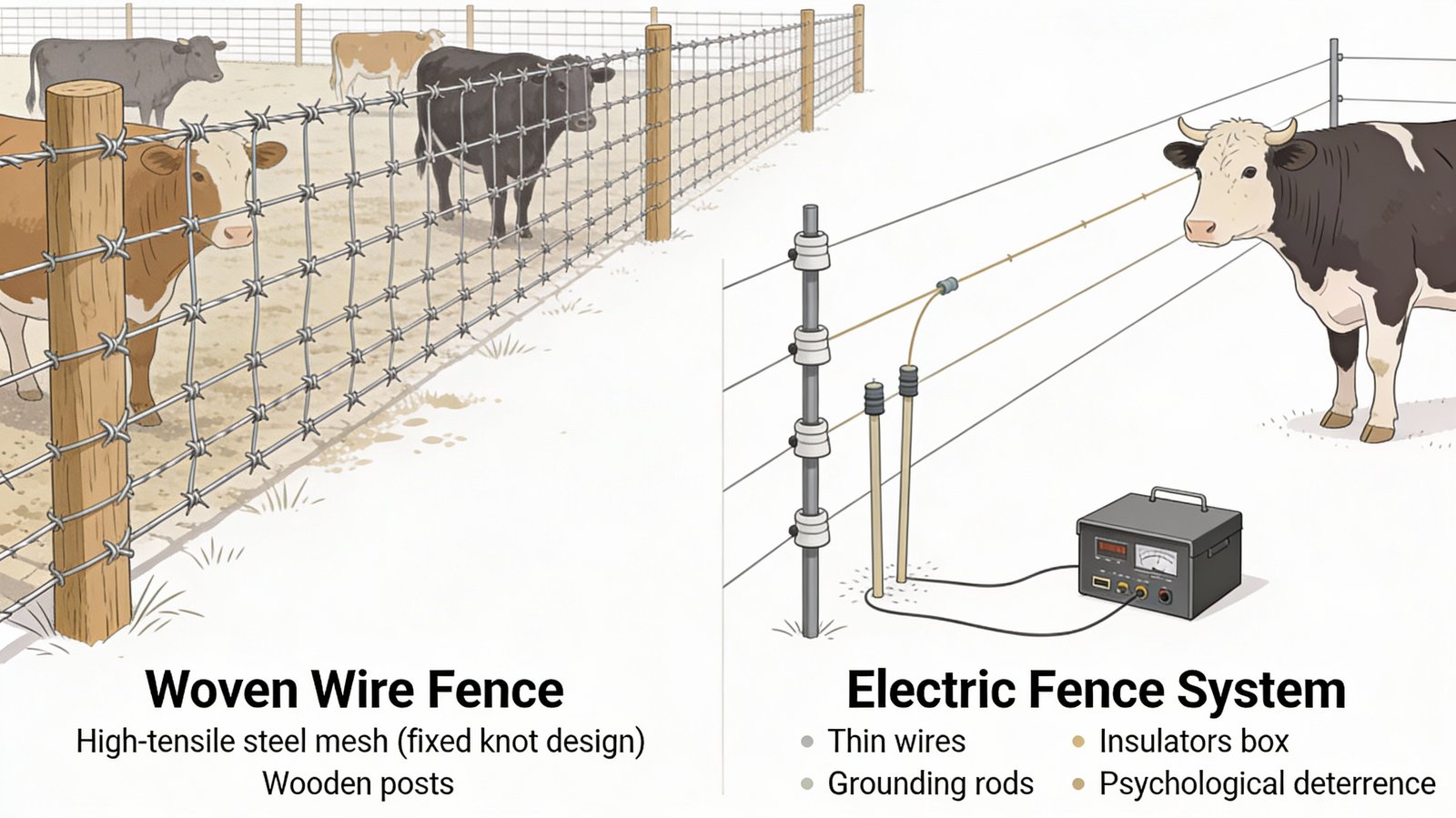
Woven wire fencing consists of high-tensile steel wires interwoven with horizontal line wires and vertical stay wires (called “stays”) to create a mesh grid system[2][19]. Key structural characteristics include:
- Construction Method: Vertical stay wires (spaced 2-12 inches apart) secure horizontal wires, with tighter spacing at the bottom (1.5 inches) and wider spacing at the top (up to 10 inches)
- Wire Specifications: Utilizes 12.5 gauge high-tensile steel wire with single-strand breaking strength of approximately 1,380 pounds—2.75 times stronger than traditional low-carbon steel wire fencing rated at 500 pounds[20]
- Fixed Knot Design: Premium styles employ “fixed knot” construction where wires wrap around both vertical and horizontal lines, delivering superior vertical strength[20]
- Surface Treatment: Class 3 hot-dip galvanization process provides uniform thickness and exceptional corrosion resistance
Electric Fence
Electric fencing creates psychological barriers by delivering high-voltage, low-amperage intermittent pulses to livestock[11]. The operational mechanism includes:
- Power System: Composed of high-voltage charger (typically 9kV+), grounding system, and conductive wire[11]
- Working Principle: Current travels through wire; when animals make contact, the circuit closes, producing brief but noticeable stinging sensation[11]
- Psychological Effect: Animals develop conditioned response after one to two shock experiences, subsequently avoiding fence contact[11]
- Maintenance Mechanism: Intermittent current pulses (typically several times per second) result in relatively low energy consumption
2. Performance Comparison Analysis
2.1 Physical Strength and Durability
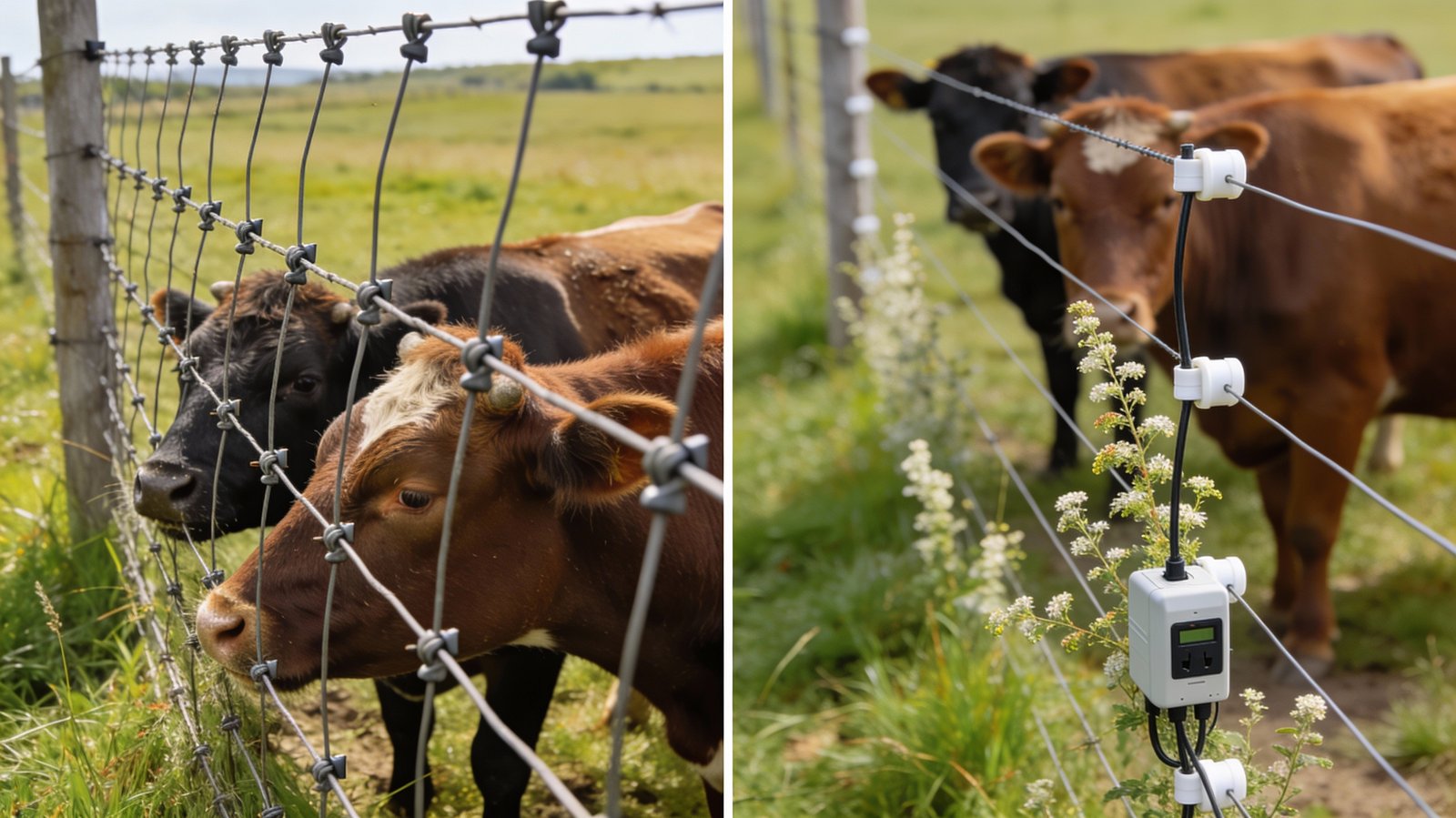
The superior performance of woven wire fencing stems from the inherent strength of its wire structure[2]. Single high-tensile wire breaking strength far exceeds traditional materials, while the fixed knot design ensures tight connections between wires, enabling the entire system to resist sustained pressure and impacts. This characteristic proves particularly critical when defending against feral hogs and other destructive animals[20].
Electric fencing possesses relatively lower physical strength, with effectiveness entirely dependent upon continuous electrical supply and animal psychological state. Once power interrupts or animals learn to ignore shocks (particularly breeding stallions or agitated bulls), system containment rapidly diminishes[11].
2.2 Livestock Type Adaptability
Woven wire fencing performs optimally for:
- Cattle (especially bulls requiring higher strength)[6]
- Sheep (small mesh spacing prevents head entrapment)
- Wildlife management areas[17]
- Predator defense scenarios[8]
Electric fencing performs optimally for:
- Temporary divisions in rotational grazing systems[11]
- Horse operations (combined with physical fencing)[21]
- Small-scale livestock management
- Routine containment of mature, healthy cattle
3. Advantages Analysis
Core Advantages of Woven Wire Fencing
1. Long-term Value Proposition
Although initial investment is higher, fixed knot high-tensile fencing delivers service life three times that of traditional fencing[20]. When calculating total cost of ownership (TCO), this option typically proves most economical. The 30-year cost comparison per mile of fencing demonstrates that woven wire fencing achieves the lowest per-unit cost[20].
2. Minimal Maintenance Burden
High-quality woven wire fencing requires essentially no maintenance. Traditional fencing and electric fencing demand regular inspections, wire repairs, and charger maintenance, whereas woven wire fencing requires no intervention for extended periods after installation[20]. This represents significant labor savings, as documented in our comprehensive cattle fence maintenance requirements guide.
3. Effective Feral Hog Prevention
The tightly woven mesh structure, especially smaller spacing designs, effectively prevents feral hogs from digging and breaching[20]. This constitutes a key reason many South American and southern U.S. ranchers select this fencing type.
4. High Grazing Flexibility
Woven wire fencing permanently defines grazing areas, supporting various grazing management systems without dependence on equipment maintenance or energy supply[8].
5. Multi-species Compatibility
A single woven wire fence safely contains multiple livestock types (cattle, sheep, horses, pigs), preventing inter-species injuries[8].
Core Advantages of Electric Fencing
1. Installation Speed and Flexibility
Electric fencing installs most rapidly, particularly for temporary or movable fencing. Posts can be quickly inserted into ground with wire tensioned and activated immediately[11].
2. Low Initial Capital Investment
Per-unit-area material costs run far lower than woven wire fencing, especially in small-scale applications[11].
3. Easy Adjustment and Expansion
Rotational grazing systems can quickly reconfigure electric fencing as needed, supporting efficient grazing management and land recovery[11].
4. No Post Spacing Limitations
Electric fence posts can be spaced much farther apart (15-20 feet), whereas woven wire typically requires 6-foot spacing, reducing material requirements[20].
4. Disadvantages and Limitations
Primary Disadvantages of Woven Wire Fencing
Primary Disadvantages of Electric Fencing
5. Cost and Economic Analysis
Initial Investment Costs
Based on typical U.S. southern farm cost estimates (per mile of 1,320 feet)[20]:
30-Year Total Cost of Ownership (TCO)
Considering maintenance, repairs, and replacements:
- Barbed Wire: $3,500-4,500/mile (requires 2-3 complete replacements)
- Woven Wire: $2,000-2,500/mile (1-1.5 replacements, low maintenance)
- High-Tensile Fixed Knot: $1,800-2,200/mile (1 replacement or none required)[20]
- Electric Fence: $3,200-4,000/mile (requires ongoing maintenance and 3-4 charger replacements)
Conclusion: Although high-tensile woven wire presents higher initial costs, it achieves the lowest per-unit cost over a 30-year cycle. Ranchers seeking to compare fence installation costs for their specific operation should utilize comprehensive cost calculators that account for long-term maintenance requirements.
6. Maintenance and Durability
Woven Wire Fencing
Expected Maintenance (Annual):
- Visual inspection: Once per quarter (20 minutes)
- Emergency repairs: Based on fallen trees or animal damage, average once every 2-3 years
- Component replacement: Extremely rare, only in cases of severe damage
Key Durability Indicators:
- Wire under galvanized protection: 20-30 years without significant corrosion[2]
- Class 3 hot-dip galvanization: Thickness 0.80-1.50 oz/sq ft, provides long-term protection[20]
- Elongation rate <1%, stable against wind force and temperature variations[20]
Electric Fencing
Expected Maintenance (Annual):
- Monthly charger inspection (ensure indicator light illuminated)
- Quarterly wire grounding inspection and vegetation clearing
- Regular hoof track and water drainage maintenance to preserve grounding effectiveness
- Immediate broken wire repair (system sensitivity-dependent)
- Charger replacement cycle: 5-10 years
Durability Limitations:
- Wire corrosion accelerates rapidly (ordinary steel shows significant rust within 2-3 years)
- Stainless steel wire improves durability but increases costs 50-80%
- Insulation aging reduces shock effectiveness (noticeable decline within 3-5 years)
7. Application Scenarios and Selection Framework
Optimal Uses for Woven Wire Fencing
- Perimeter and Permanent Fencing: Farm boundaries, highway-adjacent areas, property line divisions
- High-Value Livestock Areas: Bull pen containment, breeding herd management
- Wildlife Defense: Farms requiring predator defense and feral hog prevention
- Multi-Species Operations: Farms raising cattle, sheep, horses, and pigs simultaneously
- Low-Maintenance Priority: Large-scale farms with limited labor resources
Optimal Uses for Electric Fencing
- Rotational Grazing Systems: Temporary subdivision of established fence areas for seasonal rotation[11]
- Small-Scale Supplementation: Enhancing containment strength of low-pressure permanent fencing
- Horse Supplementation: Used in combination with wooden or pipe fencing
- Temporary Restrictions: Grass-fed areas, newborn livestock zones
- Mobile Grazing: Precision agriculture and ecological restoration projects
8. Comprehensive Scoring Matrix
9. Best Practice Recommendations
For New Farm Establishment (0-10 Year Planning)
Recommended Solution: High-Tensile Fixed Knot Woven Wire Fencing
- Rationale: One-time installation, 30 years without major repairs, optimal ROI
- Supplementation: Key rotational grazing areas can add electric fencing for daily subdivision, reducing overall costs
- Investment Return: Amortized cost only $2-3 per head of cattle annually
- Installation Guidance: Follow our detailed woven wire fence installation process for optimal results
For Existing Fence Upgrades
Three-Tier Progressive Strategy:
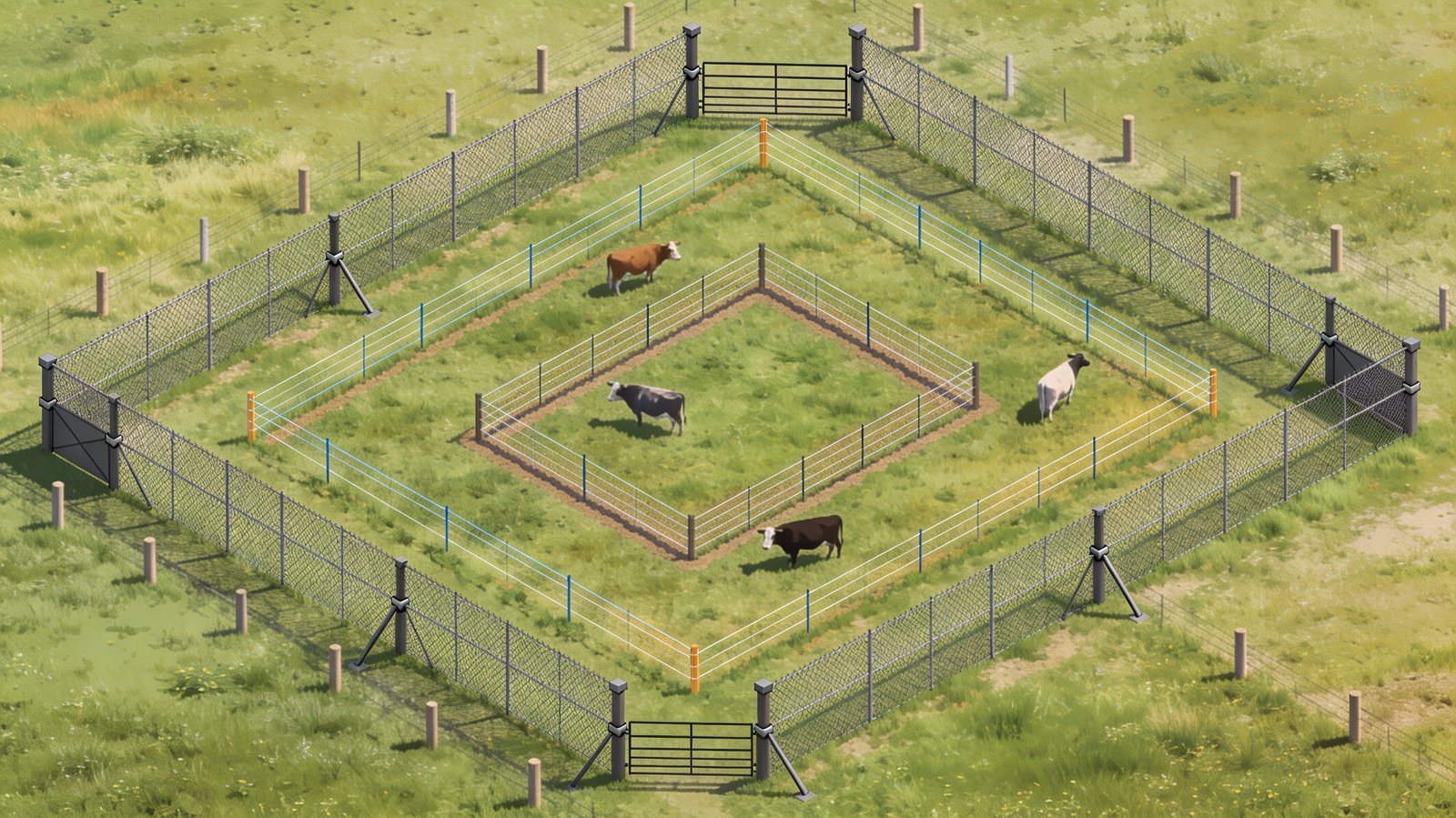
- Tier 1: Perimeter and high-pressure areas use high-tensile woven wire (permanent)
- Tier 2: Interior grazing areas use electric fencing (flexible rotation)
- Tier 3: Special scenarios (dangerous animals, calving areas) use supplementary electric wire or mesh reinforcement
Material Selection Standards
10. Key Decision Checklist
Before making final fencing decisions, ranchers should confirm the following considerations:
- ☐ Budget Range: Can initial investment accommodate woven wire costs?
- ☐ Time Horizon: How many years do you plan to operate this farm? (10+ years favors woven wire)
- ☐ Animal Types: Does your operation include bulls, feral hogs, or multi-species mixed grazing?
- ☐ Maintenance Capacity: Do you have resources for regular electric fence maintenance inspections?
- ☐ Terrain Complexity: Do steep slopes, wooded areas, or wetlands affect installation?
- ☐ Weather Conditions: Does dry climate affect electric fence grounding effectiveness?
- ☐ Adjacent Land Risks: Do you need defense against wildlife or neighboring livestock?
- ☐ Regulatory Requirements: Are there local regulations specifying fence types?
Conclusion
Woven wire fencing and electric fencing represent two fundamentally different agricultural philosophies. Woven wire fencing constitutes a physical barrier solution that delivers optimal cost-effectiveness over 30-year cycles through exceptional durability and zero-maintenance requirements. Electric fencing serves as a flexible tool most suitable for temporary subdivision, rotational grazing management, and supplementary containment.
For ranchers pursuing long-term stability, low maintenance costs, and comprehensive animal control, high-tensile fixed knot woven wire fencing represents the intelligent choice. For operations requiring flexibility to respond to seasonal variations and grazing system innovation, electric fencing as a supplementary tool possesses irreplaceable value.
Optimal Strategy: Employ a layered fencing system—use woven wire to define farm structure, use electric fencing to achieve interior management flexibility, realizing the perfect combination of physical strength and management efficiency.
Ranchers seeking comprehensive guidance should explore our complete resource library on woven cattle fence wire systems for additional technical specifications, installation guidelines, and cost optimization strategies.
Report Compilation Sources: This comprehensive analysis draws upon authoritative research from the University of Florida Institute of Food and Agricultural Sciences (UF IFAS), Tejas Ranch Fence cattle industry best practices, ProFence LLC industry standards, American rancher forums (CattleToday.com and Reddit Ranching communities), and agricultural engineering academic journals to provide evidence-based recommendations for livestock fencing decisions.