
Cattle Fence Wire Buying Guide: Complete Decision Framework for Livestock Operations
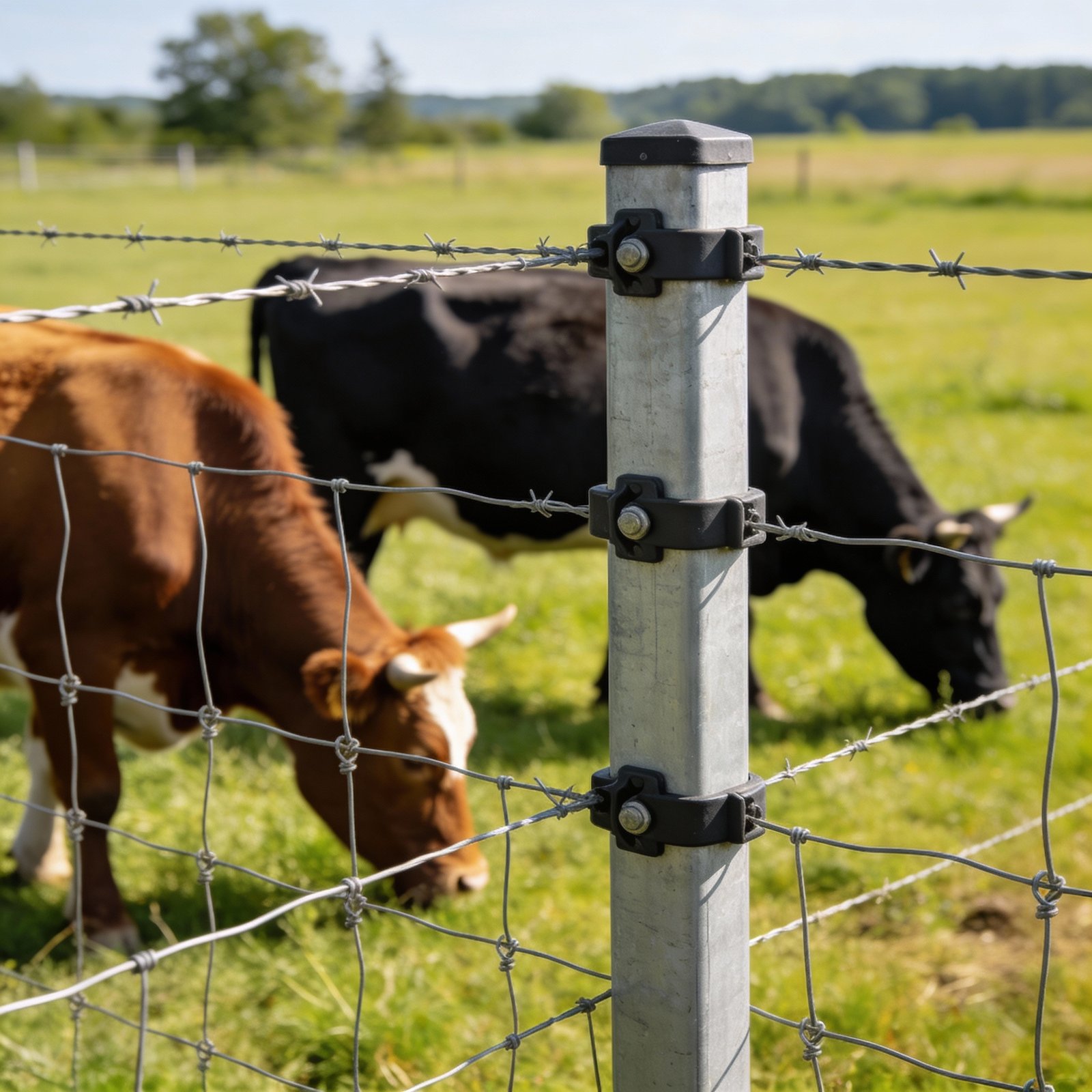
Selecting the right cattle fence wire represents one of the most critical buying decisions for modern livestock operations. The choice impacts not only immediate containment effectiveness but also long-term operational costs, animal welfare, and return on investment over decades of service. This comprehensive buying guide synthesizes industry standards, engineering specifications, and practical field experience to provide ranch operators with a systematic framework for evaluating options, comparing alternatives, and selecting cattle fence wire systems that match their operation’s requirements.
Unlike generic fencing overviews, this buying guide prioritizes quantitative decision criteria you can use to compare options: breaking strength differentials, galvanization class longevity, annualized lifecycle costs, and documented ROI case studies. Whether managing 50 head on rolling terrain or 5,000 across multiple sections, the principles outlined here enable data-driven wire selection that optimizes both upfront capital deployment and 30-year total cost of ownership.
Guide Scope & Methodology
This buying guide draws from ASTM industry standards (A116, A121, A854), university extension research, manufacturer technical specifications, and field performance data from commercial ranching operations. All cost analyses reflect 2026 market conditions with documented sources. Wire specifications include laboratory-tested breaking strengths and independently verified coating longevity projections.
Part I: Fence Wire Types & Technical Specifications
1.1 Primary Fence Wire Categories
Barbed Wire Fencing
Barbed wire remains the most widely deployed cattle containment technology since its introduction in the 1870s, consisting of two or more steel strands twisted together with barbs spaced at 4-5 inch intervals. The fundamental design creates both a physical barrier and psychological deterrent through controlled discomfort.
Advantages: Barbed wire delivers cost-effective perimeter control at approximately $4.74 per linear foot, with straightforward installation requirements suitable for large-area applications. The visual presence combined with physical barbs effectively deters predators while providing clear boundary demarcation. Installation complexity remains low, making it accessible for operations with limited specialized equipment.
Limitations: Injury risk to agitated livestock presents the primary concern, particularly lacerations during stampede events or aggressive bull behavior. Horses face severe injury potential, with barbed wire cited as a leading cause of preventable equine trauma. Tensile properties limit tolerance for heavy impact or leaning pressure. Maintenance requirements fall in the moderate range with rust inspection and tension adjustment necessary annually.
Optimal Applications: Large beef cattle operations requiring extensive perimeter containment, predator exclusion zones, budget-constrained installations across hundreds of acres, and properties without equine populations. For buyers comparing options at this stage, our woven wire vs barbed wire cattle fence analysis helps evaluate performance trade-offs between these two systems.
Woven Wire Fence Systems
Woven wire construction employs horizontal line wires interwoven with vertical stay wires through either hinged or fixed knot connections, creating rectangular mesh openings with superior structural integrity. This category includes both standard low-carbon and high-tensile configurations, each offering distinct performance characteristics.
ASTM A116 Compliance
All woven wire specifications reference ASTM A116 standards for metallic-coated steel woven wire fence fabric. Compliant products specify top/bottom line wire gauge (typically 11ga), fill wire gauge (14.5ga), stay wire spacing (≤12 inches), and minimum coating weight. Verify manufacturer certifications before large-volume purchases.
Technical Specifications: Standard configurations use 11-gauge wire for top and bottom lines, 14.5-gauge for intermediate and stay wires, with stay spacing not exceeding 12 inches. Height options range from 26 to 49 inches depending on livestock type. High-tensile variants allow increased post spacing up to 25 feet versus 16 feet maximum for standard woven wire.
Advantages: Woven wire provides superior physical containment with mesh openings sized to prevent hoof entrapment while blocking small predator access. Properly installed systems tolerate significant impact force from large animals or falling debris. Long service life with minimal maintenance characterizes high-tensile installations. The dense weave pattern effectively contains newborn calves while resisting canine predation.
Limitations: Material costs approximately 15% higher than barbed wire at $5.46 per foot ($35,118 per mile). Installation complexity increases substantially on irregular terrain, requiring specialized stretching equipment and technique. Livestock hoof entrapment between line wires presents a recognized hazard. Non-stretch high-tensile wire can inflict severe lacerations during high-speed impact events.
Optimal Applications: High-value breeding stock operations, predator-prone environments requiring maximum security, small livestock (sheep, goats) with climb/squeeze escape tendencies, and containment zones where public liability concerns justify premium investment. When making a buying decision, understanding different connection methods is critical—compare fixed knot, hinge joint, and S-knot woven wire configurations for structural performance differences before selecting a product.
High-Tensile Smooth Wire Fencing
High-tensile technology employs spring-steel wire with 170,000-200,000 psi tensile strength, representing a 3x improvement over conventional low-carbon wire. This elevated strength permits extended post spacing (80-100 feet) and maintains tension across temperature extremes without permanent deformation.
Advantages: Lifecycle cost analysis reveals high-tensile as the superior economic choice with annualized costs of $1,164 per mile versus $2,116 for barbed wire or $3,512 for low-carbon woven wire. The smooth wire surface reduces livestock injury risk compared to barbed alternatives. Shape memory characteristics maintain consistent tension despite temperature fluctuations or animal pressure. Maintenance requirements approach near-zero after proper installation. Post spacing up to 100 feet significantly reduces material costs.
Limitations: Initial capital outlay ranges 10-20% above conventional systems. Installation demands specialized knowledge of tensioning systems and proper brace construction. Poor visibility to livestock requires training period or electrification for psychological deterrence. H-brace engineering becomes critical—inadequate bracing leads to system-wide failure.
Optimal Applications: Large-scale operations prioritizing long-term ROI, flat to moderately rolling terrain suitable for extended post spacing, electrified perimeter systems combining physical and psychological barriers, and operations seeking minimal ongoing maintenance obligations. Buyers evaluating high-tensile systems can use the how to install woven cattle fence wire guide to understand practical implications of their selection without turning this page into an installation manual.
Electric Fence Systems
Electric fencing operates through psychological deterrence rather than physical obstruction, delivering 3,000-8,000 volt pulses at 1-second intervals. The technology trains livestock to avoid boundary contact through operant conditioning while reducing physical fence pressure.
Advantages: Capital efficiency dominates electric fence economics, with complete system costs ranging $500-$5,000 versus $30,000+ for permanent alternatives. Minimal post requirements (50-100 foot spacing) further reduce material costs. Rotational grazing flexibility enables rapid paddock reconfiguration. Solar energizer options eliminate power infrastructure requirements for remote pastures. Reduced physical fence pressure extends material lifespan.
Limitations: Continuous power dependency creates vulnerability during outages. Initial livestock training period necessary—untrained animals may breach before learning avoidance behavior. Drought conditions compromise soil conductivity and grounding efficiency. Vegetation contact dissipates voltage and requires ongoing maintenance. No physical barrier exists if energizer fails.
Optimal Applications: Rotational grazing systems requiring frequent boundary changes, temporary containment needs, supplement to permanent perimeter fencing, trained herds with established electric fence respect, and budget-constrained initial establishment phases.
1.2 Wire Gauge & Strength Specifications
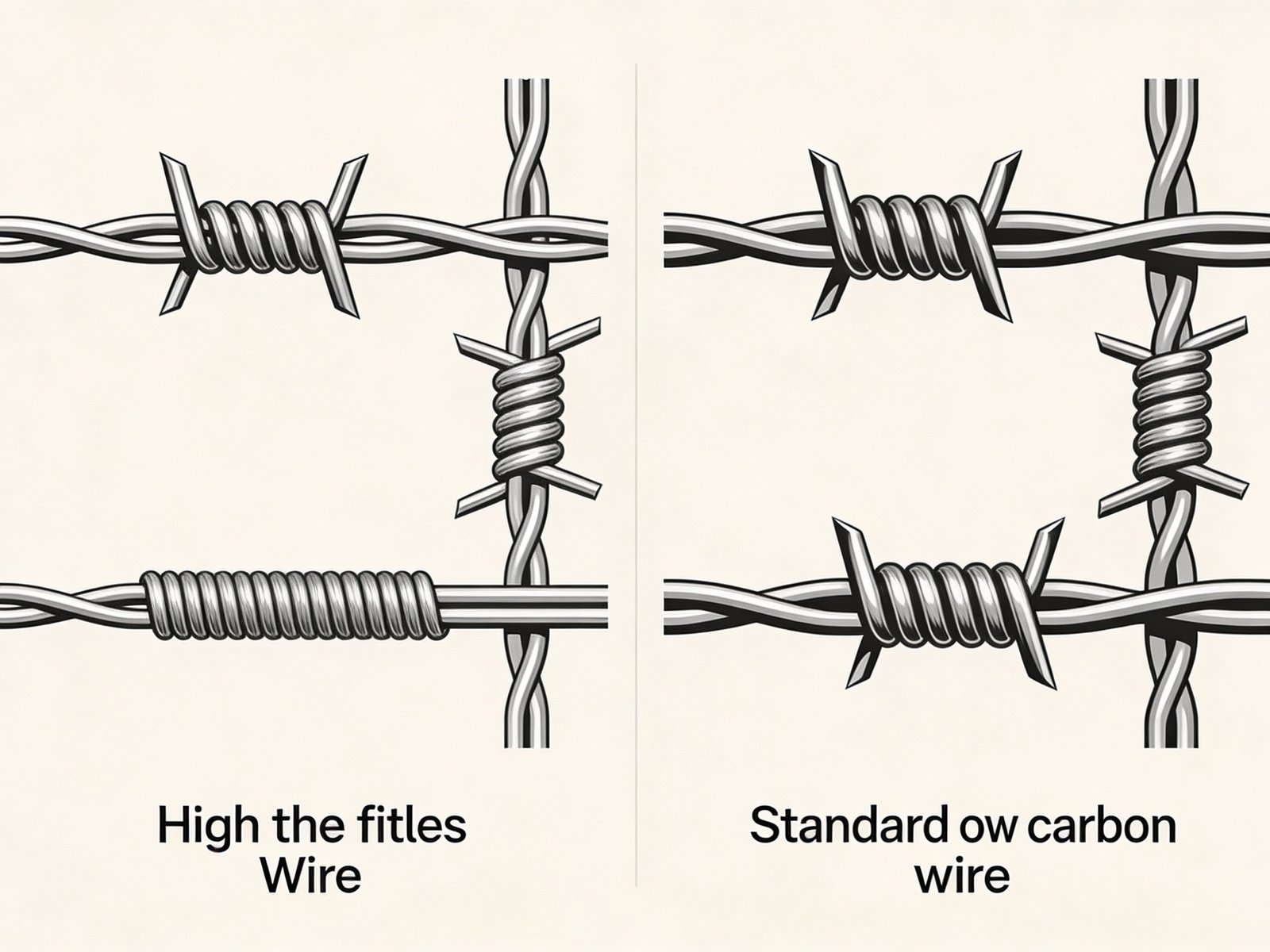
Wire gauge inversely correlates with wire diameter—smaller gauge numbers indicate thicker wire with greater breaking strength. Understanding this specification proves critical for evaluating whether a given wire option has enough capacity for your containment requirements and expected stress loads when you are choosing between products.
| Gauge | Wire Type | Diameter | Breaking Strength | Elongation | Primary Application |
|---|---|---|---|---|---|
| 9 gauge | Low-carbon | 3.8mm | 1,200 lbs | 13% | Heavy livestock high-pressure fence |
| 11 gauge | Standard | – | 950 lbs | – | Woven wire top/bottom lines |
| 12.5 gauge | Low-carbon | – | 500 lbs | 13% | Economy barbed/field fence |
| 12.5 gauge | High-tensile | – | 1,500-1,600 lbs | 1.5-2% | Recommended high-tensile systems |
| 14 gauge | High-tensile | – | 800 lbs | 1.5-2% | Premium barbed wire |
| 14.5 gauge | Standard | – | – | – | Woven wire fill/stay wires |
| 15 gauge | High-tensile | 1.70mm | 550 lbs | 1.5-2% | Lightweight barbed wire |
Key Engineering Insight
12.5-gauge high-tensile wire delivers 3x the breaking strength of equivalent-gauge low-carbon wire (1,500 lbs vs 500 lbs) while exhibiting significantly lower elongation (1.5-2% vs 13%). This strength-to-weight ratio enables extended post spacing and superior shape retention, directly translating to reduced material costs and maintenance intervals. For buyers planning projects in high-impact zones, 9-gauge low-carbon wire and 12.5-gauge high-tensile options can be evaluated as premium specifications when reliability is a primary decision criterion.
For detailed specifications across all wire types and gauges, consult our comprehensive cattle fence wire specifications reference.
1.3 Coating Systems & Longevity Engineering
Metallic coating selection represents the single most influential factor in fence wire service life, with the coating you choose extending operational lifespan from 15 years to 50+ years. This section helps you evaluate coating options—beyond basic galvanization—so you can decide which zinc or zinc-aluminum system best fits your climate and corrosion risk.
Galvanized Coating Classifications
Class I Galvanization: Entry-level zinc coating meeting minimum ASTM standards, providing 15-year average service life under moderate climate conditions. Cost-optimized for budget-conscious installations or temporary fence applications. Corrosion resistance adequate for low-humidity, non-coastal environments with neutral soil pH.
Class III Galvanization: Premium zinc coating specification applying 0.80 ounces zinc per square foot of wire surface—triple the coating weight of Class I. Laboratory testing and field performance data support 20-30 year service life projections. This specification represents the recommended standard for most permanent cattle fence installations, balancing cost increment against substantially extended replacement intervals.
Advanced Zinc-Aluminum Alloy Coatings
Class 20 Zinc-Aluminum: Proprietary coating formulation combining 95% zinc with 5% aluminum, leveraging aluminum’s superior oxidation resistance. Expected service life extends to 25-30 years with enhanced performance in challenging environments including high humidity and moderate salinity exposure.
Class 40 Zinc-Aluminum: Premium coating technology offering industry-leading 50-year service life projections backed by manufacturer warranties. The only coating class providing half-century performance guarantees. Justified for coastal installations, acidic soil conditions, and maximum-longevity applications where replacement cost and operational disruption must be minimized.
| Coating Type | Service Life | Corrosion Resistance | Heat Tolerance | Optimal Environment | Relative Cost |
|---|---|---|---|---|---|
| Class I Galvanized | 15 years | Good | Moderate | Mild climate, inland | $ |
| Class III Galvanized | 20-30 years | Excellent | Good | Most environments | $$ |
| Zinc-Aluminum Class 20 | 25-30 years | Excellent | Excellent | Challenging conditions | $$$ |
| Zinc-Aluminum Class 40 | 50 years | Superior | Superior | Coastal/extreme | $$$$ |
| PVC Coated | 15-25 years | Excellent | Good | Wet/chemical exposure | $$-$$$ |
Environmental Coating Selection Criteria
Coastal Regions: Salt spray accelerates galvanic corrosion through chloride-induced pitting. Minimum recommendation: Class III galvanized. Optimal specification: Zinc-aluminum Class 40 for properties within 10 miles of saltwater.
Acidic Soil Conditions: Low pH environments (below 6.0) significantly reduce zinc coating effectiveness. Upgrade to Class III minimum or consider zinc-aluminum formulations for pH below 5.5.
High Humidity Climates: Persistent moisture exposure accelerates oxidation cycles. PVC-coated wire or aluminized options outperform standard galvanization in subtropical and tropical environments with 70%+ average relative humidity.
Arid Environments: Dry climates with low humidity and minimal precipitation allow standard galvanization to achieve or exceed rated service life. In these desert and semi-arid rangeland applications, buyers can generally treat Class I coatings as an adequate, cost-efficient choice when comparing alternatives.
Part II: Fence System Design & Installation Engineering
2.1 Post Systems & Spacing Standards
Post infrastructure represents the structural foundation of any fence system, and understanding these specifications helps buyers decide what post sizes and spacing to budget for when comparing fence wire options. Corner and end posts particularly demand careful attention—these anchor points resist cumulative line wire tension and represent the most common failure points in improperly engineered systems.
Corner & End Post Specifications
Dimensional Requirements: Wood posts demand 6-7 inch diameter (measured at top), with natural taper providing increased ground contact area. Steel pipe alternatives require minimum 2-3/8 inch diameter with 0.154 inch wall thickness. Post length calculation: fence height + burial depth + 2 inches clearance.
Burial Depth Engineering: The fundamental rule states burial depth must equal or exceed top wire height. A 6-foot tall fence requires 6 feet of underground post penetration. This specification prevents rotational failure under sustained line wire tension. Sandy or loose soils necessitate 20-30% additional depth beyond the standard calculation.
Critical Failure Point: Undersized or shallow corner posts represent the #1 cause of catastrophic fence system failure. When corner posts fail, the entire fence section loses structural integrity. Never compromise on corner post specifications—upgrading from 4-inch to 6-inch diameter and adding 2 feet of depth costs $50-75 per post but prevents $5,000+ section rebuilds.
Installation Techniques: Use T-post drivers or hydraulic augers rather than manual sledgehammer installation—impact damage weakens wood fiber structure and creates splitting points. Posts may be set 1-2 inches off vertical, angled away from wire tension direction, providing additional resistance against pull-in forces.
Line Post Spacing Standards
| Fence Type | Recommended Spacing | Key Considerations |
|---|---|---|
| Barbed Wire (Traditional) | 16-20 feet | Historical standard but material-intensive |
| Barbed Wire (Modern) | 10-12 feet | Standard T-post spacing |
| Standard Woven Wire | 16 feet maximum | ASTM specified maximum |
| High-Tensile Woven Wire | 25 feet maximum | Requires proper tensioning |
| High-Tensile Electric | 80-100 feet | Use support battens between posts |
| Cattle Panels | 8-16 feet | Optimal for corrals and small enclosures |
Terrain Adjustments: Flat, uniform terrain permits maximum specified spacing. Reduce spacing 20-30% in rolling terrain, 30-40% in high-wind zones, and up to 50% on steep slopes where soil stability concerns arise. Support battens (lightweight fiberglass or wooden stays) maintain wire spacing between posts in extended-span high-tensile installations without requiring full post installation.
Structural Bracing Requirements: Woven wire fence systems require double-post bracing assemblies every 330 feet along straight runs per ASTM A116 specifications. This additional structural support prevents cumulative tension from causing progressive post lean and eventual system failure.
2.2 Fence Tensioning & Installation Methodology
Tension Requirements by Fence Type
Proper tension represents the difference between a functional fence system and premature failure. Under-tensioned wire sags, creating escape gaps and progressive post lean. Over-tensioned installations stress posts, anchors, and wire itself beyond design limits, causing brittle failure.
| Fence Type | Recommended Tension | Measurement Method |
|---|---|---|
| High-Tensile Smooth Wire | 200-250 lbs per strand | Tension indicator springs |
| High-Tensile (General) | 150-200 lbs | Feel/sound (guitar-string tone) |
| Barbed Wire | 270 kg (≈595 lbs) | Professional tensioning tools |
Tension Indicator Spring Operation: Install on second wire from top. First notch appearance indicates 150 lbs tension—continue tensioning. Second notch appearance signals 250 lbs target tension achieved. All remaining wires should receive equivalent tension, adjusted by feel or sound (properly tensioned high-tensile wire produces a clear tone when struck, similar to guitar string tuning).
Seasonal Tension Adjustment: Initial installation requires immediate tension setting. Annual maintenance includes re-tensioning 1-2 times per year. Spring re-tensioning proves particularly critical after winter contraction cycles. Temperature changes cause metal expansion (summer) and contraction (winter)—high-tensile wire’s low elongation properties maintain more consistent tension across seasons than conventional wire.
Installation Protocol (High-Tensile Systems)
Phase 1: Foundation Infrastructure
- Install all end posts, corner posts, and H-brace assemblies to specified depth
- Allow concrete-set posts to cure minimum 72 hours before wire attachment
- Run guide wire to mark fence line route with surveyor precision
- Install posts at low points and high points first (these prevent upward pull-out and downward crushing respectively)
Phase 2: Wire Installation
- Use spinning jenny wire dispenser to unroll wire coils—dragging wire creates kinks and weak points
- Begin with lowest wire (typically 4-8 inches above grade) and work upward
- Attach wire to end posts using double-wrap crimp sleeves or equivalent rated connectors
- Never compromise on connection hardware—$2 crimps prevent $500 section repairs
Phase 3: Tensioning Process
- Install inline strainers (typically at fence midpoint for runs up to 1/4 mile)
- Attach tension indicator spring to second-from-top wire
- Gradually tension until second notch appears (250 lbs target)
- Tension remaining wires to match using audible tone or feel comparison
Phase 4: Line Post Attachment
- On corner posts and H-braces: secure wire through knot attachment or staple penetration
- On line posts: wire runs on interior side (livestock side) of posts
- Use staples loosely driven—do NOT fully seat staples, leave 1/16-inch gap
- This loose attachment allows thermal expansion/contraction without staple pull-through or wire binding
Staple Specification & Technique
Softwood posts: 1.75-2 inch length, 8 or 9 gauge galvanized with barbed shank for grip
Hardwood posts: 1.5 inch smooth shank staples
Critical technique: Drive staples on horizontal line wires (never through knots). On braces, staple through knot intersections for maximum hold. Stagger staple heights on each post to prevent splitting along a single grain line.
Wire Splicing Techniques
When connecting multiple wire coils, splice integrity directly affects system reliability. Failed splices create weak points that progress to complete wire separation under sustained tension.
Method 1: Crimp Sleeve Connection (Recommended)
- Provides 80%+ of base wire breaking strength per ASTM specifications
- Overlap wire ends minimum 2 inches
- Install two 3/8-inch sleeves or one 3/4-inch sleeve per splice
- Crimp per manufacturer torque specifications using calibrated crimping tool
- Cost: $0.50-1.00 per splice—negligible compared to splice failure consequences
Method 2: Gripple Push-In Connectors
- Convenient field splicing solution at approximately $1.00 per unit
- One-way locking mechanism permits tensioning but prevents loosening
- Each wire strand requires individual Gripple installation
- Useful for repair situations and temporary connections
Method 3: Western Union Wrap (Standard Wire)
- Minimum 8 complete wraps each direction
- Acceptable for low-carbon wire, not recommended for high-tensile applications
- Labor-intensive and provides lower strength retention than mechanical splices
Method 4: Figure-8 Splice (High-Tensile Specific)
- Specialized technique developed for high-tensile wire properties
- Requires specific training—improper execution creates failure point
- Used by professional fence contractors in remote locations without crimping tools
2.3 Terrain Adaptation Techniques
Irregular topography presents the most significant installation challenge, requiring modified techniques to maintain fence integrity across elevation changes, slope transitions, and rock formations. Standard installation methods prove inadequate—terrain-specific approaches prevent premature failure.
Sloped Terrain Installation Methods
Method 1: Racking (Contour-Following)
Fence panels follow natural ground slope with rails tilted to match terrain angle, providing smooth continuous fence line. This approach suits gentle to moderate slopes (10-15 degrees maximum) and rolling terrain with gradual transitions.
Advantages: Eliminates ground-level gaps that permit small animal passage. Aesthetically superior with natural flow following landscape contours. Preferred method for most uneven terrain installations.
Installation Steps:
- Use string line and level to mark slope angle and establish consistent grade
- Measure total elevation change to calculate tilt angle requirements
- Adjust post heights to match slope progression while maintaining vertical post orientation
- Posts must remain perpendicular to earth surface regardless of slope—tilted posts fail under load
- Angle rails to follow terrain contour
Considerations: Slopes exceeding 15 degrees may require rail trimming or custom-length materials. Diagonal installation requires taller posts than flat-ground equivalent to achieve specified fence height.
Method 2: Stepping (Staircase Pattern)
Fence descends slope in discrete horizontal steps, creating staircase profile. Each section remains level with vertical drops between sections. This technique suits steep slopes (exceeding 15 degrees) and dramatic elevation changes.
Advantages: Easier installation than contour-following. Maintains level panel orientation. Compatible with pre-fabricated panel systems.
Limitations: Creates triangular gaps beneath each step transition. Gaps may require fill dirt, landscape timbers, or supplemental barriers to prevent small animal passage.
Installation Steps:
- Mark post locations at varying heights to create step pattern
- Cut posts to appropriate heights for each step elevation
- Install level panels at each step height
- Address gap areas with appropriate fill or barrier materials
Terraced Terrain Special Handling:
- Low steps (80cm-1m height): Single post installation with mesh following ground contour
- High steps (≈3m height): Install separate posts at top and bottom of terrace wall. Each level surface receives independent mesh section, functioning as distinct fence segments
Rocky Terrain Installation Techniques
Rock formations and shallow bedrock prevent conventional post-hole digging, requiring specialized equipment and alternative anchoring methods.
Drilling Through Rock: Employ power augers with carbide or diamond-tipped rock bits to penetrate bedrock and create deep, stable post holes. While equipment rental costs increase, the resulting installations provide superior stability compared to surface-mounted alternatives.
Surface-Mounted Alternatives (When Drilling Impractical):
- Post anchors: Metal brackets secured to rock surface with expansion bolts or epoxy anchoring systems. Posts attach to above-ground anchors rather than ground penetration
- Concrete pads: Pour concrete footings (minimum 18-inch diameter, 12-inch depth where possible) to provide stable base for surface-mounted posts
- Steel T-posts: Driven posts provide alternative to wood posts in areas with soil pockets between rock outcrops
Stability Enhancement Systems:
- H-braces and diagonal bracing: Increased bracing resists movement in unstable soils and erosion-prone slopes
- Deep-set posts: Where drilling possible, extend burial depth 3-4 feet or 50% beyond standard specification to resist downslope soil movement
- Concrete encasement: Pour concrete around posts for additional support, particularly valuable on erodible slopes and loose rocky soils
Installation Planning: Post positions may require adjustment when encountering subsurface rock. Maintain straight fence line using string guides—better to relocate posts slightly than compromise alignment. The saying “better too far than too near” applies when spacing around obstacles.
Irregular Terrain Adjustments
Ground Leveling: Fill low areas with compacted soil or crushed rock to create more uniform base. Minor grading investments prevent ongoing fence problems and simplify installation substantially.
Mesh Deformation/Cutting: Slight elevation changes permit mesh deformation (loose weave materials) or mesh cutting (welded rigid materials) at initial and terminal fence sections. Diagonal installation naturally stretches mesh—account for this in material calculations.
Variable Post Heights: Maintain consistent burial depth while varying above-ground height. This creates step-like appearance while ensuring uniform structural foundation for all posts.
Contour Following: Rails and mesh naturally follow ground contours, with heights and angles adjusted to match terrain. This organic approach works well for gentle rolling land without dramatic elevation changes.
Critical Point Post Installation Priority: Install posts at low points first (these resist upward pull from tensioned wire on upslope sides) and high points second (these resist downward crushing from tensioned wire on downslope sides). This sequence prevents post displacement during tensioning operations.
Part III: Safety Considerations & Livestock Compatibility
3.1 Species-Specific Fence Requirements
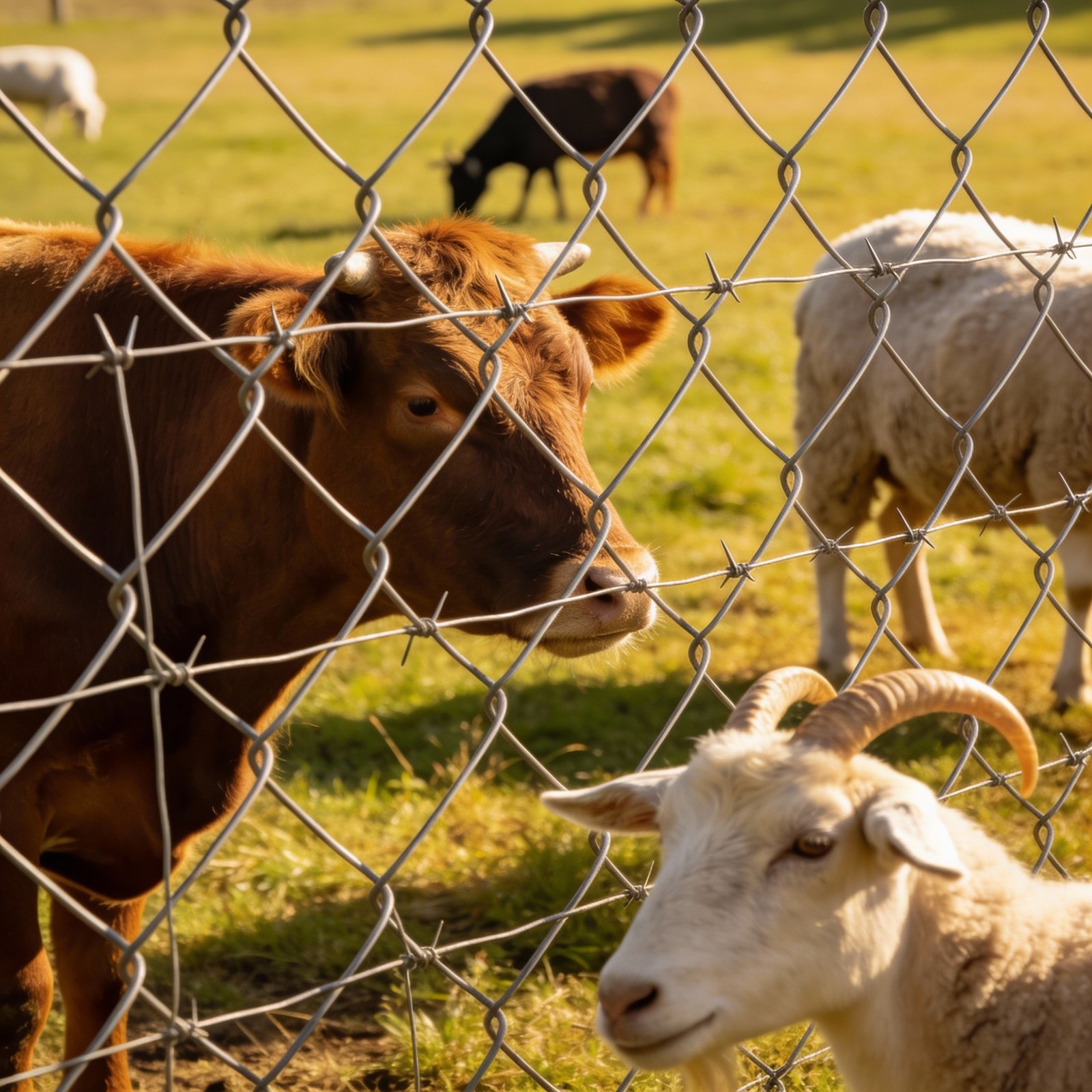
Livestock behavioral characteristics, physical capabilities, and injury vulnerability vary dramatically across species. When you choose cattle fence wire, fence systems must be evaluated against the specific containment challenges and safety requirements of each animal type. Incompatible fence selection remains a primary cause of livestock injury, escape events, and operational liability exposure.
Beef Cattle Specifications
Behavioral Profile: Cattle exhibit poor vision and depth perception, potentially failing to detect thin wire until contact occurs. Natural herding instinct creates pressure waves during group movement, concentrating force against fence lines. Bulls display aggressive fence testing during breeding season. Cattle habitually lean and scratch against vertical surfaces, creating sustained horizontal loading.
Recommended Fence Systems:
Primary Option 1: High-Tensile Fixed-Knot Fence
- Durable yet flexible construction tolerates leaning pressure without permanent deformation
- Electrification option adds psychological deterrent layer
- Superior long-term cost efficiency with 30-year service life
- Minimal maintenance requirements post-installation
Primary Option 2: 4-5 Strand Barbed Wire
- Traditional proven technology with century-long track record
- 48-60 inch height with 4-5 wire strands maintains security
- Barb points typically insufficient to penetrate thick cattle hide—function primarily as psychological deterrent
- Lower initial cost than woven alternatives
Height Requirements: Minimum 48 inches (4 feet) absolute specification for beef cattle containment. Recommended range: 48-52 inches. Bottom wire positions at 12 inches above grade. Top wire at 52 inches. For 6-strand configurations, equal 8-inch spacing provides optimal distribution: 12″ – 20″ – 28″ – 36″ – 44″ – 52″ from ground to top.
Woven Wire Specifications (When Utilized):
- Minimum 32-inch mesh height per ASTM standards
- Top and bottom line wires: 11-gauge
- Fill and stay wires: 14.5-gauge
- Stay wire spacing: 12 inches maximum
- Optional top barbed wire (positioned 23 inches below top) deters leaning behavior
Sheep Specifications
Behavioral Profile: Docile temperament with strong flocking instinct. Panic response triggers mass movement—entire flock runs as unit when threatened. Zero defensive capability against predators creates vulnerability. Group momentum during flight generates substantial cumulative fence impact despite individual animal size.
Recommended Fence System: Woven mesh fence exclusively—other options provide inadequate security.
Specifications:
- 12-gauge galvanized woven mesh with 2×4 inch opening size
- Small mesh prevents head/horn entrapment while blocking coyote/dog penetration
- Breaking strength adequate to resist predator forcing and panic-driven flock pressure
- Height: 48-60 inches (4-5 feet) standard recommendation, 40-48 inches minimum acceptable
Special Considerations: Thick wool coat renders barbed wire ineffective—barbs fail to contact skin through fleece. Predator control represents primary design consideration—fence must exclude canine predators while containing flock. Group pressure dynamics require structural integrity exceeding individual animal size suggestion.
Goat Specifications
Behavioral Profile: Extreme intelligence combined with insatiable curiosity. Legendary escape capability through climbing, jumping, squeezing, and sustained pushing. Bipedal standing behavior to browse elevated vegetation. Persistent systematic testing of every fence weakness until successful breach achieved. Head-butting behavior (particularly when segregating groups) creates focused impact loads.
Recommended Fence System: Woven mesh with mandatory electric wire enhancement—physical barrier alone proves insufficient.
Specifications:
- 12-gauge galvanized woven mesh, 2×4 inch openings
- Tight wire spacing: 1-2 inch maximum prevents body squeezing
- Electrified offset wires at multiple heights provide psychological deterrent—goats quickly learn to avoid electric shock
- Height: 48-60+ inches depending on breed. Standard 4-foot fence frequently inadequate
- Small breeds: 48 inches possibly sufficient
- Standard/large breeds: 60 inches minimum, additional top electric wire strongly recommended
Goat Containment Reality: If a goat’s head fits through an opening, the entire body will follow. Barbed wire can inflict severe injury during climbing attempts. Fencing that cannot withstand sustained poking, prodding, and chewing will eventually fail. T-post construction may prove inadequate for inter-group separation fences subjected to repeated head-butting impacts—upgrade to wooden or larger diameter steel posts for these high-stress applications.
Equine Specifications
Behavioral Profile: Easily startled with powerful flight response—panicked horses crash through inadequate fencing at high speed. Require highly visible fence to prevent collision. Habitual leaning and rubbing behavior. Natural jumping ability. High-speed impact potential creates severe injury risk with inappropriate fence materials.
Fence Systems to AVOID:
- Barbed wire: NEVER use for horses. Barbed wire causes catastrophic equine injuries including tendon severance, extensive lacerations requiring hundreds of sutures, and career-ending or fatal leg damage. This represents the single most dangerous fence material for horses.
- Thin wire: High visibility concern. Horses may fail to see thin high-tensile wire, resulting in high-speed collisions with devastating cutting injuries and wire entanglement.
Recommended Systems:
- Woven wire mesh (excellent visibility, good physical barrier)
- Flexible rail fencing (absorbs impact energy, reduces injury severity)
- High-tensile smooth wire with electrification (electric training reduces contact)
- All systems must prioritize visibility—horses must clearly see fence boundaries
Height Requirements: 48-60 inches standard (4-5 feet). Large breeds and horses with jumping training: 54-60 inches minimum. High visibility critical across entire height range.
Mixed-Species Operations
Design Principle: Fence must satisfy the most demanding species’ requirements. Mixed operations cannot compromise—attempting to use lowest-common-denominator fencing inevitably results in escapes, injuries, or both.
Typical Mixed-Operation Fence Specification:
- Equine-safe design (eliminates barbed wire, ensures visibility)
- Cattle strength standards (resists leaning pressure, adequate height)
- Small-livestock mesh spacing (contains lambs/kids, excludes predators)
Cost Considerations: Initial investment increases 20-40% compared to species-specific minimum standards. However, unified fence infrastructure eliminates complexity of maintaining multiple fence types, reduces maintenance burden, and prevents the liability exposure associated with inappropriate fence-animal pairings.
Compatibility Reference: Sheep and goat fence specifications (12-gauge woven mesh, 2×4 inch openings, appropriate height) safely accommodate dogs, poultry, swine, cattle, and horses when properly installed. The flexible mesh construction adapts well to varied terrain—a significant practical advantage for diverse operations.
3.2 Safety Analysis & Risk Mitigation
Fence material selection directly influences animal welfare outcomes, injury frequency, veterinary costs, and potential liability exposure. Quantitative risk assessment should inform material decisions beyond containment effectiveness alone.
| Fence Type | Cattle Safety | Horse Safety | Sheep/Goat Safety | Primary Hazards |
|---|---|---|---|---|
| Barbed Wire | Moderate | Dangerous | Dangerous | Lacerations, entanglement, puncture wounds |
| Woven Mesh | Good | Good | Excellent | Hoof entrapment, impact lacerations |
| High-Tensile Smooth | Good | Moderate | Moderate | Visibility issues (requires electrification) |
| Electric Fence | Good | Good | Good | Shock (minimal after training period) |
| Flexible Rail | Excellent | Excellent | Good | Minimal—absorbs impact energy |
Common Safety Hazards & Mitigation
1. Sharp Edges & Protrusions
Damaged fence wire creates lacerations and abrasions. Loose wire ends, corroded sections, and break points present particular danger. Regular inspection with immediate repair proves essential. Quarterly fence-line walks identify problems before livestock contact occurs.
2. Gaps & Entrapment Points
Improper fence construction creates entrapment zones where livestock become caught. Woven wire installations risk hoof entrapment between line wires if stay spacing exceeds specifications. Goats may trap heads in oversized mesh openings, leading to strangulation or predation of immobilized animals. Support battens maintain wire spacing and prevent sag-induced gaps that compromise containment and safety.
3. Visibility Deficiencies
Thin wire (high-tensile, smooth wire) may be invisible to horses and cattle, particularly at dawn/dusk or with sun glare. Solutions include:
- Electrification providing psychological deterrent—trained animals avoid fence without physical contact
- Visibility markers or high-visibility flagging at regular intervals
- Heavier gauge wire with increased visual presence
- Combination with highly visible rail systems
4. Stress-Induced Health Impacts
Poor fence design elevates animal stress levels, contributing to health problems beyond direct physical injury. Loose wires creating unexpected movement, sharp barbs causing minor repeated injuries, and broken boards creating unstable barriers all contribute to chronic stress. These injuries may go undetected, developing infections or behavioral problems. Systematic maintenance programs identify and resolve these issues before progression to serious conditions.
Safety-Optimized Design Features
Smooth Surface Priority: PVC-coated wire options provide smoother contact surfaces than bare metal or rusted wire. Wood rails require maintenance to prevent splintering. Material selection should prioritize smooth, consistent surfaces that minimize abrasion and laceration risk during normal fence contact.
Appropriate Support Structure: Support battens or stays maintain line wire spacing in high-tensile installations, preventing sag-induced gaps and entrapment zones. Proper spacing maintenance proves critical for both containment effectiveness and safety performance.
Electric Deterrence Integration: 3,000-5,000 volt electric fence systems (appropriate for horses and cattle) train animals to respect fence boundaries without physical contact. This psychological barrier reduces pressure on physical fence components, extending service life while minimizing injury risk. Animals learn boundary respect through conditioning, dramatically reducing fence testing behavior.
Systematic Maintenance Protocols: Monthly visual inspections identify damage and hazards before livestock injury occurs. Immediate repair prevents small problems from progressing to serious failures. Maintain detailed records of problem areas and repair history—patterns indicate systematic issues requiring comprehensive solutions rather than repeated patch repairs.
Part IV: Common Installation Errors & Avoidance Strategies
Understanding and avoiding common installation mistakes saves time, money, and ensures fence longevity. The following section details the most frequent errors and their solutions.
4.1 Structural Failures
Error #1: Undersized or Shallow Corner Posts
Problem Analysis: Corner posts function as system anchor points, resisting cumulative tension from all attached line wires, brace assemblies, and gate loads. Corner post failure cascades through entire fence sections—when the anchor fails, the system collapses. This represents the single most common cause of catastrophic fence failure requiring complete section reconstruction.
Solution Protocol:
- Size up: Specify pressure-treated oversized posts appropriate for fence type—never compromise diameter to save $20-30 per post
- Burial depth rule: Depth must equal or exceed top wire height. 6-foot fence = 6-foot burial depth minimum
- Soil adaptation: Sandy or loose soils require 20-30% additional depth beyond base specification
- Post depth distribution: Bury 1/3 to 1/2 of total post length underground depending on soil conditions and fence loading
- Tool selection: Use T-post drivers or hydraulic augers—manual sledgehammer impacts split wood and create future failure points
- Proper H-brace assembly: Ensure complete H-brace system per specifications in Section 2.1
Cost-Benefit Reality Check
Upgrading from 4-inch to 6-inch diameter corner posts and adding 2 feet of burial depth costs approximately $50-75 per post in materials and labor. Corner post failure necessitates $5,000+ emergency repairs including equipment rental, material replacement, and labor—often during critical operational periods. The $200-300 investment in proper corner post specification provides 20:1+ risk-adjusted return.
Error #2: Improper Post Spacing
Problem Analysis:
Over-dense spacing: Unnecessarily close post intervals increase material costs 30-50% while reducing fence flexibility. Rigid systems fail to absorb impact energy, creating brittle failure modes. This error typically stems from applying traditional barbed wire spacing (16.5 feet) to modern high-tensile systems engineered for 80-100 foot spans.
Excessive spacing: Under-supported wire sags between posts, creating escape gaps and progressive post lean. Concentrated loading on isolated posts exceeds design limits, causing premature failure.
Solution Protocol: Reference specification table in Section 2.1 for fence-type-specific spacing standards.
Error #3: Inadequate Bracing Systems
Problem Analysis: Missing or improperly constructed H-braces, incorrect brace post spacing, and insufficient brace wire tension all result in progressive post lean and eventual system failure under sustained line wire tension.
Solution Protocol:
- Brace post spacing formula: Horizontal span = fence height × 2.5
- Brace wire specification: 9-gauge smooth wire (double wrap) or 12.5-gauge double-strand
- Critical tensioning: Twist or tension brace wire to provide structural rigidity
- Gate reinforcement: Install bracing and support battens on both gate sides
4.2 Electric Fence Specific Errors
Error #4: Deficient Grounding System
Problem Analysis: Industry experts estimate 99% of electric fence performance problems originate from inadequate grounding. Insufficient ground rods, improper spacing, or poor soil conductivity prevent proper current return path, dramatically reducing shock effectiveness.
Solution Protocol:
- Ground rod requirement: Minimum 3 feet of ground rod per joule of energizer output (6-joule energizer = 18 feet total ground rod length)
- Spacing specification: Ground rods must be spaced minimum 10 feet apart
- Seasonal testing: Verify ground system performance regularly, especially during drought periods
Error #5: Incorrect Energizer Sizing
Problem Analysis: Undersized energizers deliver weak shocks that cattle learn to ignore. Oversized units may short-circuit when vegetation contacts fence wire.
Solution Protocol:
- Sizing rule: 1 joule output per mile of fence
- Target voltage: Maintain 7,000-8,000 volts for reliable cattle control
- Vegetation management: Keep bottom wire 12+ inches from heavy vegetation
Error #6: Gate Area Current Interruption
Problem Analysis: Gate openings interrupt electrical continuity, creating dead zones in fence line.
Solution Protocol:
- Underground bypass: Install insulated wire pair buried 12 inches below gate
- Floating diagonal braces: Install on both gate sides
- Non-conductive posts: Use flexible plastic or wood-plastic composite posts
- Premium insulators: Specify UV-resistant, high-quality insulators
4.3 Planning & Preparation Failures
Error #7: Insufficient Pre-Installation Planning
Problem Analysis: Poor material selection, inconveniently located gates, fence placement beyond property boundaries, and excavation into unmarked utilities cause expensive corrections and safety incidents.
Solution Protocol:
- Comprehensive layout plan: Draw detailed diagram including fence routes, water points, handling facilities
- Stakeholder consultation: Discuss plans with adjacent property owners and county offices
- Utility location: Contact utility location services minimum 72 hours before excavation
- Material buffer: Order 10% excess materials
- Gate positioning: Consider equipment access, animal flow patterns, daily operations
Error #8: Improper Post Setting Methods
Correct Concrete Setting Procedure:
- Excavate hole depth = 1/3 to 1/2 of total post length
- Place 6+ inches crushed rock at hole bottom for drainage
- Set post vertically with temporary bracing
- Verify alignment with string line and plumb
- Pour concrete over drainage rock base
- Slope concrete surface away from post for water shedding
- Critical: Allow 72-96 hours curing before attaching wire
Crushed Rock Tamping Method (No Concrete):
- Place 1-3 inches crushed rock at hole bottom
- Add 5 inches of rock and tamp thoroughly
- Repeat: Add 5-inch layers with thorough tamping after each
- Continue to ground level
- Advantage: Immediate fence installation without curing wait
Error #9: Improper Stapling Techniques
Solution Protocol:
- Loose-drive technique: Do NOT fully seat staples—leave 1/16-inch gap
- Staple specifications: Softwood: 1.75-2 inch, 8-9 gauge galvanized with barbed shank; Hardwood: 1.5 inch smooth shank
- Positioning rules: Line posts: staple on horizontal wires only; H-braces: staple through knot points
- Staggered placement: Vary staple heights on each post to prevent splitting
Part V: Maintenance Protocols & Troubleshooting
5.1 Seasonal Maintenance Calendar
Systematic seasonal maintenance extends fence service life 40-60% compared to reactive repair approaches. For comprehensive ongoing care, reference our detailed cattle fence maintenance and repair guide.
Winter Maintenance (December-February)
Critical Tasks:
- Monitor ice/snow accumulation—remove loads before structural damage
- Inspect all posts for verticality and stability
- Check for frost heave displacement
- Conduct monthly visual inspection
- Emergency repairs only—defer comprehensive maintenance to spring
Spring Maintenance (March-May)
PRIMARY REPAIR SEASON—Most critical maintenance period for winter damage correction.
Key Activities:
- Walk entire fence perimeter for comprehensive inspection
- Document heaved posts, damaged panels, snow-crushed sections
- Assess wire tension after winter contraction/expansion cycles
- Clear 12-18 inch zone along fence base
- Address drainage issues preventing post rot
- Complete all identified issues before livestock turnout
Summer Maintenance (June-August)
Focus Areas:
- Metal components expand in heat—tighten hardware bimonthly
- Implement mowing schedule maintaining 12-18 inch clearance
- Electric fence ground system effectiveness declines in dry conditions
- Fire hazard management in arid regions
Fall Maintenance (September-November)
WINTER PREPARATION—Most critical preventive season.
Essential Tasks:
- Comprehensive pre-winter inspection
- Tighten all hardware preventing winter stress-induced failure
- Improve drainage preventing water accumulation
- Stock winter repair materials
- Complete deferred maintenance before ground freezes
5.2 Monthly Inspection Protocol
Inspection Frequency Standards
- Baseline: Monthly minimum for all fence systems
- Post-storm: Additional inspection after severe weather
- High-stress periods: Increase frequency during breeding season
- Annual minimum: Comprehensive walking inspection twice yearly
Walking Inspection Checklist
- Post verticality and stability verification
- Loose or broken wires requiring repair
- Corrosion and rust (particularly high-humidity zones)
- Vegetation encroachment
- Hardware and connections looseness
- Gate alignment and hinge functionality
- Electric system voltage and ground connections
5.3 Common Problem Troubleshooting
Problem 1: Wire Sag and Slack
Root Causes: Summer thermal expansion, insufficient initial tensioning, post movement, permanent wire elongation.
Temporary Field Repairs: Hammer method, Gripple re-tensioning, fence stretcher tools.
Permanent Solution: Proper fence tensioner tools, verify H-braces properly constructed, address structural deficiencies before re-tensioning.
Problem 2: Broken Wire
Root Causes: Excessive tension, corrosion-induced weakness, impact damage, age-related degradation.
Permanent Repair: Crimp sleeve splicing achieving minimum 80% wire breaking strength. Replace temporary repairs within 30 days.
Problem 3: Leaning or Loose Posts
Solution: Immediate replacement for severely rotted posts. Use concrete setting in stable soils or tamped gravel in well-drained locations. Update bracing systems when replacing critical structural posts.
Problem 4: Rust and Corrosion
Treatment: Remove surface rust with wire brush, apply rust converter or inhibiting paint. Remove debris accumulation that traps moisture.
Problem 5: Vegetation Encroachment
Solution: Maintain 12-18 inch clear zone both sides of fence base. Extend brush clearing 3-4 feet from fence line. Apply herbicides for persistent problems. Schedule regular mowing.
Problem 6: Electric Fence Low Performance
Diagnostic: Measure voltage at multiple locations (target: 7,000-8,000 volts). Verify ground system efficiency.
Solutions: Verify ground rod requirements (3 feet per joule), clean ground connections, clear vegetation contact, replace damaged insulators, verify wire continuity.
Part VI: Purchase Decision Framework
6.1 Comprehensive Cost Analysis
Initial Cost Comparison (Per Mile Basis)
Lifespan: 15 years
Annual Cost: $2,116
Lifespan: 10 years
Annual Cost: $3,512
Lifespan: 30 years
Annual Cost: $1,164 ★ LOWEST
Lifespan: Variable
Annual Cost: Variable + operating
Critical Economic Insight: When you compare options on an annualized basis, fixed-knot high-tensile fence delivers the lowest cost despite similar upfront investment. Its 30-year service life translates to annual cost of $1,164 per mile—45% lower than barbed wire ($2,116) and 67% lower than low-carbon woven wire ($3,512).
Return on Investment Case Studies
Case Study 1: Medium-Investment Fence
- Total Investment: $73,664
- ROI: 23% annual return
- Payback Period: 4 years
- 10-Year Benefit-Cost Ratio: 2.0:1
Case Study 2: High-Performance System
- Total Investment: $206,000
- ROI: 51% annual return
- Payback Period: 2 years
- 10-Year Benefit-Cost Ratio: 4.4:1
For detailed project cost estimation, utilize our fence installation cost and labor calculator.
6.2 Purchase Checklist & Decision Criteria
Step 1: Define Your Requirements
- Fence purpose (livestock type, predator control, boundary)
- Property characteristics (terrain, soil, area)
- Climate factors (humidity, coastal exposure, extremes)
- Livestock requirements (species, size, behavior)
- Budget parameters (initial, annual, ROI expectations)
Step 2: Select Fence Type
Use decision matrix to evaluate options against your specific requirements. High-tensile smooth wire excels in long-term value and maintenance requirements. Woven wire provides superior predator protection and small livestock containment.
Step 3: Specify Wire Characteristics
Wire Gauge Selection:
- 9-gauge low-carbon: Maximum strength (1,200 lb)
- 12.5-gauge high-tensile: Optimal balance (1,500-1,600 lb) ★ RECOMMENDED
- 12.5-gauge low-carbon: Economy option (500 lb)
Coating Grade by Environment:
- Mild climate, budget-conscious: Class I galvanized (15 years)
- Most applications, best value: Class III galvanized (20-30 years) ★ RECOMMENDED
- Challenging environments: Zinc-aluminum Class 20 (25-30 years)
- Coastal/extreme, maximum longevity: Zinc-aluminum Class 40 (50 years)
Reference our complete cattle fence wire specifications guide for detailed technical data.
Step 4: Calculate Material Requirements
- Measure total fence length and multiply by number of strands
- Add 10-15% buffer for splices and waste
- Calculate posts based on spacing standards
- Include H-braces every 330 feet for woven wire
- List supplemental materials (staples, crimps, strainers)
For complete material lists and equipment needs, review our cattle fence installation tools and equipment guide.
Step 5: Evaluate Suppliers
- Verify ASTM compliance (A116 woven, A121 barbed)
- Check quality certificates
- Obtain quotes from 3+ reputable suppliers
- Compare delivered pricing including freight
- Review warranty terms and technical support
- Request samples for large projects
Step 6: Verify Compliance & Regulations
- Check local zoning requirements
- Confirm property boundaries with neighbors
- Verify easements and rights-of-way
- Contact utility location services (811 in US)
- Ensure compliance with industry standards
6.3 Final Purchasing Checklist
Pre-Purchase Verification
- Needs definition complete
- Fence type selected using decision matrix
- Wire specifications chosen (gauge, coating, height)
- Material quantities calculated with buffer
- Suppliers evaluated and quotes obtained
- Compliance and regulations verified
- Total project cost calculated
- ROI and payback period estimated
- Delivery scheduled and installation planned
Conclusion
Selecting the right cattle fence wire is a critical infrastructure decision that impacts operational efficiency, livestock safety, and long-term profitability. This guide provides a comprehensive, evidence-based framework for making informed decisions.
Key Takeaways
- Prioritize Long-Term Value: Fixed-knot high-tensile fence offers lowest annual cost ($1,164/mile) compared to barbed wire ($2,116) or woven wire ($3,512)
- Match Fence to Livestock: Cattle: high-tensile or 4-5 strand barbed wire. Horses: NEVER barbed wire. Sheep/Goats: woven mesh required
- Invest in Proper Infrastructure: Corner post failure causes system collapse. Never compromise on specifications
- Coating Selection Matters: Class III galvanized (20-30 years) recommended for most applications. Coastal areas: zinc-aluminum Class 40 (50 years)
- Maintenance Extends Lifespan: Systematic seasonal maintenance, monthly inspections, immediate repairs prevent cascading failures
- Avoid Common Errors: Undersized corner posts, improper spacing, poor grounding, insufficient planning
- Terrain-Specific Approaches: Sloped terrain: racking (<15°) or stepping (steep). Rocky terrain: power drills, surface anchors, enhanced bracing
Recommended Configuration for Most Beef Cattle Operations
- Perimeter: Fixed-knot high-tensile woven wire with Class III galvanized or higher
- Internal Divisions: High-tensile smooth wire (4-5 strands) with electrification
- High-Value Areas: Woven mesh with top electric wire
This combination balances reasonable initial investment, lowest annual costs (30-year lifespan), minimal maintenance, excellent livestock safety, and flexible management capabilities.
Next Steps
- Use Section 6.3 checklist to systematically evaluate your needs
- Obtain quotes from 3+ reputable suppliers
- Calculate full lifecycle costs, not just initial price
- Request samples for quality verification
- Review Part II installation best practices
- Consider professional installation for critical areas (corners, gates)
- Establish seasonal maintenance schedule from Section 5.1
Final Reminder: Fencing is the backbone of ranch infrastructure. Proper planning, quality materials, and professional installation pay dividends for decades. The difference between adequate and excellent fencing often costs 10-20% more initially but delivers 2-3x the service life and substantially lower total cost of ownership.
Recommended Resources
Explore detailed guides that expand on specific topics covered in this buying guide, from installation methods to failure analysis and compliance standards.
- Cattle Fence Wire FAQs – Answers to common technical and purchasing questions
- Cattle Fence Wire Installation Videos – Visual step-by-step demonstrations and field examples
- Fence Wire Selection by Livestock Type – Species-specific recommendations for cattle, sheep, goats, and horses
- Fence Wire Selection by Environment – Choosing the right wire for climate, terrain, and soil conditions
- Woven Wire vs Barbed Wire Comparison – Detailed performance, safety, and cost analysis
- Woven Wire vs Electric Fence Systems – Structural containment versus psychological deterrence
- Fixed Knot vs Hinge Joint vs S-Knot Fence – Structural differences in woven wire connection technology
- Common Cattle Fence Wire Buying Mistakes – Costly errors to avoid before making a purchase
- Cattle Fence Wire Standards and Regulations – ASTM standards, compliance requirements, and best practices
- Why Cattle Fences Fail – Structural, material, and installation failure analysis
- DIY vs Professional Cattle Fence Installation – Cost, risk, and long-term performance comparison
- Cattle Fence Installation Tools & Equipment – Essential tools, tensioners, and professional-grade equipment
- Corner Bracing Systems for Cattle Fence – H-brace engineering, load resistance, and failure prevention
- How to Install Woven Cattle Fence Wire – Step-by-step installation process and field best practices
- Cattle Fence Wire Case Studies – Real-world applications and ROI-driven fence projects